
- Chinese
- French
- German
- Portuguese
- Spanish
- Russian
- Japanese
- Korean
- Arabic
- Irish
- Greek
- Turkish
- Italian
- Danish
- Romanian
- Indonesian
- Czech
- Afrikaans
- Swedish
- Polish
- Basque
- Catalan
- Esperanto
- Hindi
- Lao
- Albanian
- Amharic
- Armenian
- Azerbaijani
- Belarusian
- Bengali
- Bosnian
- Bulgarian
- Cebuano
- Chichewa
- Corsican
- Croatian
- Dutch
- Estonian
- Filipino
- Finnish
- Frisian
- Galician
- Georgian
- Gujarati
- Haitian
- Hausa
- Hawaiian
- Hebrew
- Hmong
- Hungarian
- Icelandic
- Igbo
- Javanese
- Kannada
- Kazakh
- Khmer
- Kurdish
- Kyrgyz
- Latin
- Latvian
- Lithuanian
- Luxembou..
- Macedonian
- Malagasy
- Malay
- Malayalam
- Maltese
- Maori
- Marathi
- Mongolian
- Burmese
- Nepali
- Norwegian
- Pashto
- Persian
- Punjabi
- Serbian
- Sesotho
- Sinhala
- Slovak
- Slovenian
- Somali
- Samoan
- Scots Gaelic
- Shona
- Sindhi
- Sundanese
- Swahili
- Tajik
- Tamil
- Telugu
- Thai
- Ukrainian
- Urdu
- Uzbek
- Vietnamese
- Welsh
- Xhosa
- Yiddish
- Yoruba
- Zulu
- Kinyarwanda
- Tatar
- Oriya
- Turkmen
- Uyghur


How do chemical bolts boost industrial efficiency?
2026-01-05
In the world of industrial construction and maintenance, there’s often a debate about the most effective fasteners to use. Chemical bolts have increasingly become a topic of interest, as practitioners weigh their benefits against traditional mechanical anchors. Here, I’ll share some hands-on insights on how these bolts can enhance efficiency in various industrial scenarios.
The Nuts and Bolts of Chemical Fastening
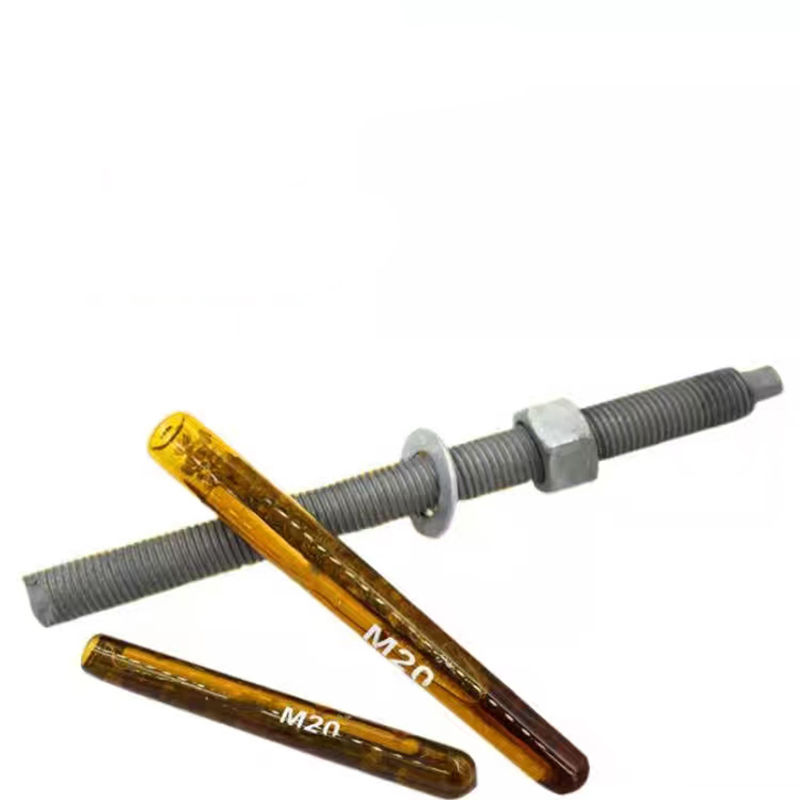
When we talk about chemical bolts, what we’re really discussing is a complex process where resin is used to secure the bolt within a drilled hole. This method has been a game-changer for industries needing reliable and durable fastening solutions. In my experience, one significant advantage is the uniform distribution of stress, which significantly reduces the risk of concrete cracking.
I remember a project where we needed to secure heavy machinery to an aged concrete floor. The use of chemical bolts was crucial; traditional anchors were simply insufficient given the floor’s condition. The chemical solution ensured the machinery stayed rock solid despite vibrations and other operational stresses.
Despite their benefits, there’s a learning curve involved. During my early projects, I underestimated the importance of curing time, resulting in a few bolts not achieving their full strength. It’s a common oversight—one that speaks to the necessity of thorough training and understanding of material science.
Practical Applications in Tough Environments
Chemical bolts shine in environments where traditional methods falter. Their use is not limited to just securing machinery. I’ve seen them applied successfully in structures exposed to dynamic loads—think bridges or high-rise buildings. The flexibility of this fastening method is remarkable.
Let’s take a challenging setting like offshore platforms. These platforms face relentless environmental forces, and the structurally sound integrity offered by chemical anchors is invaluable. Yet, the key to success here is precise installation, which sometimes requires skilled divers who understand both the marine environment and the chemical properties of the fasteners.
To illustrate, I recall a refurbishment project where liners had to be replaced in an oil rig. The only feasible option was chemical bolting due to its performance under stress and corrosive conditions. This approach not only enhanced safety but also reduced downtime significantly.
The Role of Quality and Standards
The quality of chemical bolts cannot be overstated. Companies like Handan Zitai Fastener Manufacturing Co., Ltd., play a pivotal role in ensuring these components meet stringent industry standards. Located in Yongnian District, Handan City, their access to major transport networks facilitates efficient distribution, a crucial factor for timely project execution. More about their offerings can be explored on their website, here.
In one of my collaborations with them, I was impressed by the consistency in their product line. Their bolts withstood rigorous testing under simulated conditions, reinforcing my trust in their quality claims. Companies like Zitai keep projects running smoothly, preventing costly downtimes associated with product failures.
Though the products are top-notch, I won’t overstate that selecting the right chemical bolt involves more than just quality. Compatibility with materials, load requirements, and environmental conditions are essential considerations. This isn’t just a purchase but a strategic choice in line with project demands.
Installation: The Make or Break Factor
The installation process of chemical bolts is not a one-size-fits-all. There are common pitfalls, many of which I encountered first-hand. One critical aspect is hole preparation. Any deviation here, be it in diameter or depth, can affect the bond strength.
In my experiences, I’ve seen contractors ignore cleaning out drilling dust, only to find adhesion compromised. Beyond that, proper mixing and setting time of the resin is just as crucial—rushing this step invites future failures. Chemical bolts require patience and precision, like crafting a fine sculpture rather than mere assembly.
But when done correctly, the results are well worth the effort. There’s a sense of satisfaction watching a challenging installation withstand hectic operational routines, testament to careful planning and execution.
Evaluating Cost vs. Benefit
There’s often a concern about the upfront cost of chemical bolts compared to mechanical anchors. True, these might appear costlier initially, but I’d argue the real value lies in the lifecycle. I’ve witnessed initial investments offset by reduced maintenance and downtime, a significant factor in high-stakes industries.
For instance, in a petrochemical plant where operational continuity is paramount, the long-term savings in man-hours and replacement costs made chemical bolting an attractive option. Decisions based solely on initial outlay often overlook the broader financial implications over a system’s lifespan.
Ultimately, chemical bolts provide not just a fastening solution but also a strategic advantage, optimizing efficiency, and ensuring durability in demanding situations. Whether for construction giants or niche industrial applications, they offer a compelling case for redefining how we approach complex engineering challenges.
Please leave us a message
-


-
-


WeChat
