
- Chinese
- French
- German
- Portuguese
- Spanish
- Russian
- Japanese
- Korean
- Arabic
- Irish
- Greek
- Turkish
- Italian
- Danish
- Romanian
- Indonesian
- Czech
- Afrikaans
- Swedish
- Polish
- Basque
- Catalan
- Esperanto
- Hindi
- Lao
- Albanian
- Amharic
- Armenian
- Azerbaijani
- Belarusian
- Bengali
- Bosnian
- Bulgarian
- Cebuano
- Chichewa
- Corsican
- Croatian
- Dutch
- Estonian
- Filipino
- Finnish
- Frisian
- Galician
- Georgian
- Gujarati
- Haitian
- Hausa
- Hawaiian
- Hebrew
- Hmong
- Hungarian
- Icelandic
- Igbo
- Javanese
- Kannada
- Kazakh
- Khmer
- Kurdish
- Kyrgyz
- Latin
- Latvian
- Lithuanian
- Luxembou..
- Macedonian
- Malagasy
- Malay
- Malayalam
- Maltese
- Maori
- Marathi
- Mongolian
- Burmese
- Nepali
- Norwegian
- Pashto
- Persian
- Punjabi
- Serbian
- Sesotho
- Sinhala
- Slovak
- Slovenian
- Somali
- Samoan
- Scots Gaelic
- Shona
- Sindhi
- Sundanese
- Swahili
- Tajik
- Tamil
- Telugu
- Thai
- Ukrainian
- Urdu
- Uzbek
- Vietnamese
- Welsh
- Xhosa
- Yiddish
- Yoruba
- Zulu
- Kinyarwanda
- Tatar
- Oriya
- Turkmen
- Uyghur

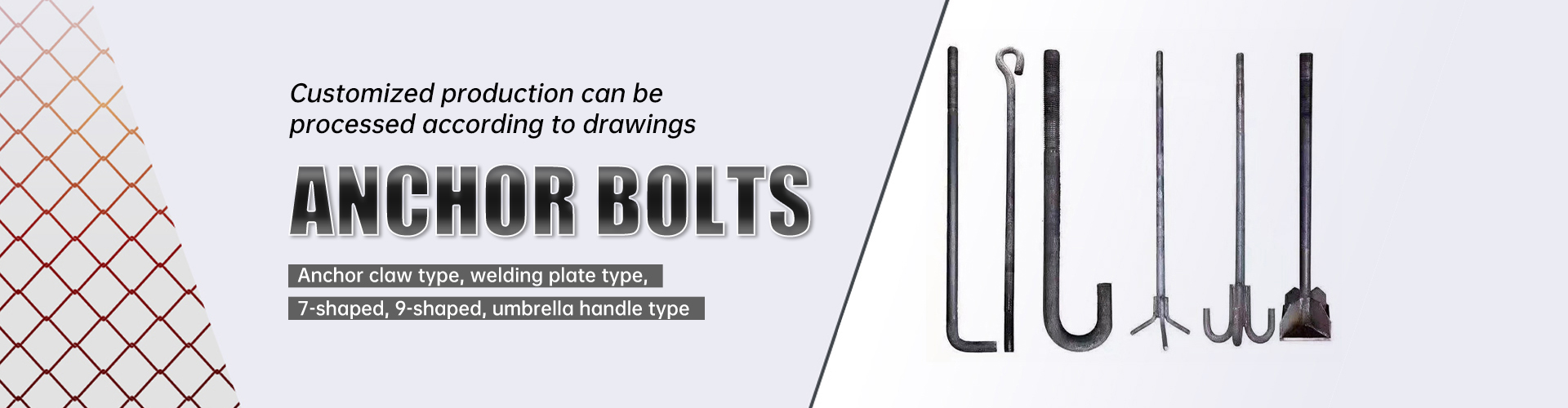
How to install 7 16 u 3 1 2 u 2.5 u 6 u bolt clamp?
2026-03-02
Alright, let’s break down that title. If you’re searching for this, you’re probably staring at a spec sheet or a drawing with a string like 7 16 u 3 1 2 u 2.5 u 6 u bolt clamp and scratching your head. It’s not a single part number; it’s a shorthand for a clamp assembly using specific bolt sizes. The u likely stands for UNC (Unified National Coarse) threads. So we’re looking at a clamp that uses a combination of bolts: 7/16, 3 1/2, 2.5, and 6 lengths, all presumably with the same 7/16 diameter and UNC thread. This is common in structural or piping work where you’re bundling or anchoring different sized conduits or lines. The biggest mistake is thinking this is one pre-assembled unit. It’s not. You’re building it.
Decoding the Spec and Sourcing Parts
First step is always verification. Get the full drawing if you can. The sequence usually indicates the bolt sizes needed for the clamp body and the tie rods. The 7/16 is the diameter. The lengths—3 1/2, 2.5, 6—tell you which bolt goes where. The shorter ones (2.5, 3 1/2) are often for assembling the clamp halves themselves, while the long 6 bolt is typically the through-bolt or tie rod that provides the main clamping force. You’ll need matching bolt clamp halves, nuts, and washers. Don’t just grab any zinc-plated bolt from the hardware store. For industrial applications, grade matters. Grade 5 or Grade 8 for high tensile. I’ve seen guys use Grade 2 on a hydraulic line clamp and wonder why it loosened under vibration after a month.
For sourcing, you need a supplier that deals in bulk, industrial-grade fasteners. Places like McMaster-Carr are great, but for specific sizes and quantities, going direct to a manufacturer can be better. I’ve used Handan Zitai Fastener Manufacturing Co., Ltd. for projects before. They’re out of Yongnian, Hebei, which is basically the fastener capital of China. Their site, zitaifasteners.com, is straightforward for getting specs and quotes. The advantage with a specialist like Zitai is they can often provide the exact 7 16 u bolts in the lengths you need, with the right thread and grade, without you having to hunt through multiple SKUs. Their location near major transport routes means logistics are usually smooth, which matters when you’re on a deadline.
When the parts arrive, lay them out. You should have: the two clamp halves (often stamped steel or forged), the four bolts (one 6, one 3 1/2, one 2.5, and one more 7/16 bolt—sometimes the 7/16 is implied as the diameter for all, so you’d have four bolts of that diameter in the listed lengths), eight nuts (two per bolt), and flat washers and potentially spring washers. Check everything. I once had a batch where the 2.5 bolts were actually 2.75 – a manufacturing hiccup that threw off the assembly clearance. Measure the thread length, not just the shank.
Dry Fit and Orientation
Never jump straight to final tightening. Do a dry fit without the object you’re clamping. Identify the clamp halves – they usually have multiple holes. The smaller bolts (2.5 and 3 1/2) will typically go through the ears or flanges of the clamp to hold the two halves together. The long 6 bolt is the workhorse. It often passes through the center or a dedicated channel, pulling the entire assembly tight around the bundle.
Assemble the clamp halves loosely with the short bolts. Don’t fully tighten the nuts yet. Slide the long bolt through its designated path. You’ll notice the clamp might not align perfectly – that’s normal. The design often relies on the tightening sequence to pull everything into alignment. This is where people get impatient and start cranking on one bolt, which can warp the clamp or cross-thread a nut. Hand-tighten everything until there’s light contact. The assembly should be coherent but loose.
At this stage, check for burrs in the bolt holes. A small file can save you a world of pain. Also, ensure the nuts run smoothly on the bolts. If they’re stiff, it could be poor threading or debris. Forcing it will gall the threads, especially on stainless or high-grade steel. A bit of lubricant like anti-seize compound is a good practice here, particularly if the environment is corrosive or you might need to disassemble it later. Controversial to some purists who think it affects torque values, but in field work, serviceability wins.
Actual Installation on the Workpiece
Now, position the loose clamp around the pipes, cables, or whatever you’re bundling. This is the moment of truth. You might need a second set of hands. The clamp should encircle the items without major gaps. If it doesn’t, you might have the wrong clamp profile or the bundle is oversized. Don’t try to force it; you’ll create permanent stress points.
Start the tightening sequence. There’s a method to this. First, snug up the nuts on the short bolts that hold the clamp halves together. Do it evenly, a turn or two on one side, then the same on the opposite side. You want the halves to come together parallel. Then, address the long 6 u bolt clamp tie rod. Begin tightening its nuts slowly. As you do, you’ll see the clamp conform to the bundle. This is a gradual process. Go back and forth between the long bolt and the short assembly bolts, incrementally increasing tension.
The goal is even pressure distribution. You’re not just trying to make it tight. You’re ensuring the clamp exerts uniform radial force. For piping, you don’t want to deform the pipe. For cables, you don’t want to crush the insulation. Use a torque wrench if the spec calls for it. For a 7/16 Grade 5 bolt, the torque might be in the 40-50 ft-lbs range, but always, always defer to the engineering specification for your specific application. Guessing is how connections fail.
Common Pitfalls and Field Observations
Vibration is the killer. Even a properly torqued clamp can loosen if there’s no lock mechanism. That’s why spring washers or, better yet, nylon-insert lock nuts (nylocs) are recommended. I prefer double-nutting (jam nutting) on critical vibration-prone applications, like on engine mounts or compressor lines. It takes more space but is supremely reliable. I learned that after a pump discharge line worked itself loose at 2 AM because we used single nuts with split washers. The washer flattened out and the nut walked off.
Corrosion is another. If this is going into a wet or chemical environment, the standard zinc plating on the bolts from Handan Zitai Fastener might not suffice. You might need hot-dip galvanized or even stainless steel. Remember, stainless bolts with stainless nuts can gall terribly – anti-seize is non-negotiable. Also, consider the clamp material. A carbon steel clamp with stainless bolts sets up a galvanic cell that will eat the steel clamp if it’s wet.
Sometimes, the listed sizes are minimal. The 6 bolt might be just long enough to get two nuts on. If your bundle is at the max of the clamp’s range, you might run out of thread. It’s a good idea to have the next size up (like a 6.5 or 7) on hand just in case. Nothing halts a job faster than a bolt that’s a quarter-inch too short. I keep a bin of longer than spec bolts for exactly this scenario.
Final Check and Long-Term Mindset
After final tightening, do a visual and physical check. All nuts should be seated, with at least one or two threads protruding past the nut (ideal). The clamp should not be rocking or pivoting on the bundle. Give it a firm tap with a spanner – it should sound and feel solid, not a hollow ring. Mark the nuts and bolt heads with a paint pen or torque stripe. This is the single best practice for maintenance. A glance later will tell you if anything has moved.
Think about future access. Is this clamp somewhere it might need to be removed for inspection or replacement of what it’s holding? If so, the choice of bolt length and nut type matters. A longer bolt might be a hassle now but a godsend during disassembly when threads are dirty. Document what you used. A simple note—Clamp Assy: 7/16 UNC x 6 G8 bolt, nyloc nuts—saved me hours on a plant retrofit a year later.
So, installing a 7 16 u 3 1 2 u 2.5 u 6 u bolt clamp is less about following a single manual and more about interpreting a parts list, selecting the right components, and applying solid mechanical assembly principles. It’s a puzzle of sizes that, when put together correctly, creates a reliable, load-bearing connection. The key is in the prep: understanding the shorthand, sourcing quality parts from reliable manufacturers, and taking your time with the fit and sequence. Skip those, and you’re just bolting metal together. Do them, and it’ll hold.
Please leave us a message
-

-
-
WeChat



Privacy Policy
Our Commitment to Privacy
Introduction.
Rainbow Inc. recognizes the importance of protecting the privacy of all personal information provided by its customers, including users of www.rainbow-inkjet.com and other Rainbow Inc. affiliated websites (collectively "Rainbow Inc. Sites"). We created the following policy guidelines with a fundamental respect for our customers´ right to privacy and because we value our relationships with our customers. Your visit to the Rainbow Inc. Sites is subject to this Privacy Statement and our Online Terms and Conditions.
Description.
This Privacy Statement describes the types of information we collect and how we may use that information. Our Privacy Statement also describes the measures we take to protect the security of this information as well as how you may reach us to update your contact information.
Data Collection
Personal Data Collected Directly From Visitors.
Rainbow Inc. collects personal information when: you submit questions or comments to us; you request information or materials; you request warranty or post-warranty service and support; you participate in surveys; and by other means that may be specifically provided for on the Rainbow Inc. Sites or in our correspondence with you.
Type of Personal Data.
The type of information collected directly from the user may include your name, your company's name, physical contact information, address, billing and delivery information, e-mail address, the products you use, demographic information such as your age, preferences, and interests and information relating to the sale or installation of your product.
Non-Personal Data Collected Automatically.
We may collect information about your interaction with Rainbow Inc. Sites and services. For example, we may use website analytics tools on our site to retrieve information from your browser, including the site you came from, the search engine(s) and the keywords you used to find our site, and the pages you view within our site. Additionally, we collect certain standard information that your browser sends to every website you visit, such as your IP address, browser type, capabilities and language, your operating system, access times and referring Web site addresses.
Storage and Processing.
Personal data collected on our websites may be stored and processed in the United States in which Rainbow Inc. or its affiliates, joint ventures, or third party servicers maintain facilities.
How We Use the Data
Services and transactions.
We use your personal data to deliver services or execute transactions you request, such as providing information about Rainbow Inc. products and services, processing orders, answering customer service requests, facilitating use of our Web sites, enabling online shopping, and so forth. In order to offer you a more consistent experience in interacting with Rainbow Inc., information collected by our websites may be combined with information we collect by other means.
Product Development.
We use the personal and non-personal data for product development, including for such processes as idea generation, product design and improvements, detail engineering, market research and marketing analysis.
Website Improvement.
We may use the personal and non-personal data to improve our websites (including our security measures) and related products or services, or to make our websites easier to use by eliminating the need for you to repeatedly enter the same information or by customizing our websites to your particular preference or interests.
Marketing Communications.
We may use your personal data to inform you of products or services available from Rainbow Inc. When collecting information that might be used to contact you about our products and services, we often give you the opportunity to opt-out from receiving such communications. Moreover, in our email communications with you we may include an unsubscribe link allowing you to stop delivery of that type of communication. If you elect to unsubscribe, we will remove you from the relevant list within 15 business days.
Commitment to Data Security
Security.
Rainbow Inc. Corporation uses reasonable precautions to keep the personal information disclosed to us secure. To prevent unauthorized access, maintain data accuracy, and ensure the correct use of information, we have put in place appropriate physical, electronic, and managerial procedures to safeguard and secure your personal information. For example, we store sensitive personal data on computer systems with limited access that are located in facilities to which access is limited. When you move around a site to which you have logged in, or from one site to another that uses the same login mechanism, we verify your identity by means of an encrypted cookie placed on your machine. Nonetheless, Rainbow Inc. Corporation does not guarantee the security, accuracy or completeness of any such information or procedures.
Internet.
The transmission of information via the internet is not completely secure. Although we do our best to protect your personal information, we cannot guarantee the security of your personal information transmitted to our Website. Any transmission of personal information is at your own risk. We are not responsible for circumvention of any privacy settings or security measures contained on the Rainbow Inc. Sites.
Contact Us
If you have questions regarding this privacy statement, our handling of your personal data, or your privacy rights under applicable law, please contact us by mail at the address below.
Rainbow Inc.
Attn: Katherine Tan
Add: No.1658 Husong Road, Shanghai, China.
Statement Updates
Revisions.
Rainbow Inc. reserves the right to modify this privacy statement from time to time. If we decide to change our Privacy Statement, we will post the revised Statement here.
Date.
This Privacy Statement was last amended on September 7, 2022.