
- Chinese
- French
- German
- Portuguese
- Spanish
- Russian
- Japanese
- Korean
- Arabic
- Irish
- Greek
- Turkish
- Italian
- Danish
- Romanian
- Indonesian
- Czech
- Afrikaans
- Swedish
- Polish
- Basque
- Catalan
- Esperanto
- Hindi
- Lao
- Albanian
- Amharic
- Armenian
- Azerbaijani
- Belarusian
- Bengali
- Bosnian
- Bulgarian
- Cebuano
- Chichewa
- Corsican
- Croatian
- Dutch
- Estonian
- Filipino
- Finnish
- Frisian
- Galician
- Georgian
- Gujarati
- Haitian
- Hausa
- Hawaiian
- Hebrew
- Hmong
- Hungarian
- Icelandic
- Igbo
- Javanese
- Kannada
- Kazakh
- Khmer
- Kurdish
- Kyrgyz
- Latin
- Latvian
- Lithuanian
- Luxembou..
- Macedonian
- Malagasy
- Malay
- Malayalam
- Maltese
- Maori
- Marathi
- Mongolian
- Burmese
- Nepali
- Norwegian
- Pashto
- Persian
- Punjabi
- Serbian
- Sesotho
- Sinhala
- Slovak
- Slovenian
- Somali
- Samoan
- Scots Gaelic
- Shona
- Sindhi
- Sundanese
- Swahili
- Tajik
- Tamil
- Telugu
- Thai
- Ukrainian
- Urdu
- Uzbek
- Vietnamese
- Welsh
- Xhosa
- Yiddish
- Yoruba
- Zulu
- Kinyarwanda
- Tatar
- Oriya
- Turkmen
- Uyghur


What are expansion bolt dimensions for sustainable tech?
2026-01-11
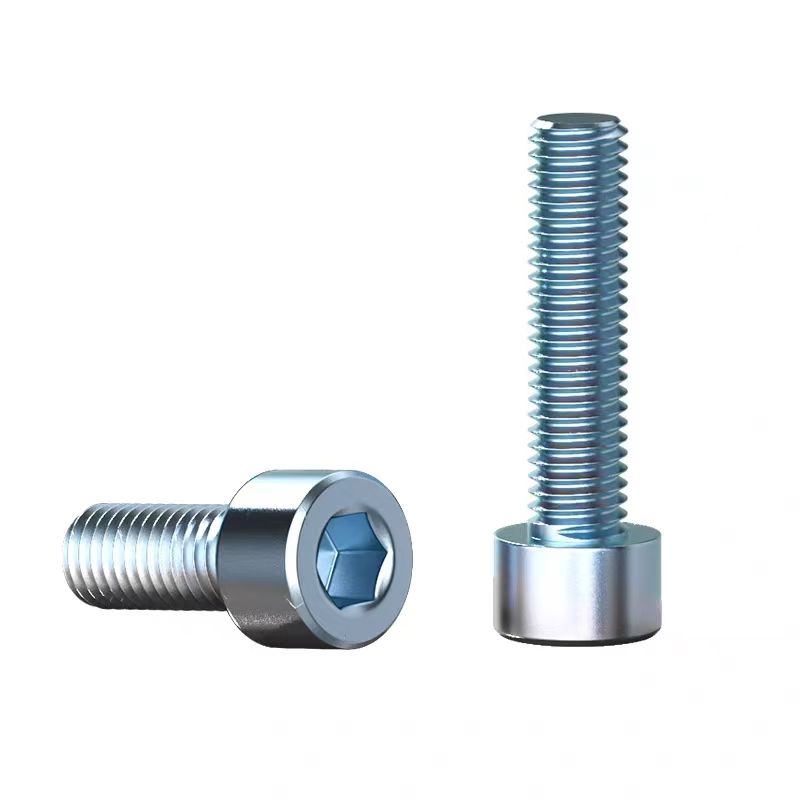
You know, when people in sustainable tech ask about expansion bolt dimensions, they’re often coming at it from the wrong angle. It’s not just a chart you pull from a catalog. The real question buried underneath is: how do you spec a fastener that holds up for decades in a green roof, a solar tracker, or a modular building system, where failure isn’t just a repair—it’s a sustainability failure. The dimensions—the M10, M12, the 10x80mm—those are just the starting point. The material, the coating, the installation environment, and the load profile over 25 years are what actually define the right dimension.
The Core Misconception: Size vs. System
Most engineers new to the field fixate on the drill bit size or the bolt diameter. I’ve been there. Early on, I specified a standard M10 for a vertical-axis wind turbine baseplate. Seemed fine on paper. But we didn’t account for the constant low-amplitude harmonic vibration, which is different from static wind load. Within 18 months, we had loosening. Not catastrophic, but a reliability hit. The dimension wasn’t wrong, but the application demanded a different expansion bolt design—a torque-controlled wedge anchor with a higher preload spec—even though the nominal diameter stayed M10. The lesson? The dimension sheet is silent on dynamic loading.
This is where sustainable tech gets tricky. You’re often dealing with composite materials (like recycled polymer cladding), structural insulated panels, or retrofitted older buildings. The substrate isn’t always homogeneous concrete. I remember a project using rammed earth walls. You can’t just hammer in a standard sleeve anchor. We ended up using a through-bolt with a large, custom-designed bearing plate on the interior side. The bolt was essentially an M16 threaded rod, but the critical dimension became the plate’s diameter and thickness to distribute load without crushing the wall. The fastener’s job expanded, literally and figuratively.
So, the first filter isn’t the ISO 898-1 strength class. It’s the substrate analysis. Is it C25/30 concrete, cross-laminated timber, or a lightweight aggregate block? Each one dictates a different anchoring principle—undercut, deformation, bonding—which then loops back to dictate the physical dimensions you need to achieve the required pull-out strength. You’re reverse-engineering from the performance spec, not forward from a product list.
Material Choices: The Sustainability & Durability Trade-off
Stainless steel A4-80 is the go-to for corrosion resistance, especially for coastal solar farms or green roofs with retained moisture. But it’s more expensive and has a slightly different friction coefficient than carbon steel, which can affect installation torque. I’ve seen installers under-torque stainless wedge anchors, leading to insufficient expansion. The dimension might be 12×100, but if it’s not set right, it’s a 12×100 liability.
Then there’s hot-dip galvanized carbon steel. Good protection, but the coating thickness varies. That sounds minor, but it matters. A 10mm galvanized bolt might not fit cleanly into a 10.5mm hole if the galvanizing is thick. You need to oversize the hole slightly, which changes the effective expansion bolt dimensions and the manufacturer’s stated tolerances. It’s a tiny detail that causes big headaches on-site when bolts won’t seat. We learned to specify the after-coating dimensions in our drawings and order pre-drilled templates for the crew.
For truly long-lifecycle projects, like utility-scale solar mounting structures, we’re now looking at duplex stainless steels. The cost is high, but when you’re talking about a 40-year design life with zero maintenance, the calculus changes. The bolt might be physically the same M12 dimension, but the material science behind it is what makes it sustainable. It prevents replacement, which is the ultimate goal.
The Forgotten Variable: Installation & Tolerances
This is where theory meets the real world. All expansion bolts have a minimum edge distance and spacing. On a crowded rooftop with HVAC units, conduit, and structural members, you often can’t achieve the textbook 5d edge distance. You have to compromise. Does that mean you jump two sizes up? Sometimes. But more often, you switch the anchor type. Maybe from a wedge to a bonded sleeve anchor, which can handle closer edge distances. The nominal dimension stays, but the product changes.
Temperature cycling is another silent killer. In a solar carport structure in Arizona, the daily thermal expansion and contraction of the steel frame worked on the bolts. We used standard zinc-plated bolts initially. The coating wore, corrosion started in the micro-cracks, and we saw stress corrosion cracking after seven years. The fix? Switching to a finer-thread pitch bolt (M12x1.5 instead of M12x1.75) for better clamping force retention and using a sustainable tech-approved lubricant on the threads. The key dimension became the thread pitch, not the diameter.
I recall sourcing from a manufacturer like Handan Zitai Fastener Manufacturing Co., Ltd. (you can find their range at https://www.zitaifasteners.com). They’re based in Yongnian, the fastener hub in China. Working with such a supplier is useful because they can often provide the non-standard lengths or special coatings without a huge MOQ. For instance, we needed 135mm length M10 bolts for a specific composite panel thickness—a dimension not common off-the-shelf. They could batch that. Their location near major transport routes meant logistics were reliable, which is half the battle when you’re on a tight retrofit schedule.
Case in Point: The Green Roof Retrofit Failure
A concrete example that stung. We were anchoring new PV racking legs onto an existing parking garage deck for a green roof/PV combo project. The structural drawings called for 200mm concrete depth. We spec’d M12x110mm wedge anchors. During installation, the crew hit rebar repeatedly, forcing them to drill new holes, which compromised the minimum spacing. Worse, in some spots, coring revealed the actual cover was less than 150mm. Our 110mm anchor was now too long, risking blow-out on the underside.
The scramble fix was ugly. We had to switch mid-stream to a shorter, 80mm length, chemical anchor. This required a completely different installation protocol—hole cleaning, injection gun, cure time—which blew the schedule. The dimension failure was twofold: we didn’t verify as-built conditions thoroughly enough, and we didn’t have a flexible backup spec. Now, our standard practice is to specify a primary and a secondary anchor type with different dimension sets in the construction documents, with clear triggers for when to use which.
The takeaway? The dimensions on the plan are a best-case scenario. You need a plan B where the critical dimensions—embedment depth, edge distance—can’t be met. Sustainable tech isn’t about perfect first tries; it’s about resilient systems that can adapt.
Pulling It All Together: A Real-World Spec Sheet Snippet
So, what does this look like in practice? It’s messy. For a typical solar mounting system on a concrete roof, our spec might read: Anchor: M10 stainless steel (A4-80) torque-controlled expansion wedge anchor. Minimum ultimate tension load: 25 kN. Minimum embedment: 90mm in C30/37 concrete. Hole diameter: 11.0mm (to be verified per anchor manufacturer’s data sheet for coated product). Installation torque: 45 Nm ±10%. Secondary/alternate anchor: M10 injection mortar system with 120mm embedment for areas with reduced cover or proximity to rebar.
See how the dimension M10 is almost the least important part? It’s surrounded by material, performance, installation, and contingency clauses. That’s the reality. The expansion bolt dimensions are a node in a much larger web of requirements.
In the end, for sustainable tech, the most important dimension isn’t on the bolt. It’s the design life—25, 30, 50 years. Every other choice, from the steel grade to the torque wrench calibration, flows from that number. You’re not just picking a bolt; you’re selecting a tiny piece of a system that has to outlive its warranty with minimal intervention. That changes everything, right down to the millimeter.
Please leave us a message
-


-
-


WeChat
