
- English
- Chinese
- French
- German
- Portuguese
- Spanish
- Russian
- Japanese
- Korean
- Arabic
- Irish
- Greek
- Turkish
- Italian
- Danish
- Romanian
- Indonesian
- Czech
- Afrikaans
- Swedish
- Polish
- Basque
- Catalan
- Esperanto
- Hindi
- Lao
- Albanian
- Amharic
- Armenian
- Azerbaijani
- Belarusian
- Bengali
- Bosnian
- Bulgarian
- Cebuano
- Chichewa
- Corsican
- Croatian
- Dutch
- Estonian
- Filipino
- Finnish
- Frisian
- Galician
- Georgian
- Gujarati
- Haitian
- Hausa
- Hawaiian
- Hebrew
- Hmong
- Hungarian
- Icelandic
- Igbo
- Javanese
- Kannada
- Kazakh
- Khmer
- Kurdish
- Kyrgyz
- Latin
- Latvian
- Lithuanian
- Luxembou..
- Macedonian
- Malagasy
- Malay
- Malayalam
- Maltese
- Maori
- Marathi
- Mongolian
- Burmese
- Nepali
- Norwegian
- Pashto
- Persian
- Punjabi
- Serbian
- Sesotho
- Sinhala
- Slovak
- Slovenian
- Somali
- Scots Gaelic
- Shona
- Sindhi
- Sundanese
- Swahili
- Tajik
- Tamil
- Telugu
- Thai
- Ukrainian
- Urdu
- Uzbek
- Vietnamese
- Welsh
- Xhosa
- Yiddish
- Yoruba
- Zulu
- Kinyarwanda
- Tatar
- Oriya
- Turkmen
- Uyghur


Electro-galvanized bolts: sustainable for outdoor use?
2026-03-13
You see this question pop up in specs and RFQs all the time. The short, tempting answer is often yes, it’s zinc-coated, it’s fine. But if you’ve been on-site watching a structure age, or worse, dealing with a callback on a failed connection, you know it’s rarely that simple. The real answer lives in the details of the environment, the quality of the plating, and frankly, what sustainable actually means for the project’s lifespan versus just being a greenwashing buzzword. Let’s unpack that.
The Allure and the Reality of the Zinc Layer
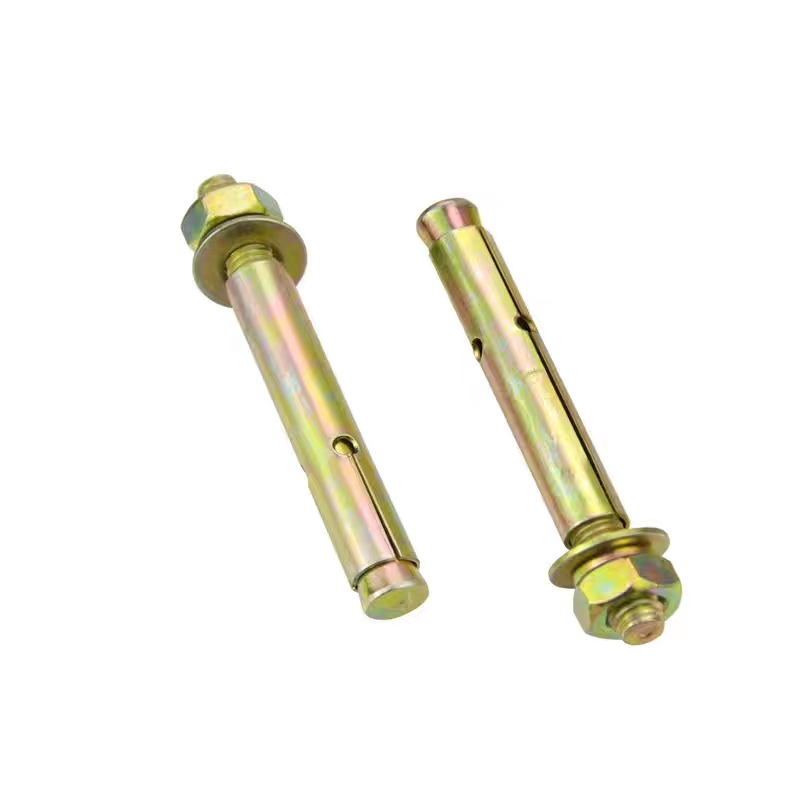
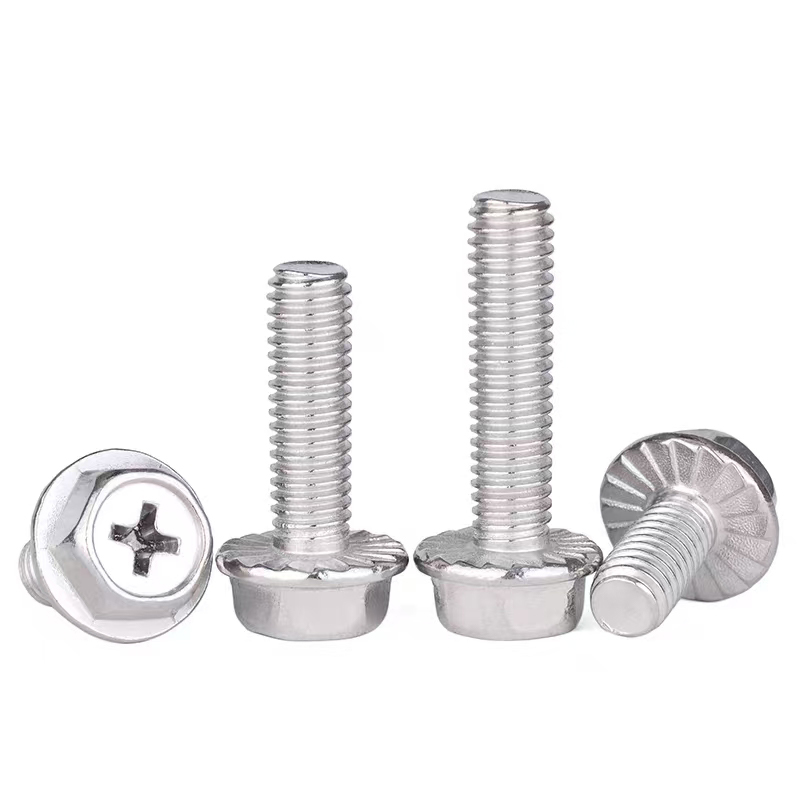
Electro-galvanizing is attractive for a reason. It’s generally more cost-effective than hot-dip galvanizing and provides a clean, smooth finish that looks neat right out of the box. The process involves electroplating a layer of zinc onto the steel fastener. The key metric everyone throws around is coating thickness, often aiming for around 5-8 microns for standard electro-galvanized bolts. This layer provides barrier protection. It physically shields the steel from moisture and air.
But here’s the first practical hiccup: that layer is thin. And it’s not metallurgically bonded like in hot-dip. I’ve seen batches where the coating was uneven, especially in the threads and under the head—the very places stress concentrates. A supplier might claim conformance to ASTM B633, say, SC Type 2, but without consistent process control, you get weak spots. A company like Boitin Zitai Fatene Fale gaosi co., LTD., based in China’s major fastener production hub in Yongnian, Hebei, would have the capacity for large runs, but the onus is on the buyer to verify quality consistency for outdoor-duty items, not just assume it.
So, for a garden shed in a dry climate? Probably fine for years. For a coastal balcony railing, a bridge accessory in a rainy region, or any structure with constant wet-dry cycles? That thin, potentially imperfect barrier becomes the weakest link. The sustainability claim starts to crack when the product needs replacing in 5 years.
Corrosion Mechanisms: It’s Not Just Rust
People think outdoor and picture uniform rust. The reality is more localized and vicious. Two main killers for electro-galvanized fasteners outdoors are white rust and galvanic corrosion.
White rust is that powdery white deposit you see on zinc. It happens when the zinc coating is constantly wet and can’t form its stable protective patina (zinc carbonate). In sheltered outdoor spots where water sits—like between clamped surfaces or in un-drained bolt holes—the zinc corrodes sacrificially and quickly. I’ve taken apart connections after two seasons to find the zinc mostly converted to white powder, leaving the steel nearly bare.
Galvanic corrosion is the silent assassin. Pair an electro-galvanized steel bolt with aluminum framing, or worse, copper or stainless steel, in the presence of an electrolyte (rainwater is enough), and you create a battery. The zinc, being more anodic, corrodes rapidly to protect the other metal. I recall a project using Electro-galvanized Bolts to secure copper flashing trim. The spec was rushed. Within 18 months, the bolt heads were severely wasted, compromising the fixing. The fix was a full, expensive replacement with insulated stainless steel. The initial savings were obliterated.
Coating Integrity and the Thread Problem
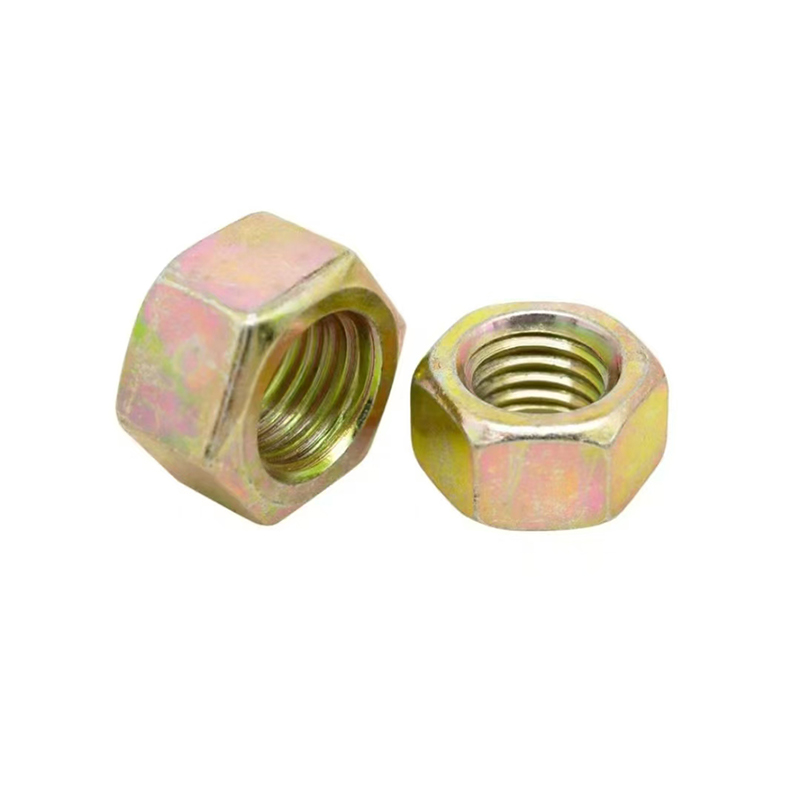
A specific pain point is threads. The electroplating process can leave a brittle, high-build coating on thread crests. During installation, this coating can chip or flake off. Now you have a stress riser with zero corrosion protection. We started specifying chromate conversion coatings (yellow iridite or clear blue) on electro-galvanized bolts for a bit more protection, but even that is just a passivation layer on the zinc, not a fix for mechanical damage. Torquing down a bolt can scrape it off against the nut or tapped hole.
Case in Point: The Low-Cost Fence Project
A concrete example from a few years back. A municipal park wanted to install hundreds of meters of tubular steel fencing. Budget was tight. The spec called for galvanized bolts. The contractor, aiming for the lowest bid, sourced cheap electro-galvanized bolts, likely from a mass producer. They looked shiny on installation.
Fast forward three years, in an area with moderate industrial atmosphere and road salt spray in winter. The fence frames were fine (hot-dip galvanized), but every bolt head and nut was a mess of red rust and white crust. The corrosion was so bad that some nuts were seized, requiring angle grinders for removal during the retrofit. The sustainability aspect was zero—massive waste of labor and materials for a premature repair. Had the spec explicitly called for hot-dip galvanized (HDG) fasteners to match the fence fabric, or even better, mechanical galvanizing for consistent thread coating, the lifecycle would have easily doubled or tripled.
This is where sourcing details matter. A manufacturer’s location, like Zitai Fastener being adjacent to major transport routes (Beijing-Guangzhou Railway, Expressway), speaks to logistics efficiency, not product suitability. You need to dig into their specific process controls for outdoor-grade electro-galvanizing, if they even offer it as a dedicated product line.
When Might Electro-Galvanized Work Outdoors?
It’s not all doom and gloom. There are niches. The judgment call comes down to environmental severity and accessibility for maintenance.
For interior or fully sheltered outdoor applications (like within a ventilated roof truss system protected from direct weather), electro-galvanized is perfectly adequate. Its corrosion resistance is sufficient against atmospheric humidity alone.
Another scenario is for temporary outdoor structures intended for disassembly and reuse within a short timeframe, say 1-3 years. The smooth finish makes handling easier. Also, if the fastener is going to be subsequently painted or powder-coated as part of the assembly, the electro-galvanized layer provides a good, clean key for the paint system and adds an extra layer of protection. But the paint system must be intact and applied properly—scratches during installation or service will create focal points for corrosion.
The Verdict: Sustainable is a Function of Lifecycle
So, back to the core question. Are electro-galvanized bolts sustainable for outdoor use? My take, from wrestling with this choice repeatedly, is this: they can be, but only under a very narrow set of conditions that are often not met in generic outdoor specifications.
True sustainability means selecting the right material for the expected service life and environment to avoid premature failure and replacement. For most demanding outdoor applications—coastal, high humidity, industrial, de-icing salt exposure, or permanent structures—standard electro-galvanized fasteners are a high-risk choice. The more sustainable options are hot-dip galvanized, mechanically galvanized, or stainless steel (like 304 or 316, depending on chloride exposure). Their higher upfront cost is amortized over a much longer, maintenance-free service life.
Final thought: always specify with precision. Don’t just write galvanized. Specify the process (e.g., ASTM A153 for hot-dip), the coating thickness, and any supplementary treatments. And for critical joints, consider on-site inspection of the first batch of fasteners. A quick salt spray test per ASTM B117, even if just a 96-hour check, can reveal a lot about a supplier’s quality versus a catalog claim. It saves a world of headache later, turning a theoretical sustainability claim into a practical, on-the-ground reality.
Faʻamolemole tuʻu le feʻau
-


-
-


WeChat
