
- English
- Chinese
- French
- German
- Portuguese
- Spanish
- Russian
- Japanese
- Korean
- Arabic
- Irish
- Greek
- Turkish
- Italian
- Danish
- Romanian
- Indonesian
- Czech
- Afrikaans
- Swedish
- Polish
- Basque
- Catalan
- Esperanto
- Hindi
- Lao
- Albanian
- Amharic
- Armenian
- Azerbaijani
- Belarusian
- Bengali
- Bosnian
- Bulgarian
- Cebuano
- Chichewa
- Corsican
- Croatian
- Dutch
- Estonian
- Filipino
- Finnish
- Frisian
- Galician
- Georgian
- Gujarati
- Haitian
- Hausa
- Hawaiian
- Hebrew
- Hmong
- Hungarian
- Icelandic
- Igbo
- Javanese
- Kannada
- Kazakh
- Khmer
- Kurdish
- Kyrgyz
- Latin
- Latvian
- Lithuanian
- Luxembou..
- Macedonian
- Malagasy
- Malay
- Malayalam
- Maltese
- Maori
- Marathi
- Mongolian
- Burmese
- Nepali
- Norwegian
- Pashto
- Persian
- Punjabi
- Serbian
- Sesotho
- Sinhala
- Slovak
- Slovenian
- Somali
- Scots Gaelic
- Shona
- Sindhi
- Sundanese
- Swahili
- Tajik
- Tamil
- Telugu
- Thai
- Ukrainian
- Urdu
- Uzbek
- Vietnamese
- Welsh
- Xhosa
- Yiddish
- Yoruba
- Zulu
- Kinyarwanda
- Tatar
- Oriya
- Turkmen
- Uyghur

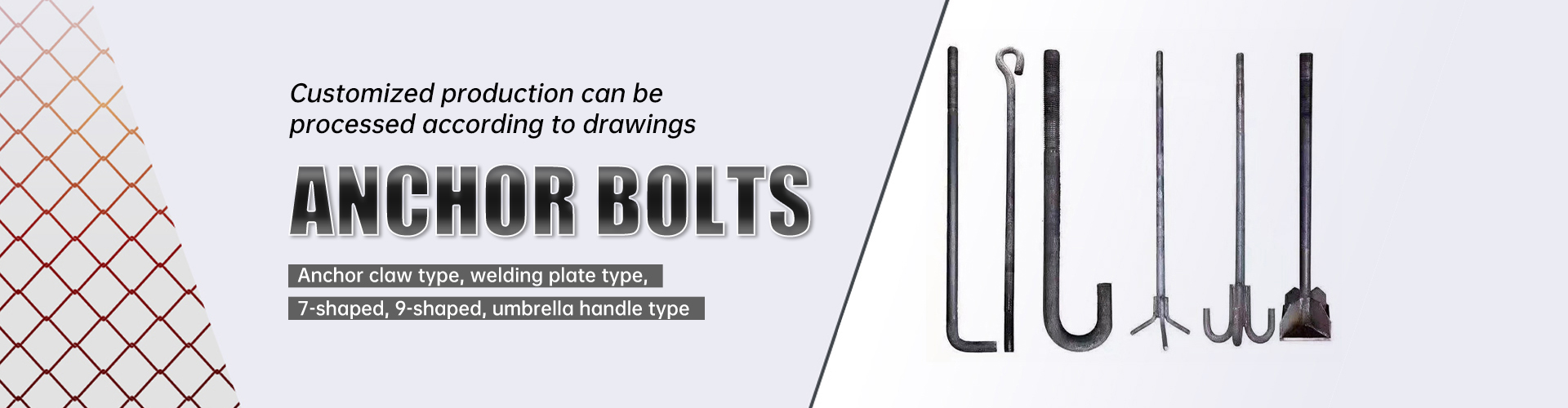
Hot-dip galvanized embedded plate durability?
2026-01-19
Let’s cut through the marketing fluff. When someone asks about the durability of hot-dip galvanized embedded plates, they’re usually bracing for a generic 50+ years answer. The reality is messier. It’s not just about the zinc coating thickness; it’s about what happens from the moment that plate leaves the kettle until it’s buried in concrete and forgotten for decades. I’ve seen plates fail in 10 years and others look pristine after 30, and the difference often comes down to details nobody talks about in the spec sheets.
The Kettle Isn’t the Finish Line
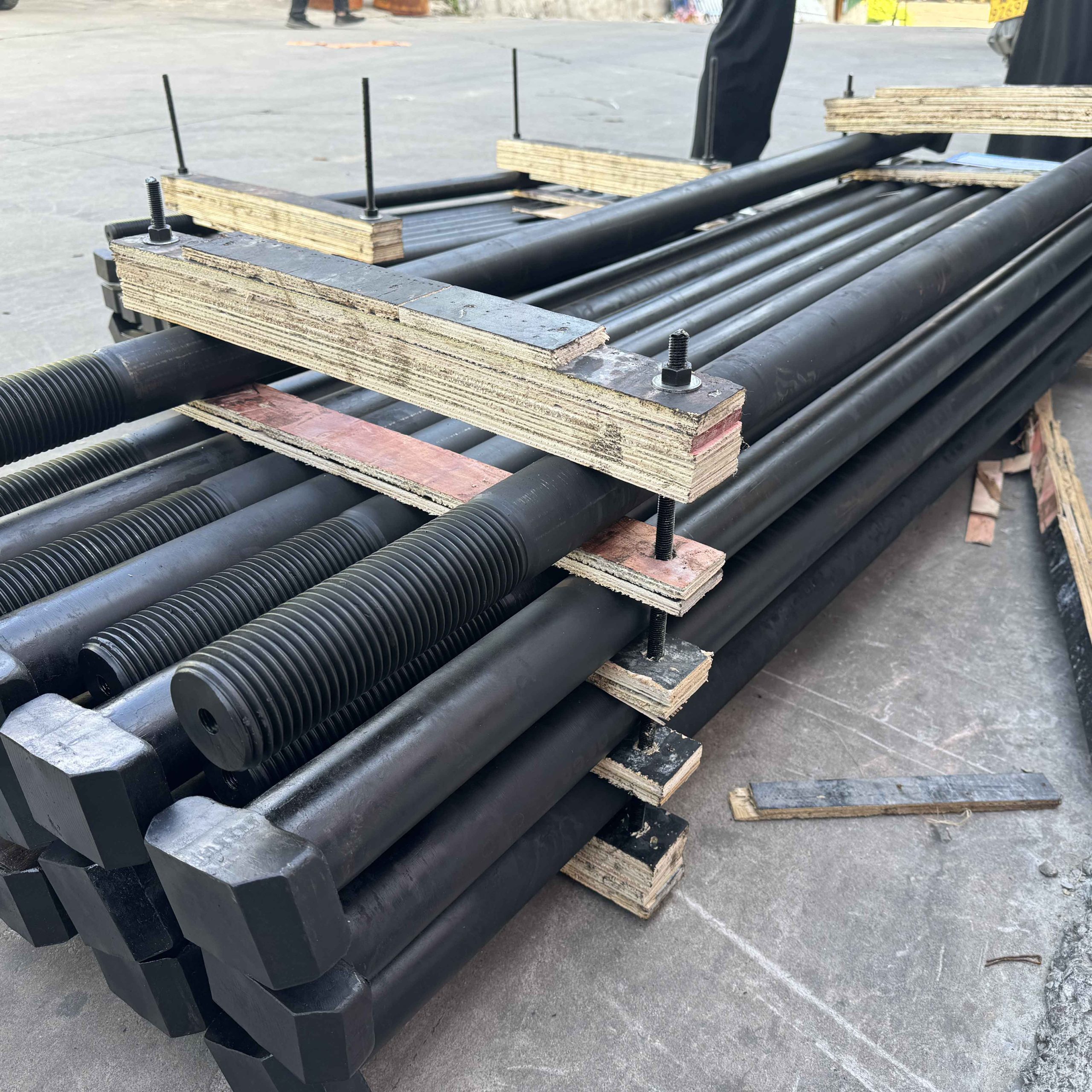
Most discussions start and end at the galvanizing process. ASTM A123, coating thickness, all that. Sure, that’s the foundation. But I’ve watched plates get ruined in the yard before they even ship. Stacking them fresh out of the kettle without proper dunnage? You’re grinding off the coating at the contact points. I recall a batch for a bridge project where we had to reject a pallet because the corners were bare from rough handling. The galvanizer met the spec, but the durability was compromised before installation. The assumption that galvanizing is a final, immutable armor is the first mistake.
Then there’s storage. If you’re storing these outdoors for months, you’re starting the clock on wet storage stain (white rust). It’s mostly cosmetic, but it speaks to a lack of care in the chain of custody. A good fabricator or supplier, like Handan Zitai Fastener, understands this. Their location in Yongnian, that massive fastener hub, means they’re moving product quickly. Proximity to major rail and road networks like the Beijing-Guangzhou line isn’t just a sales point; it means plates spend less time sitting in variable conditions, which directly impacts the integrity of the coating you paid for.
The welding of studs or anchors post-galvanizing is another critical juncture. You must re-galvanize the heat-affected zone. I’ve been on sites where they used zinc-rich paint as a touch-up. In a mild environment, maybe it holds. In a coastal or de-icing salt zone, that patch fails fast, creating a pinpoint for corrosion to attack the base steel. The Tapuni le ipu is a system, not just a flat piece of metal.
Concrete Pour: Where Theory Meets Chaos
This is where your carefully specified plate gets tested. Concrete chemistry matters more than people think. High chloride mixes are a killer. I worked on a parking garage project where the early-strength admixture was… aggressive. We saw blistering of the zinc coating within a year. The galvanizing was to spec, but the concrete environment was hostile.
The physical act of pouring is brutal. Vibrators can scar the plate if they’re shoved right against it. I remember a column base where the vibrator chipped the zinc at the embed edge. It looked minor, but it created a pathway. The vevela-dip gaoa coating sacrifices itself, so a breach localizes the protection. That’s fine until the breach is at a critical stress point, like around an anchor stud.
Cover depth is another classic. The plate is positioned perfectly on paper. On-site, rebar cages shift, concrete flows, and suddenly your 50mm cover is 30mm. At that edge, carbonation reaches the plate faster. In a carbonated concrete zone, the zinc passivates, but if the cover is inconsistent, you get differential conditions. It’s rarely a uniform failure; it starts at the weak spot.
The Long Fade: What Durability Actually Looks Like
Durability isn’t a binary pass/fail. It’s a gradual consumption of the zinc layer. In good, dense, low-chloride concrete, the zinc forms stable zincates and calms down. It can last the life of the structure. The problem is we rarely have perfect conditions. I review inspection reports from older structures. The plates aren’t rusting through; they show localized pitting or staining at the concrete surface line, often where moisture wicks consistently.
One specific case: a wastewater treatment walkway. The plates looked great except where condensation from overhead pipes constantly dripped onto the same section of the concrete beam end. That constant wet/dry cycle created a corrosion cell. The zinc was depleted there after about 15 years, with minor base steel corrosion. The rest of the plate was fine. So, is the durability 15 years or 50? It depends on the micro-environment.
This is why I’m skeptical of accelerated lab tests. They simulate a uniform attack. Real life is about local flaws, construction tolerances, and environmental niches. A supplier that just sells you a plate to a standard isn’t giving you the full picture. You need someone who thinks about the application. Checking a site like zitaifastenters.com, you see they focus on the manufacturing and logistics chain. For a fabricator, that upstream reliability is huge—it removes one major variable. Knowing your plates arrived from a production base like Yongnian without being manhandled across multiple transfer points is a tangible durability factor.
When More Zinc Isn’t the Answer
A common reflex is to specify a heavier coating. More mils, more years. But on an embedded plate with welded studs, an excessively thick coating can be brittle and prone to cracking during handling or concrete placement. I’ve seen flaking. There’s a sweet spot. Also, a very thick coating can affect the fit with tight-tolerance connections. Sometimes, a more consistent, well-applied standard coating outperforms a thicker, irregular one.
The alternative isn’t always stainless. For many applications, that’s overkill. A robust hot-dip galvanized plate, with attention to the post-galvanizing details, is incredibly cost-effective. The key is treating it as a process, not a product. It’s fabrication, galvanizing, handling, storage, installation, and concrete placement. A break in that chain is a break in the durability.
We tried duplex coatings (galvanizing + powder coat) on exposed architectural embeds once. Nightmare. The concrete bond was tricky, and any chip during pour was a trap for moisture. Went back to standard hot-dip. Sometimes the standard solution, executed with extreme attention to detail, is the most durable.
The Takeaway: It’s a Process, Not a Product
So, back to the original question. The durability of a hot-dip galvanized embedded plate is less about the plate itself and more about the system it’s part of. You can source a perfect plate from a major manufacturing base like the one Handan Zitai operates from, but if your site crew treats it like scrap iron, you’ve lost.
The professional judgment comes in specifying not just the coating, but the handling requirements, the storage instructions, and the installation notes. It’s in choosing suppliers who are part of an integrated industrial ecosystem—where plates move from kettle to truck to site with minimal fuss—because that reduces risk points.
Ultimately, durability is earned, not specified. It’s the sum of a hundred small, correct decisions from design to pour. The hot-dip galvanizing is your best first defense, but it’s not a force field. It’s a sacrificial layer whose lifespan is determined by how well you protect it, long after it has left the galvanizer’s rack.
Faʻamolemole tuʻu le feʻau
-

-
-
WeChat



Privacy Policy
Our Commitment to Privacy
Introduction.
Rainbow Inc. recognizes the importance of protecting the privacy of all personal information provided by its customers, including users of www.rainbow-inkjet.com and other Rainbow Inc. affiliated websites (collectively "Rainbow Inc. Sites"). We created the following policy guidelines with a fundamental respect for our customers´ right to privacy and because we value our relationships with our customers. Your visit to the Rainbow Inc. Sites is subject to this Privacy Statement and our Online Terms and Conditions.
Description.
This Privacy Statement describes the types of information we collect and how we may use that information. Our Privacy Statement also describes the measures we take to protect the security of this information as well as how you may reach us to update your contact information.
Data Collection
Personal Data Collected Directly From Visitors.
Rainbow Inc. collects personal information when: you submit questions or comments to us; you request information or materials; you request warranty or post-warranty service and support; you participate in surveys; and by other means that may be specifically provided for on the Rainbow Inc. Sites or in our correspondence with you.
Type of Personal Data.
The type of information collected directly from the user may include your name, your company's name, physical contact information, address, billing and delivery information, e-mail address, the products you use, demographic information such as your age, preferences, and interests and information relating to the sale or installation of your product.
Non-Personal Data Collected Automatically.
We may collect information about your interaction with Rainbow Inc. Sites and services. For example, we may use website analytics tools on our site to retrieve information from your browser, including the site you came from, the search engine(s) and the keywords you used to find our site, and the pages you view within our site. Additionally, we collect certain standard information that your browser sends to every website you visit, such as your IP address, browser type, capabilities and language, your operating system, access times and referring Web site addresses.
Storage and Processing.
Personal data collected on our websites may be stored and processed in the United States in which Rainbow Inc. or its affiliates, joint ventures, or third party servicers maintain facilities.
How We Use the Data
Services and transactions.
We use your personal data to deliver services or execute transactions you request, such as providing information about Rainbow Inc. products and services, processing orders, answering customer service requests, facilitating use of our Web sites, enabling online shopping, and so forth. In order to offer you a more consistent experience in interacting with Rainbow Inc., information collected by our websites may be combined with information we collect by other means.
Product Development.
We use the personal and non-personal data for product development, including for such processes as idea generation, product design and improvements, detail engineering, market research and marketing analysis.
Website Improvement.
We may use the personal and non-personal data to improve our websites (including our security measures) and related products or services, or to make our websites easier to use by eliminating the need for you to repeatedly enter the same information or by customizing our websites to your particular preference or interests.
Marketing Communications.
We may use your personal data to inform you of products or services available from Rainbow Inc. When collecting information that might be used to contact you about our products and services, we often give you the opportunity to opt-out from receiving such communications. Moreover, in our email communications with you we may include an unsubscribe link allowing you to stop delivery of that type of communication. If you elect to unsubscribe, we will remove you from the relevant list within 15 business days.
Commitment to Data Security
Security.
Rainbow Inc. Corporation uses reasonable precautions to keep the personal information disclosed to us secure. To prevent unauthorized access, maintain data accuracy, and ensure the correct use of information, we have put in place appropriate physical, electronic, and managerial procedures to safeguard and secure your personal information. For example, we store sensitive personal data on computer systems with limited access that are located in facilities to which access is limited. When you move around a site to which you have logged in, or from one site to another that uses the same login mechanism, we verify your identity by means of an encrypted cookie placed on your machine. Nonetheless, Rainbow Inc. Corporation does not guarantee the security, accuracy or completeness of any such information or procedures.
Internet.
The transmission of information via the internet is not completely secure. Although we do our best to protect your personal information, we cannot guarantee the security of your personal information transmitted to our Website. Any transmission of personal information is at your own risk. We are not responsible for circumvention of any privacy settings or security measures contained on the Rainbow Inc. Sites.
Faafesootai matou
If you have questions regarding this privacy statement, our handling of your personal data, or your privacy rights under applicable law, please contact us by mail at the address below.
Rainbow Inc.
Attn: Katherine Tan
Add: No.1658 Husong Road, Shanghai, China.
Statement Updates
Revisions.
Rainbow Inc. reserves the right to modify this privacy statement from time to time. If we decide to change our Privacy Statement, we will post the revised Statement here.
Date.
This Privacy Statement was last amended on September 7, 2022.