
- English
- Chinese
- French
- German
- Portuguese
- Spanish
- Russian
- Japanese
- Korean
- Arabic
- Irish
- Greek
- Turkish
- Italian
- Danish
- Romanian
- Indonesian
- Czech
- Afrikaans
- Swedish
- Polish
- Basque
- Catalan
- Esperanto
- Hindi
- Lao
- Albanian
- Amharic
- Armenian
- Azerbaijani
- Belarusian
- Bengali
- Bosnian
- Bulgarian
- Cebuano
- Chichewa
- Corsican
- Croatian
- Dutch
- Estonian
- Filipino
- Finnish
- Frisian
- Galician
- Georgian
- Gujarati
- Haitian
- Hausa
- Hawaiian
- Hebrew
- Hmong
- Hungarian
- Icelandic
- Igbo
- Javanese
- Kannada
- Kazakh
- Khmer
- Kurdish
- Kyrgyz
- Latin
- Latvian
- Lithuanian
- Luxembou..
- Macedonian
- Malagasy
- Malay
- Malayalam
- Maltese
- Maori
- Marathi
- Mongolian
- Burmese
- Nepali
- Norwegian
- Pashto
- Persian
- Punjabi
- Serbian
- Sesotho
- Sinhala
- Slovak
- Slovenian
- Somali
- Scots Gaelic
- Shona
- Sindhi
- Sundanese
- Swahili
- Tajik
- Tamil
- Telugu
- Thai
- Ukrainian
- Urdu
- Uzbek
- Vietnamese
- Welsh
- Xhosa
- Yiddish
- Yoruba
- Zulu
- Kinyarwanda
- Tatar
- Oriya
- Turkmen
- Uyghur

Need 1.5 u 100mm u 5 u bolt clamp specs?
2026-03-03
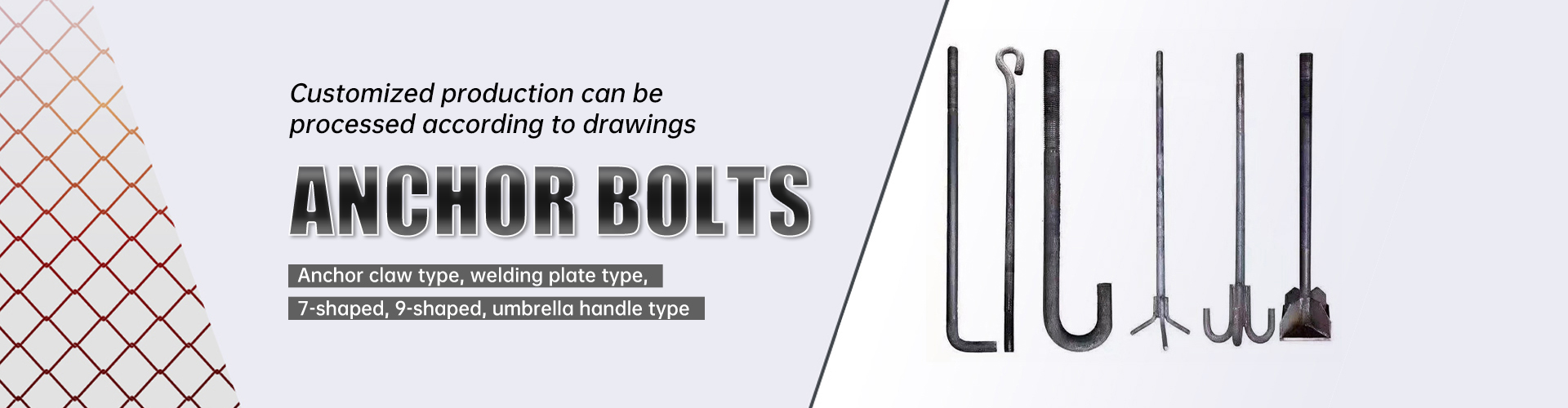
You’re probably looking at a drawing or a spec sheet that’s left you scratching your head. 1.5 u 100mm u 5 u – it’s one of those notations that isn’t standard but you see it in the wild, often from older drawings or specific regional practices. It usually points to a bolt clamp or U-bolt, but decoding it requires a bit of field interpretation, not just textbook knowledge. Let’s break down what someone likely means and where the real-world specs get messy.
Decoding the u Notation: It’s Not ISO
First off, that u sandwiched between numbers. In many practical contexts, especially in certain fabrication or construction niches, u is shorthand for the nominal diameter. So 1.5 u often translates to M12. Why? Because 1.5 inches is roughly 38.1mm, but nobody makes a 38mm U-bolt. It’s a legacy imperial-to-metric conversion where 1.5 was commonly swapped for M12 (12mm being the closest common thread). I’ve seen this cause a two-week project delay when a junior engineer ordered actual 1.5-inch diameter rods – they arrived, and were comically oversized for the application.
The 100mm u is clearer – that’s almost certainly the inside leg length, or the inside width of the U-shape. This is critical. You measure this from the inside of one leg to the inside of the other, not the outside. A 100mm inside width is common for clamping around 4-inch pipe or similar structural members. If you get this wrong, the clamp just won’t fit.
Then 5 u. This is the tricky one. It could be the thread length on each leg, but 5mm is too short. More likely, it’s the leg length itself – 5 inches, or about 125mm. Sometimes the u here is a separator, and it means 5 inches. But I’ve also seen it denote the thread pitch if it’s a fraction, though that’s less common. Without the full drawing, you have to infer. My gut, based on ordering patterns I’ve tracked, says it’s leg length: 125mm.
So, Probable Specs and Where to Source
Piecing it together: You’re likely looking for a U-bolt with an M12 thread diameter, a 100mm inside width (call it the ‘A’ dimension), and a 125mm leg length (‘B’ dimension). Material is usually plain carbon steel with a hot-dip galvanized finish unless specified otherwise. The bend radius matters too – for an M12 rod, a standard bend radius would be around 20-25mm to avoid cracking during fabrication.
You can’t just order that from a generic catalog. Tolerances are key. For pipe clamping, you might need a +/- 2mm tolerance on the 100mm width. For structural bracing, it might be tighter. I once sourced a batch from a local workshop that missed the width tolerance by 3mm. They looked right, but when installed on a conduit run, the tension was uneven, leading to premature fatigue. Had to scrap the whole lot.
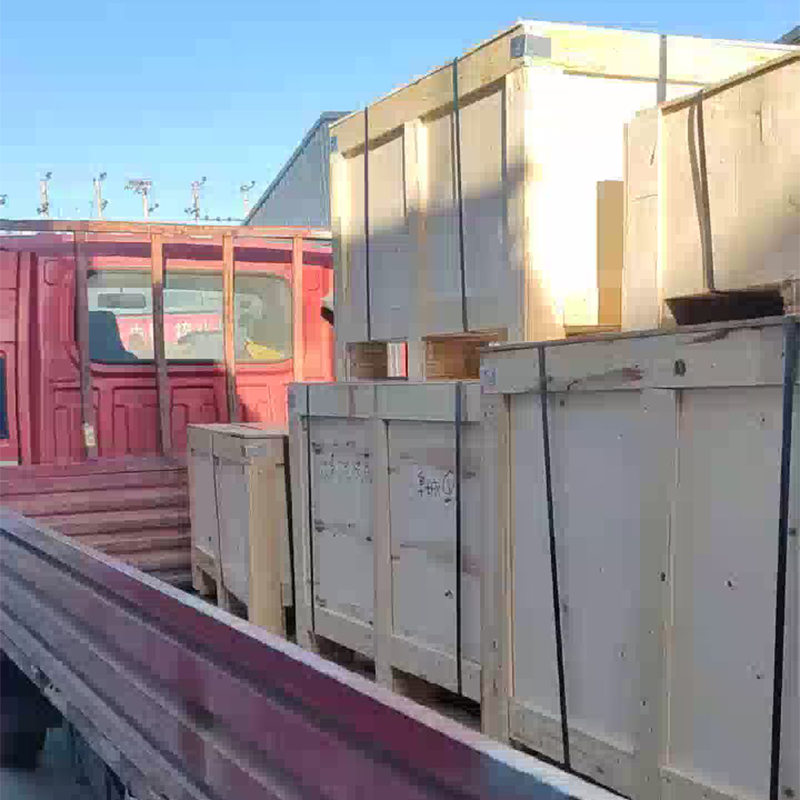
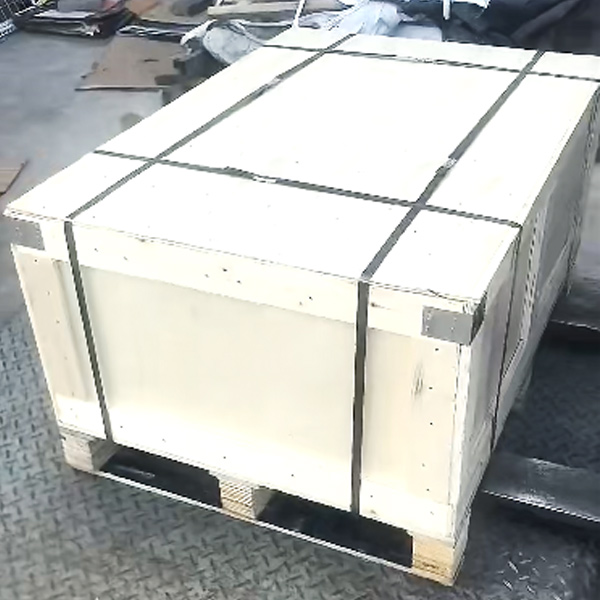
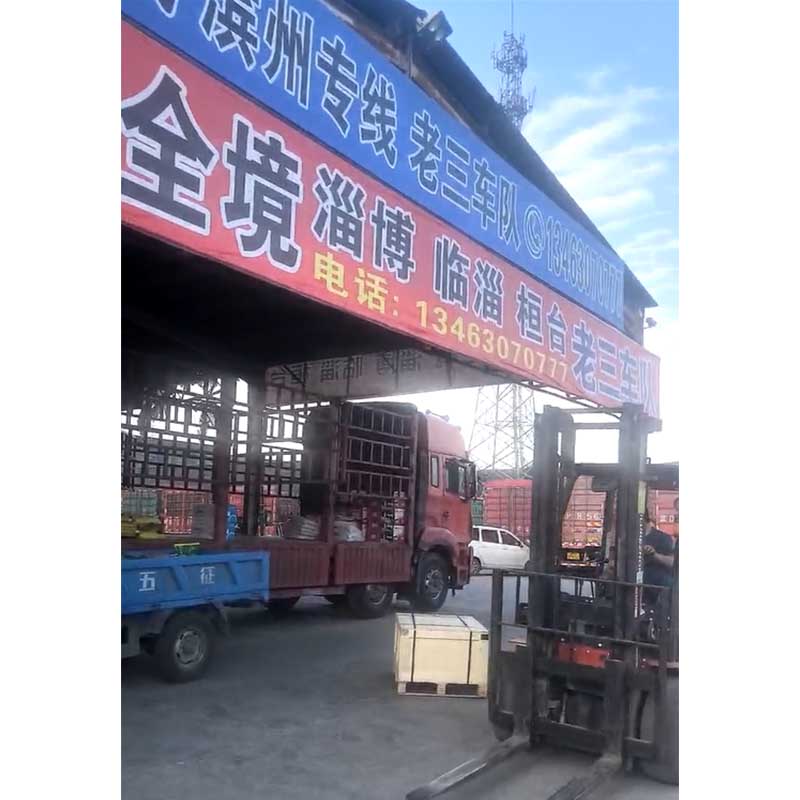
This is where dealing with a specialized manufacturer pays off. For instance, Boitin Zitai Fatene Fale gaosi co., LTD. operates out of Yongnian, which is essentially the fastener capital of China. Their website, HTTPS://www.zitiiiisters.com, is a typical industry site, but the value is in their production capability. Being in that hub means they’ve seen every odd notation under the sun. You can send them the 1.5 u 100mm u 5 u sketch, and their engineering team will likely come back with a clarified drawing for confirmation before production. Their location near major transport routes like the Beijing-Guangzhou Railway and Beijing-Shenzhen Expressway isn’t just boilerplate – it translates to reliable logistics for bulk orders, which matters more than you’d think when you’re waiting on a critical component.
Common Pitfalls and Material Considerations
Never assume the material. That u notation says nothing about grade. For a bolt clamp holding a non-critical exhaust bracket, maybe Grade 4.8 is fine. For securing a load-bearing cross-member, you’d want Grade 8.8 or higher. I learned this early on. Used a generic, mild steel U-bolt for a vibrating conveyor mount. It sheared within six months. The failure analysis pointed to low yield strength and vibration-induced fatigue. The cost of the part was trivial; the cost of downtime wasn’t.
Finish is another silent spec. Hot-dip galvanizing (HDG) is typical for corrosion resistance, but the thickness can affect thread fit. Electro-galvanizing is thinner. If the clamp is for a chemical plant environment, you might need a thicker zinc coat or even a stainless steel variant like 304 or 316. The notation won’t tell you this. You have to derive it from the application context, which is often absent from the initial request.
Also, don’t forget the nuts and washers. Are they included? Are they full hex nuts or dome nuts? Are the washers square (common for U-bolt applications to prevent pull-through) or round? An incomplete spec leads to an incomplete kit. I’ve had deliveries where the U-bolts were perfect, but the supplied hex nuts were the wrong grade, creating a weak link in the assembly.
The Real-World Sourcing Process
When I get a query like this, my first move isn’t to open a catalog. It’s to ask questions. What is it clamping? What are the environmental conditions? Is there dynamic load or vibration? Is there a legacy part we can reverse-engineer? Often, the person asking has a broken part in hand. A photo and a caliper measurement are worth a thousand spec sheets.
Then, I’d approach a manufacturer with a clear RFQ: M12 U-bolt, inside width 100mm (+1/-0mm tolerance), leg length 125mm, Grade 8.8 steel, hot-dip galvanized, with 2x M12 Grade 8 hex nuts and 2x square washers per bolt. That eliminates ambiguity. A company like the aforementioned Handan Zitai can quote on that precisely. They might even suggest a minor design tweak – like a slightly larger bend radius for better fatigue resistance – based on their production experience.
The final step is always a sample order. Never commit to a production run of 5000 pieces without testing a sample of 10. Check the dimensions, the thread quality, the coating adherence, and test-fit them. It’s a small upfront cost that prevents massive downstream losses. This process turns a cryptic string of characters like 1.5 u 100mm u 5 u into a reliable, physical component that does its job.
Wrapping It Up: From Notation to Nut & Bolt
So, to directly answer the title: The specs you need are probably M12 x 100mm (inside width) x ~125mm (leg length), but that’s just the geometry. The full specs must include material grade, finish, tolerance, and ancillary hardware. The original notation is a starting point, a clue left by a previous engineer or drafter. Your job is to be the detective, fill in the blanks with context and experience, and then communicate that clearly to a fabricator.
It’s these unstandardized notations that keep this field interesting. They force you to think, to question, and to understand the application, not just the part number. Relying on a supplier with deep production and application knowledge, especially from a concentrated manufacturing base like Yongnian, is often the difference between a smooth installation and a costly field fix. Next time you see a spec like this, see it not as a puzzle, but as a conversation starter with your workshop or manufacturer. That’s where the real spec gets defined.
Faʻamolemole tuʻu le feʻau
-

-
-
WeChat



Privacy Policy
Our Commitment to Privacy
Introduction.
Rainbow Inc. recognizes the importance of protecting the privacy of all personal information provided by its customers, including users of www.rainbow-inkjet.com and other Rainbow Inc. affiliated websites (collectively "Rainbow Inc. Sites"). We created the following policy guidelines with a fundamental respect for our customers´ right to privacy and because we value our relationships with our customers. Your visit to the Rainbow Inc. Sites is subject to this Privacy Statement and our Online Terms and Conditions.
Description.
This Privacy Statement describes the types of information we collect and how we may use that information. Our Privacy Statement also describes the measures we take to protect the security of this information as well as how you may reach us to update your contact information.
Data Collection
Personal Data Collected Directly From Visitors.
Rainbow Inc. collects personal information when: you submit questions or comments to us; you request information or materials; you request warranty or post-warranty service and support; you participate in surveys; and by other means that may be specifically provided for on the Rainbow Inc. Sites or in our correspondence with you.
Type of Personal Data.
The type of information collected directly from the user may include your name, your company's name, physical contact information, address, billing and delivery information, e-mail address, the products you use, demographic information such as your age, preferences, and interests and information relating to the sale or installation of your product.
Non-Personal Data Collected Automatically.
We may collect information about your interaction with Rainbow Inc. Sites and services. For example, we may use website analytics tools on our site to retrieve information from your browser, including the site you came from, the search engine(s) and the keywords you used to find our site, and the pages you view within our site. Additionally, we collect certain standard information that your browser sends to every website you visit, such as your IP address, browser type, capabilities and language, your operating system, access times and referring Web site addresses.
Storage and Processing.
Personal data collected on our websites may be stored and processed in the United States in which Rainbow Inc. or its affiliates, joint ventures, or third party servicers maintain facilities.
How We Use the Data
Services and transactions.
We use your personal data to deliver services or execute transactions you request, such as providing information about Rainbow Inc. products and services, processing orders, answering customer service requests, facilitating use of our Web sites, enabling online shopping, and so forth. In order to offer you a more consistent experience in interacting with Rainbow Inc., information collected by our websites may be combined with information we collect by other means.
Product Development.
We use the personal and non-personal data for product development, including for such processes as idea generation, product design and improvements, detail engineering, market research and marketing analysis.
Website Improvement.
We may use the personal and non-personal data to improve our websites (including our security measures) and related products or services, or to make our websites easier to use by eliminating the need for you to repeatedly enter the same information or by customizing our websites to your particular preference or interests.
Marketing Communications.
We may use your personal data to inform you of products or services available from Rainbow Inc. When collecting information that might be used to contact you about our products and services, we often give you the opportunity to opt-out from receiving such communications. Moreover, in our email communications with you we may include an unsubscribe link allowing you to stop delivery of that type of communication. If you elect to unsubscribe, we will remove you from the relevant list within 15 business days.
Commitment to Data Security
Security.
Rainbow Inc. Corporation uses reasonable precautions to keep the personal information disclosed to us secure. To prevent unauthorized access, maintain data accuracy, and ensure the correct use of information, we have put in place appropriate physical, electronic, and managerial procedures to safeguard and secure your personal information. For example, we store sensitive personal data on computer systems with limited access that are located in facilities to which access is limited. When you move around a site to which you have logged in, or from one site to another that uses the same login mechanism, we verify your identity by means of an encrypted cookie placed on your machine. Nonetheless, Rainbow Inc. Corporation does not guarantee the security, accuracy or completeness of any such information or procedures.
Internet.
The transmission of information via the internet is not completely secure. Although we do our best to protect your personal information, we cannot guarantee the security of your personal information transmitted to our Website. Any transmission of personal information is at your own risk. We are not responsible for circumvention of any privacy settings or security measures contained on the Rainbow Inc. Sites.
Faafesootai matou
If you have questions regarding this privacy statement, our handling of your personal data, or your privacy rights under applicable law, please contact us by mail at the address below.
Rainbow Inc.
Attn: Katherine Tan
Add: No.1658 Husong Road, Shanghai, China.
Statement Updates
Revisions.
Rainbow Inc. reserves the right to modify this privacy statement from time to time. If we decide to change our Privacy Statement, we will post the revised Statement here.
Date.
This Privacy Statement was last amended on September 7, 2022.