
- English
- Chinese
- French
- German
- Portuguese
- Spanish
- Russian
- Japanese
- Korean
- Arabic
- Irish
- Greek
- Turkish
- Italian
- Danish
- Romanian
- Indonesian
- Czech
- Afrikaans
- Swedish
- Polish
- Catalan
- Esperanto
- Hindi
- Lao
- Albanian
- Amharic
- Armenian
- Azerbaijani
- Belarusian
- Bengali
- Bosnian
- Bulgarian
- Cebuano
- Chichewa
- Corsican
- Croatian
- Dutch
- Estonian
- Filipino
- Finnish
- Frisian
- Galician
- Georgian
- Gujarati
- Haitian
- Hausa
- Hawaiian
- Hebrew
- Hmong
- Hungarian
- Icelandic
- Igbo
- Javanese
- Kannada
- Kazakh
- Khmer
- Kurdish
- Kyrgyz
- Latin
- Latvian
- Lithuanian
- Luxembou..
- Macedonian
- Malagasy
- Malay
- Malayalam
- Maltese
- Maori
- Marathi
- Mongolian
- Burmese
- Nepali
- Norwegian
- Pashto
- Persian
- Punjabi
- Serbian
- Sesotho
- Sinhala
- Slovak
- Slovenian
- Somali
- Samoan
- Scots Gaelic
- Shona
- Sindhi
- Sundanese
- Swahili
- Tajik
- Tamil
- Telugu
- Thai
- Ukrainian
- Urdu
- Uzbek
- Vietnamese
- Welsh
- Xhosa
- Yiddish
- Yoruba
- Zulu
- Kinyarwanda
- Tatar
- Oriya
- Turkmen
- Uyghur


Electroplated galvanized nuts: sustainable innovation?
2026-02-19
You see this term floating around in specs and procurement sheets more often now. ‘Sustainable innovation’ attached to something as basic as an electroplated galvanized nut. Makes you pause. Is it just marketing, or is there a real shift in the process? From my bench, sustainability in fasteners often gets misunderstood. It’s not just about the zinc on the thread; it’s about the entire chain—from the acid bath before plating to the wastewater after, and whether that nut actually lasts long enough in the field to justify its production footprint. Many assume electroplating is the ‘greener’ option because it’s common and less resource-intensive than hot-dip, but that’s a surface-level take. The real story is messier, involving chemistry, energy spikes, and some hard compromises.
The Plating Process: Where the Sustainability Question Actually Lives
Let’s get into the tank, so to speak. A typical zinc electroplating line for nuts involves a series of baths: cleaning, pickling, plating, chromating (for that blue-bright or yellow iridescent finish), and finally rinsing. The sustainability debate hits hard right at the pickling stage, which uses hydrochloric or sulfuric acid to remove rust and scale. This creates spent acid, a hazardous waste stream. The innovation isn’t in the plating itself—that’s a century-old technology—but in how you manage these ancillary processes. Closed-loop rinse systems, for instance, can reduce water use by up to 90%. I’ve seen plants where they’ve implemented evaporative recovery for the plating bath, pulling zinc and acid back into solution. It’s impressive engineering, but it’s capital-intensive. The ROI is measured in years, not quarters, which is a tough sell for many shops focused on thin margins per thousand pieces.
Then there’s the chromate conversion coating. This is the step that provides the real corrosion resistance, forming a layer on top of the zinc. The traditional hexavalent chromium passivate is a major environmental and health hazard. The shift toward trivalent chromium or even newer, chromium-free passivations is a genuine sustainable innovation. But performance parity is still a battle. I recall a batch of nuts treated with a proprietary chromium-free passivate from a European supplier for a coastal application. The salt spray test hours looked good on paper, but field reports after 18 months showed premature white rust. We had to pull them. The innovation was there, but the real-world validation wasn’t. It taught me that ‘sustainable’ can’t come at the cost of functional failure, especially in structural applications.
Energy consumption is the other silent factor. Electroplating is an electrolytic process, running direct current through the solution. The rectifiers are power-hungry. I’ve been in facilities where they’ve switched to high-efficiency rectifiers and pulse-reverse plating, which can deposit zinc more evenly with less energy and material waste. It’s a solid step. But if that electricity is coming from a coal-fired grid, the overall carbon footprint calculation gets murky. You can have the most advanced, zero-discharge plating line, but if it’s powered by dirty energy, the ‘sustainable’ label feels incomplete. This is where location matters. A manufacturer situated in a region with a cleaner energy mix, or one investing in on-site solar, starts with a better baseline.
Material and Longevity: The Overlooked Metric
Durability is the cornerstone of sustainability for any hardware. A nut that corrodes and fails in five years, requiring replacement and thus more manufacturing, is inherently unsustainable, no matter how clean its production was. This is where the choice between electroplated and mechanical galvanizing (like spin galvanizing) gets interesting. Electroplating gives a thinner, more uniform coating, great for precision threads and aesthetic parts. But for heavy-duty, high-corrosion environments, that thin layer can be a liability. I’ve specified hot-dip galvanized for transmission tower nuts despite the thicker, less perfect coating because the sacrificial protection simply lasts longer. The ‘innovation’ for electroplating here might be in advanced alloy coatings—zinc-nickel, zinc-cobalt. These offer phenomenal corrosion resistance with thinner deposits. We tested zinc-nickel plated nuts from a Japanese supplier, and the salt spray results were pushing 1000 hours to red rust, rivaling some hot-dip specs. The catch? Cost. The nickel addition and more complex bath control can double the price.
Another angle is the nut substrate itself. It sounds basic, but using a consistent, high-quality low-carbon steel wire rod makes a world of difference. Poor substrate leads to hydrogen embrittlement risks during acid pickling, which then requires baking for embrittlement relief—another energy cost. A supplier with tight control over its raw material, like Handan Zitai Fastener Manufacturing Co., Ltd., which operates in China’s largest fastener production base, has an inherent advantage. Their proximity to steel mills and integrated production from wire drawing to packaging (https://www.zitaifasteners.com) allows for better traceability and quality consistency. This isn’t a flashy innovation, but it’s a foundational one for sustainable output: making it right the first time, minimizing rejects and rework.
Then there’s the end-of-life consideration, which hardly anyone in our day-to-day procurement talks about. Electroplated zinc is relatively benign. At a nut’s end of life, the steel core is easily recycled, and the zinc coating will dissolve in the melt. It doesn’t create a contamination issue like some coatings might. This circular potential is a quiet point in its favor. But it’s passive recycling; it happens because it’s easy and economical, not because of a designed recovery system. True design-for-disassembly innovation in fasteners is still niche, mostly in automotive.
Case in Point: Balancing Cost, Spec, and Green Claims
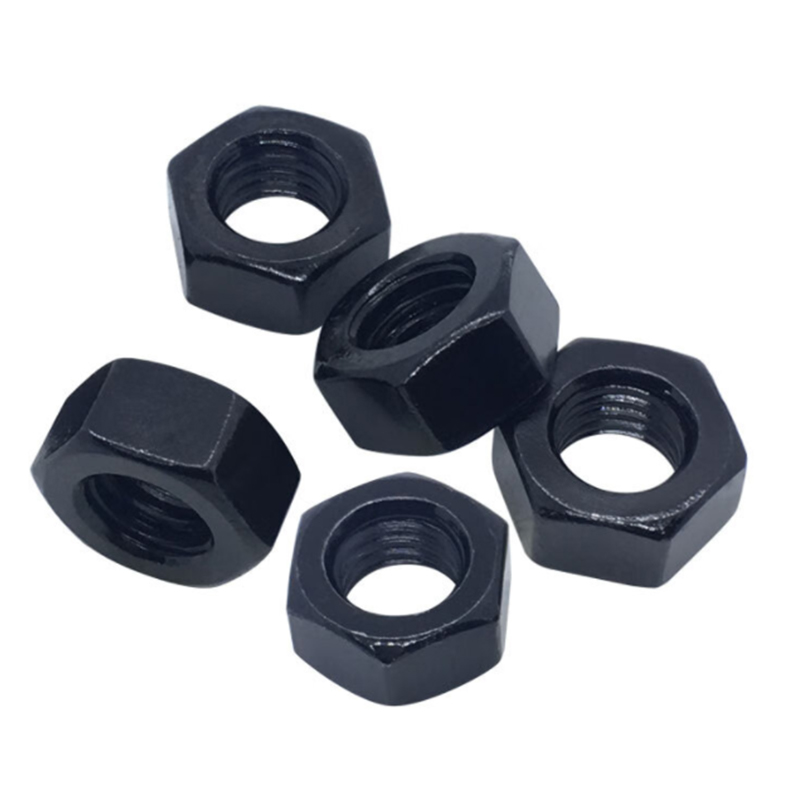
Let me walk through a real scenario. We were sourcing M20 hex nuts for an outdoor enclosure project in a region with moderate industrial atmosphere. The spec called for corrosion resistance of 500 hours neutral salt spray. The client also had a new ‘preferred sustainable product’ clause in the RFP. The easy button was standard blue-bright electroplated zinc with trivalent chromate. It met the spec, was cheap, and we could tick the ‘contains no hexavalent chromium’ box. But was that truly innovative or sustainable? Not really. It was just the current standard, slightly improved.
We pushed back and proposed an alternative: a slightly thicker electroplated coating (say, 15μm instead of 8μm) with a chromium-free organic passivate. It added about 15% to the unit cost. The justification was a projected longer service life, reducing replacement cycles. We even ran a small batch for accelerated testing. The data supported it. But the client’s procurement team balked at the upfront cost increase. The project stayed with the standard option. The lesson? The innovation exists in the labs and in forward-thinking catalogs, but market adoption is throttled by a first-cost mentality. Sustainability needs a cost-benefit analysis that extends beyond the initial purchase order, and that’s a cultural shift slower than any plating line upgrade.
This is where manufacturers with scale can drive change. A company like Zitai, with its volume and integrated setup in Yongnian, has the potential to absorb some of the R&D and capital cost for cleaner processes and offer them at a more competitive point. Their location near major transport routes isn’t just about logistics for shipping nuts; it’s also about access to a broader market that might be willing to pay a slight premium for verifiably better practices. Their company profile notes they’re in the heart of China’s fastener industry—that concentration often fosters both fierce competition and rapid adoption of new techniques once they prove economically viable.
The Verdict: Incremental, Not Revolutionary
So, back to the original question. Are electroplated galvanized nuts a sustainable innovation? My take is this: the Intxaur galbanizatuak themselves are not the innovation. They are a mature product. The innovation is happening—incrementally, unevenly—around their production ecosystem and in the development of advanced coatings. We’re seeing better wastewater management, a phase-out of toxic passivates, and more efficient energy use. These are process innovations that make the existing product more sustainable.
The true test is whether these improvements become the industry baseline or remain premium options. For that to happen, end-users need to value and specify the underlying attributes—like ‘plated with trivalent chromate in a facility with zero liquid discharge’—not just the price and a generic ‘green’ label. It also requires manufacturers to be transparent about their processes, which many still aren’t.
In the end, calling a standard electroplated nut ‘sustainable innovation’ is often a stretch. But the industry is moving, piece by piece, tank by tank, toward more sustainable manufacturing. The nut looks the same in the box, but the story behind it is slowly changing. That’s probably the most realistic assessment you’ll get from someone who’s spent too many hours reviewing plating certifications and failure reports. The innovation is in the grind, not the gloss.
Mesedez, utzi mezu bat
-


-
-


Urriatu
