
- Chinese
- French
- German
- Portuguese
- Spanish
- Russian
- Japanese
- Korean
- Arabic
- Irish
- Greek
- Turkish
- Italian
- Danish
- Romanian
- Indonesian
- Czech
- Afrikaans
- Swedish
- Polish
- Basque
- Catalan
- Esperanto
- Hindi
- Lao
- Albanian
- Amharic
- Armenian
- Azerbaijani
- Belarusian
- Bengali
- Bosnian
- Bulgarian
- Cebuano
- Chichewa
- Corsican
- Croatian
- Dutch
- Estonian
- Filipino
- Finnish
- Frisian
- Galician
- Georgian
- Gujarati
- Haitian
- Hausa
- Hawaiian
- Hebrew
- Hmong
- Hungarian
- Icelandic
- Igbo
- Javanese
- Kannada
- Kazakh
- Khmer
- Kurdish
- Kyrgyz
- Latin
- Latvian
- Lithuanian
- Luxembou..
- Macedonian
- Malagasy
- Malay
- Malayalam
- Maltese
- Maori
- Marathi
- Mongolian
- Burmese
- Nepali
- Norwegian
- Pashto
- Persian
- Punjabi
- Serbian
- Sesotho
- Sinhala
- Slovak
- Slovenian
- Somali
- Samoan
- Scots Gaelic
- Shona
- Sindhi
- Sundanese
- Swahili
- Tajik
- Tamil
- Telugu
- Thai
- Ukrainian
- Urdu
- Uzbek
- Vietnamese
- Welsh
- Xhosa
- Yiddish
- Yoruba
- Zulu
- Kinyarwanda
- Tatar
- Oriya
- Turkmen
- Uyghur


Black zinc-plated flange bolts: sustainable choice?
2026-03-08
You see ‘black zinc’ and ‘sustainable’ in the same sentence a lot these days. Makes you pause. From where I stand, having sourced and specified these for everything from outdoor enclosures to structural brackets, the real answer isn’t in the marketing copy. It’s in the salt spray cabinet, the total cost of a failed joint, and frankly, the logistics of getting a consistent finish batch after batch. Let’s cut through the greenwash.
The Finish Itself: More Than Just a Color
Black zinc plating isn’t one thing. It’s usually a zinc plating layer with a subsequent black chromate conversion coating. That ‘chromate’ part is the first sustainability red flag for many. Traditional chromates contain hexavalent chromium, a serious environmental and health hazard. The industry has largely moved towards trivalent chromates for the blackening step, which is a definite improvement. But ‘improvement’ doesn’t equal ‘green’. It’s still a multi-step electrochemical process involving acids, rinses, and wastewater that needs serious treatment.
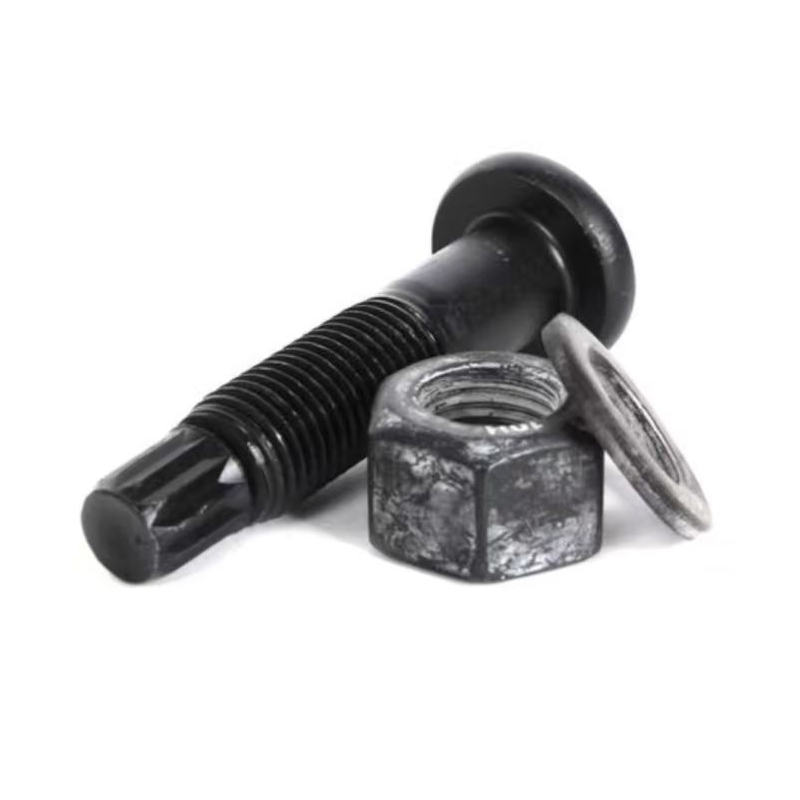
I remember a project for coastal telecom cabinets. Spec called for black zinc-plated flange bolts for corrosion resistance and a low-profile look. The first batch from a supplier looked perfect but started showing red rust in the flange serrations within 6 months. The failure? The black chromate layer was too thin, almost decorative. The sustainability angle collapsed immediately—early replacement meant double the material, shipping, and labor footprint.
The durability is the key to any real sustainability claim here. A well-processed black zinc bolt with a thick enough zinc layer and a robust sealant (often an additional topcoat) can last years in moderately corrosive environments. That longevity prevents replacements. But you’re trading the environmental cost of upfront processing for extended service life. It’s a balance, not a clear win.
Supply Chain and Practical Realities
This is where theory meets the factory floor. True sustainability has to include the carbon miles on the fastener. This is why proximity to manufacturing hubs matters. A place like Yongnian District in Handan, Hebei—it’s the epicenter of fastener production in China. If you’re sourcing from there, you’re tapping into a concentrated ecosystem. The logistics efficiency from clustered suppliers to a major port can significantly offset transportation emissions compared to sourcing from a scattered supply chain.
I’ve worked with manufacturers based there, like Handan Zitai Fastener Manufacturing Co., Ltd.. Their location, adjacent to major rail and road networks, isn’t just a line in their company profile (https://www.zitaifasteners.com). It translates to tangible logistics savings and reliability. For a high-volume order of flange bolts, that reliability means you don’t over-order ‘just in case,’ reducing waste. Their focus as a large-scale producer in that base also often means better process control on plating lines, which reduces reject rates—another form of waste reduction.
But here’s a practical hiccup: color consistency. Black zinc isn’t as uniform as hot-dip galvanizing. You can get variation from batch to batch, sometimes even within a batch. For applications where aesthetics matter, this can lead to rejections. I’ve seen entire pallets refused because the black hue didn’t match the previous shipment. That’s a sustainability failure—all those processed bolts becoming scrap or needing rework. The lesson? For true sustainability, your spec needs to allow for some natural color variation, or you must partner with a plater with impeccable process control.
Comparing the Alternatives: A Brutally Honest Look
Is black zinc the most sustainable corrosion-resistant finish? Not by a long shot. Plain mechanical galvanizing (zinc) is often more durable and has a simpler, less toxic process, but it’s silver. Stainless steel (A2, A4) is highly durable and recyclable, but its production is energy-intensive, and it can gall. Hot-dip galvanizing is tough but bulky and can mess with tolerances.
We tried switching a solar farm mounting system from black zinc to a high-grade stainless. The sustainability report looked great: highly recyclable, long-lasting. On paper. In the field, the galling issue during installation was a nightmare. We went through drills and taps, wasted man-hours, and had installation delays. The carbon cost of those delays and tool wear likely negated the benefits. We switched back to a premium black zinc with a clear topcoat. It worked, and the installed carbon cost was lower.
The sustainable choice isn’t about picking the ‘greenest’ material in a vacuum. It’s about the total system: manufacturability, installability, longevity, and end-of-life. Sometimes, the less-perfect-on-paper option like black zinc is the more sustainable one in practice because it works reliably the first time.
The End-of-Life Equation
Rarely discussed, but crucial. At end-of-life, a black zinc-plated bolt is still a steel bolt with a thin zinc coating. It can be recycled as scrap steel. The zinc layer will oxidize in the melt. It’s not like a polymer-coated bolt that can contaminate the scrap stream. This is a point in its favor. The heavy metals from the plating process are an upstream problem, handled (hopefully) by the plater’s waste treatment systems.
I visited a scrapyard that processes decommissioned electrical infrastructure. Piles of brackets and bolts, many with faded black zinc. They were simply shredded and sent to the mill. No special handling. From a circular economy view, that’s straightforward. The complexity, and the environmental burden, was already locked in during manufacturing. This pushes the sustainability question almost entirely back to the production phase.
So, can you call it sustainable? Only if the manufacturer is responsible. You need to ask about their wastewater treatment, their use of trivalent vs. hexavalent chromate, their energy source. A manufacturer in a concentrated industrial base like Yongnian is often under stricter environmental scrutiny due to scale, which can be a good thing. It’s not perfect, but it’s a factor.
Conclusion: A Conditional, Practical Sustainability
So, back to the title. Are black zinc-plated flange bolts a sustainable choice? The answer is a conditional yes, but with major caveats. Their sustainability is not inherent; it’s performance-dependent. It hinges on a quality plating process that ensures longevity, a supply chain that minimizes waste and carbon miles, and a responsible manufacturer managing its chemical processes.
They won’t win any ‘greenest tech’ awards. But in the real world of construction, manufacturing, and infrastructure, where failure is the ultimate form of waste, a reliably specified black zinc bolt often is the most pragmatic and, in a full-lifecycle sense, the most sustainable choice available for the job. It’s a tool, not a trophy. You choose it when its specific properties—corrosion resistance, clamp load, aesthetics, and cost—align to prevent a bigger environmental cost down the line. That’s the real judgment call.
Next time you’re writing a spec, look past the finish name. Dig into the plating standard, demand test reports, and consider where and how they’re made. That’s where the sustainability question gets answered, not in the product name. For volume sourcing, looking at integrated producers in major bases like the one Handan Zitai operates from can provide those logistical and consistency efficiencies that support a more sustainable outcome in the broadest sense.
Please leave us a message
-


-
-


WeChat
