
- Chinese
- French
- German
- Portuguese
- Spanish
- Russian
- Japanese
- Korean
- Arabic
- Irish
- Greek
- Turkish
- Italian
- Danish
- Romanian
- Indonesian
- Czech
- Afrikaans
- Swedish
- Polish
- Basque
- Catalan
- Esperanto
- Hindi
- Lao
- Albanian
- Amharic
- Armenian
- Azerbaijani
- Belarusian
- Bengali
- Bosnian
- Bulgarian
- Cebuano
- Chichewa
- Corsican
- Croatian
- Dutch
- Estonian
- Filipino
- Finnish
- Frisian
- Galician
- Georgian
- Gujarati
- Haitian
- Hausa
- Hawaiian
- Hebrew
- Hmong
- Hungarian
- Icelandic
- Igbo
- Javanese
- Kannada
- Kazakh
- Khmer
- Kurdish
- Kyrgyz
- Latin
- Latvian
- Lithuanian
- Luxembou..
- Macedonian
- Malagasy
- Malay
- Malayalam
- Maltese
- Maori
- Marathi
- Mongolian
- Burmese
- Nepali
- Norwegian
- Pashto
- Persian
- Punjabi
- Serbian
- Sesotho
- Sinhala
- Slovak
- Slovenian
- Somali
- Samoan
- Scots Gaelic
- Shona
- Sindhi
- Sundanese
- Swahili
- Tajik
- Tamil
- Telugu
- Thai
- Ukrainian
- Urdu
- Uzbek
- Vietnamese
- Welsh
- Xhosa
- Yiddish
- Yoruba
- Zulu
- Kinyarwanda
- Tatar
- Oriya
- Turkmen
- Uyghur

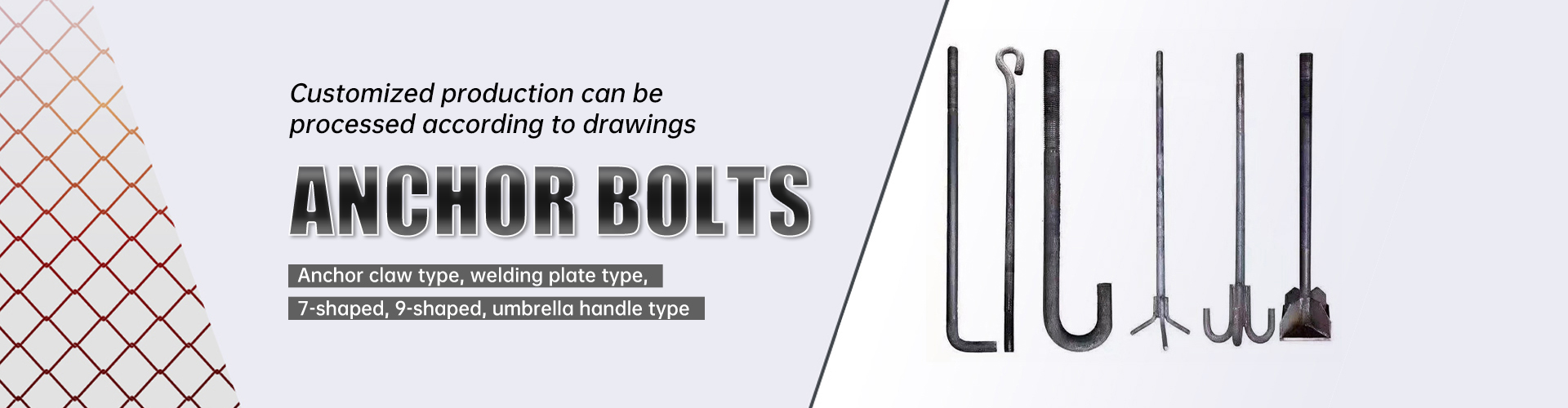
Colored zinc-plated flange bolts: sustainable innovation?
2026-03-07
You see ‘colored’ and ‘sustainable’ together on a spec sheet, and your first thought is probably marketing fluff. I thought so too. In this game, a bolt is a bolt—until it fails on site because the coating blistered, or a client complains about hex head colors fading to pink after six months in a coastal warehouse. The real question isn’t whether colored zinc plating is an innovation, but whether it’s a durable, practical one that moves the needle on waste, rework, and lifecycle. Let’s peel back the layers.
The Allure and The Immediate Skepticism
The pitch is straightforward: take a standard zinc-plated flange bolt, run it through a chromate conversion process, and get a range of colors—blue, yellow, black, rainbow. It’s for identification, corrosion resistance, sometimes even aesthetics in exposed architectural applications. The sustainability angle usually gets tacked on: longer life means fewer replacements, less material use. But here’s the rub. Standard yellow zinc dichromate has been around for ages. Calling it ‘green’ because it might last longer is a stretch if the plating process itself hasn’t evolved from its chemical-intensive roots.
I remember a batch from a supplier a few years back, beautiful uniform blue bolts for a solar panel mounting structure. The color coding was meant to simplify installation for different torque zones. Looked great in the box. But the project was in a region with high UV index. Within 18 months, the blue on the exposed flange heads had significantly faded, while the uncolored zinc bolts next to them just showed typical white corrosion. The color didn’t fail structurally, but its purpose—permanent visual identification—did. That’s not sustainability; that’s planned obsolescence of a feature.
So, the innovation part has to be more than color. It’s about the substrate prep, the plating chemistry, and the post-treatment. Some newer trivalent chromate processes, which are less toxic than hexavalent, can offer decent color stability. But the adhesion and corrosion performance, honestly, can be hit or miss. You’re trading off some of the ‘self-healing’ property of traditional zinc plating for that color layer. It’s a compromise, not a pure upgrade.
2
Where Sustainable Gets Real: Process and Logistics
For me, a more tangible sustainability story emerges in logistics and inventory. This is where a company like Handan Zitai Fastener Manufacturing Co., Ltd. comes to mind. Based in Yongnian, the heart of China’s fastener production, their scale allows for something smaller shops can’t do efficiently: dedicated, optimized plating lines. When you visit a facility like that (their site at zitaifasteners.com gives a sense of the operation), you see the potential for reducing the environmental footprint per bolt.
Think about it. If a fabrication project in Europe needs M12, M16, and M20 flange bolts in yellow for one assembly and black for another, sourcing them pre-colored from a large-scale, integrated manufacturer cuts down on multiple shipments, multiple plating batches, and the associated handling and packaging. Zitai’s location near major transport routes isn’t just a sales point; it translates to consolidated freight. One container with pre-finished, color-coded fasteners from a major production base has a lower carbon cost than sourcing plain bolts from one place and sending them out to various local platers.
The real test is in the plating tank management. Large-volume producers have a better shot at maintaining consistent chemistry, treating wastewater effectively, and recovering metals. That’s a systemic sustainability gain that has little to do with the color itself but everything to do with how the colored bolt is produced. A small, inefficient plating shop dumping hexavalent chromium waste is the antithesis of sustainable, regardless of how ‘green’ the final product color is marketed.
The Failure Modes and Field Observations
Let’s talk about where these bolts can let you down. Hydrogen embrittlement is a classic with any electroplated high-strength bolt, but the coloring process adds another layer of potential stress. If the chromate coating is too thick in pursuit of a vibrant color, it can become brittle and micro-crack. I’ve seen this under a microscope on some red bolts that failed prematurely in a vibrating machinery application. The cracks became initiation points for corrosion, defeating the entire purpose.
Another practical headache is galvanic compatibility. The colored chromate layer alters the electrical potential. In an assembly with aluminum brackets, a standard zinc bolt might be okay, but a colored one with a different formulation could accelerate galvanic corrosion of the aluminum. You need to know the exact specification of the post-plating treatment, not just assume it’s ‘zinc with dye.’ We learned this the hard way on an outdoor telecom cabinet project. The black bolts looked fine, but the aluminum chassis around them showed intense pitting within two years. The plain zinc bolts on the same panel did not cause the same issue.
Then there’s torque consistency. A colored flange bolt with a smooth, thick chromate layer on the bearing surface can have a different friction coefficient than a plain zinc one. If the installers aren’t aware and use the same torque value, you can get under-clamping or, worse, over-torquing and stripping threads. It sounds minor, but on a line with thousands of connections, it’s a quality control nightmare. The solution is often a wax or oil topcoat, which then alters the appearance and can attract dirt. It’s a cascade of small compromises.
Case in Point: The Right Application
So, is there a sweet spot? Absolutely. Where colored zinc-plated fasteners shine is in controlled, semi-exposed environments where their secondary benefit is fully utilized. Indoor structural steel with color-coded bolts for different load ratings or inspection schedules. Pre-fabricated modular building units where bolts are visible and color is part of the design spec, but they’re shielded from direct weather and UV.
I recall a successful use in a large warehouse racking system. The client used blue bolts for seismic bracing connections and yellow for standard beams. It made post-installation audits and future modifications incredibly fast. The environment was dry, indoor, with stable temperatures. Those bolts will likely outlast the racking system itself with zero maintenance. In that scenario, the color adds real, durable value and prevents errors—that’s sustainable design.
The key is managing client expectations. You don’t sell them as a direct replacement for hot-dip galvanized bolts in a wastewater treatment plant. You position them as a smart, value-adding finish for the right environment. Their sustainability claim is strongest when they prevent misassembly, reduce installation time, and are produced in an efficient, controlled supply chain that minimizes process waste. The color itself isn’t the innovation; the thoughtful application of a finished component is.
Conclusion: A Tool, Not a Revolution
Wrapping this up, colored zinc-plated flange bolts are a nuanced product. Calling them a ‘sustainable innovation’ outright is overreach. They are a sustainable option only under specific conditions: when the plating process is clean and efficient, when the color formulation is stable and durable for the intended service life, and when the color provides a tangible, lasting benefit that reduces waste or error down the line.
The industry needs to move past the shiny catalog pictures. The real work is in the data sheets—corrosion resistance hours in salt spray, UV stability ratings, friction coefficients for the specific finish. Manufacturers like Handan Zitai have the capacity to drive this by offering transparent specs and moving towards greener trivalent processes as a standard, not a premium.
In the end, it’s another tool. A useful one when applied with expertise and a clear-eyed view of its limitations. The innovation isn’t in the bolt you hold in your hand, but in the knowledge of when to use it, and when to walk away. That decision, based on experience and hard lessons, is what actually builds sustainable practice.
Please leave us a message
-

-
-
WeChat



Privacy Policy
Our Commitment to Privacy
Introduction.
Rainbow Inc. recognizes the importance of protecting the privacy of all personal information provided by its customers, including users of www.rainbow-inkjet.com and other Rainbow Inc. affiliated websites (collectively "Rainbow Inc. Sites"). We created the following policy guidelines with a fundamental respect for our customers´ right to privacy and because we value our relationships with our customers. Your visit to the Rainbow Inc. Sites is subject to this Privacy Statement and our Online Terms and Conditions.
Description.
This Privacy Statement describes the types of information we collect and how we may use that information. Our Privacy Statement also describes the measures we take to protect the security of this information as well as how you may reach us to update your contact information.
Data Collection
Personal Data Collected Directly From Visitors.
Rainbow Inc. collects personal information when: you submit questions or comments to us; you request information or materials; you request warranty or post-warranty service and support; you participate in surveys; and by other means that may be specifically provided for on the Rainbow Inc. Sites or in our correspondence with you.
Type of Personal Data.
The type of information collected directly from the user may include your name, your company's name, physical contact information, address, billing and delivery information, e-mail address, the products you use, demographic information such as your age, preferences, and interests and information relating to the sale or installation of your product.
Non-Personal Data Collected Automatically.
We may collect information about your interaction with Rainbow Inc. Sites and services. For example, we may use website analytics tools on our site to retrieve information from your browser, including the site you came from, the search engine(s) and the keywords you used to find our site, and the pages you view within our site. Additionally, we collect certain standard information that your browser sends to every website you visit, such as your IP address, browser type, capabilities and language, your operating system, access times and referring Web site addresses.
Storage and Processing.
Personal data collected on our websites may be stored and processed in the United States in which Rainbow Inc. or its affiliates, joint ventures, or third party servicers maintain facilities.
How We Use the Data
Services and transactions.
We use your personal data to deliver services or execute transactions you request, such as providing information about Rainbow Inc. products and services, processing orders, answering customer service requests, facilitating use of our Web sites, enabling online shopping, and so forth. In order to offer you a more consistent experience in interacting with Rainbow Inc., information collected by our websites may be combined with information we collect by other means.
Product Development.
We use the personal and non-personal data for product development, including for such processes as idea generation, product design and improvements, detail engineering, market research and marketing analysis.
Website Improvement.
We may use the personal and non-personal data to improve our websites (including our security measures) and related products or services, or to make our websites easier to use by eliminating the need for you to repeatedly enter the same information or by customizing our websites to your particular preference or interests.
Marketing Communications.
We may use your personal data to inform you of products or services available from Rainbow Inc. When collecting information that might be used to contact you about our products and services, we often give you the opportunity to opt-out from receiving such communications. Moreover, in our email communications with you we may include an unsubscribe link allowing you to stop delivery of that type of communication. If you elect to unsubscribe, we will remove you from the relevant list within 15 business days.
Commitment to Data Security
Security.
Rainbow Inc. Corporation uses reasonable precautions to keep the personal information disclosed to us secure. To prevent unauthorized access, maintain data accuracy, and ensure the correct use of information, we have put in place appropriate physical, electronic, and managerial procedures to safeguard and secure your personal information. For example, we store sensitive personal data on computer systems with limited access that are located in facilities to which access is limited. When you move around a site to which you have logged in, or from one site to another that uses the same login mechanism, we verify your identity by means of an encrypted cookie placed on your machine. Nonetheless, Rainbow Inc. Corporation does not guarantee the security, accuracy or completeness of any such information or procedures.
Internet.
The transmission of information via the internet is not completely secure. Although we do our best to protect your personal information, we cannot guarantee the security of your personal information transmitted to our Website. Any transmission of personal information is at your own risk. We are not responsible for circumvention of any privacy settings or security measures contained on the Rainbow Inc. Sites.
Contact Us
If you have questions regarding this privacy statement, our handling of your personal data, or your privacy rights under applicable law, please contact us by mail at the address below.
Rainbow Inc.
Attn: Katherine Tan
Add: No.1658 Husong Road, Shanghai, China.
Statement Updates
Revisions.
Rainbow Inc. reserves the right to modify this privacy statement from time to time. If we decide to change our Privacy Statement, we will post the revised Statement here.
Date.
This Privacy Statement was last amended on September 7, 2022.