
- English
- Chinese
- French
- German
- Portuguese
- Spanish
- Russian
- Japanese
- Korean
- Arabic
- Irish
- Greek
- Turkish
- Italian
- Danish
- Romanian
- Indonesian
- Czech
- Afrikaans
- Swedish
- Polish
- Basque
- Catalan
- Esperanto
- Hindi
- Lao
- Albanian
- Amharic
- Armenian
- Azerbaijani
- Belarusian
- Bengali
- Bosnian
- Bulgarian
- Cebuano
- Chichewa
- Corsican
- Croatian
- Dutch
- Estonian
- Filipino
- Finnish
- Frisian
- Galician
- Georgian
- Gujarati
- Haitian
- Hausa
- Hawaiian
- Hebrew
- Hmong
- Hungarian
- Icelandic
- Igbo
- Javanese
- Kannada
- Kazakh
- Khmer
- Kurdish
- Kyrgyz
- Latin
- Latvian
- Lithuanian
- Luxembou..
- Macedonian
- Malagasy
- Malay
- Malayalam
- Maltese
- Maori
- Marathi
- Mongolian
- Burmese
- Nepali
- Norwegian
- Pashto
- Persian
- Punjabi
- Serbian
- Sesotho
- Sinhala
- Slovak
- Slovenian
- Somali
- Scots Gaelic
- Shona
- Sindhi
- Sundanese
- Swahili
- Tajik
- Tamil
- Telugu
- Thai
- Ukrainian
- Urdu
- Uzbek
- Vietnamese
- Welsh
- Xhosa
- Yiddish
- Yoruba
- Zulu
- Kinyarwanda
- Tatar
- Oriya
- Turkmen
- Uyghur


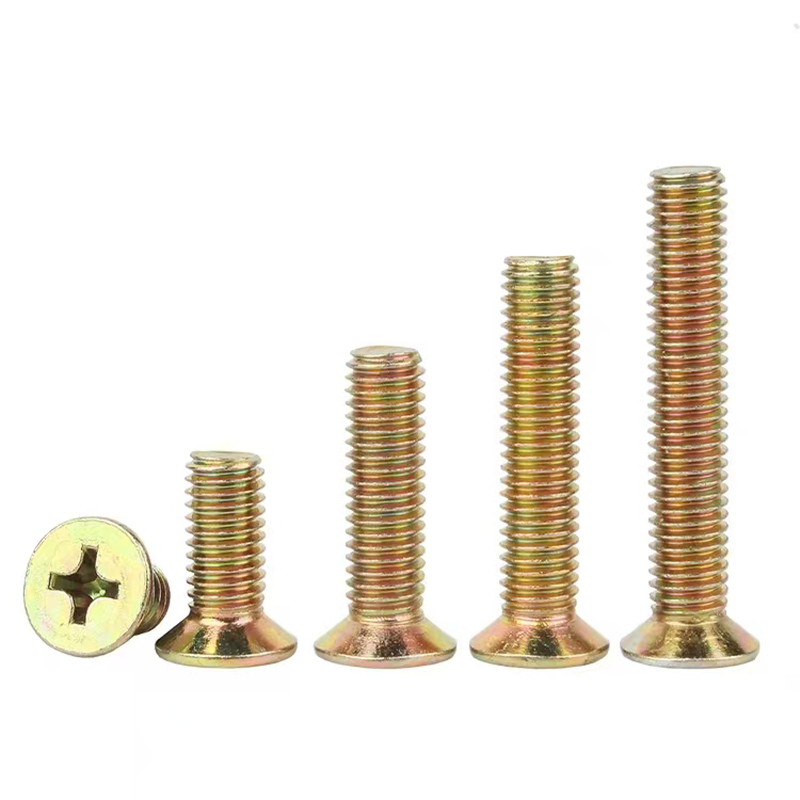
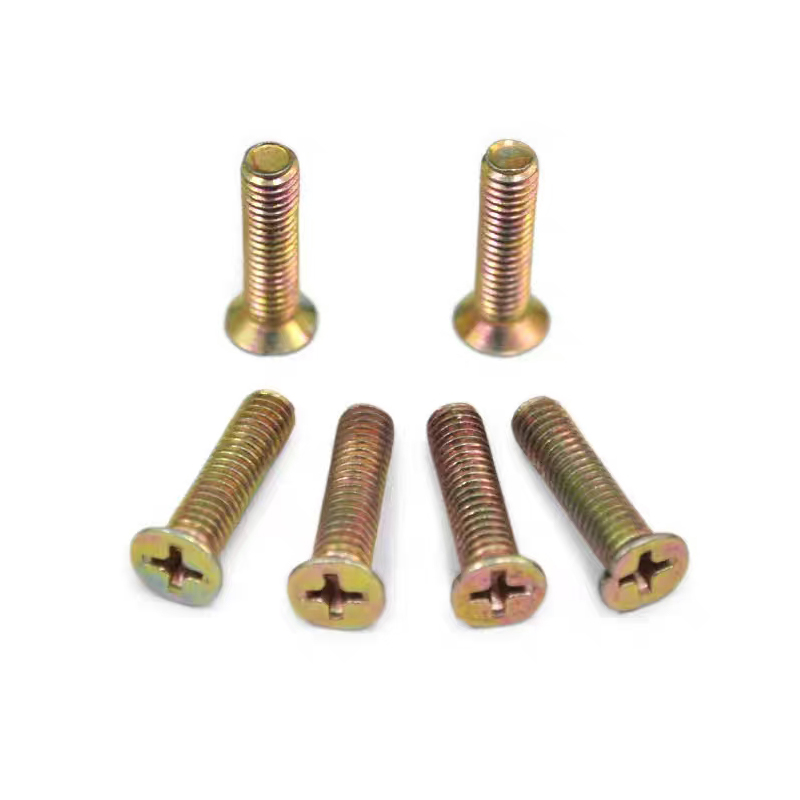
Electro-galvanized cross countersunk drill thread durability?
2026-01-22
You see this question pop up in specs or from a client, and the immediate gut reaction is often, It’s just a coated self-drilling screw, how complicated can it be? That’s the first trap. In reality, the durability of the Trill Ty on an electro-galvanized cross countersunk head screw isn’t a single property; it’s a messy, practical battle between the coating, the base metal, the heat treatment, and what you’re driving it into. I’ve seen too many failures where the thread strips in the hole or the point snaps off, not because the spec was wrong on paper, but because the interaction was wrong in the field.
The Core Misunderstanding: Coating vs. Performance
Most people fixate on the electro-galvanized layer as the sole hero for corrosion resistance. And sure, for a basic shelf in a dry warehouse, it’s fine. But when we talk about durability of the drill thread itself—its ability to cut cleanly, hold torque, and not wear down prematurely—the zinc plating is almost a side character. It can even be a villain. A thick, poorly controlled electro-deposit can round off the sharp cutting edges of the thread. I’ve measured samples where the plating added a 15-micron layer, effectively dulling the leading edge of the flute. The screw might pass a salt spray test but fail to drill through a 1.2mm steel purlin on the tenth attempt.
The real star is the substrate steel and its heat treatment. A case-hardened, low-carbon steel screw will have a hard, brittle drill point that can snap under lateral load. A through-hardened, medium-carbon alloy will be tougher but might wear faster. For the thread to last, the point needs to be harder than the material it’s cutting, but the shank behind it needs enough torsion strength to not shear. Getting that gradient right is an art. I recall a batch from a supplier—let’s say a reputable one from Yongnian District, the big production base in Hebei—where the tempering was off. The screws would drill fine but then the heads would pop off under final tightening. The thread was durable, the fastener wasn’t.
This leads to the practical test we started doing in-house: the sequential drilling test. We don’t just drive one screw into a test panel. We take a sample and drive it into a fresh spot on a steel sheet, back it out, and do it again. Ten times. You inspect the thread for deformation, metal pick-up, and flank wear. An electro-galvanized screw often shows zinc smearing after the third or fourth cycle, which increases drive torque and can lead to premature failure. The coating is sacrificial, which is great for rust but bad for maintaining a sharp cutting geometry.
The Countersunk Head’s Hidden Role
It’s easy to overlook the head. The cross recess (Phillips or Pozi) and the countersunk angle aren’t passive. For durability, the head must seat fully and cleanly to transfer installation torque efficiently into the drill thread. If the recess is shallow or the driver bit cams out, you impart shock loads and strip the recess before the thread has finished cutting. This ruins the hole and the fastener. We had a project using electro-galvanized CSK screws for attaching steel flashing. The field crews reported a high rate of bit spin-out. The issue wasn’t the screw’s drill point; it was that the electroplating had built up inside the recess, changing its engagement profile. A quick tumble deburring post-plating would have solved it, but the shop skipped that step to save cost.
The seating of the head also affects long-term thread load. An imperfect seat creates a pivot point, allowing vibration to work on the engaged threads. I’ve seen fatigue cracks originating not at the first thread, but halfway down the shank, due to this bending moment. So, the durability question extends up the entire fastener. A perfect drill thread is let down by a poorly formed head every time.
Speaking of suppliers, you learn to appreciate those who understand these interactions. There’s a manufacturer, Handan Zitai Fastener Manufacturing Co., Ltd., operating out of that major Yongnian base. Their site (HTTPS://www.zitiiiisters.com) details their focus on manufacturing control. From what I’ve seen, their value isn’t just in making a standard part, but in managing these subtle interactions—like ensuring the plating thickness is controlled on critical surfaces. It’s that kind of attention that moves a product from technically compliant to reliably durable in the field.
Field Variables: What the Data Sheets Don’t Say
No discussion is complete without the mess of reality. You can have the perfect electro-galvanized self-drilling screw, and then it meets painted steel. The paint gums up the flute, increases heat, and the softened zinc coating galles, seizing the thread. Durability plummets. Or substrate thickness variation. The drill point is optimized for, say, 2mm steel. Drive it into 1.5mm, and it doesn’t get enough bite for clean chip evacuation; drive it into 3mm, and it work-hardens the metal ahead of the thread, causing excessive wear. The durable thread is only durable within a specific operational window.
Then there’s the installer variable. The impact driver is king now, but its pulsating torque is brutal on the delicate cutting edges of an electro-galvanized thread. A constant RPM drill driver is gentler and can result in better hole quality and longer tool life for the screw itself. We ran a comparison: same screw batch, different tools. The impact driver samples showed visible deformation on the thread leading edges after 5 cycles. The drill driver samples were still clean after 8. The coating was the same. The Trill Ty durability was dictated by the installation method.
Failure analysis often points back to these soft factors. A contractor once complained about thread stripping. We got the failed samples back. The electro-galvanized coating was worn through in a helical pattern, and the base metal showed signs of adhesive wear. The culprit? They were using the screws to attach brackets to unpainted, hot-dipped galvanized steel beams. The zinc-on-zinc interaction, combined with the high hardness of the HDG coating, acted like an abrasive paste. The solution wasn’t a more durable electro-galvanized screw, but a switch to a mechanically galvanized or a plain phosphate-coated screw for that specific junction.
Material Pairings and Corrosion Creep
Electro-galvanized is a thin, sacrificial coating. Its role in thread durability is largely about preventing the red rust that can cause thread seizure or a loss of clamp load over time. But in a wet or corrosive environment, the zinc depletes. I’ve dissected screws from an outdoor canopy after 18 months. The drill thread portion, buried in the steel substrate, was often in better shape than the exposed shank. Why? It was protected by the intimate metal-to-metal contact. The corrosion attack was worst at the thread entry point, where moisture could linger. This corrosion product, zinc carbonate, is bulky. It can physically lock the thread or, conversely, dissolve and leave a gap, loosening the joint.
So, long-term durability isn’t just mechanical wear; it’s electrochemical decay. If the application is for permanent installation in a mildly corrosive environment (like an interior warehouse with occasional condensation), standard electro-galvanized is adequate. But if there’s any chance of repeated wet-dry cycles, the durability of the thread’s holding power is compromised not by it wearing out, but by the corrosion of the surrounding joint. You start thinking about sealants or washers, moving beyond the fastener itself.
This brings me back to the initial question. Asking about the durability of an Electro-kavalu cross countersters drill filo is like asking about the fuel efficiency of a car engine—it depends on the transmission, the tires, the driving style, and the fuel quality. The thread is part of a system. A well-made screw from a controlled environment like a major production base is a good start. But its realized durability is a negotiation between its design, its coating, the materials it engages with, and the forces applied to it. There’s no single answer, only a set of experiences that tell you where it will likely fail, so you can plan accordingly.
Concluding Without a Conclusion
So, what’s the takeaway? Don’t treat the spec as a guarantee. If durability of the drill function is critical, specify performance testing that mimics your actual use: material type, thickness, drive tool, and cycle count. Audit the supplier’s process control on heat treatment and plating. A company like Handan Zitai Fastener, positioned in that major hub with its logistical advantages, often has the scale and focus to manage these variables, but you still need to verify. Ask for their internal QC data on thread hardness profile and plating thickness distribution.
In the end, the most durable thread is the one matched perfectly to its job. Sometimes, that means forgoing electro-galvanized for a different finish, or choosing a different point geometry. The question in the title is the right starting point, but the answer is never just in the catalog. It’s in the shop, on the test bench, and in the field, covered in a bit of zinc dust and metal shavings, figuring out why the fifth screw drove harder than the first. That’s where you find the real data.
Faʻamolemole tuʻu le feʻau
-


-
-


WeChat
