
- English
- Chinese
- French
- German
- Portuguese
- Spanish
- Russian
- Japanese
- Korean
- Arabic
- Irish
- Greek
- Turkish
- Italian
- Danish
- Romanian
- Indonesian
- Czech
- Afrikaans
- Swedish
- Polish
- Basque
- Catalan
- Esperanto
- Hindi
- Lao
- Albanian
- Amharic
- Armenian
- Azerbaijani
- Belarusian
- Bengali
- Bosnian
- Bulgarian
- Cebuano
- Chichewa
- Corsican
- Croatian
- Dutch
- Estonian
- Filipino
- Finnish
- Frisian
- Galician
- Georgian
- Gujarati
- Haitian
- Hausa
- Hawaiian
- Hebrew
- Hmong
- Hungarian
- Icelandic
- Igbo
- Javanese
- Kannada
- Kazakh
- Khmer
- Kurdish
- Kyrgyz
- Latin
- Latvian
- Lithuanian
- Luxembou..
- Macedonian
- Malagasy
- Malay
- Malayalam
- Maltese
- Maori
- Marathi
- Mongolian
- Burmese
- Nepali
- Norwegian
- Pashto
- Persian
- Punjabi
- Serbian
- Sesotho
- Sinhala
- Slovak
- Slovenian
- Somali
- Scots Gaelic
- Shona
- Sindhi
- Sundanese
- Swahili
- Tajik
- Tamil
- Telugu
- Thai
- Ukrainian
- Urdu
- Uzbek
- Vietnamese
- Welsh
- Xhosa
- Yiddish
- Yoruba
- Zulu
- Kinyarwanda
- Tatar
- Oriya
- Turkmen
- Uyghur


Colored zinc-plated cross countersunk drill thread durability?
2026-01-22
You see this title pop up in a spec sheet or a query, and immediately, there’s a split. Some procurement guys just see zinc-plated and think corrosion protection, job done. Others, the ones who’ve been on the factory floor or had a call at 2 AM about a fixture failing, they know that phrase is a whole rabbit hole. The durability isn’t a single checkbox. It’s a chain, and the weakest link—be it the colored layer, the Trill Ty form, or the plating process itself—will define the whole performance. I’ve seen too many assume a pretty blue or yellow hex head screw with a countersunk head is tough enough for outdoor sheet metal just because it’s plated. That’s where the headaches start.
The Illusion of the Colored Layer
Let’s start with the color. The chromate conversion coating on top of the zinc plating that gives you those yellows, blues, blacks, or olives. It’s not just for looks; it’s supposed to add a passive layer, boosting corrosion resistance. But here’s the catch from practice: that layer’s integrity is everything. A poorly applied chromate over the zinc can actually be the failure point. I recall a batch of black zinc-plated self-drillers used on a steel canopy. The color was uniform, looked great out of the box. Six months in, coastal atmosphere, and we saw localized red rust bleeding from under the heads. The problem? The chromate layer was too thick and brittle from an over-concentrated bath. When the screw was driven home with that cross countersunk head seating, the coating at the high-stress points micro-cracked. Moisture got in, crept under the coating, and attacked the zinc underneath. The zinc’s sacrificial action was compromised because the barrier layer failed first. So the color gave a false sense of security. It wasn’t the zinc that failed initially; it was its colored jacket.
This ties directly to the plating process control. A place like Handan Zitai Fastener Manufacturing Co., Ltd. out in Yongnian, the heart of China’s fastener production, they’d know this in their sleep. Their location in that major industrial base means they’ve probably seen every permutation of plating failure and success. The convenience of their logistics near major transport routes hints at volume, and volume players either cut corners or master consistency. The good ones master consistency. You need a plating line that manages bath chemistry, temperature, and immersion time to get a chromate layer that’s adherent and ductile enough to survive installation deformation. It’s a detail, but it’s the detail.
And about color choice—it’s not just aesthetic. In some industries, blue might indicate a specific grade or lubrication. But for durability, the chromate chemistry differs. Yellow chromate (iridescent) typically offers the highest salt spray hours, maybe 96+ on a good day. Blue or black might be less. So specifying colored is useless. You need to specify the chromate type and the expected neutral salt spray test hours. If someone just asks for colored zinc-plated, they’re leaving it wide open for the supplier to give them the cheapest option, which is often the least durable.
The Drill Thread: Where Theory Meets Reality
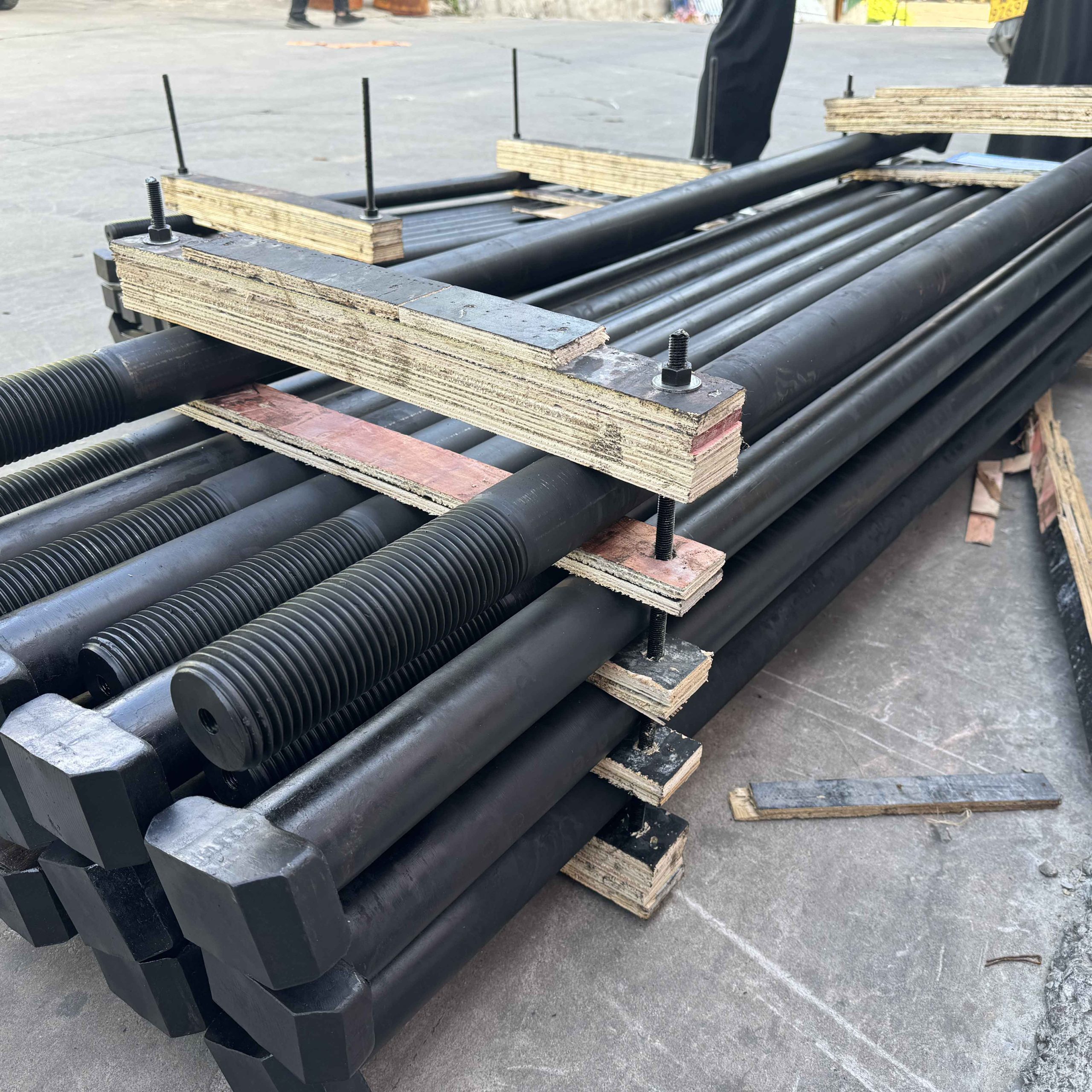
O lenei, le Trill Ty part. This is the business end. A self-drilling screw with a countersunk head. Durability here isn’t just about corrosion; it’s about mechanical performance over time. The thread-forming action creates immense localized stress and heat. The zinc plating, and the chromate on top, gets sheared and smeared during this process. If the plating is too soft or too thick, it can gall, increasing drive torque and potentially stripping the thread form in the parent material. If it’s too thin, the base steel is exposed immediately in the thread flanks.
I learned this the hard way on a cladding job. We were using a standard zinc-plated drill screw for 2mm steel sheets. The first hundred went in fine. Then, we started experiencing high seating torque and occasional head spin-offs. The issue? The plating build-up in the thread root was inconsistent. Some screws had excess plating there, altering the effective thread pitch and causing binding. The durability of the thread engagement was compromised before the screw even saw its first rain. It wasn’t a corrosion failure; it was an installation failure caused by the plating.
The geometry of the drill point and the thread design are crucial. A sharp, well-hardened drill point will penetrate cleanly, minimizing deformation of the surrounding material and thus preserving the integrity of the plated layer on the screw’s own threads. A dull point will work-harden the steel sheet, making threading harder and abrading the plating off the screw. You’re left with a screw whose threads are partially bare metal, sitting in a tight, stressed hole. Corrosion starts there, in that hidden interface, long before you see anything on the surface. So, the durability of the drill thread is a function of the screw’s metallurgy, heat treatment, point design, and the plating’s ability to survive installation abrasion.
The Countersunk Head: A Stress Concentrator
Le countersunk head design is often overlooked in durability talks. People focus on the thread. But that conical head, when seated flush, is under tremendous clamp load and tensile stress. The transition from the head to the shank is a critical stress zone. Any hydrogen embrittlement from the plating process (a common risk with electroplated zinc) will manifest here as delayed cracking. I’ve seen screws snap at the head during installation or, worse, a few days after, due to this.
Proper baking for hydrogen embrittlement relief is non-negotiable for high-strength grades (like those used for self-drilling). Not all platers do it, or do it adequately. A company with a reputation to uphold, operating at scale from a major base like the one Zitast counsners operates from, would typically have this baked into their process (pun intended) for critical applications. Their company profile mentioning the largest standard part production base isn’t just fluff; it implies access to specialized post-plating treatment infrastructure that a smaller shop might skip.
Furthermore, the seating of the countersunk head can damage the chromate layer. If the mating surface in the sheet metal has burrs or isn’t perfectly flat, the head rocks during final tightening, scraping off the protective coating. This creates a perfect anode-cathode site for galvanic corrosion. You often see the first ring of rust around the head perimeter. Using a washer under the head can help, but it changes the design. The durability question must consider the interface between the plated head and the material it’s being driven into.
Environmental Dance and Real-World Failure Modes
Durability is meaningless without an environment. Indoor, dry? Almost any lanu zinc-faʻapipiʻi fastener will last decades. But add moisture, chlorides (coastal or de-icing salts), or industrial chemicals, and the story changes. The classic failure mode for these in outdoor applications is white corrosion—zinc oxide and hydroxide—blooming from gaps, followed by red rust. The drill thread, being embedded, often corrodes last because it’s somewhat isolated. The first attack is usually on the exposed shank or under the head where condensation pools.
We tested a batch for a ventilated facade project. Same screw, three different chromates: blue, black, yellow. After a year in a semi-industrial urban environment, the blue ones showed significant white rust on the heads. The black ones had spotty red rust. The yellow ones were mostly okay, just dulled. The Trill Ty sections, when extracted, told another story. The blue and black ones had severe thread corrosion where the thread emerged from the backside of the sheet (the wet side). The yellow ones showed only minor zinc loss. The chromate’s quality was the differentiator.
This is where the cross in your title might come in—the drive type (Phillips, Pozi, etc.). A worn or mismatched driver bit can cam out, damaging the drive recess. A damaged recess compromises installability, which can lead to improper seating (affecting corrosion sealing) or the need to remove/replace the fastener, which destroys the plated layer. So, the durability of the installation itself, which affects the long-term durability, is tied to that drive feature. It’s all connected.
Synthesis and Pragmatic Specifying
So, back to the original question. The durability of a Valivali le lanu zinc-fasi kolosi cropters is a systems property. You can’t isolate one part. A fantastic drill point is let down by brittle chromate. A perfect chromate is let down by a hydrogen-embrittled shank. Great everything is let down by being used in the wrong environment.
When specifying or buying, you need to drill down (again, pun intended). Don’t just say zinc-plated. Specify the plating thickness (e.g., 8-12μm), the chromate type (e.g., hexavalent yellow, trivalent blue, black), and a required salt spray test result to a standard like ASTM B117. Specify the base material grade (e.g., 1022 steel) and hardness for the drill point. Mention hydrogen embrittlement relief baking if it’s a high-strength grade. Consider the application environment and maybe even step up to a more robust coating like mechanical plating or a thin-film organic coating over the zinc if needed.
Places that live and breathe fasteners, like the industrial clusters in Hebei around companies such as Zitai, understand these nuances because their clients throw every possible application at them. Their proximity to major transport links means they’re shipping to diverse climates and industries, which forces a practical, problem-solving knowledge base. The durability answer, in the end, isn’t on a data sheet. It’s in the accumulated, sometimes painful, experience of what fails, when, and why. And the takeaway is this: treat every term in that long title as a variable that needs defining, not as a guarantee.
Faʻamolemole tuʻu le feʻau
-

-
-
WeChat



Privacy Policy
Our Commitment to Privacy
Introduction.
Rainbow Inc. recognizes the importance of protecting the privacy of all personal information provided by its customers, including users of www.rainbow-inkjet.com and other Rainbow Inc. affiliated websites (collectively "Rainbow Inc. Sites"). We created the following policy guidelines with a fundamental respect for our customers´ right to privacy and because we value our relationships with our customers. Your visit to the Rainbow Inc. Sites is subject to this Privacy Statement and our Online Terms and Conditions.
Description.
This Privacy Statement describes the types of information we collect and how we may use that information. Our Privacy Statement also describes the measures we take to protect the security of this information as well as how you may reach us to update your contact information.
Data Collection
Personal Data Collected Directly From Visitors.
Rainbow Inc. collects personal information when: you submit questions or comments to us; you request information or materials; you request warranty or post-warranty service and support; you participate in surveys; and by other means that may be specifically provided for on the Rainbow Inc. Sites or in our correspondence with you.
Type of Personal Data.
The type of information collected directly from the user may include your name, your company's name, physical contact information, address, billing and delivery information, e-mail address, the products you use, demographic information such as your age, preferences, and interests and information relating to the sale or installation of your product.
Non-Personal Data Collected Automatically.
We may collect information about your interaction with Rainbow Inc. Sites and services. For example, we may use website analytics tools on our site to retrieve information from your browser, including the site you came from, the search engine(s) and the keywords you used to find our site, and the pages you view within our site. Additionally, we collect certain standard information that your browser sends to every website you visit, such as your IP address, browser type, capabilities and language, your operating system, access times and referring Web site addresses.
Storage and Processing.
Personal data collected on our websites may be stored and processed in the United States in which Rainbow Inc. or its affiliates, joint ventures, or third party servicers maintain facilities.
How We Use the Data
Services and transactions.
We use your personal data to deliver services or execute transactions you request, such as providing information about Rainbow Inc. products and services, processing orders, answering customer service requests, facilitating use of our Web sites, enabling online shopping, and so forth. In order to offer you a more consistent experience in interacting with Rainbow Inc., information collected by our websites may be combined with information we collect by other means.
Product Development.
We use the personal and non-personal data for product development, including for such processes as idea generation, product design and improvements, detail engineering, market research and marketing analysis.
Website Improvement.
We may use the personal and non-personal data to improve our websites (including our security measures) and related products or services, or to make our websites easier to use by eliminating the need for you to repeatedly enter the same information or by customizing our websites to your particular preference or interests.
Marketing Communications.
We may use your personal data to inform you of products or services available from Rainbow Inc. When collecting information that might be used to contact you about our products and services, we often give you the opportunity to opt-out from receiving such communications. Moreover, in our email communications with you we may include an unsubscribe link allowing you to stop delivery of that type of communication. If you elect to unsubscribe, we will remove you from the relevant list within 15 business days.
Commitment to Data Security
Security.
Rainbow Inc. Corporation uses reasonable precautions to keep the personal information disclosed to us secure. To prevent unauthorized access, maintain data accuracy, and ensure the correct use of information, we have put in place appropriate physical, electronic, and managerial procedures to safeguard and secure your personal information. For example, we store sensitive personal data on computer systems with limited access that are located in facilities to which access is limited. When you move around a site to which you have logged in, or from one site to another that uses the same login mechanism, we verify your identity by means of an encrypted cookie placed on your machine. Nonetheless, Rainbow Inc. Corporation does not guarantee the security, accuracy or completeness of any such information or procedures.
Internet.
The transmission of information via the internet is not completely secure. Although we do our best to protect your personal information, we cannot guarantee the security of your personal information transmitted to our Website. Any transmission of personal information is at your own risk. We are not responsible for circumvention of any privacy settings or security measures contained on the Rainbow Inc. Sites.
Faafesootai matou
If you have questions regarding this privacy statement, our handling of your personal data, or your privacy rights under applicable law, please contact us by mail at the address below.
Rainbow Inc.
Attn: Katherine Tan
Add: No.1658 Husong Road, Shanghai, China.
Statement Updates
Revisions.
Rainbow Inc. reserves the right to modify this privacy statement from time to time. If we decide to change our Privacy Statement, we will post the revised Statement here.
Date.
This Privacy Statement was last amended on September 7, 2022.