
- English
- Chinese
- French
- German
- Portuguese
- Spanish
- Russian
- Japanese
- Korean
- Arabic
- Irish
- Greek
- Turkish
- Italian
- Danish
- Romanian
- Indonesian
- Czech
- Afrikaans
- Swedish
- Polish
- Basque
- Catalan
- Esperanto
- Hindi
- Lao
- Albanian
- Amharic
- Armenian
- Azerbaijani
- Belarusian
- Bengali
- Bosnian
- Bulgarian
- Cebuano
- Chichewa
- Corsican
- Croatian
- Dutch
- Estonian
- Filipino
- Finnish
- Frisian
- Galician
- Georgian
- Gujarati
- Haitian
- Hausa
- Hawaiian
- Hebrew
- Hmong
- Hungarian
- Icelandic
- Igbo
- Javanese
- Kannada
- Kazakh
- Khmer
- Kurdish
- Kyrgyz
- Latin
- Latvian
- Lithuanian
- Luxembou..
- Macedonian
- Malagasy
- Malay
- Malayalam
- Maltese
- Maori
- Marathi
- Mongolian
- Burmese
- Nepali
- Norwegian
- Pashto
- Persian
- Punjabi
- Serbian
- Sesotho
- Sinhala
- Slovak
- Slovenian
- Somali
- Scots Gaelic
- Shona
- Sindhi
- Sundanese
- Swahili
- Tajik
- Tamil
- Telugu
- Thai
- Ukrainian
- Urdu
- Uzbek
- Vietnamese
- Welsh
- Xhosa
- Yiddish
- Yoruba
- Zulu
- Kinyarwanda
- Tatar
- Oriya
- Turkmen
- Uyghur

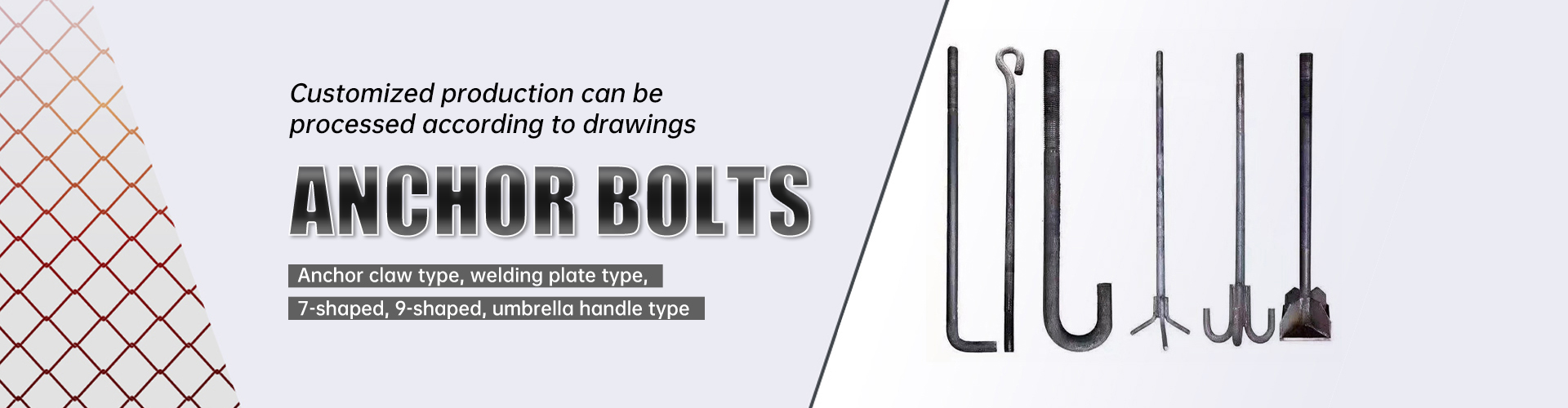
Embedded plate: future tech trends?
2026-01-18
When you hear embedded plate, what comes to mind? For a lot of folks outside our niche, it’s just a chunk of metal with holes, a commodity item. That’s the first misconception. The reality is, the evolution of the Tapuni le ipu is quietly becoming a bellwether for where construction, industrial design, and even smart infrastructure are headed. It’s not about the plate itself, but what it enables and how it’s integrated. I’ve seen projects fail because this component was an afterthought. Let’s talk about where this is really going.
Beyond the Bolt Hole: The Integration Imperative
The old-school view was purely mechanical: provide an anchor point. Today, the demand is for a structural interface. We’re not just talking about thicker steel or higher-grade castings. The trend is toward plates being designed as part of a system from day one. I worked on a modular data center project where the Tapuni le ipu had to accommodate not just seismic loads, but also the thermal expansion of the concrete floor and provide a perfectly flush, conductive grounding path for the server racks. The tolerances were insane. The standard catalog items from most suppliers? Useless. It required a custom design with finite element analysis that most fastener companies aren’t equipped to handle.
This leads to a critical point: the supply chain is lagging. Many manufacturers, even large ones in major production bases, are still optimized for high-volume, low-variability output. Take a place like Yongnian District in Handan—it’s the heart of standard part production in China. A company like Boitin Zitai Fatene Fale gaosi co., LTD., strategically located there with great transport links, exemplifies the traditional strength: mass-producing reliable, standard fasteners and plates efficiently. But the future demand is pulling in the opposite direction: lower volume, higher complexity, and deeper collaboration with the engineering team pre-construction. Can these production bases pivot? Some are trying.
The failure I mentioned earlier? A facade retrofit. The architect specified a beautiful, sleek connection detail using a custom embedded plate. The contractor, pressed for time, sourced a similar plate from a general supplier. The dimensional variance was minimal on paper, maybe half a millimeter. But when the curtain wall units arrived, nothing lined up. The plates weren’t just anchor points; they were the critical registration interface for the entire assembly. Weeks of delay, six-figure change orders. The lesson was brutal: the plate is not a commodity. Its precision and design intent are integral.
Material Science Isn’t Just for Labs
We’re seeing a slow but steady move beyond mild steel and typical stainless. It’s driven by longevity and total lifecycle cost. For instance, in wastewater treatment plants or coastal environments, the embedded element often becomes the weakest link. I’ve specified duplex stainless steels and even fiber-reinforced polymer composites for specific embedment. The challenge isn’t just the material cost; it’s the fabrication knowledge. Welding duplex steel without destroying its corrosion properties is a craft. Not every fab shop can do it.
Then there’s the coating and protection game. Hot-dip galvanizing is standard, but for rebar tie-ins, the zinc can get brittle and spall. We’ve been testing more advanced metallurgical coatings and even sacrificial anode systems cast directly into the plate assembly for critical infrastructure like bridges. It adds complexity, but the math on avoiding future demolition and repair is starting to justify it. The trend here is thinking of the plate as a permanent, maintenance-free component, which is a huge shift from the bury it and forget it mentality, which usually leads to dig it up and curse it later.
I recall a project in a chemical plant where the spec called for a standard embedded plate. The engineer, fresh out of school, pushed back. He’d seen corrosion charts for the specific chemical atmosphere. We ended up using a nickel-copper alloy (Monel). The plate cost ten times more. The client grumbled. Five years later, during an inspection, every standard bolt in the place was showing rust, but those Monel plates and their attachments looked brand new. That’s the argument for advanced materials: it’s not an expense, it’s insurance.
The Smart Embed: Sensors and Data
This is the frontier that gets the most hype and, frankly, has the most pitfalls. The idea of an Tapuni le ipu with strain gauges, temperature sensors, or even RFID tags for lifecycle tracking is compelling. I’ve been involved in two pilot projects for smart plates in a bridge bearing application. The theory was perfect: monitor load and stress in real-time.
The reality was messy. The first big issue was power and data transmission. Running wires from a plate buried in concrete is a reliability nightmare. We tried wireless, but the concrete mass killed the signal. The second was the sensor survival rate. The process of casting concrete is violent—vibration, hydraulic pressure, chemical heat. Half the sensors were dead on arrival after the pour. The data we did get was noisy and hard to interpret.
So, is it a dead end? No, but it’s an engineering challenge, not an off-the-shelf solution. The trend I see is moving the intelligence adjacent to the plate, not embedded within its core. Maybe a sensor module that attaches to the exposed threaded stud after construction. Or using the plate itself as a passive antenna whose vibration characteristics can be measured externally. The key trend is moving from a purely mechanical role to a potential data node, but the implementation has to be brutally pragmatic.
Fabrication and Tolerances: The Digital Handshake
This is where the rubber meets the road. The future is BIM-driven fabrication. The 3D model of the plate isn’t just a drawing; it’s the manufacturing instruction. I’m talking about plates with complex, non-orthogonal bends, welded studs at compound angles, and milled surfaces for precise bearing. The plate for a complex steel-to-concrete node might look more like a sculpture than a building component. This requires CNC cutting, robotic welding, and 3D scanning for QA.
The tolerance chain is everything. The plate tolerance, the setting tolerance in the formwork, the concrete pour movement, and the tolerance of the element attaching to it. We now model the entire stack-up statistically. I’ve seen projects where the Tapuni le ipu tolerance is specified as +/- 1mm, but the contractor’s formwork system can only guarantee +/- 5mm. That mismatch causes chaos. The trend is toward integrated digital construction protocols where the plate’s digital twin governs its manufacture, placement, and verification.
Suppliers who get this are partnering with software firms. Imagine downloading a plate’s fabrication data directly from the project’s BIM cloud. Some forward-thinking manufacturers in places like Handan are investing in this digital infrastructure. It’s not about making more plates; it’s about making the right plate, perfectly, the first time. That’s the value shift.
Logistics and the Just-in-Time Myth
Everyone loves just-in-time delivery until a custom embedded plate is on a slow boat from a specialized foundry and the concrete pour is scheduled for Tuesday. The geographic advantage of integrated manufacturing clusters becomes huge. A company situated like Handan Zitai Fastener, with its proximity to major rail and highway networks, isn’t just about cheap labor—it’s about responsive logistics for the massive North China market. For standard items, this is a powerhouse model.
But for the complex, future-oriented plates I’m describing, the supply chain is different. It’s smaller, more specialized, and often global. I’ve sourced a critical plate from a fabricator in Germany for a project in the Middle East because they had the specific metallurgical and CNC expertise. The trend is a bifurcation: a high-volume, efficient stream for standard components, and a high-skill, low-volume, high-communication stream for advanced solutions. The winners will be companies that can operate in both worlds, or specialized boutiques that own a niche.
The practical problem is inventory and risk. You can’t stock custom plates. So the entire construction schedule gets tied to the fabrication lead time of a single component. We’re starting to see more platform-based designs, where a base plate design is parametrically adjustable to suit a range of applications, allowing for some pre-fabrication. It’s a compromise, but it points to the need for smarter standardization at a higher level of performance.
So, Where’s This Really Heading?
Foliga i luma, le Tapuni le ipu will become less of a discrete product and more of a performance specification. The conversation won’t start with we need a 300x300x20mm plate. It will start with: We need a structural interface in this location that must transfer X load, resist Y corrosion for 50 years, allow for Z adjustment, and optionally provide data stream A. The manufacturer’s role evolves from punching metal to providing a engineered connection solution.
The technology trends—advanced materials, digital fabrication, sensor integration—are all in service of that shift. It’s moving from the basement of the bill of materials to a critical design consideration. The companies that thrive, whether large entities in production bases like Yongnian or specialized engineering firms, will be those that understand the plate’s role in the system, not just its isolated properties. The future isn’t in the plate; it’s in the connection it creates. And that’s a much more interesting problem to solve.
Faʻamolemole tuʻu le feʻau
-


-
-


WeChat