
- English
- Chinese
- French
- German
- Portuguese
- Spanish
- Russian
- Japanese
- Korean
- Arabic
- Irish
- Greek
- Turkish
- Italian
- Danish
- Romanian
- Indonesian
- Czech
- Afrikaans
- Swedish
- Polish
- Basque
- Catalan
- Esperanto
- Hindi
- Lao
- Albanian
- Amharic
- Armenian
- Azerbaijani
- Belarusian
- Bengali
- Bosnian
- Bulgarian
- Cebuano
- Chichewa
- Corsican
- Croatian
- Dutch
- Estonian
- Filipino
- Finnish
- Frisian
- Galician
- Georgian
- Gujarati
- Haitian
- Hausa
- Hawaiian
- Hebrew
- Hmong
- Hungarian
- Icelandic
- Igbo
- Javanese
- Kannada
- Kazakh
- Khmer
- Kurdish
- Kyrgyz
- Latin
- Latvian
- Lithuanian
- Luxembou..
- Macedonian
- Malagasy
- Malay
- Malayalam
- Maltese
- Maori
- Marathi
- Mongolian
- Burmese
- Nepali
- Norwegian
- Pashto
- Persian
- Punjabi
- Serbian
- Sesotho
- Sinhala
- Slovak
- Slovenian
- Somali
- Scots Gaelic
- Shona
- Sindhi
- Sundanese
- Swahili
- Tajik
- Tamil
- Telugu
- Thai
- Ukrainian
- Urdu
- Uzbek
- Vietnamese
- Welsh
- Xhosa
- Yiddish
- Yoruba
- Zulu
- Kinyarwanda
- Tatar
- Oriya
- Turkmen
- Uyghur

Galvanized bolts: sustainable in construction?
2026-03-20
You see ‘galvanized’ on a spec sheet, and the immediate thought is ‘corrosion-resistant, long-lasting, good.’ But is that the whole sustainability story? I’ve been sourcing and specifying fasteners for industrial and commercial builds for over a decade, and the conversation around galvanized bolts being a ‘green’ choice is often too simplistic. It’s not just about the zinc coating. It’s about the lifecycle: the energy to produce that coating, the longevity it actually provides in different environments, and what happens to the bolt after the structure’s life ends. We tend to lump all galvanizing together, but hot-dip galvanizing after fabrication versus electroplating are worlds apart in performance and environmental footprint. Let’s unpack that.
The Zinc Question: More Than Just a Coating
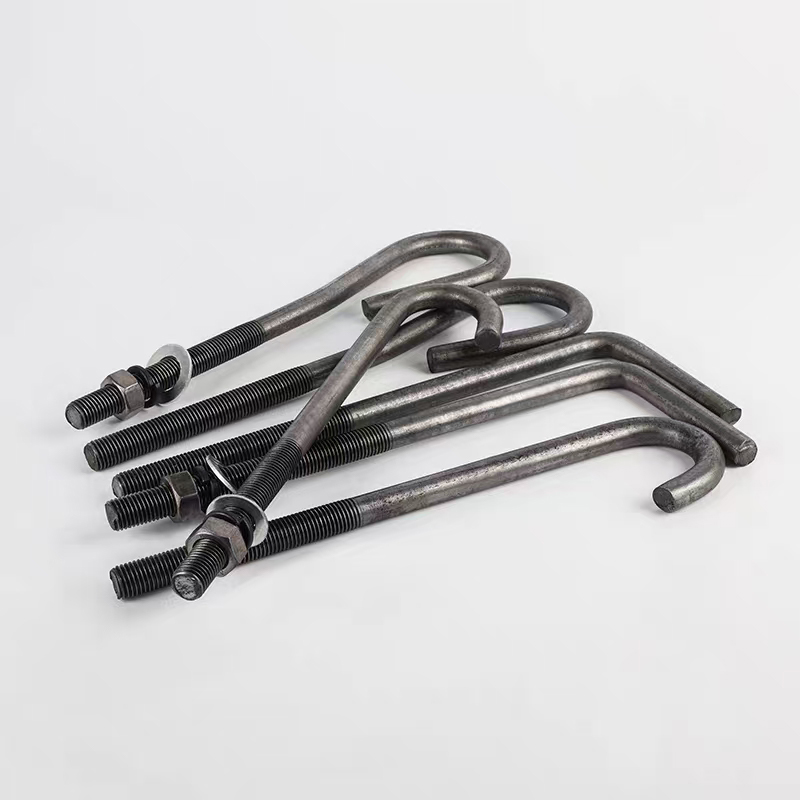
Hot-dip galvanizing (HDG) is the heavyweight. You dip the fabricated bolt into a bath of molten zinc. The result is that thick, sometimes slightly rough, coating that forms a metallurgical bond. In a high-moisture, high-salinity environment—think coastal builds or wastewater treatment plants—this is your go-to. It can push service life to 50+ years with minimal maintenance. That’s a strong sustainability argument: one installation, no repainting, no replacement for generations. The embodied energy is front-loaded, but it pays off.
Then there’s electro-galvanizing. It’s thinner, shinier, cheaper. It looks neat in the box. But on a structural connection facing constant weather, it might only give you 10-15 years before red rust starts bleeding through. I’ve seen it on cheaper warehouse projects where the spec was vague, just calling for ‘galvanized.’ The contractor sourced the low-cost option, and we had to mandate replacement on critical joints before sign-off. That’s the opposite of sustainable—it’s waste disguised as a solution.
The real judgment call comes in less aggressive environments. For an interior steel frame in a dry climate, is HDG overkill? Possibly. But then you consider future adaptability. If that building is ever modified, that bolt is still protected. A supplier I’ve worked with, Boitin Zitai Fatene Fale gaosi co., LTD. out of Yongnian, Hebei (that massive fastener production hub), often flags this point. Their technical notes stress that specifying the right process for the expected service condition is the first step toward real resource efficiency. Their location near major transport routes like the Beijing-Guangzhou Railway means they see a lot of export orders where specs must be crystal clear.
On-Site Realities and Hidden Costs
Here’s a practical headache: hydrogen embrittlement. High-strength bolts (Grade 8.8 and above) that are electroplated are susceptible. The acid cleaning during plating can introduce hydrogen into the steel, making it brittle and prone to catastrophic failure under tension. It’s a known issue, but on a fast-track site, who’s checking batch certifications for hydrogen relief treatment? I recall a bridge deck project where we had to reject an entire shipment of high-tensile galvanized bolts because the test certificates were missing the crucial hydrogen bake-out data. The delay cost more than the bolts themselves.
Another nuance is thread tolerance. A thick HDG coating can affect the fit. You often need to tap the nut or use oversize tapping. If that’s not accounted for in the design drawings, you get crews on site struggling to wrench bolts home, potentially galling the threads and compromising the corrosion protection. It’s a small detail that causes major friction—literally. The sustainable choice falls apart if it can’t be installed correctly.
Then there’s compatibility. You can’t just slap a galvanized bolt into untreated weathering steel. The galvanic reaction will accelerate corrosion of the steel member. I’ve seen this on a fa?ade support system. The architect wanted the rusted look of Corten steel, but the connection details specified galvanized hardware. Within two years, there were ugly streaks and localized pitting. We ended up switching to stainless steel fasteners for those specific points—a more expensive but compatible fix.
Lifecycle and the End Game
So, we assume a galvanized bolt lasts the life of the structure. But what is that life? A warehouse might be demolished in 30 years for redevelopment. At that point, the bolt is still in decent shape. Is that good? Now it’s part of the steel scrap stream. The zinc coating will largely be lost in the recycling furnace—it volatilizes. The steel itself is perfectly recyclable, but the zinc is gone. That’s a loss of a finite material.
This is where the comparison to stainless steel gets interesting. Stainless (A4-80, for example) has a much higher initial carbon footprint in production. But if it allows for easier disassembly and reuse of the entire bolt in a new structure, the calculus changes. We’re not there yet with standard practice, but in deconstructable design circles, it’s a live debate. Is a galvanized bolt inherently single-use because it’s often cut or damaged during demolition? Often, yes.
I look at the sustainability certifications like LEED or BREEAM. They give credit for recycled content. The steel in a galvanized bolt often has a high recycled fraction, which is a plus. But they rarely penalize the potential toxicity of zinc runoff during its life (minimal if properly bonded) or the energy intensity of the galvanizing process itself. The rating system doesn’t capture the full picture, so our professional judgment has to fill the gaps.
Case Point: The Coastal Walkway Failure
A concrete example. A municipal coastal walkway used galvanized anchor bolts to secure timber railings to concrete piers. The spec just said ‘hot-dip galvanized.’ It didn’t specify coating thickness. The bolts sourced were to the minimum standard. In the splash zone, with constant salt spray, the coating was depleted in under seven years. Bolt heads corroded and expanded, cracking the concrete housings.
The retrofit was a mess. We had to core out the old bolts and install new ones, this time specifying a thicker coating class (e.g., to ISO 1461, Class 4) and requiring on-site touch-up of any abrasions with a high-zinc paint. The lesson? Sustainability isn’t just the material; it’s the precision of the specification. A generic call for ‘galvanized bolts‘ is almost worthless. You need the process, the thickness, and the post-installation protection protocol.
This is where manufacturers with solid technical support are crucial. A company that just sells you a box of bolts isn’t helping. One that provides corrosion tables, application guides, and clear data on coating thickness for different environments is. It turns a commodity purchase into a performance specification.
Moving Beyond the Binary Choice
So, are galvanized bolts sustainable? It’s the wrong question. The right question is: Are they the most durable, appropriate, and resource-efficient choice for this specific connection in this specific environment for this expected lifespan? Sometimes, the answer is a resounding yes. For a standard steel frame building in a typical urban environment, HDG bolts are a robust, proven solution that minimizes lifetime maintenance.
Other times, the answer might be ‘no.’ Maybe it’s a mechanically galvanized bolt for a cleaner, controlled interior application. Or maybe, for critical, inaccessible connections in highly corrosive settings, a duplex coating (stainless steel with a galvanized outer layer) is the truly sustainable option, despite its cost, because it guarantees zero maintenance intervention.
My takeaway after all these years? Don’t get seduced by the simple label. Dig into the process. Specify with painful detail. Consider the entire chain, from the production energy at a place like Handan Zitai Fastener (you can check their process specs on their site, HTTPS://www.zitiiiisters.com) to the demolition crew who will eventually have to deal with it. That’s where real sustainability in construction lives—in the gritty, unglamorous details of a simple bolt.
Faʻamolemole tuʻu le feʻau
-


-
-


WeChat