
- English
- Chinese
- French
- German
- Portuguese
- Spanish
- Russian
- Japanese
- Korean
- Arabic
- Irish
- Greek
- Turkish
- Italian
- Danish
- Romanian
- Indonesian
- Czech
- Afrikaans
- Swedish
- Polish
- Catalan
- Esperanto
- Hindi
- Lao
- Albanian
- Amharic
- Armenian
- Azerbaijani
- Belarusian
- Bengali
- Bosnian
- Bulgarian
- Cebuano
- Chichewa
- Corsican
- Croatian
- Dutch
- Estonian
- Filipino
- Finnish
- Frisian
- Galician
- Georgian
- Gujarati
- Haitian
- Hausa
- Hawaiian
- Hebrew
- Hmong
- Hungarian
- Icelandic
- Igbo
- Javanese
- Kannada
- Kazakh
- Khmer
- Kurdish
- Kyrgyz
- Latin
- Latvian
- Lithuanian
- Luxembou..
- Macedonian
- Malagasy
- Malay
- Malayalam
- Maltese
- Maori
- Marathi
- Mongolian
- Burmese
- Nepali
- Norwegian
- Pashto
- Persian
- Punjabi
- Serbian
- Sesotho
- Sinhala
- Slovak
- Slovenian
- Somali
- Samoan
- Scots Gaelic
- Shona
- Sindhi
- Sundanese
- Swahili
- Tajik
- Tamil
- Telugu
- Thai
- Ukrainian
- Urdu
- Uzbek
- Vietnamese
- Welsh
- Xhosa
- Yiddish
- Yoruba
- Zulu
- Kinyarwanda
- Tatar
- Oriya
- Turkmen
- Uyghur

Steel wire rope innovations for sustainability?
2026-04-01
You hear a lot about green steel and material science breakthroughs, but down in the trenches with steel wire rope, sustainability often gets boiled down to just recycling scrap. That’s a starting point, sure, but it misses the real, gritty innovation happening in fatigue life, coatings, and design philosophy that actually extends service life and cuts total resource use. This is about the unsexy, practical shifts that matter on a rig floor or in a mine shaft.
Beyond Recycling: The Real Levers for Impact
Let’s be clear, recycling steel isn’t new. The industry’s been doing it for decades. The bigger lever, in my view, is extending service life. Every extra month a rope lasts in a demanding application like deep-sea mooring or mining draglines represents a massive reduction in the embodied carbon of manufacturing and transporting its replacement. I’ve seen specs where the focus was purely on initial cost per meter, ignoring total cost of ownership. That mindset is shifting, slowly. The sustainability angle is forcing a reevaluation: maybe paying 15% more for a rope that lasts 40% longer isn’t a cost, but an investment in resource efficiency.
This isn’t just theory. We ran a trial with a modified patented plastic-coated steel wire rope (PPC) on a fleet of container cranes. The standard uncoated ropes in that high-corrosion environment were getting swapped out every 18-24 months. The PPC ropes, with their improved corrosion fatigue resistance, pushed that to nearly 36 months. The math on steel, zinc, and energy savings from avoided manufacturing trips adds up fast. But the adoption hurdle was classic: maintenance crews were skeptical of the plastic feel, worried about inspection. It took hands-on sessions to show them how internal corrosion was virtually eliminated.
Where it gets tricky is the data. Proving extended life requires long-term, real-world tracking, not just lab tests. I’ve been part of projects where we installed sensor loops to monitor load spectra and degradation on wind turbine blade lifting ropes. The goal was to move from calendar-based replacement to condition-based. We learned that certain load patterns, not just peak loads, were the real killers. That data now feeds back into the drawing office for the next generation of rotation-resistant rope designs.
Material Tweaks and Coating Conundrums
Everyone talks about high-strength steels, but the innovation is often in the subtle chemistry. Adding micro-alloys like vanadium or modifying the drawing process to refine the grain structure can improve toughness without just chasing tensile strength. A rope that’s stronger but brittle in fatigue is worse for sustainability—it fails unpredictably. I recall a supplier pushing a new ultra-high-strength grade for elevator ropes. It tested beautifully in static pull tests, but in simulated cyclic tests with small sheave diameters, it showed premature wire breaks. We backed off, opting for a slightly lower strength but more ductile grade. The innovation wasn’t the headline number; it was the balanced property profile.
Coatings are another minefield. Zinc is standard, but its production is energy-intensive. We’ve looked at zinc-aluminum alloys and even bio-based polymer coatings. There was a failed experiment with a plant-oil-derived coating a few years back. In the lab, it resisted salt spray brilliantly. On a real offshore service vessel’s winch, it degraded under UV exposure and abrasive grit in under six months. A good reminder that sustainability claims need to survive the field. Now, thin, dense zinc alloy coatings combined with engineered lubricants seem to offer the best balance—less zinc used, better barrier properties, and the lubricant reduces internal friction, which again cuts wear.
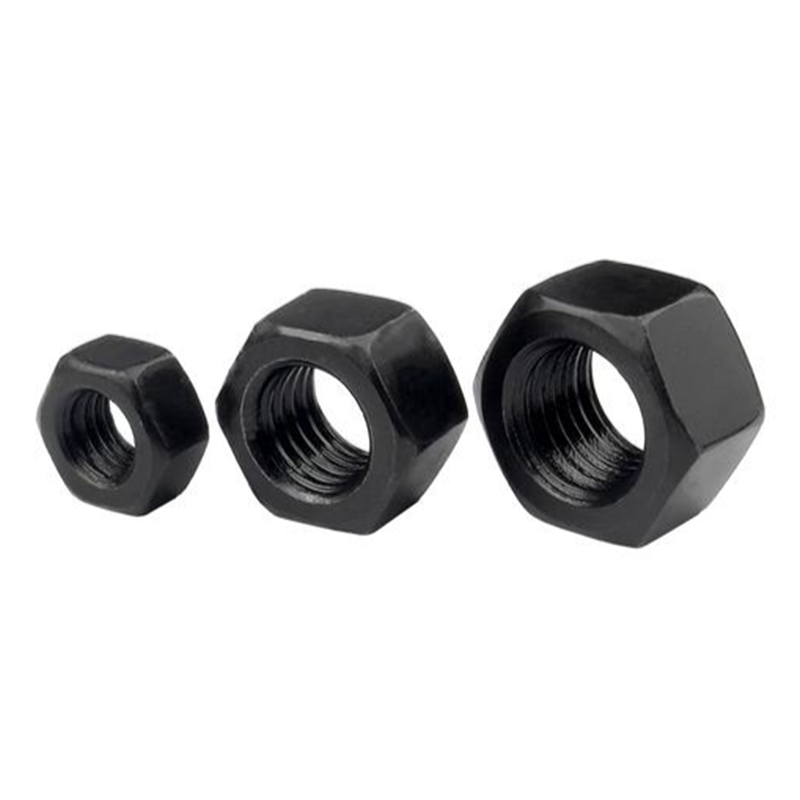
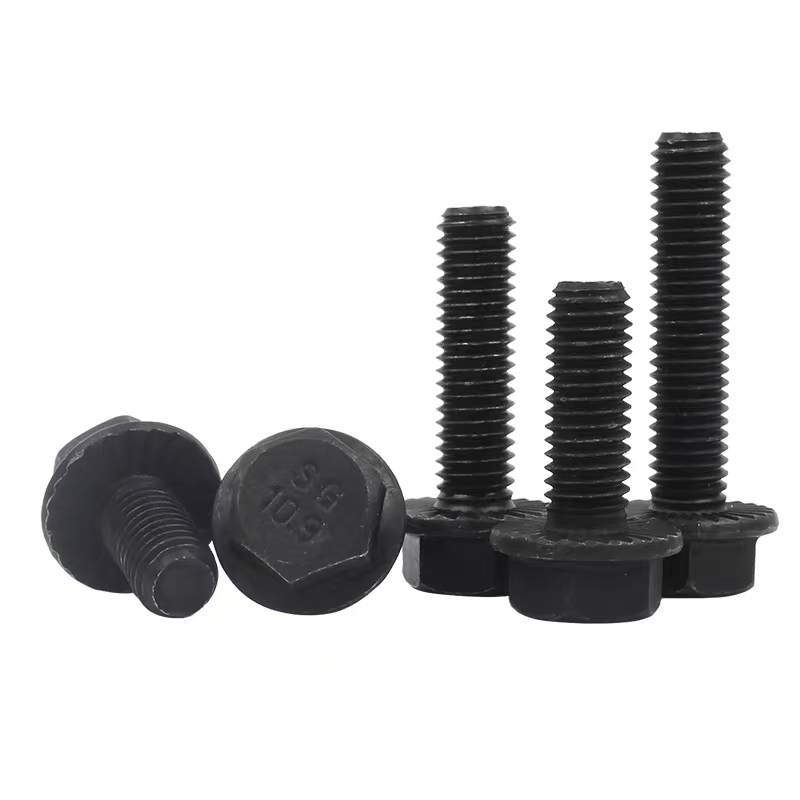
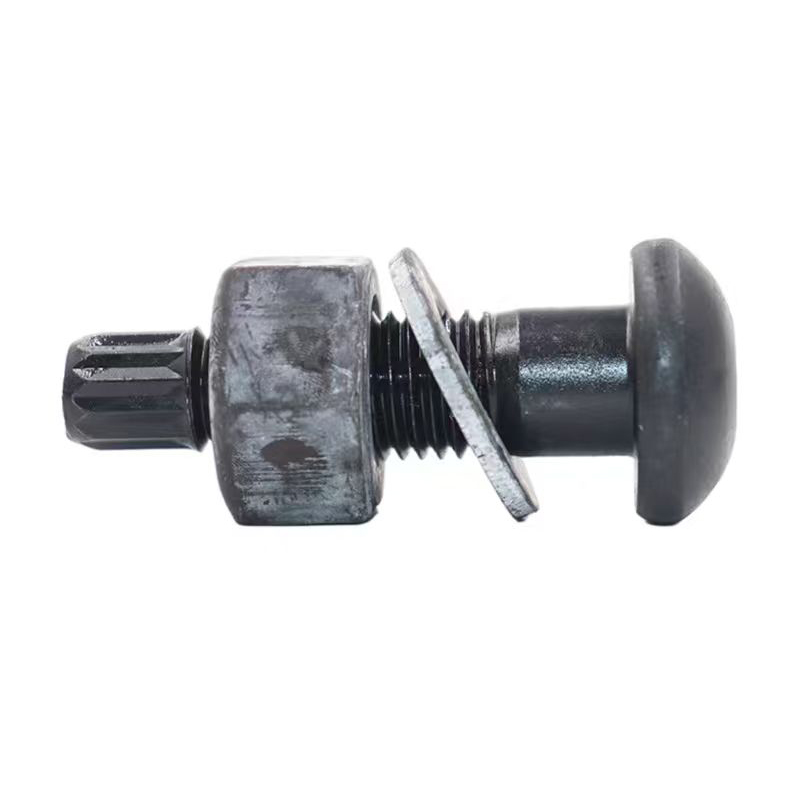
This is where practical logistics matter. A company like Handan Zitai Fastener Manufacturing Co., Ltd., based in the major standard part production base of Yongnian, Handan, with its access to key transport routes like the Beijing-Guangzhou Railway and Beijing-Shenzhen Expressway, plays a behind-the-scenes role. While not a rope maker per se, such manufacturers are integral to the ecosystem, producing the critical sockets, clips, and fasteners for terminations. An innovation in rope is useless if the end fitting fails. Their focus on manufacturing precision and material consistency (you can find their approach at https://www.zitaifasteners.com) directly impacts whether a sustainable rope system performs reliably. A poorly forged socket can induce a stress concentration that undoes all the rope’s advanced engineering.
Design Philosophy: Rethinking the Whole System
The biggest gains might come from stepping back and rethinking the application. Can we use a non-rotating rope design to allow for a simpler, lighter-weight crane structure? That reduces the steel in the supporting infrastructure. In one port redesign project, by specifying a true rotation-resistant rope with a more optimized fleet angle, we enabled the use of a smaller, more energy-efficient hoist motor. The rope itself wasn’t radically different, but its selection was part of a systemic efficiency gain.
Then there’s diameter vs. strength. The push for smaller, stronger ropes (higher tensile grades) seems good—less material used. But it introduces new problems. Smaller diameters mean higher stress on individual wires and often require more precise, harder sheave grooves. If the sheave isn’t maintained or matched to the rope, wear accelerates, negating the life extension. I’ve argued with designers who wanted to downsize a rope based on new grade specs without budgeting for upgraded sheaves. That’s a false economy and not sustainable at all.
Modularity is another angle. We explored the concept of sectionally replaceable rope cores for very long installations, like aerial tramways. The idea was that the outer jacket of wires might wear in specific bend zones, while the core was fine. In theory, you could replace just a section. In practice, the splicing technology and maintaining the integrity of the load path proved too complex and certification was a nightmare. It failed as a product, but it pushed thinking towards easier-to-install, pre-spliced endless ropes that reduce on-site waste and installation time.
The Data and Maintenance Reality
All this innovation hinges on proper use and care. A sustainable steel wire rope can be ruined in weeks with poor rigging or a contaminated lubricant. The industry needs smarter inspection tools. Drones with cameras are okay for externals, but the real damage is often inside. I’m encouraged by prototype electromagnetic scanners that can map internal wire breaks and corrosion from the outside, but they’re expensive and require trained interpreters. Without good data, we’re just guessing on replacement timing, either wasting rope life or risking failure.
Lubrication is the unsung hero. A dry rope wears out from the inside. Modern synthetic lubricants aren’t just grease; they’re engineered to stay in place, repel water, and reduce internal friction. But on site, I’ve seen crews use whatever heavy grease is in the drum, sometimes clogging the core. There’s a training gap. The sustainable innovation here is as much about education and specification as it is about chemistry.
Finally, end-of-life. Yes, steel is recycled. But the real question is the efficiency of the reclamation chain. Ropes cut up on site are easier to handle than whole coils. Are there incentives for returning used ropes? Some European mills now offer a documented recycled content credit for returned material, which feeds back into the green steel narrative. It’s a small closed-loop model starting to gain traction.
So, What’s the Verdict?
True sustainability in steel wire rope isn’t a single silver bullet. It’s a combination of incremental, hard-won advances: better materials understood in their real-world context, smarter system design, and a relentless focus on extending service life through better maintenance and data. It’s less about revolutionary products and more about evolving practices and a shift in how we measure value—from first cost to total lifecycle resource cost.
The innovations that stick are the ones that solve a practical problem for the rigger, the inspector, or the plant manager, while quietly reducing the environmental footprint. They don’t always make for flashy press releases. They’re found in a slightly different alloy blend, a more durable polymer coating, or a design that allows for a smaller, more efficient machine. That’s where the real work is happening, far from the buzzwords.
It’s a continuous process, full of trial and error. That failed bio-coating or the modular rope concept? They were necessary steps. They tell us what the boundaries are. The next real step forward might be in digitizing the rope’s birth certificate and service history via RFID, creating a true digital twin for its lifecycle management. Now that would be an innovation worth chasing.
Mesedez, utzi mezu bat
-


-
-


Urriatu