
- Chinese
- French
- German
- Portuguese
- Spanish
- Russian
- Japanese
- Korean
- Arabic
- Irish
- Greek
- Turkish
- Italian
- Danish
- Romanian
- Indonesian
- Czech
- Afrikaans
- Swedish
- Polish
- Basque
- Catalan
- Esperanto
- Hindi
- Lao
- Albanian
- Amharic
- Armenian
- Azerbaijani
- Belarusian
- Bengali
- Bosnian
- Bulgarian
- Cebuano
- Chichewa
- Corsican
- Croatian
- Dutch
- Estonian
- Filipino
- Finnish
- Frisian
- Galician
- Georgian
- Gujarati
- Haitian
- Hausa
- Hawaiian
- Hebrew
- Hmong
- Hungarian
- Icelandic
- Igbo
- Javanese
- Kannada
- Kazakh
- Khmer
- Kurdish
- Kyrgyz
- Latin
- Latvian
- Lithuanian
- Luxembou..
- Macedonian
- Malagasy
- Malay
- Malayalam
- Maltese
- Maori
- Marathi
- Mongolian
- Burmese
- Nepali
- Norwegian
- Pashto
- Persian
- Punjabi
- Serbian
- Sesotho
- Sinhala
- Slovak
- Slovenian
- Somali
- Samoan
- Scots Gaelic
- Shona
- Sindhi
- Sundanese
- Swahili
- Tajik
- Tamil
- Telugu
- Thai
- Ukrainian
- Urdu
- Uzbek
- Vietnamese
- Welsh
- Xhosa
- Yiddish
- Yoruba
- Zulu
- Kinyarwanda
- Tatar
- Oriya
- Turkmen
- Uyghur


Photovoltaic Series: Future Market Trends?
2026-01-27
Let’s cut through the noise. Everyone’s talking about terawatt-scale expansion and AI-driven O&M, but the real story is in the trenches—supply chain resilience, the brutal economics of module oversupply, and whether that new heterojunction line is actually bankable. This isn’t about glossy forecasts; it’s about what sticks, what breaks, and where the money quietly moves next.
The Cheapest Watt Myth and Material Realities
For years, the race was singular: drive down $/W. That led us to PERC dominance and wafer sizes jumping from M6 to G12 in what felt like a blink. But the fallacy here is assuming cost reduction is linear and infinite. We hit a wall with silver paste consumption. Even with advanced front-side printing, a typical PERC cell still uses about 85mg of silver per cell. With global PV installations projected to hit 500GW annually by mid-decade, the silver demand just from PV would be staggering. That’s not sustainable. It forces a pivot not just in cell architecture—like TOPCon’s slightly lower paste use—but in fundamental material science. Copper electroplating is the whispered solution, but I’ve seen pilot lines struggle with adhesion and long-term reliability in damp heat tests. The future trend isn’t just a new cell tech; it’s which one cracks the material bottleneck first.
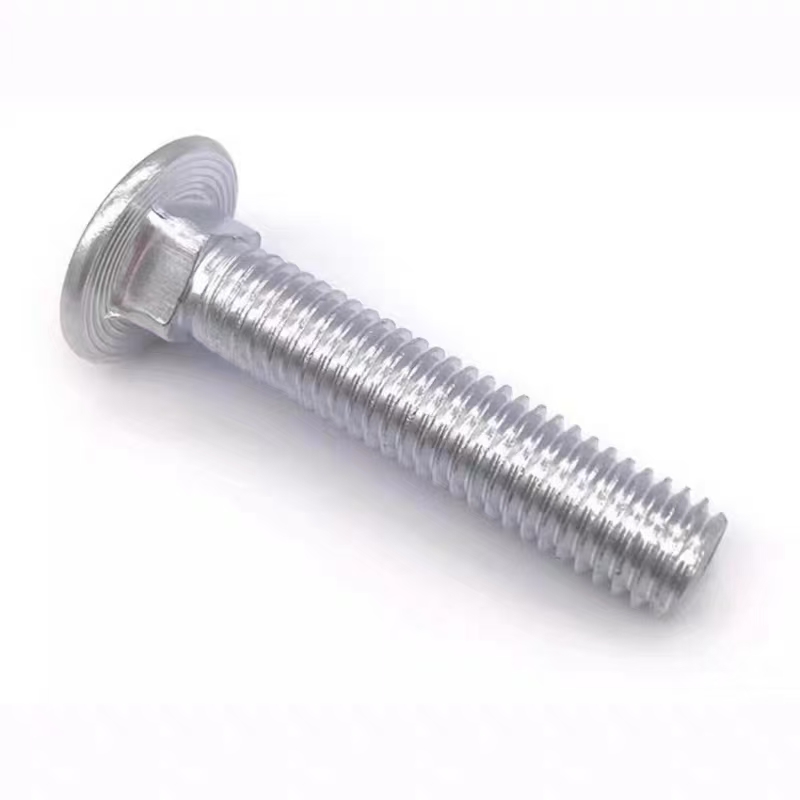
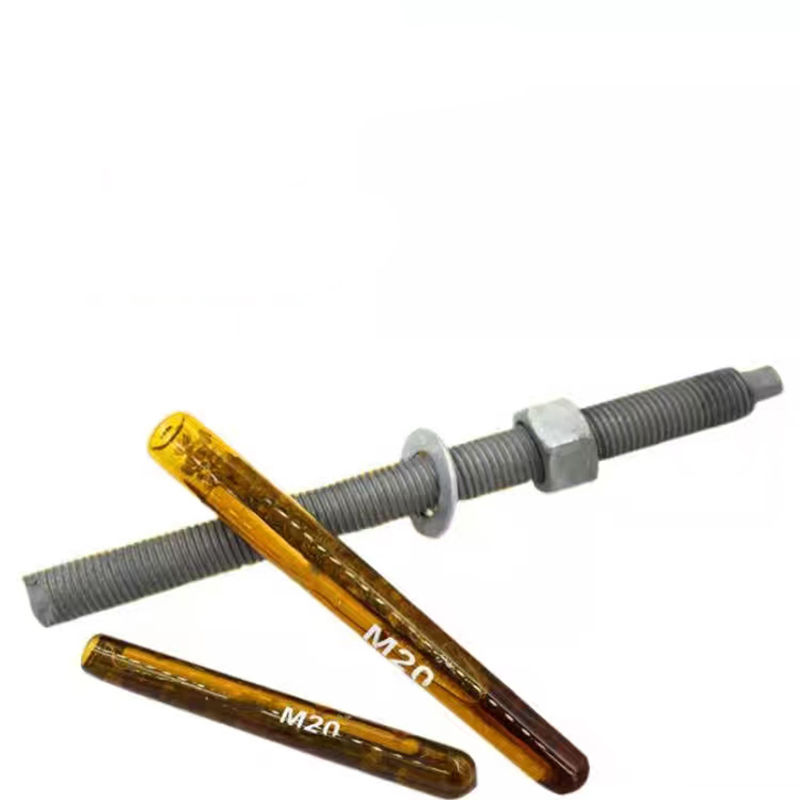
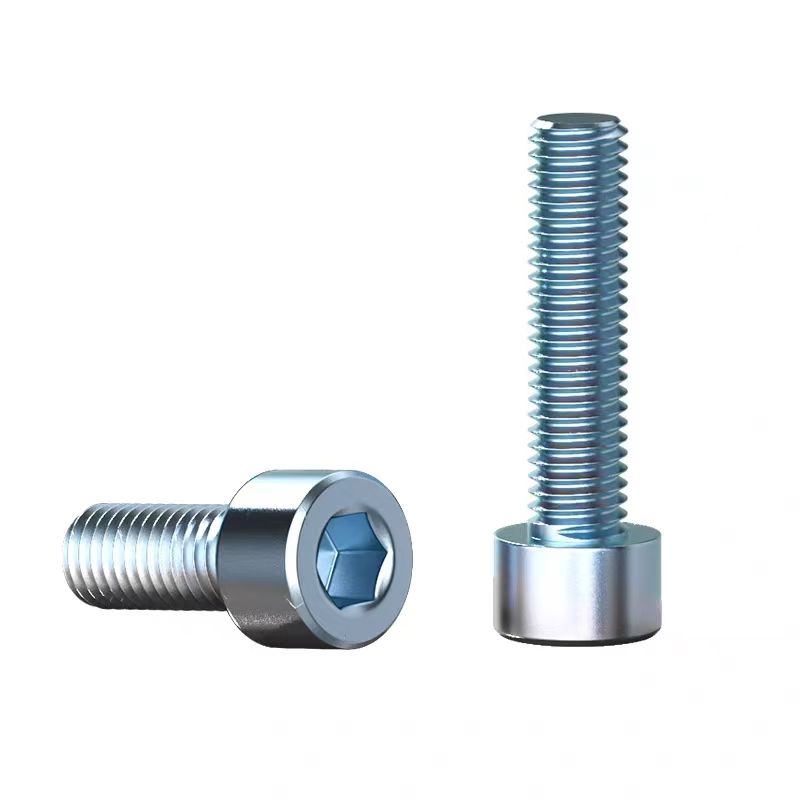
This connects to something as mundane as mounting. When you’re deploying GWs of capacity, the balance of system (BOS) costs become king. That’s where the hardware, the nuts and bolts literally, gets critical. I recall a project in Texas where we had to halt construction because the specified fasteners for the tracker system failed a sudden on-site pull-out test. The substitution process caused a three-week delay. The supplier? Not some fly-by-night shop, but a large, certified manufacturer. It highlighted a gap between lab spec sheets and field performance under dynamic load. This is why procurement is now looking at the entire mechanical ecosystem, not just the modules.
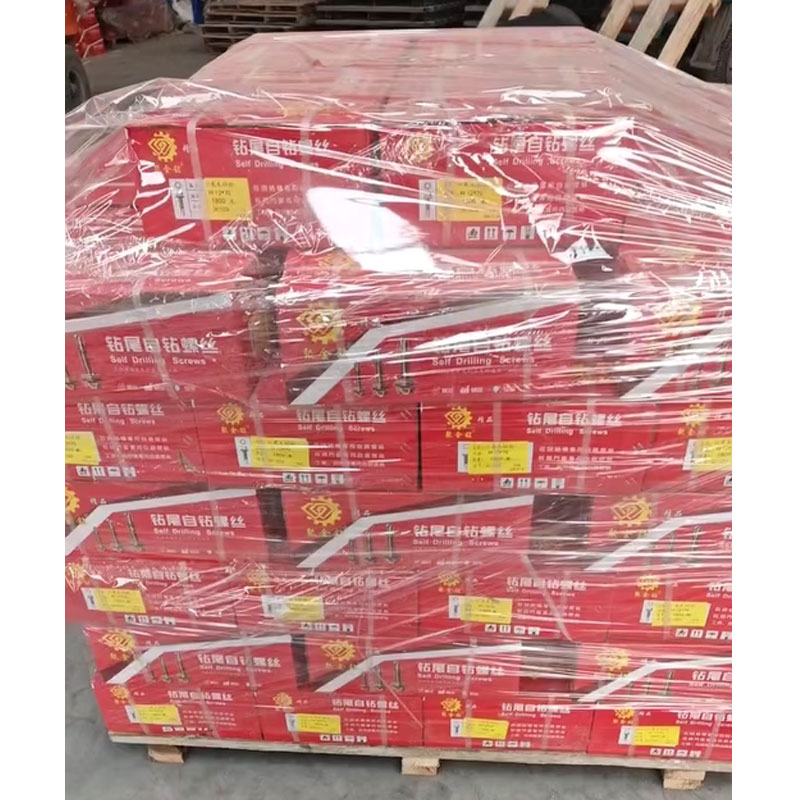
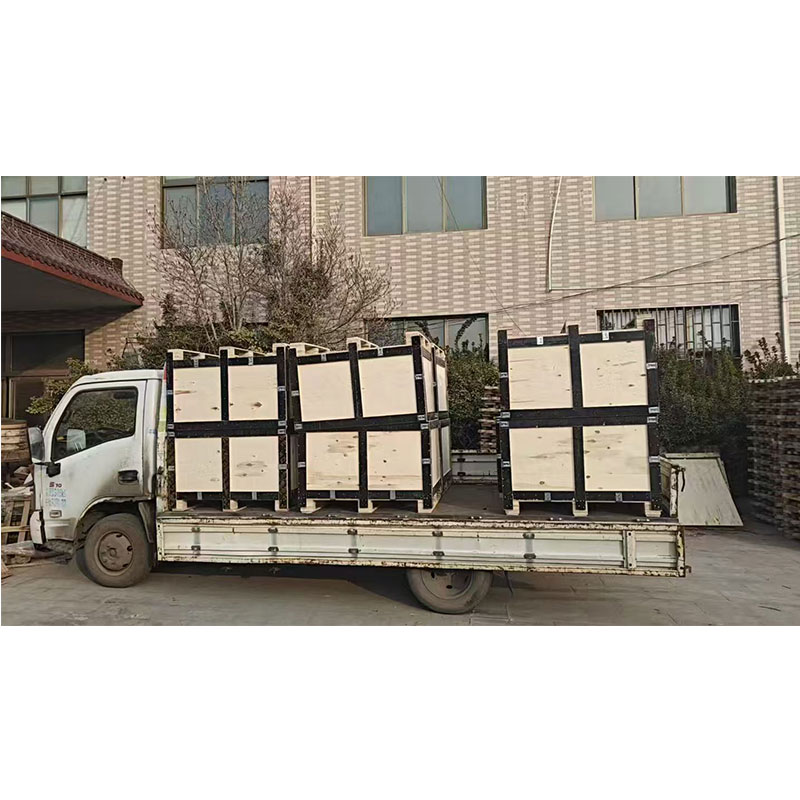
Speaking of which, I recently came across a supplier, Handan Zitai Fastener Manufacturing Co., Ltd. (you can find them at https://www.zitaifasteners.com). They’re based in Yongnian, Hebei—the heart of China’s standard parts production. Their location near major transport arteries like the Beijing-Guangzhou Railway and National Highway 107 is a classic advantage for bulk, low-margin hardware. It’s a reminder that the PV industry’s backbone is built on these massive, specialized industrial clusters. Their existence doesn’t dictate a trend, but their evolution—towards more corrosion-resistant coatings, better fatigue life specs for bifacial module frames—will be a subtle indicator of where the mechanical stress points in future installations are anticipated.
Energy Yield is the New Efficiency
Module efficiency leaderboards are great for headlines, but the conversation on the ground has shifted to energy yield. It’s the kilowatt-hours you actually harvest over 25 years. This brings bifaciality, temperature coefficients, and spectral response into sharp focus. I’ve walked too many sites where the backside gain was compromised by a last-minute decision to save on racking height or use a sub-optimal ground cover. The theoretical 15% gain became 5%. A painful lesson in system integration.
The real test is in harsh environments. We deployed some of the earliest n-type TOPCon batches in a high-desert, high-UV site. The initial PID resistance was stellar, but we noticed a slower, cumulative power degradation linked to UV-induced degradation of the encapsulant interface, a problem less pronounced in older p-type modules. It wasn’t a showstopper, but it tweaked the LCOE model. It’s these nuanced, long-term field data points that will shape the next generation of cell and module packaging, moving beyond the standard 1000-hour DH/TC/UV sequence in the lab.
This focus on yield is also driving a hybrid approach. It’s no longer just about choosing between TOPCon or HJT. I’m seeing more designs that mix technologies within a single plant—HJT on constrained, high-value rooftop spaces for its superior performance in diffuse light and heat, and bulkier, cheaper PERC or TOPCon on open land. This pragmatic, portfolio-based approach to tech adoption is a key trend the pure R&D narratives often miss.
The Inverter as a Grid Citizen
Inverters are becoming the brain of the plant, not just a DC-AC converter. The trend is grid-forming capabilities. We’re past the point of just feeding in power. With grid inertia falling due to retiring thermal plants, new plants are being asked to provide synthetic inertia, voltage support, and ride-through during faults. I sat through a commissioning where the grid operator rejected the plant because its reactive power (Q) control loop was too slow, by milliseconds. That delay meant it couldn’t help stabilize a nearby voltage dip. The hardware was capable, but the firmware wasn’t. The fix took six months of software updates and re-certification.
This pushes the industry towards power electronics that are fundamentally more grid-friendly. Silicon Carbide (SiC) MOSFETs in next-gen inverters allow for higher switching frequencies, leading to smaller filters, but more importantly, they enable much faster and more precise control of output waveforms. This is a silent, behind-the-panel trend that matters more for future market stability than a 0.5% absolute efficiency gain in a module.
The integration challenge is massive. Now you have to model the electromagnetic transient behavior of your entire solar park interacting with a weak grid. It requires a new skillset, blending power systems engineering with power electronics. The companies that master this system-level control will lock in the next decade of EPC contracts.
Storage: The Indivisible Partner
Calling it PV plus storage is already outdated. In many markets, it’s just PV, with storage assumed. The trend is towards DC-coupled architectures, where batteries connect directly to the PV array’s DC bus before the inverter. The efficiency gain is meaningful—you avoid a DC-AC-DC-AC conversion cycle. But the real benefit is control. You can precisely clip the PV output to exactly match the inverter’s rating and funnel any excess straight into the battery. We retrofitted a 100MWac plant with a 40MWh DC-coupled system. The tricky part wasn’t the hardware; it was the revised energy management system (EMS) logic to forecast cloud cover and decide, in seconds, whether to pull from the battery or let the PV ramp, all while meeting a rigid PPA schedule.
The chemistry debate is ongoing. LFP (Lithium Iron Phosphate) is the default for stationary storage now due to safety and cycle life. But I’m keeping an eye on sodium-ion. The energy density is lower, but for utility-scale, footprint is less critical than raw material cost and availability. If the cycle life claims hold in the field, it could disrupt the pricing floor for long-duration storage applications attached to solar, particularly where the value is in shifting energy over days, not just hours.
A failure we had? Early attempts at thermal management for containerized batteries that relied too heavily on ambient air cooling in a desert site. Dust clogged the filters faster than anticipated, leading to overheating and derating. A simple, almost stupid oversight, but it cost us months of performance. Now the spec sheets for battery enclosures have a whole new section on filtration and maintenance cycles.
Circularity: From Buzzword to BOM
Sustainability is moving from PR to the bill of materials. It’s not just about carbon footprint anymore; it’s about designing for disassembly and recyclability. The EU’s coming eco-design mandates are a harbinger. Can you separate the glass from the encapsulant (EVA or POE) cleanly? Can you recover the silicon wafer? Most current recycling is downcycling—crushing panels for aggregate in concrete. That’s a dead end.
Some module makers are now designing with a thermoplastic polymer backsheet instead of thermoset, which can be re-melted. Others are looking at conductive adhesives to replace soldering, making cell recovery easier. This isn’t altruism; it’s future-proofing against regulatory risk and securing access to secondary material streams. I’ve toured a pilot recycling facility that uses a combination of thermal and chemical processes to delaminate panels. The recovered glass was of high enough purity to go back into the float line for new solar glass. That’s a closed loop. But the economics only work at massive scale and with modules designed for it from the start.
This thinking even trickles down to the structural components. Can the aluminum from tracker posts and module frames be easily sorted and recycled? The industry will start demanding documentation—a material passport—for everything, down to the fasteners. It adds a layer of complexity, but also a potential for cost recovery at end-of-life. The companies that build these circular logistics chains now will own a significant piece of the future market.
The Human Factor: Skills Gap in a Tech-Saturated Field
Finally, a trend no one likes to talk about: we’re running out of the right people. The technology is evolving faster than the workforce can be trained. It’s one thing to install PERC modules; it’s another to commission a grid-forming inverter or troubleshoot a DC-coupled storage system’s EMS. I’ve seen projects delayed because the local technicians, skilled in traditional PV, weren’t certified to work on the MV transformer side of the new, integrated inverter-skid solutions.
The future market will bifurcate. There will be a premium for highly integrated, smart solar-storage-grid solutions that require specialized O&M teams, often remotely supported. And there will be a market for simpler, more robust kits for less demanding applications. The winner won’t necessarily have the best tech, but the most effective ecosystem for deploying, maintaining, and financing it. That includes having a reliable supply chain for every component, from the IGBTs in the inverter to the bolts that hold it all together. Because in the end, a trend is just an idea until it’s physically anchored to the ground, and that still takes a wrench, a trained hand to turn it, and a part that won’t fail in the sun.
Please leave us a message
-


-
-


WeChat
