
- Chinese
- French
- German
- Portuguese
- Spanish
- Russian
- Japanese
- Korean
- Arabic
- Irish
- Greek
- Turkish
- Italian
- Danish
- Romanian
- Indonesian
- Czech
- Afrikaans
- Swedish
- Polish
- Basque
- Catalan
- Esperanto
- Hindi
- Lao
- Albanian
- Amharic
- Armenian
- Azerbaijani
- Belarusian
- Bengali
- Bosnian
- Bulgarian
- Cebuano
- Chichewa
- Corsican
- Croatian
- Dutch
- Estonian
- Filipino
- Finnish
- Frisian
- Galician
- Georgian
- Gujarati
- Haitian
- Hausa
- Hawaiian
- Hebrew
- Hmong
- Hungarian
- Icelandic
- Igbo
- Javanese
- Kannada
- Kazakh
- Khmer
- Kurdish
- Kyrgyz
- Latin
- Latvian
- Lithuanian
- Luxembou..
- Macedonian
- Malagasy
- Malay
- Malayalam
- Maltese
- Maori
- Marathi
- Mongolian
- Burmese
- Nepali
- Norwegian
- Pashto
- Persian
- Punjabi
- Serbian
- Sesotho
- Sinhala
- Slovak
- Slovenian
- Somali
- Samoan
- Scots Gaelic
- Shona
- Sindhi
- Sundanese
- Swahili
- Tajik
- Tamil
- Telugu
- Thai
- Ukrainian
- Urdu
- Uzbek
- Vietnamese
- Welsh
- Xhosa
- Yiddish
- Yoruba
- Zulu
- Kinyarwanda
- Tatar
- Oriya
- Turkmen
- Uyghur

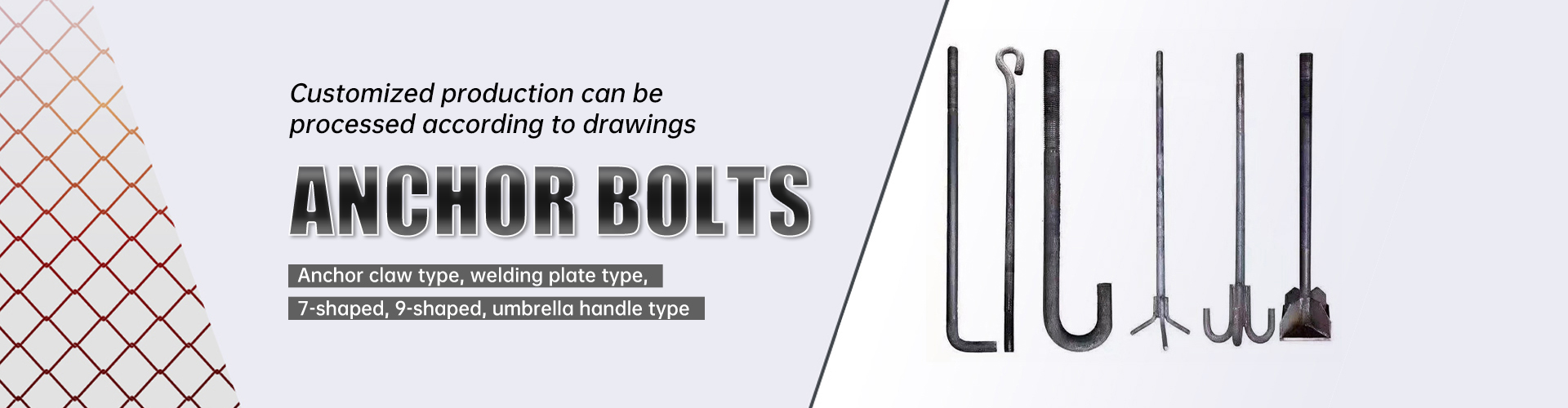
Pin shaft innovation driving sustainability?
2026-01-16
When you hear sustainability in manufacturing, you probably think of big-ticket items: renewable energy for the plant, switching to recycled steel, or cutting coolant waste. Rarely does the humble pin shaft come to mind. That’s the common blind spot. For years, the narrative was that fasteners are commodities—cheap, replaceable, and functionally static. The sustainability push was seen as something that happened around them, not through them. But if you’ve been on the factory floor or in the design review meetings, you know that’s where the real, gritty efficiency gains—or losses—are locked in. This isn’t about greenwashing a component; it’s about rethinking a fundamental load-bearing element to drive material efficiency, longevity, and system-wide resource reduction. Let me unpack that.
The Weight of a Gram: Material Efficiency as a Starting Point
It starts with a simple question: why is this pin here, and does it need to be this heavy? In a past project for an agricultural machinery maker, we were looking at a pivot pin for a harvester linkage. The original spec was a 40mm diameter, 300mm long solid carbon steel pin. It had been that way for decades, a carry-over part. The goal was cost reduction, but the path led straight to sustainability. By conducting a proper FEA analysis on the actual load cycles—not just the textbook safety factor of 5—we realized we could switch to a high-strength, low-alloy steel and reduce the diameter to 34mm. That saved 1.8 kg of steel per pin. Multiply that by 20,000 units a year. The immediate impact was less raw material mined, processed, and transported. The carbon footprint of producing that steel is enormous, so saving nearly 36 metric tons of steel annually wasn’t just a line-item cost win; it was a tangible environmental one. The challenge wasn’t the engineering; it was convincing procurement that a slightly more expensive grade of steel per kilogram was worth it for the overall system saving. That’s a cultural shift.
This is where the geography of production matters. In places like Yongnian District in Handan, Hebei—the epicenter of fastener production in China—you see this material calculus play out at an industrial scale. A company operating there, like Handan Zitai Fastener Manufacturing Co., Ltd., sits in the middle of a vast supply network. Their decisions on material sourcing and process optimization ripple. When they choose to work with steel mills that provide cleaner, more consistent billets, it reduces scrap rates in their own forging and machining processes. Less scrap means less energy wasted remelting or reprocessing defective parts. It’s a chain reaction of efficiency that begins with the raw billet and ends with a finished pin shaft that doesn’t over-engineer the problem. You can learn more about their operational context on their site, https://www.zitai fasteners.com.
But material reduction has its limits. You can only make a pin so thin before it fails. The next frontier isn’t just taking material out, but putting performance in. That leads to surface treatments and advanced manufacturing.
Beyond Chrome: The Unseen Life-Extension Plays
Corrosion is the silent killer of machinery and the enemy of sustainability. A failed pin due to rust doesn’t just stop a machine; it creates a waste event—the broken pin, the downtime, the replacement labor, the potential collateral damage. The old-school answer was thick electroplated chrome. It works, but the plating process is nasty, involving hexavalent chromium, and it creates a surface that can chip, leading to galvanic corrosion pits.
We experimented with several alternatives. One was a high-density, low-friction polymer coating. It worked beautifully in the lab and in clean test environments. Reduced friction, excellent corrosion resistance. But in the field, on a construction excavator operating in abrasive silt, it wore through in 400 hours. A failure. The lesson was that sustainability isn’t just about a clean process; it’s about a product that lasts in the real world. The more sustainable solution turned out to be a different path: a ferritic nitrocarburizing (FNC) treatment combined with a post-oxidation seal. This isn’t a coating; it’s a diffusion process that changes the surface metallurgy. It creates a deep, hard, and incredibly corrosion-resistant layer. The pin’s core remains tough, but the surface can handle abrasion and resist rust far longer than plating. The lifespan of the pivot joint in our field test doubled. That’s two lifecycles for the price of one in terms of embodied carbon from manufacturing. The energy for the FNC process is significant, but when amortized over twice the service life, the overall environmental burden plummets.
This is the kind of trade-off analysis that happens on the ground. The greenest option on paper isn’t always the most durable. Sometimes, a more energy-intensive manufacturing step for the component is the key to massive savings for the whole machine. It forces you to think in systems, not isolated parts.
The Logistics Footprint Hidden in a Carton
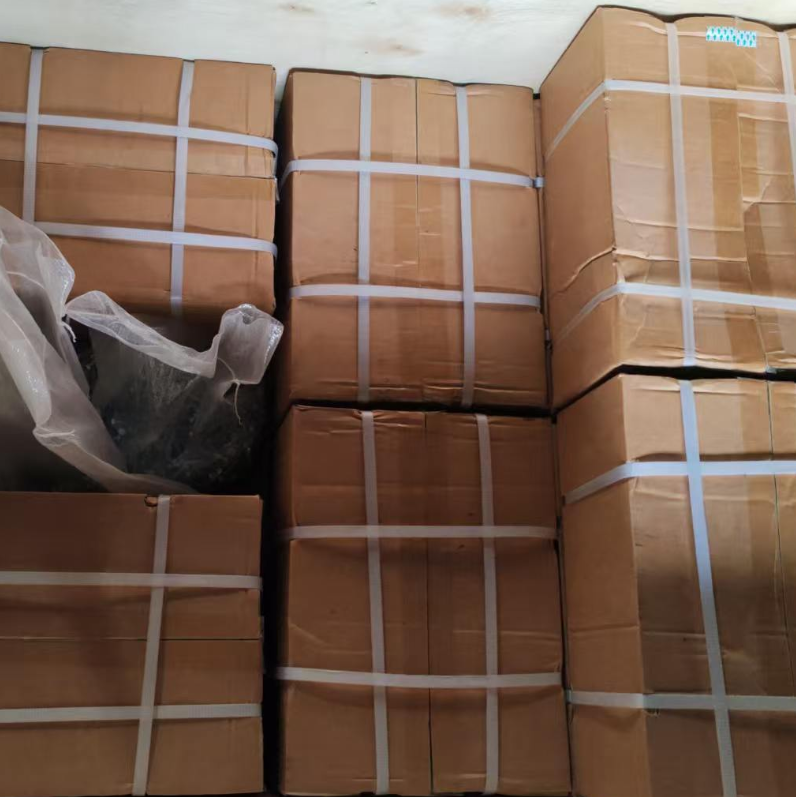
Here’s an angle often missed: packaging and logistics. We once audited the carbon cost of getting a pin from a factory in Hebei to an assembly line in Germany. The pins were individually wrapped in oil paper, placed in small boxes, then into a larger master carton, with copious foam filler. The volumetric efficiency was terrible. We were shipping air and packaging waste.
We worked with the supplier—a scenario where a manufacturer like Zitai, with its proximity to major rail and road arteries like the Beijing-Guangzhou Railway and National Highway 107, has a natural advantage—to redesign the pack. We moved to a simple, recyclable cardboard sleeve that held ten pins in a precise matrix, separated by cardboard ribs. No foam, no plastic wrap (a light, biodegradable anti-tarnish paper instead). This increased the number of pins per shipping container by 40%. That’s 40% fewer container shipments for the same output. The fuel savings across ocean freight are staggering. This is pin shaft innovation? Absolutely. It’s an innovation in its delivery system, which is a core part of its lifecycle impact. The company’s location, offering very convenient transportation, isn’t just a sales line; it’s a lever for reducing freight miles when combined with smart packaging. It turns a geographical fact into a sustainability feature.
When Standardization Fights Waste
The drive for customization is a sustainability nightmare. Every unique pin requires its own tooling, its own setup on the CNC, its own inventory slot, its own risk of obsolescence. I’ve seen warehouses full of special pins for machines long out of production. That’s embodied energy and material sitting idle, destined for scrap.
A powerful move is aggressive standardization within a product family. On a recent electric vehicle battery pack project, we fought to use the same diameter and material for all internal structural locating pins, even across different module sizes. We varied only the length, which is a simple cut-off operation. This meant one raw material stock, one heat-treatment batch, one quality control protocol. It simplified assembly (no risk of picking the wrong pin) and massively reduced inventory complexity. The sustainability gain here is in lean manufacturing principles: reducing setup changes, minimizing surplus inventory, and eliminating waste from confusion. It’s not glamorous, but it’s where real, systemic resource efficiency is born. The resistance usually comes from design engineers who want to optimize each pin for its specific load, often with marginal gain. You have to show them the total cost—financial and environmental—of that complexity.
The Circular Thought: Design for Disassembly
This is the tough one. Can a pin shaft be circular? Most are pressed in, welded, or deformed (like with a circlip) in a way that makes removal destructive. We looked at this for a wind turbine pitch system. The pins securing the blade bearings are monumental. At end-of-life, if they’re seized or fused, it’s a torch-cut operation—dangerous, energy-intensive, and it contaminates the steel.
Our proposal was a tapered pin with a standardized extraction thread at one end. The design required more precise machining, yes. But it allowed for safe, non-destructive removal using a hydraulic puller. Once out, that high-quality, large-forged pin could be inspected, re-machined if necessary, and reused in a less critical application, or at the very least, recycled as clean, high-grade steel scrap, not a mixed-metal nightmare. The initial unit cost was higher. The value proposition wasn’t to the first buyer, but to the operator’s total cost of ownership over 25 years and to the decommissioning company later. This is long-term, true lifecycle thinking. It hasn’t been widely adopted—the capital cost mindset still dominates—but it’s the direction. It moves the pin from a consumable to a recoverable asset.
So, is pin shaft innovation driving sustainability? It can. It does. But not through magic materials or buzzwords. It drives sustainability through the accumulated weight of a thousand pragmatic decisions: shaving grams off a design, choosing a longer-lasting treatment, packing them smarter, standardizing relentlessly, and daring to think about the end at the beginning. It’s in the hands of the engineers, the production planners, and the quality managers on the floor in places like Handan. The drive isn’t always labeled green; it’s often labeled efficient, reliable, or cost-effective. But the destination is the same: doing more with less, for longer. That’s the real story.

Please leave us a message
-

-
-
WeChat



Privacy Policy
Our Commitment to Privacy
Introduction.
Rainbow Inc. recognizes the importance of protecting the privacy of all personal information provided by its customers, including users of www.rainbow-inkjet.com and other Rainbow Inc. affiliated websites (collectively "Rainbow Inc. Sites"). We created the following policy guidelines with a fundamental respect for our customers´ right to privacy and because we value our relationships with our customers. Your visit to the Rainbow Inc. Sites is subject to this Privacy Statement and our Online Terms and Conditions.
Description.
This Privacy Statement describes the types of information we collect and how we may use that information. Our Privacy Statement also describes the measures we take to protect the security of this information as well as how you may reach us to update your contact information.
Data Collection
Personal Data Collected Directly From Visitors.
Rainbow Inc. collects personal information when: you submit questions or comments to us; you request information or materials; you request warranty or post-warranty service and support; you participate in surveys; and by other means that may be specifically provided for on the Rainbow Inc. Sites or in our correspondence with you.
Type of Personal Data.
The type of information collected directly from the user may include your name, your company's name, physical contact information, address, billing and delivery information, e-mail address, the products you use, demographic information such as your age, preferences, and interests and information relating to the sale or installation of your product.
Non-Personal Data Collected Automatically.
We may collect information about your interaction with Rainbow Inc. Sites and services. For example, we may use website analytics tools on our site to retrieve information from your browser, including the site you came from, the search engine(s) and the keywords you used to find our site, and the pages you view within our site. Additionally, we collect certain standard information that your browser sends to every website you visit, such as your IP address, browser type, capabilities and language, your operating system, access times and referring Web site addresses.
Storage and Processing.
Personal data collected on our websites may be stored and processed in the United States in which Rainbow Inc. or its affiliates, joint ventures, or third party servicers maintain facilities.
How We Use the Data
Services and transactions.
We use your personal data to deliver services or execute transactions you request, such as providing information about Rainbow Inc. products and services, processing orders, answering customer service requests, facilitating use of our Web sites, enabling online shopping, and so forth. In order to offer you a more consistent experience in interacting with Rainbow Inc., information collected by our websites may be combined with information we collect by other means.
Product Development.
We use the personal and non-personal data for product development, including for such processes as idea generation, product design and improvements, detail engineering, market research and marketing analysis.
Website Improvement.
We may use the personal and non-personal data to improve our websites (including our security measures) and related products or services, or to make our websites easier to use by eliminating the need for you to repeatedly enter the same information or by customizing our websites to your particular preference or interests.
Marketing Communications.
We may use your personal data to inform you of products or services available from Rainbow Inc. When collecting information that might be used to contact you about our products and services, we often give you the opportunity to opt-out from receiving such communications. Moreover, in our email communications with you we may include an unsubscribe link allowing you to stop delivery of that type of communication. If you elect to unsubscribe, we will remove you from the relevant list within 15 business days.
Commitment to Data Security
Security.
Rainbow Inc. Corporation uses reasonable precautions to keep the personal information disclosed to us secure. To prevent unauthorized access, maintain data accuracy, and ensure the correct use of information, we have put in place appropriate physical, electronic, and managerial procedures to safeguard and secure your personal information. For example, we store sensitive personal data on computer systems with limited access that are located in facilities to which access is limited. When you move around a site to which you have logged in, or from one site to another that uses the same login mechanism, we verify your identity by means of an encrypted cookie placed on your machine. Nonetheless, Rainbow Inc. Corporation does not guarantee the security, accuracy or completeness of any such information or procedures.
Internet.
The transmission of information via the internet is not completely secure. Although we do our best to protect your personal information, we cannot guarantee the security of your personal information transmitted to our Website. Any transmission of personal information is at your own risk. We are not responsible for circumvention of any privacy settings or security measures contained on the Rainbow Inc. Sites.
Contact Us
If you have questions regarding this privacy statement, our handling of your personal data, or your privacy rights under applicable law, please contact us by mail at the address below.
Rainbow Inc.
Attn: Katherine Tan
Add: No.1658 Husong Road, Shanghai, China.
Statement Updates
Revisions.
Rainbow Inc. reserves the right to modify this privacy statement from time to time. If we decide to change our Privacy Statement, we will post the revised Statement here.
Date.
This Privacy Statement was last amended on September 7, 2022.