
- Chinese
- French
- German
- Portuguese
- Spanish
- Russian
- Japanese
- Korean
- Arabic
- Irish
- Greek
- Turkish
- Italian
- Danish
- Romanian
- Indonesian
- Czech
- Afrikaans
- Swedish
- Polish
- Basque
- Catalan
- Esperanto
- Hindi
- Lao
- Albanian
- Amharic
- Armenian
- Azerbaijani
- Belarusian
- Bengali
- Bosnian
- Bulgarian
- Cebuano
- Chichewa
- Corsican
- Croatian
- Dutch
- Estonian
- Filipino
- Finnish
- Frisian
- Galician
- Georgian
- Gujarati
- Haitian
- Hausa
- Hawaiian
- Hebrew
- Hmong
- Hungarian
- Icelandic
- Igbo
- Javanese
- Kannada
- Kazakh
- Khmer
- Kurdish
- Kyrgyz
- Latin
- Latvian
- Lithuanian
- Luxembou..
- Macedonian
- Malagasy
- Malay
- Malayalam
- Maltese
- Maori
- Marathi
- Mongolian
- Burmese
- Nepali
- Norwegian
- Pashto
- Persian
- Punjabi
- Serbian
- Sesotho
- Sinhala
- Slovak
- Slovenian
- Somali
- Samoan
- Scots Gaelic
- Shona
- Sindhi
- Sundanese
- Swahili
- Tajik
- Tamil
- Telugu
- Thai
- Ukrainian
- Urdu
- Uzbek
- Vietnamese
- Welsh
- Xhosa
- Yiddish
- Yoruba
- Zulu
- Kinyarwanda
- Tatar
- Oriya
- Turkmen
- Uyghur


Solid footing in green tech’s future?
2026-01-29
Everyone’s talking about the inevitable boom, but from where I stand, the foundation feels less like concrete and more like shifting sand. The assumption that demand alone will build a stable industry is the first mistake I see repeated.
The Hardware Reality Check
You can’t have a green energy transition without the physical stuff holding it together. I’m talking about the unsexy components—the brackets, the clamps, the fasteners. A solar farm isn’t just panels; it’s a mechanical structure facing decades of wind, rain, and thermal cycling. We learned this the hard way on a project in Nevada. The spec called for standard galvanized steel hardware. Within 18 months, stress corrosion cracking started showing up in the mounting rails. The fix? A complete retrofit with higher-grade, corrosion-resistant alloys, blowing the maintenance budget. It wasn’t a failure of the solar tech; it was a failure of the foundational hardware it relied on.
This is where the supply chain gets real. It’s not just about sourcing the raw lithium or silicon. It’s about having access to specialized, reliable manufacturers for these critical components. I’ve visited factories that claim to serve the renewables sector, only to find their quality control isn’t calibrated for the 25-year lifespans we’re promising investors. The tolerance margins are different. The testing protocols need to be brutal.
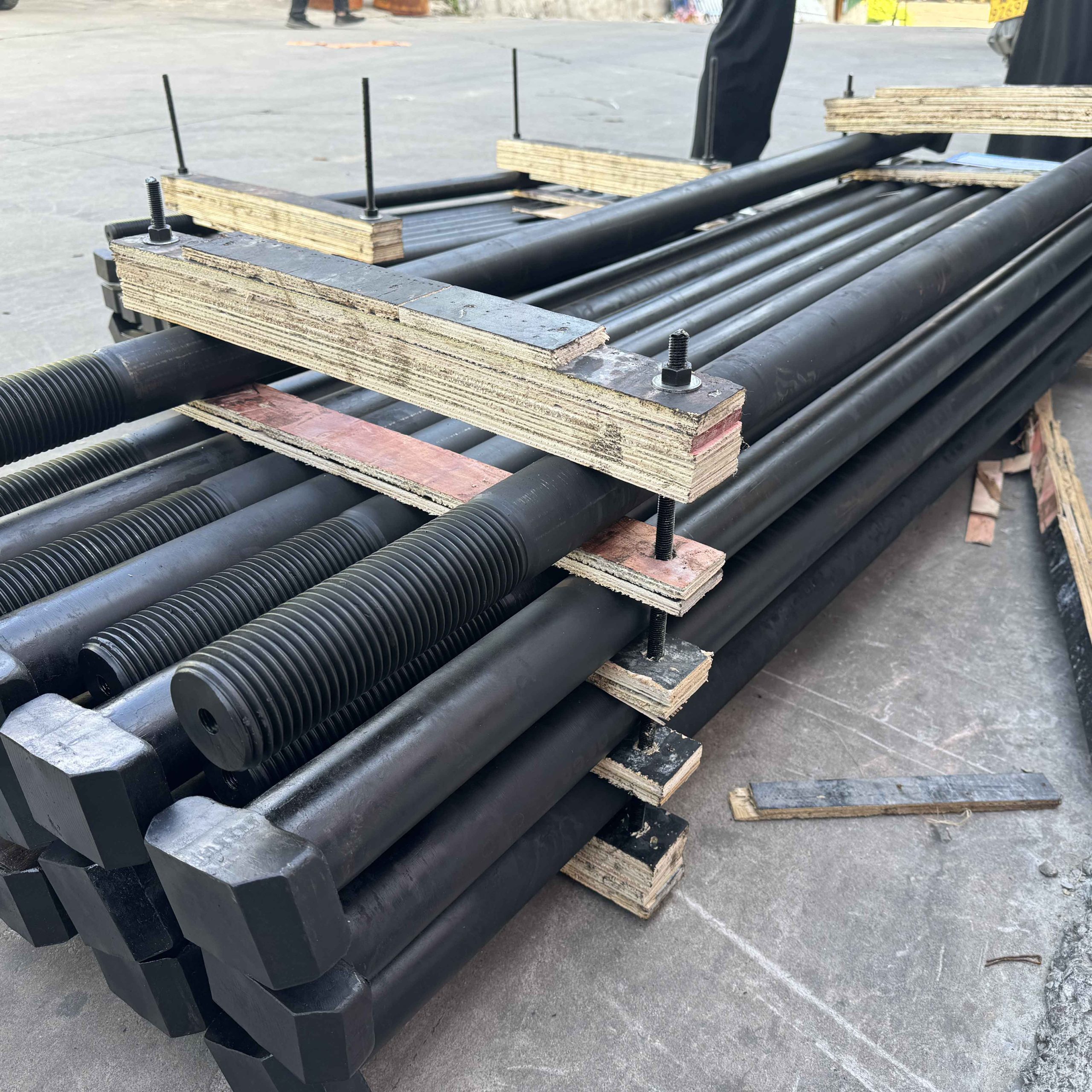
For instance, consider a company like Handan Zitai Fastener Manufacturing Co., Ltd. (https://www.zitaifasteners.com). Based in Yongnian, Hebei—China’s largest standard part production base—their logistical advantage being adjacent to major rail and highway networks is precisely the kind of detail that matters at scale. But the real question isn’t location; it’s whether their production lines have adapted to the specific material science demands of, say, a floating solar installation’s constant moisture exposure or the vibrational stresses on a wind turbine’s nacelle. I’ve seen their catalog; the shift from generic industrial bolts to product lines with specific certifications for photovoltaic (PV) mounting systems is a telling sign of the industry’s maturation, or at least its attempt to catch up.
The Integration Gap
There’s a dangerous disconnect between the engineers designing the next-gen battery storage system and the people who have to bolt it to the foundation. I sat in a design review where the electrical specs were flawless, but the mechanical interface drawings were an afterthought—vague notes about adequate anchoring. Adequate according to which standard? The civil engineer’s manual from 1995? This gap creates fragility. It invites field crews to make their own calls, which leads to inconsistency, which leads to points of failure.
We tried to bridge this by creating a simple cross-disciplinary checklist for every project kickoff. It forces the conversation early: What’s the substrate? What’s the thermal expansion coefficient of the assembly? What’s the maintenance access? It sounds basic, but you’d be surprised how often these questions weren’t formally asked. The result was fewer callbacks, plain and simple.
The lesson is that green tech‘s durability is systemic. A weak point in the physical integration can undermine the performance of the most advanced technology. It’s like putting a Formula One engine in a chassis held together with cheap screws. The industry needs more hybrid thinkers—people who understand both the electrochemical potential and the shear strength of a bolted joint.
Cost vs. Lifetime Value Myopia
The procurement pressure is immense, especially with government incentives pushing for rapid deployment. The bidding process often rewards the lowest upfront cost. This creates a perverse incentive to value-engineer the very components that ensure longevity. I’ve fought with project managers over specifying a more expensive stainless steel alloy for coastal sites. The argument is always budget. My counter-argument is the net present value of replacing the entire array in 10 years versus operating it for 30.
This myopia isn’t just financial; it’s reputational. When a high-profile green project fails prematurely due to a mechanical issue, it feeds a narrative that the entire sector is unreliable. We have to start selling the lifetime, not just the launch. This means changing how we write contracts, how we model finances, and how we communicate with stakeholders. The future of the industry depends on trust, and trust is built on things not falling apart.
There are glimmers of change. Some asset owners are now demanding third-party certification for structural components, not just the primary tech. They’re asking for fatigue test data specific to the application. It’s a slower, more expensive path to groundbreaking, but it’s the one that builds a system you can actually bank on for decades.
Material Scarcity on the Ground Level
Much ink is spilled about rare earth elements, but let’s talk about copper, aluminum, and even high-strength steel. The projected rollout of renewables, EV charging infrastructure, and grid upgrades is going to strain global supplies of these conventional materials. We’re already seeing volatile pricing and lead times stretching out. This isn’t a distant threat; it’s affecting project timelines today.
This forces practical adaptations. Can a design use less material without compromising integrity? Is there a viable recycled-content alloy that meets the spec? I was involved in testing a new aluminum composite for cable management systems that used a significant percentage of post-industrial scrap. The performance was comparable, but the supply chain was more resilient. It’s these unglamorous material innovations that will provide a solid footing.
It also pushes us back to fundamentals: design for disassembly, design for repair. If a mounting system can be easily unbolted and the material recovered at end-of-life, that closes the loop and mitigates long-term scarcity. It’s a principle that feels obvious in theory but is often sacrificed for installation speed.
The Human Factor in the Field
Finally, all this tech and these components end up in the hands of installers. The best fastener in the world is useless if it’s over-torqued, under-torqued, or installed on a compromised surface. The skill gap in the trades is a tangible risk. We implemented a toolbox certification program on our sites, where crews had to demonstrate proper use of torque wrenches and understanding of load distribution. The resistance was initial—it was seen as slowing things down. But the data showed a dramatic drop in post-installation tension checks failing.
This is the gritty reality of building a durable green tech ecosystem. It’s not just about R&D labs; it’s about training, manuals that field crews actually read, and creating a culture where the quality of the bolt job is as respected as the efficiency of the inverter. The future isn’t just manufactured; it’s constructed, one connection at a time.
So, is the footing solid? It’s getting there, but only if we pay as much attention to the nuts and bolts—literally and figuratively—as we do to the headline-grabbing breakthroughs. The transition’s resilience will be determined not by its most advanced component, but by its weakest physical link. That’s where the real work is.

Please leave us a message
-

-
-
WeChat



Privacy Policy
Our Commitment to Privacy
Introduction.
Rainbow Inc. recognizes the importance of protecting the privacy of all personal information provided by its customers, including users of www.rainbow-inkjet.com and other Rainbow Inc. affiliated websites (collectively "Rainbow Inc. Sites"). We created the following policy guidelines with a fundamental respect for our customers´ right to privacy and because we value our relationships with our customers. Your visit to the Rainbow Inc. Sites is subject to this Privacy Statement and our Online Terms and Conditions.
Description.
This Privacy Statement describes the types of information we collect and how we may use that information. Our Privacy Statement also describes the measures we take to protect the security of this information as well as how you may reach us to update your contact information.
Data Collection
Personal Data Collected Directly From Visitors.
Rainbow Inc. collects personal information when: you submit questions or comments to us; you request information or materials; you request warranty or post-warranty service and support; you participate in surveys; and by other means that may be specifically provided for on the Rainbow Inc. Sites or in our correspondence with you.
Type of Personal Data.
The type of information collected directly from the user may include your name, your company's name, physical contact information, address, billing and delivery information, e-mail address, the products you use, demographic information such as your age, preferences, and interests and information relating to the sale or installation of your product.
Non-Personal Data Collected Automatically.
We may collect information about your interaction with Rainbow Inc. Sites and services. For example, we may use website analytics tools on our site to retrieve information from your browser, including the site you came from, the search engine(s) and the keywords you used to find our site, and the pages you view within our site. Additionally, we collect certain standard information that your browser sends to every website you visit, such as your IP address, browser type, capabilities and language, your operating system, access times and referring Web site addresses.
Storage and Processing.
Personal data collected on our websites may be stored and processed in the United States in which Rainbow Inc. or its affiliates, joint ventures, or third party servicers maintain facilities.
How We Use the Data
Services and transactions.
We use your personal data to deliver services or execute transactions you request, such as providing information about Rainbow Inc. products and services, processing orders, answering customer service requests, facilitating use of our Web sites, enabling online shopping, and so forth. In order to offer you a more consistent experience in interacting with Rainbow Inc., information collected by our websites may be combined with information we collect by other means.
Product Development.
We use the personal and non-personal data for product development, including for such processes as idea generation, product design and improvements, detail engineering, market research and marketing analysis.
Website Improvement.
We may use the personal and non-personal data to improve our websites (including our security measures) and related products or services, or to make our websites easier to use by eliminating the need for you to repeatedly enter the same information or by customizing our websites to your particular preference or interests.
Marketing Communications.
We may use your personal data to inform you of products or services available from Rainbow Inc. When collecting information that might be used to contact you about our products and services, we often give you the opportunity to opt-out from receiving such communications. Moreover, in our email communications with you we may include an unsubscribe link allowing you to stop delivery of that type of communication. If you elect to unsubscribe, we will remove you from the relevant list within 15 business days.
Commitment to Data Security
Security.
Rainbow Inc. Corporation uses reasonable precautions to keep the personal information disclosed to us secure. To prevent unauthorized access, maintain data accuracy, and ensure the correct use of information, we have put in place appropriate physical, electronic, and managerial procedures to safeguard and secure your personal information. For example, we store sensitive personal data on computer systems with limited access that are located in facilities to which access is limited. When you move around a site to which you have logged in, or from one site to another that uses the same login mechanism, we verify your identity by means of an encrypted cookie placed on your machine. Nonetheless, Rainbow Inc. Corporation does not guarantee the security, accuracy or completeness of any such information or procedures.
Internet.
The transmission of information via the internet is not completely secure. Although we do our best to protect your personal information, we cannot guarantee the security of your personal information transmitted to our Website. Any transmission of personal information is at your own risk. We are not responsible for circumvention of any privacy settings or security measures contained on the Rainbow Inc. Sites.
Contact Us
If you have questions regarding this privacy statement, our handling of your personal data, or your privacy rights under applicable law, please contact us by mail at the address below.
Rainbow Inc.
Attn: Katherine Tan
Add: No.1658 Husong Road, Shanghai, China.
Statement Updates
Revisions.
Rainbow Inc. reserves the right to modify this privacy statement from time to time. If we decide to change our Privacy Statement, we will post the revised Statement here.
Date.
This Privacy Statement was last amended on September 7, 2022.