
- English
- Chinese
- French
- German
- Portuguese
- Spanish
- Russian
- Japanese
- Korean
- Arabic
- Irish
- Greek
- Turkish
- Italian
- Danish
- Romanian
- Indonesian
- Czech
- Afrikaans
- Swedish
- Polish
- Basque
- Catalan
- Esperanto
- Hindi
- Lao
- Albanian
- Amharic
- Armenian
- Azerbaijani
- Belarusian
- Bengali
- Bosnian
- Bulgarian
- Cebuano
- Chichewa
- Corsican
- Croatian
- Dutch
- Estonian
- Filipino
- Finnish
- Frisian
- Galician
- Georgian
- Gujarati
- Haitian
- Hausa
- Hawaiian
- Hebrew
- Hmong
- Hungarian
- Icelandic
- Igbo
- Javanese
- Kannada
- Kazakh
- Khmer
- Kurdish
- Kyrgyz
- Latin
- Latvian
- Lithuanian
- Luxembou..
- Macedonian
- Malagasy
- Malay
- Malayalam
- Maltese
- Maori
- Marathi
- Mongolian
- Burmese
- Nepali
- Norwegian
- Pashto
- Persian
- Punjabi
- Serbian
- Sesotho
- Sinhala
- Slovak
- Slovenian
- Somali
- Scots Gaelic
- Shona
- Sindhi
- Sundanese
- Swahili
- Tajik
- Tamil
- Telugu
- Thai
- Ukrainian
- Urdu
- Uzbek
- Vietnamese
- Welsh
- Xhosa
- Yiddish
- Yoruba
- Zulu
- Kinyarwanda
- Tatar
- Oriya
- Turkmen
- Uyghur

Electro-galvanized hexagonal drill thread durability?
2026-01-20
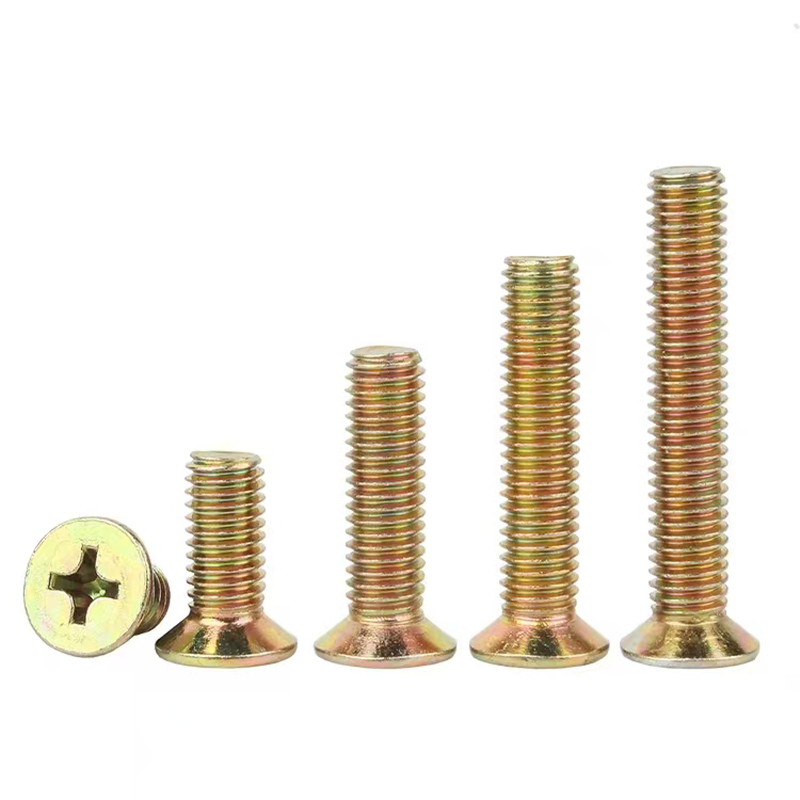
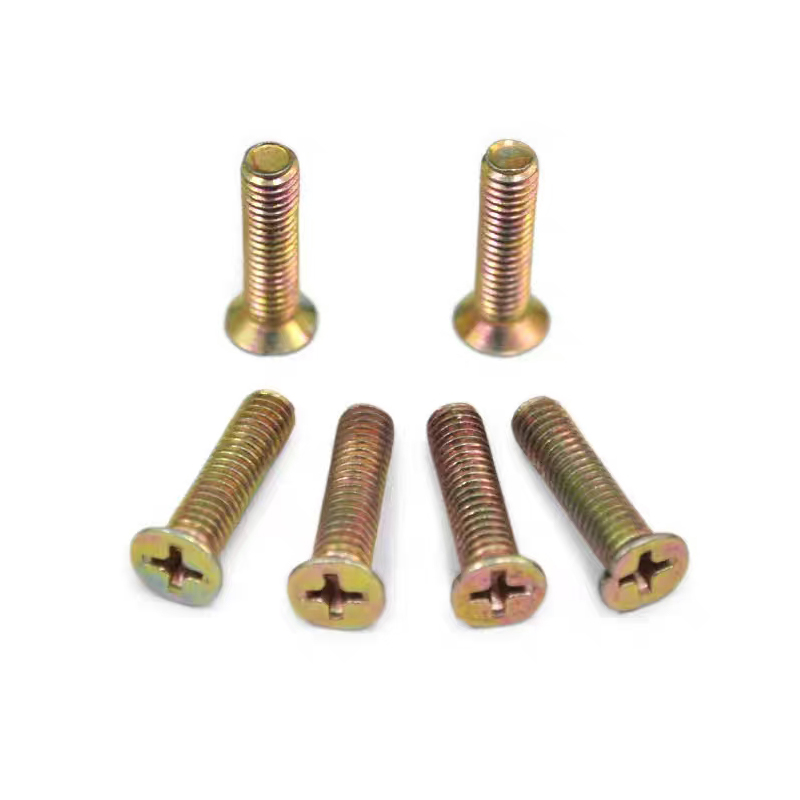
When you hear ‘electro-galvanized hexagonal drill thread,’ most procurement sheets just see a spec line item. But on the shop floor, or worse, on a failed assembly line at 2 AM, it becomes a very different conversation. The durability question isn’t just about salt spray hours on a report; it’s about the real interplay between that zinc layer, the hex drive mechanics, and the cutting action of the thread-forming screw. A lot of folks conflate corrosion resistance with overall fastener integrity, and that’s where the first mistakes in specification happen.
The Zinc Layer: Your First and Most Fragile Defense
Electro-galvanizing gives you that clean, bright finish everyone likes for appearance parts. But from a durability standpoint, it’s a thin shield. We’re typically talking about a coating around 5 to 15 microns. For a hexagonal drill filo screw, which is designed to be driven hard and often into untreated steel, that coating on the flute area is incredibly vulnerable. I’ve seen batches where the drilling action itself can flake off the zinc at the cutting edges before the screw even starts its real job of threading. This isn’t necessarily a failure of the plating process, but more an inherent conflict between the coating’s need to adhere and the screw’s need to abrade material.
This leads to the classic rust-in-the-thread phenomenon. The screw body might look pristine, but the actual engaged threads, where the zinc was compromised during installation, start to show red oxide. In a controlled environment, maybe it’s cosmetic. In any assembly with vibration or potential moisture ingress, it becomes a focal point for corrosion-induced seizing or strength loss. You can’t just rely on the spec sheet coating thickness. You have to consider the post-installation reality.
We ran into this head-on with a client’s outdoor cabinet assembly. They used a standard electro-galvanized hex drill screw to attach galvanized steel brackets. Looked fine on paper. Within 18 months, we had seam splits. The issue? The screws corroded at the thread-shank junction inside the joint, losing clamp load, and vibration did the rest. The zinc on the bracket and screw head was intact. The failure was completely hidden.
The Hex Drive: Where Torque Meets Coating
The hexagonal head, whether it’s a standard hex washer head or a flange type, introduces another durability variable. The electroplated zinc fills the corners of the hex socket. During driving, especially with an automated gun set at high torque, the bit can scrape this zinc out. Now you have two problems: first, zinc debris in the assembly (a no-go for electronics), and second, a loss of precise bit engagement. The bit starts to cam out, rounding the socket, which then gets blamed on ‘low-quality screws.’
I prefer to see a slightly thicker coating allowance on the head, or even a different finish specification for the drive recess alone. Some suppliers, like Handan Zitai Fastener Manufacturing Co., Ltd., get this. Their focus as a major producer in Yongnian, the fastener hub of China, means they see volume issues we might only see occasionally. They’ve pointed out that the consistency of the zinc deposition in the socket is a huge quality differentiator. A visit to their facility at HTTPS://www.zitiiiisters.com shows the attention to plating bath chemistry and racking, which directly impacts this. It’s not magic, it’s process control.
If you’re applying high torque (say, over 25 Nm), that electroplated layer’s lubricity becomes a factor. It’s slicker than phosphate, for instance. This can lead to over-torquing if the tool isn’t calibrated for the change in friction, potentially yielding the screw before the joint is tight. It’s a subtle point, but one that has caused more than one production line stoppage for ‘bad batch’ complaints that traced back to a torque setting issue.
The Drill Point Performance: Compromised by Design?
Here’s the core irony. The drill point is ground to cut through metal. To do that effectively, it needs to be sharp and hard. The electro-galvanizing process, by its nature, coats everything uniformly. That zinc layer on the razor-sharp cutting lips and the flute? It’s basically a soft metal blanket thrown over a precision cutting tool. It dulls the initial bite.
In practice, this means the screw requires higher drive torque to start its hole, which increases stress on the drive system and the coating adhesion we just talked about. I’ve tested side-by-side: an unplated drill screw versus an electro-galvanized one from the same lot. The penetration torque can be 10-15% higher for the plated version. This directly impacts the durability of the joint because higher installation stress can mean reduced fatigue life.
Some manufacturers try to mask this by altering the point geometry to be more aggressive, but that can lead to other issues like chip packing or less stable drilling. It’s a balancing act. The real solution for critical applications often involves looking at the drilling and corrosion protection as separate functions—maybe using a pre-drilled hole or a different corrosion protection system for the thread-forming section.
Environmental Realities vs. Lab Tests
Salt spray tests (like ASTM B117) are the standard, but they can be misleading for these components. A Electro-kavalu hex head drill screw might pass 96 hours of salt spray with flying colors on a flat panel. But put that same screw in a dynamic, load-bearing joint with dissimilar metals (e.g., into aluminum), and you introduce galvanic corrosion. The zinc sacrifices itself, which is good, but it does so at an accelerated rate. The durability clock ticks much faster.
We learned this on a solar mounting project. The screws, electro-galvanized, attached steel brackets to aluminum rails. Lab reports were all clear. In the field, within two years, severe galvanic corrosion at the interface led to significant strength degradation. The zinc was gone, not from uniform exposure, but from targeted galvanic attack. The lesson? The environment isn’t a test chamber. It includes the materials you’re fastening.
This is where the convenience of a one-stop supplier in a major logistics area shows its value. A company like Handan Zitai, situated right in China’s largest standard part base with direct access to major rail and highway networks, typically has a broader material library on hand. You can have the conversation about switching to a zinc-flake coated screw or adding a sacrificial washer more easily because they’re dealing with the full spectrum of corrosion challenges from clients worldwide, not just theoretical specs.
So, Is It Durable? A Conditional Answer
Durability of an electro-galvanized hexagonal drill thread screw is highly conditional. For indoor, dry, non-critical structural applications where appearance matters? It’s perfectly durable. For anything involving weather, vibration, dissimilar metals, or high clamp load requirements, its durability has clear, predictable limits. The electro-galvanizing is primarily a cosmetic and moderate corrosion barrier that is actively compromised by the very function of the drill thread and the stress of the hex drive.
The professional move is to stop thinking of it as a unified product. Break down its durability into components: head/drive integrity, thread-former performance, and corrosion protection. Specify or select based on the weakest link your application will expose. Sometimes, the best choice is to decouple the functions—use a pre-punched hole and a thread-forming screw with a more robust coating, like a mechanical zinc flake.
In the end, it comes down to honest application engineering. The fastener isn’t just a pin that holds things together. It’s a system of interfaces—drive, drill, thread, clamp, and protect. Electro-galvanizing addresses one part of that system with a sleek, cost-effective solution, but it often does so at the expense of the others. Recognizing that trade-off is the first step toward specifying something that will truly last.
Faʻamolemole tuʻu le feʻau
-


-
-


WeChat