
- English
- Chinese
- French
- German
- Portuguese
- Spanish
- Russian
- Japanese
- Korean
- Arabic
- Irish
- Greek
- Turkish
- Italian
- Danish
- Romanian
- Indonesian
- Czech
- Afrikaans
- Swedish
- Polish
- Catalan
- Esperanto
- Hindi
- Lao
- Albanian
- Amharic
- Armenian
- Azerbaijani
- Belarusian
- Bengali
- Bosnian
- Bulgarian
- Cebuano
- Chichewa
- Corsican
- Croatian
- Dutch
- Estonian
- Filipino
- Finnish
- Frisian
- Galician
- Georgian
- Gujarati
- Haitian
- Hausa
- Hawaiian
- Hebrew
- Hmong
- Hungarian
- Icelandic
- Igbo
- Javanese
- Kannada
- Kazakh
- Khmer
- Kurdish
- Kyrgyz
- Latin
- Latvian
- Lithuanian
- Luxembou..
- Macedonian
- Malagasy
- Malay
- Malayalam
- Maltese
- Maori
- Marathi
- Mongolian
- Burmese
- Nepali
- Norwegian
- Pashto
- Persian
- Punjabi
- Serbian
- Sesotho
- Sinhala
- Slovak
- Slovenian
- Somali
- Samoan
- Scots Gaelic
- Shona
- Sindhi
- Sundanese
- Swahili
- Tajik
- Tamil
- Telugu
- Thai
- Ukrainian
- Urdu
- Uzbek
- Vietnamese
- Welsh
- Xhosa
- Yiddish
- Yoruba
- Zulu
- Kinyarwanda
- Tatar
- Oriya
- Turkmen
- Uyghur


Which expansion anchor bolt sizes suit aircraft maintenance best?
2026-03-17
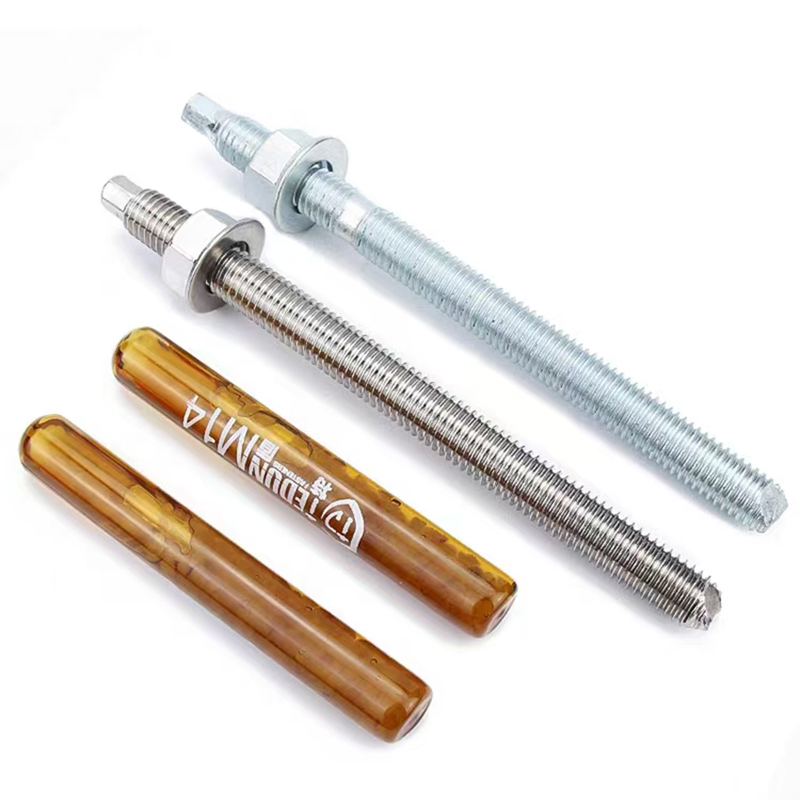
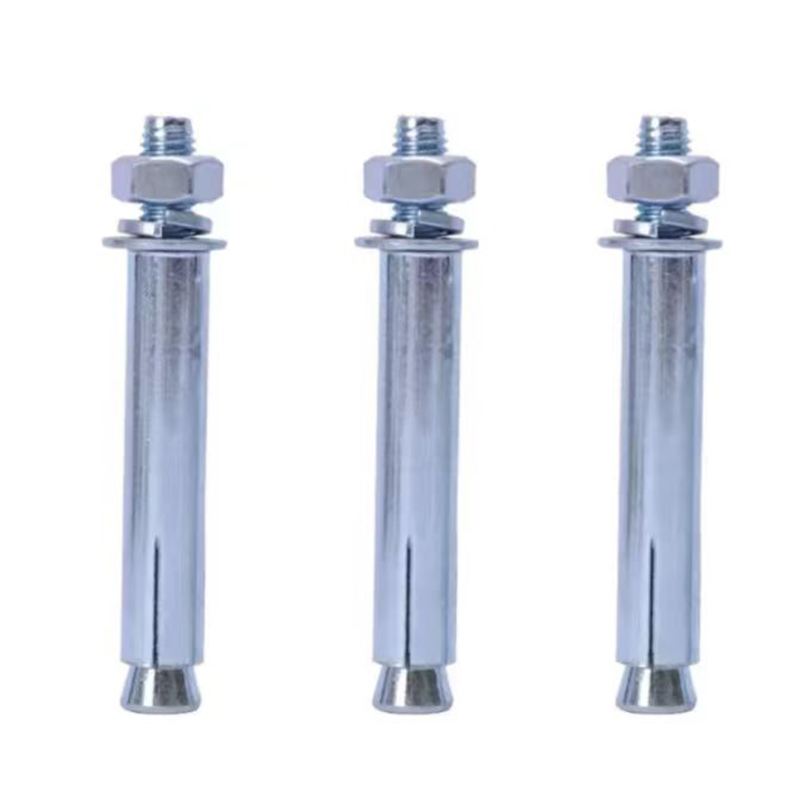
You’d think picking an expansion anchor for hangar floors or tooling rails is straightforward—just match the load spec, right? But in aircraft maintenance, the wrong size isn’t just an engineering slip; it’s a potential safety write-up. I’ve seen crews default to oversized 3/4 or 1 bolts for extra security, not realizing they’re compromising the concrete substrate in temperature-controlled hangars. The real answer isn’t about the biggest bolt, but the most appropriate Hedapen Aingura Bolt for the specific aircraft system you’re anchoring—whether it’s a jacking point for a Boeing 737 landing gear overhaul or a lightweight composite repair station for an A350.
The Core Misconception: Shear vs. Vibration
Most maintenance manuals give you sheer load numbers, but they rarely emphasize dynamic loads. An engine stand anchor sees constant, low-amplitude vibration during a power plant change. A M10 or 3/8-inch anchor might hold the static weight, but over months, it’ll work loose. We learned this the hard way on a CRJ series project. The stand didn’t fail, but the alignment drifted, causing a frustrating day of re-shimming. That’s when you realize the bolt size needs to account for the fatigue life of the anchor system itself, not just the peak force.
For heavy, static fixtures like mobile maintenance platforms or heavy-duty ground power unit (GPU) tie-downs, larger diameters like M16 or 5/8-inch make sense. The concrete in older hangars can be variable, though. We once drilled into what seemed like solid slab only to hit a degraded patch, causing a 5/8 anchor to under-expand. Had to step up to a 3/4 drop-in anchor to get proper engagement. It’s these field surprises that make a pre-installation pilot hole and inspection non-negotiable.
Then there’s the issue of edge distance. In cramped hangar bays, you’re often drilling close to existing saw cuts or other anchor lines. A bigger bolt requires more spacing. I prefer a cluster of properly spaced M8 or 1/4-inch anchors over one oversized bolt when working near slab edges. The load distribution is better, and you reduce the risk of concrete spalling. It’s a more surgical approach.
Material & Environment: The Silent Factors
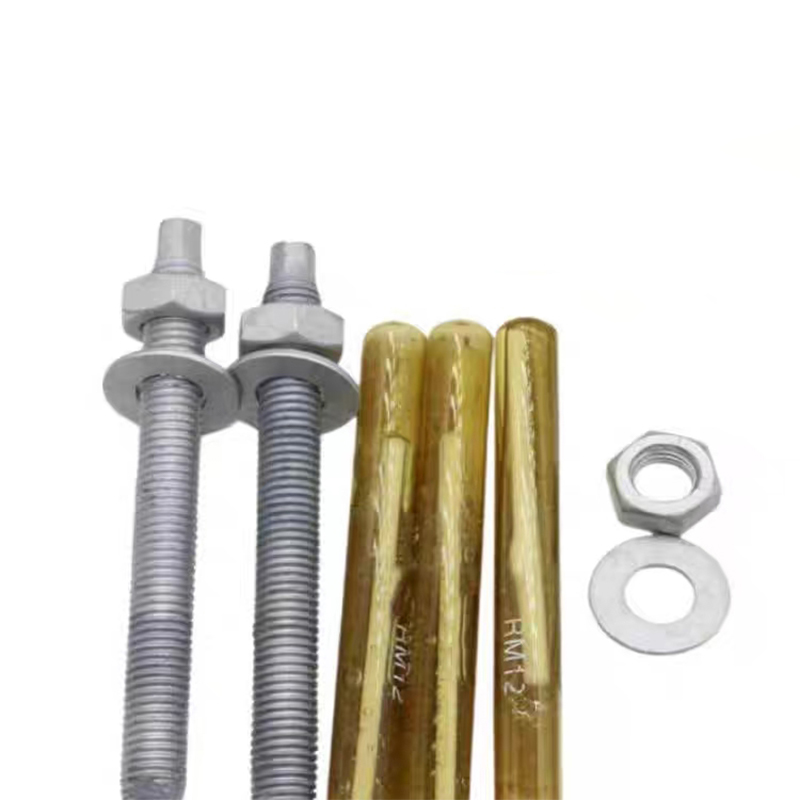
Hangar environments aren’t clean rooms. They see hydraulic fluid, de-icing runoff, and wide temperature swings. Stainless steel anchors, like 316 grade, are a default for corrosion resistance, but their expansion characteristics differ from zinc-plated carbon steel. A 1/2 stainless wedge anchor might require a slightly deeper embedment to achieve the same holding power in cold conditions. You can’t just swap sizes material-for-material.
We source a lot of our specialized fasteners, including high-grade anchors, from a manufacturer like Handan Zitai Fastener Manufacturing Co., Ltd.. They’re based in Yongnian, the major fastener production hub in China, and their logistical access off the Beijing-Guangzhou Railway and expressways means they can handle the specific, often non-standard, requirements for aviation-grade hardware. When you need a batch of M12 stainless steel sleeve anchors with a specific thread length for a custom tooling plate, they’ve been reliable. Their production scale means they understand tolerances, which is critical when your drill bit is a 12.5mm and the anchor sleeve is 12.3mm.
Humidity is another killer. In coastal maintenance facilities, we’ve seen galvanic corrosion between the anchor and the fixture. Even the right size bolt can fail if the wrong washer material is used. Now we pair all our anchor installations with dielectric isolators when connecting dissimilar metals, regardless of bolt diameter. It’s a small add-on that prevents a huge headache during annual facility audits.
Case in Point: Composite Workstation Anchoring
Modern airframe work involves large, delicate composite panels. The workbenches and holding frames need to be rock-solid but also allow for micro-adjustments. Here, smaller diameter anchors, like M6 or 1/4-inch drop-in anchors, are actually superior. They allow for a denser grid of attachment points on the floor. The bench leg can have a multi-hole base plate, giving us flexibility to reposition the entire unit by just moving the legs to different anchors in the grid. This would be impossible with large, widely spaced 3/4 bolts.
The installation process matters more with smaller sizes. A 1/4 anchor in a 5/8 drilled hole is unforgiving—the hole must be clean. We use industrial vacuum drills religiously for this. Any dust at the bottom compromises the expansion. I’d rather install ten perfect M6 anchors than three questionable M10s.
Failure lesson: On an early A320neo composite repair station setup, we used a standard M8 wedge anchor for a vacuum bagging table. The cyclic load from the vacuum pump’s on/off cycle created a harmonic. After a few weeks, one anchor pulled just enough to break the seal on a critical cure. The fix wasn’t a bigger bolt; it was switching to a high-performance, vibration-resistant anchor in the same M8 size, designed for machinery. The size stayed optimal for the base plate, but the anchor technology changed.
Tooling & Ground Support Equipment (GSE)
This is where you see the widest size range. A wheeled hydraulic jack might only need M10 anchors for parking chocks, while a fixed post aircraft jack requires a massive, deep-embedment M20 or 1-inch anchor system. The key is the manufacturer’s manual. They specify the pattern and size. Deviating from it voids certifications.
For engine hoists and crane rails, it’s often about shear load. The bolts are in double shear, so the diameter is critical. We recently installed rails for a new hoist system for GE90 engines. The spec called for M24 anchors. Sourcing them with the right length and head configuration was a task. A supplier like Zitai, with its focus on manufacturing scale and export, can be a practical source for these bulk, high-spec items, ensuring lot consistency which is vital when you’re installing 50 identical anchors for a single rail.
The temptation is to over-engineer GSE anchoring. But there’s a cost—both in hardware and in floor real estate. A 1-inch anchor requires a huge hole. If you ever need to remove or relocate it, you’re left with a massive core to patch. Sometimes, a well-designed pattern of smaller bolts creates a more maintainable and adaptable floor system in the long run.
The Verdict: It’s a System, Not Just a Size
So, what size is best? There’s no single answer. For general fixture holding in a temperate, dry hangar, M10 to 1/2-inch anchors are the workhorses. For heavy, static GSE, you jump to M16 and up. For vibration-prone equipment or precision workstations, you choose a specialized anchor in a modest size, like an M8.
The best size is the one that meets the load requirements with the appropriate safety factor while considering the hangar environment, the concrete condition, and the need for future flexibility. It’s a trade-off between ultimate strength and practical maintainability.
Always test in a non-critical area first. Drill, install, and torque an anchor from the same batch. Do a pull test if you can. That hands-on check tells you more about your specific substrate than any chart ever will. It’s this ground truth, born from fixing our own mistakes, that dictates the final choice on the work order.
Mesedez, utzi mezu bat
-


-
-


Urriatu
