
- Chinese
- French
- German
- Portuguese
- Spanish
- Russian
- Japanese
- Korean
- Arabic
- Irish
- Greek
- Turkish
- Italian
- Danish
- Romanian
- Indonesian
- Czech
- Afrikaans
- Swedish
- Polish
- Basque
- Catalan
- Esperanto
- Hindi
- Lao
- Albanian
- Amharic
- Armenian
- Azerbaijani
- Belarusian
- Bengali
- Bosnian
- Bulgarian
- Cebuano
- Chichewa
- Corsican
- Croatian
- Dutch
- Estonian
- Filipino
- Finnish
- Frisian
- Galician
- Georgian
- Gujarati
- Haitian
- Hausa
- Hawaiian
- Hebrew
- Hmong
- Hungarian
- Icelandic
- Igbo
- Javanese
- Kannada
- Kazakh
- Khmer
- Kurdish
- Kyrgyz
- Latin
- Latvian
- Lithuanian
- Luxembou..
- Macedonian
- Malagasy
- Malay
- Malayalam
- Maltese
- Maori
- Marathi
- Mongolian
- Burmese
- Nepali
- Norwegian
- Pashto
- Persian
- Punjabi
- Serbian
- Sesotho
- Sinhala
- Slovak
- Slovenian
- Somali
- Samoan
- Scots Gaelic
- Shona
- Sindhi
- Sundanese
- Swahili
- Tajik
- Tamil
- Telugu
- Thai
- Ukrainian
- Urdu
- Uzbek
- Vietnamese
- Welsh
- Xhosa
- Yiddish
- Yoruba
- Zulu
- Kinyarwanda
- Tatar
- Oriya
- Turkmen
- Uyghur

What is a 7-character footing?
2026-01-30
You hear 7-character footing tossed around in fastener specs or old engineering notes, and honestly, most people’s eyes glaze over. It sounds like some arcane code. In my line of work—dealing with structural connections, anchor bolts, and heavy base plates—it’s not a code, but a specific, almost old-school way of defining a bolt’s embedment depth. The confusion usually starts because folks assume it’s about the physical bolt having seven characters stamped on it. It’s not. It’s a specification language, a shorthand. Essentially, it refers to the required length of the bolt that must be buried in concrete to develop its full tensile strength, and the 7-character part is a format for conveying that dimension and sometimes other attributes in a tight, standardized string of letters and numbers. I’ve seen this come up most in legacy project drawings or when dealing with certain industrial equipment installations from the late 20th century.
The Anatomy of the 7-Character String
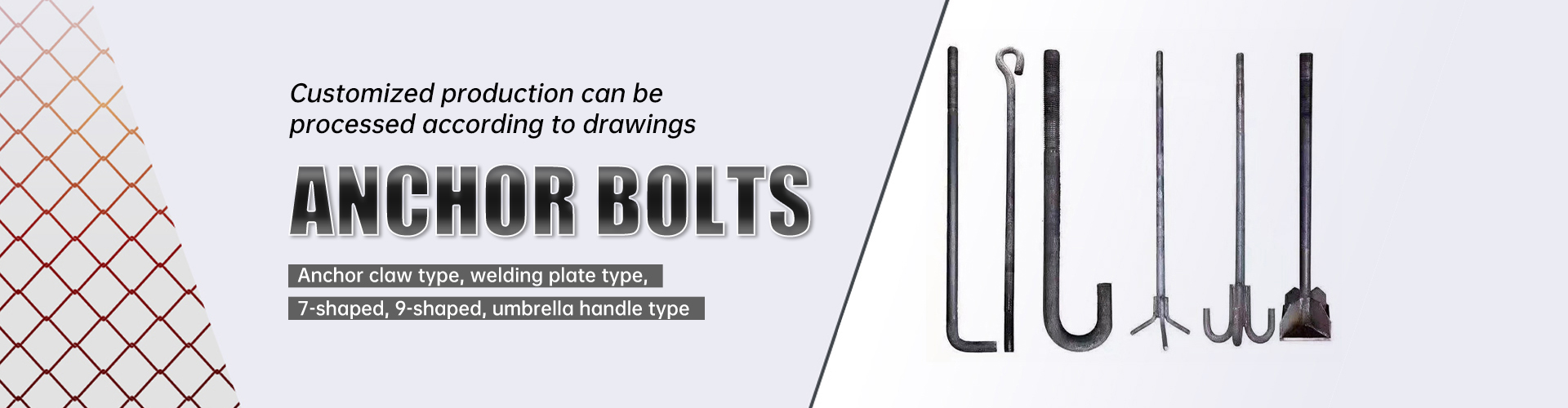
Let’s break down what those seven characters typically represent. It’s not universal, but a common pattern I’ve encountered is something like ‘L45x300’. That’s six characters, you might say. Add a prefix or suffix letter for thread type or finish, and you hit seven. The ‘L’ might denote a specific bolt type (like a J-bolt or L-bolt for embedment). The ’45’ could be the diameter in millimeters, and ‘300’ the embedment depth. Another format might be ‘M36-400’, where ‘M’ is metric thread, ’36’ is diameter, and ‘400’ is the embedment. The key is the depth—the 300mm or 400mm—that’s the critical footing dimension. It’s the part that ensures the bolt doesn’t just pull out under load. I recall a retrofit project where the original 1980s specs called for 7-character footing bolts, spec: H-B 5/8×24. Took us a day to decipher that H-B was likely a manufacturer’s series, 5/8 diameter, and 24 inches of embedment. The 7-character was the overarching descriptor for that class of specification.
Why this format? Pre-digital drafting. It was a compact way to pack critical info into a limited space on a drawing schedule. You couldn’t write a paragraph. You needed a string that a seasoned fabricator or site foreman could glance at and understand. The problem today is that knowledge is fading. Younger engineers see it and have to go digging through obsolete manuals. I’ve been that guy on the phone explaining it to a confused contractor more times than I can count.
The practical implication is all about load transfer. That embedded length is calculated based on the concrete’s compressive strength and the bolt’s yield strength to ensure a proper bond. Too short, and you risk a catastrophic pull-out failure. I always cross-reference these old specs with modern anchor design codes, like ACI 318 Appendix D or its equivalents, to verify the adequacy. Sometimes the old specs were overly conservative; sometimes, worryingly, they were borderline.
Real-World Application and Common Pitfalls
Where do you actually see these? Old power generation facilities, pump bases for large industrial machinery, and the support structures for heavy conveyors. The site condition is often the biggest hurdle. You get a drawing calling for a 7-character footing bolt with a 400mm embedment. You show up, and the existing concrete foundation is only 500mm thick. You can’t embed 400mm without blowing out the bottom. Now what? The original designer might have assumed a massive concrete block. This is where the rubber meets the road. You either have to redesign the foundation block (costly, time-consuming) or find an alternative anchoring system, like post-installed adhesive anchors or undercut anchors, which can achieve similar capacity with a shorter embedment. But that requires a full structural re-calculation.
Another pitfall is corrosion protection. Many of these old specs were for plain carbon steel bolts. In a chemical plant or a wastewater treatment setting, that bolt, buried in concrete, can corrode from within. I’ve been on forensic investigations where the failure wasn’t due to embedment length but due to section loss from corrosion at the concrete interface. Now, when I see a 7-character spec, one of my first questions is about the environment. Should it be stainless? Should there be a protective coating? The original spec often silent on this.
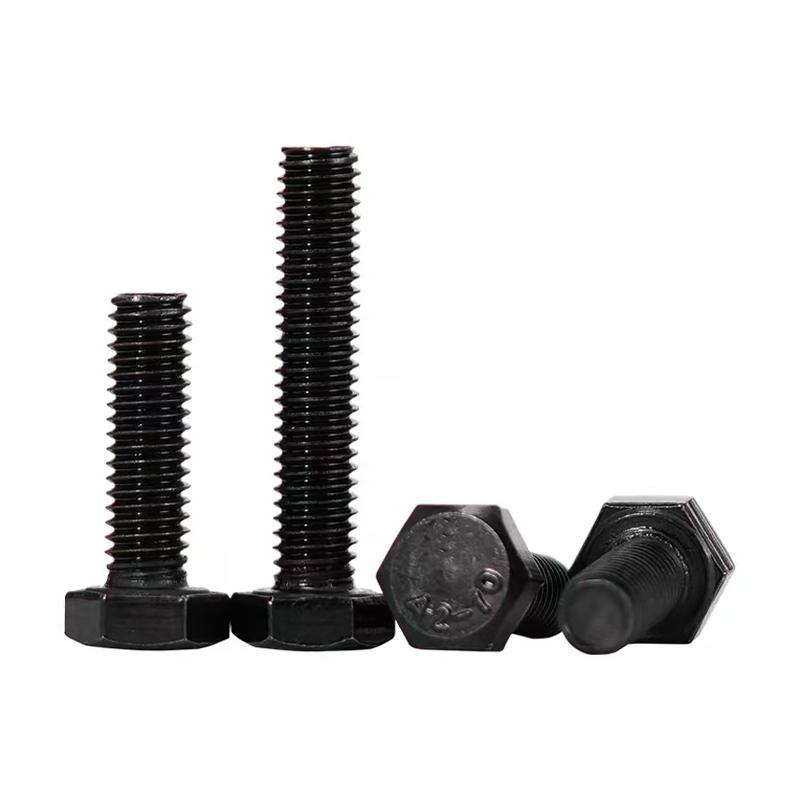
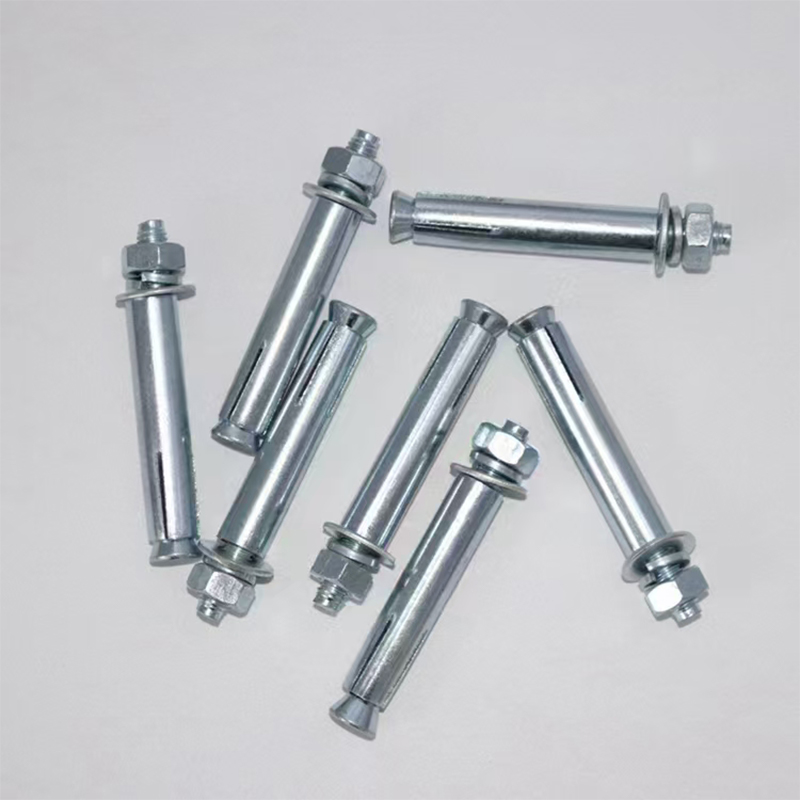
Sourcing is its own headache. You can’t just walk into a standard fastener shop and ask for a 7-character footing bolt. You need to translate the spec into modern, purchasable terms: material grade (e.g., ASTM A307, A193 B7), diameter, thread pitch, and total length (embedment depth plus the exposed thread length). This is where having a reliable manufacturer is gold. A company like Handan Zitai Fastener Manufacturing Co., Ltd., based in China’s major fastener production hub in Yongnian, Hebei, often has the capability to produce these non-standard, heavy-duty items to precise specifications. Their location near major transport links is practical for logistics, but the real value is in their engineering support to interpret these legacy requirements into a manufacturable product.
Case in Point: A Retrofit Gone Awry
I’ll share a brief case that wasn’t a disaster but a near-miss that cost time and money. We were installing a new compressor on an existing pad in an old refinery. The drawings, a copy of a copy, specified Anchor Bolts (7-char footing): 4 req’d, see detail 5/B. Detail 5/B was faded but showed something like D32-550. We interpreted it as 32mm diameter, 550mm embedment. The foundation was thick enough, so we procured the bolts—through a local supplier who subcontracted the fabrication. The bolts arrived, we set them in the template, poured the grout. During the final torque-up, one of the bolts started spinning. It had pulled. We stopped everything.
After frantic investigation, we realized our error. In the original drawing’s tiny legend, the D didn’t stand for diameter; it stood for a proprietary deformed-bar anchor type from a defunct German manufacturer. The 32 was the diameter, but the 550 was the total length, not the embedment depth. The embedment was actually marked elsewhere as 400mm. Our bolt had the wrong deformation pattern along the shank for the full 550mm, meaning the bond strength was way lower than required. We had to core out the grout, remove the bolts, and start over. The lesson? The 7-character spec was a clue, but we didn’t dig deep enough into the contemporaneous supporting documents. We assumed the format was universal. It wasn’t.
This is why I now treat any such spec as a starting point for detective work. It necessitates a review of the full project’s historical standards, material specs from the era, and sometimes even reaching out to retired engineers if the project is critical enough.
Modern Equivalents and Obsolescence
So, is the concept of a 7-character footing obsolete? Largely, yes, in terms of the specific terminology. Modern engineering software and BIM (Building Information Modeling) models embed (no pun intended) all this data parametrically. An anchor bolt in a Revit model has dozens of properties attached to it: diameter, length, embedment, material, ultimate strength, corrosion resistance, installation torque. The need for a cryptic seven-character string is gone.
However, the principle is absolutely not obsolete. Specifying a clear, unambiguous embedment depth is more critical than ever. We just do it differently. A modern spec might read: Anchor Bolt: ASTM F1554 Grade 105, 1-1/4 diameter, hex head, with 36 minimum embedment into concrete, f’c=4000 psi. That’s more characters, but it’s explicit. The legacy of the 7-character system is a reminder to be precise and comprehensive. It forced a discipline of conciseness that we’ve perhaps lost, but we’ve gained clarity.
For fabricators and suppliers today, the translation is key. When I receive an old drawing, I create a clear cut sheet that strips out the jargon. I might write: For item marked ‘L45x300’ on drawing A-101, supply 4x anchor bolts, material: 304 Stainless Steel, diameter: 45mm, total thread length to be 700mm with 300mm of clean shank for embedment, thread to ISO metric coarse pitch. I then send that to a manufacturer like Zitai Fastener for quote. Clarity prevents the expensive mistakes. Their team, familiar with both old and new standards, can usually work from that without issue.
Conclusion: It’s About the Depth, Not the Jargon
At the end of the day, 7-character footing is a piece of historical technical jargon. If you remember one thing, let it be this: the core of the term points to the critically important embedment depth of a fastener in concrete. It’s a snapshot of an era of engineering communication. Today, we have better tools and more explicit standards, but the fundamental challenge remains the same: ensuring a steel element is securely bonded into concrete to carry a load. The terminology fades, the calculations get more sophisticated, but the need for rigorous attention to detail on the shop drawing and at the jobsite never changes. Don’t get hung up on decoding the seven characters; focus on verifying the load path they were meant to ensure. That’s the real takeaway from two decades of seeing these things in the wild, from pristine drawings to grease-stained field sketches.
Please leave us a message
-


-
-


WeChat