- English
- Chinese
- French
- German
- Portuguese
- Spanish
- Russian
- Japanese
- Korean
- Arabic
- Irish
- Greek
- Turkish
- Italian
- Danish
- Romanian
- Indonesian
- Czech
- Afrikaans
- Swedish
- Polish
- Catalan
- Esperanto
- Hindi
- Lao
- Albanian
- Amharic
- Armenian
- Azerbaijani
- Belarusian
- Bengali
- Bosnian
- Bulgarian
- Cebuano
- Chichewa
- Corsican
- Croatian
- Dutch
- Estonian
- Filipino
- Finnish
- Frisian
- Galician
- Georgian
- Gujarati
- Haitian
- Hausa
- Hawaiian
- Hebrew
- Hmong
- Hungarian
- Icelandic
- Igbo
- Javanese
- Kannada
- Kazakh
- Khmer
- Kurdish
- Kyrgyz
- Latin
- Latvian
- Lithuanian
- Luxembou..
- Macedonian
- Malagasy
- Malay
- Malayalam
- Maltese
- Maori
- Marathi
- Mongolian
- Burmese
- Nepali
- Norwegian
- Pashto
- Persian
- Punjabi
- Serbian
- Sesotho
- Sinhala
- Slovak
- Slovenian
- Somali
- Samoan
- Scots Gaelic
- Shona
- Sindhi
- Sundanese
- Swahili
- Tajik
- Tamil
- Telugu
- Thai
- Ukrainian
- Urdu
- Uzbek
- Vietnamese
- Welsh
- Xhosa
- Yiddish
- Yoruba
- Zulu
- Kinyarwanda
- Tatar
- Oriya
- Turkmen
- Uyghur


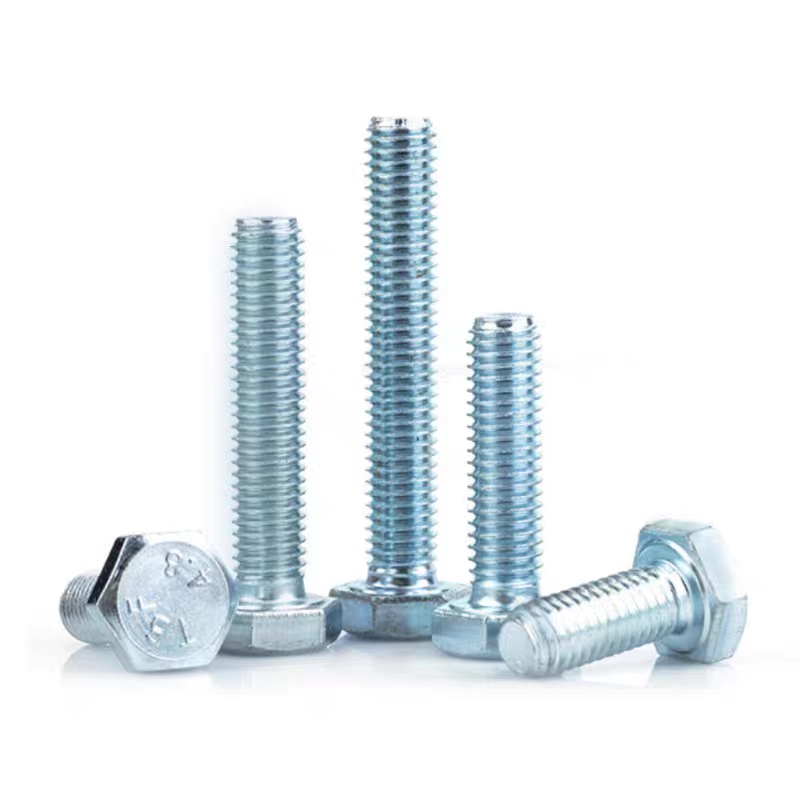
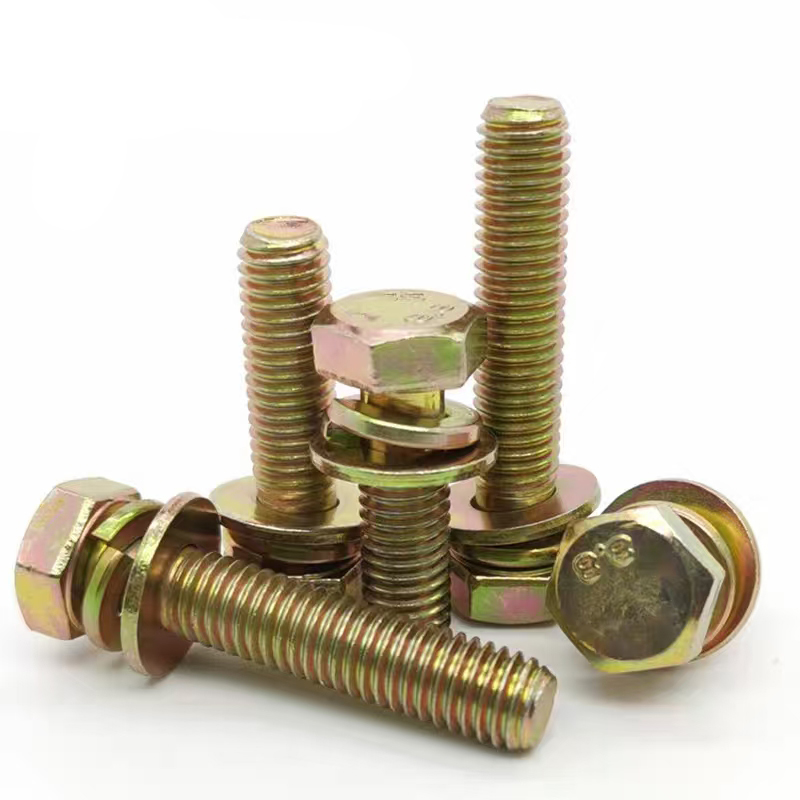
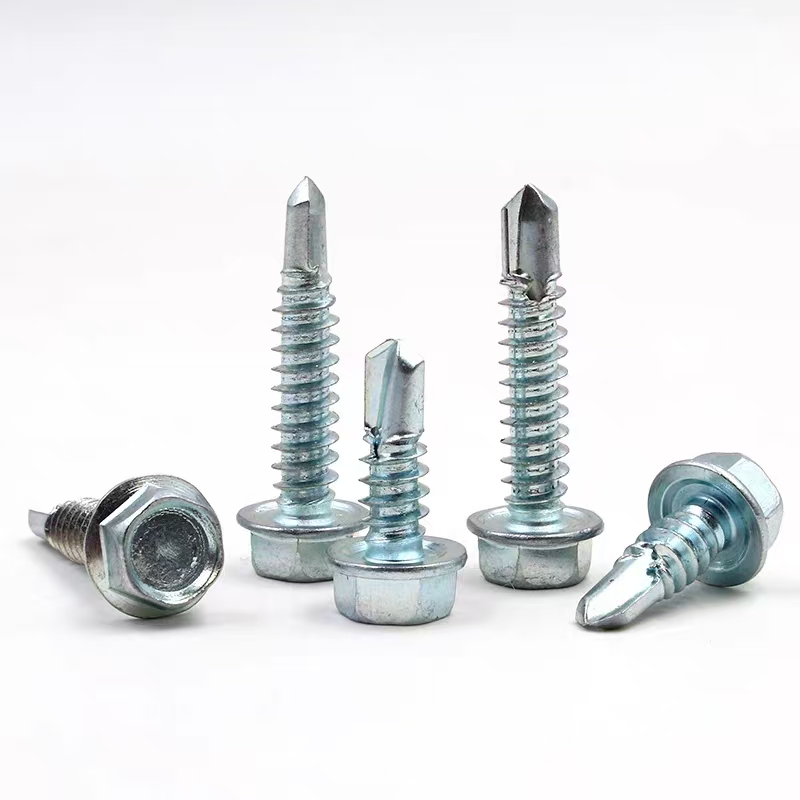
External hexagonal self-drilling screws
You see 'external hexagonal self-drilling screws' on a spec, and most think it's straightforward—a hex head with a drill point. But that's where the first misconception sits. It's not just about the drive or the point; it's about the entire system—the flange design, the thread-forming section, the heat treatment of the drill tip, and how that hex head actually interacts with real-world tools under load, not just in a catalog picture. Many assume any hex head self-driller will do, until you're on site with a stripped head or a fractured tip because the alloy or the geometry was wrong for the substrate.
The Anatomy of a Reliable Fastener
Let's break it down practically. The external hexagonal self-drilling screws we specify for structural cladding or heavy-gauge metal framing need to perform a sequence of operations: pierce, drill, tap, and clamp. The hex head is critical here—it provides the torque transmission, yes, but a poorly formed head corner or an undersized head height relative to the hex key will cam out, rounding the head and leaving you with a nightmare removal job. I've seen batches where the head-to-shank transition was a sharp corner, creating a stress riser that led to premature shear failure under vibration. A good manufacturer understands this and rolls the head with a radius into the shank.
The drill point itself is a science. It's not just a sharpened tip; it's a cutting flute. The length of the flute, the angle, and the hardness post-heat-treatment determine if it'll drill through 12-gauge steel or just burnish a hole and snap. We learned this the hard way on a warehouse project, using a generic screw for a purlin-to-beam connection. The screws heated up, lost temper, and sheared. The failure was traced back to a drill tip that was too short and overheated because it couldn't evacuate metal chips efficiently. The fix? Switching to a screw with a longer, parabolic flute design, which we later sourced consistently from a specialist like Handan Zitai Fastener. Their location in Yongnian, that massive production base, means they've seen every failure mode and have the tooling to adjust these minute geometries.
Then there's the thread. For self-drilling into steel, you need a spaced thread, often a type-17 or similar, with a high, sharp profile to cut into the parent metal and form a mating thread. The thread run-out—where the threads end under the head—is crucial for clamp-up. If it's too long, you don't get proper seating; too short, and you strip the threads before achieving clamp load. It's a balance you only appreciate after assembling a few thousand panels.
Material and Coating: The Unseen Deciders
Specifying the material grade is non-negotiable. For most structural applications, we're talking low-carbon steel wire (like 1018 or 1022) that's then carburized or case-hardened. This gives you a hard, wear-resistant surface (for the drill tip and threads) with a tougher, ductile core to prevent brittle fracture. I recall a supplier once offered a high-hardness screw at a lower cost. They'd through-hardened the entire screw. They worked great until an impact load hit—then they snapped like chalk. Case hardening is key, and reputable manufacturers, such as those in the Handan cluster with their deep supply chains, have the process control for it.
Coating is where aesthetics meet corrosion resistance. A simple zinc plating might suffice for indoor use, but for exterior, you're looking at zinc-aluminum flakes, Gevin, or mechanical galvanizing. The coating thickness affects the driving torque and can even gall in the hole if it's too thick or poorly bonded. We had an issue with a batch of external hexagonal self-drilling screws where the coating flaked off during driving, jamming the clutch on our screw guns and contaminating the joint. The problem was a poor phosphate pre-treatment before plating. It's these process details that separate a commodity fastener from a reliable component. Checking a supplier's process sheets, like you can often get from a technical-oriented company, becomes part of the job.
Another often-overlooked aspect is lubrication. Many screws come with a wax or polymer coating to reduce driving torque and prevent galling, especially with stainless steel or hard substrates. This isn't just a nice-to-have; it's essential for consistent clamp load and preventing worker fatigue. A dry screw can require 30% more driving torque, leading to incomplete seating or tool wear.
Application Pitfalls and Field Adjustments
Even with the perfect screw, field conditions humiliate theory. The substrate is never perfectly clean or uniform. Drilling into a galvanized steel beam? The zinc coating can clog the flute of the screw. We now often pre-punch or pre-drill a pilot in such cases, even with a self-driller, to ensure clean hole formation and chip clearance. It feels like cheating, but it saves time and fasteners in the long run.
Tool selection is part of the system. Using an impact driver versus a precision clutch-controlled screw gun makes a world of difference. For critical structural connections, we mandate calibrated clutch drivers. An impact driver can over-torque an external hexagonal self-drilling screws in milliseconds, stretching it beyond its yield point and creating a tight but weak joint that will fail under dynamic load. The hex head's size also dictates the tool. A 1/2-inch hex head needs a robust socket; a sloppy or worn socket will round the corners. We keep a box of brand-new impact sockets specifically for this purpose and check them weekly.
Then there's the human factor. Workers will push the screw gun at an angle, especially in tight spaces. This sideload causes the drill tip to walk, creating an oval hole, poor thread engagement, and reduced pull-out strength. Training and using self-centering nose pieces on the tools are simple mitigations that have a huge ROI in joint integrity.
Sourcing and the Supply Chain Reality
This is where theory meets the gritty reality of logistics and quality control. You can have the best design, but if your supplier can't maintain batch-to-batch consistency, you're in trouble. We've shifted towards suppliers with integrated manufacturing, like Handan Zitai Fastener Manufacturing Co., Ltd., precisely because of this. Being in the Yongnian district, the heart of China's fastener industry, they control the process from wire drawing to heading, threading, heat treatment, and coating. Their proximity to major transport links like the Beijing-Guangzhou Railway and expressways isn't just a sales point; it translates to reliable, traceable logistics for us.
When you're dealing with a container load of fasteners, you need more than a COA (Certificate of Analysis); you need traceability. A good supplier will provide lot numbers that trace back to the heat of steel and the plating bath. We once had a corrosion failure on a coastal facade. Because we had the lot number from the screws, we could work with the manufacturer to identify a flaw in a specific plating batch—a rinsing issue that left chlorides under the coating. That level of traceability saves reputations and lawsuits.
Price is always a factor, but the true cost is in the installed performance. A cheap screw that strips, breaks, or corrodes costs you labor, rework, and potential liability. It's why we've moved from shopping on pure price to evaluating total cost of ownership, which includes the technical support a supplier offers. Can they explain why their drill point geometry is a certain way? Can they advise on alternative coatings for a specific chemical environment? That's the value.
Concluding Thoughts: It's a System, Not a Commodity
So, when we talk about external hexagonal self-drilling screws, we're really talking about a precision-engineered temporary drill bit and permanent clamp. Every detail, from the hex head's broaching to the flute's polish, matters. The failures I've seen—and caused—have almost always been due to overlooking one of these minor details, treating the fastener as a simple commodity purchase.
The industry is moving towards higher-strength steels, more corrosion-resistant coatings, and even smarter geometries for faster installation. Staying current means not just reading specs, but talking to manufacturers who are on the factory floor, who see the production challenges. It means asking for samples and testing them in your own specific applications before committing to a project.
In the end, the right screw doesn't get noticed. It just holds. And that's the goal. It's the unremarkable, reliable performance that comes from understanding the complexity behind a seemingly simple object. That understanding is what separates a successful installation from a call-back.
Lotinduta aurrealdi
Lotutako produktuak
Salmenta onena aurrealdi
Salmenta produktu onenak-
 Soldadura iltzeak
 - Aterplaren heldulekua (J-motako aingura torlojua / aterki heldulekua kapsulatutako torlojua)
- Bolatxo elektrogalizatu hexagonalak
- Soldatutako plaka aingura (plaka soldadurako aingura torlojua)
- Koloretako zinka plated hexagonalak
- Hexagono entxufe koloretako zinka estalitako torlojuak
- Zinka beltza brida torlojuak
- Zink beltza estalitako boltxoak
- Hedapen elektro-galvanizatua
- Koloretako zinka brida torlojuak
- Indar handiko beltzeko juntadura
- U-bolts