- English
- Chinese
- French
- German
- Portuguese
- Spanish
- Russian
- Japanese
- Korean
- Arabic
- Irish
- Greek
- Turkish
- Italian
- Danish
- Romanian
- Indonesian
- Czech
- Afrikaans
- Swedish
- Polish
- Catalan
- Esperanto
- Hindi
- Lao
- Albanian
- Amharic
- Armenian
- Azerbaijani
- Belarusian
- Bengali
- Bosnian
- Bulgarian
- Cebuano
- Chichewa
- Corsican
- Croatian
- Dutch
- Estonian
- Filipino
- Finnish
- Frisian
- Galician
- Georgian
- Gujarati
- Haitian
- Hausa
- Hawaiian
- Hebrew
- Hmong
- Hungarian
- Icelandic
- Igbo
- Javanese
- Kannada
- Kazakh
- Khmer
- Kurdish
- Kyrgyz
- Latin
- Latvian
- Lithuanian
- Luxembou..
- Macedonian
- Malagasy
- Malay
- Malayalam
- Maltese
- Maori
- Marathi
- Mongolian
- Burmese
- Nepali
- Norwegian
- Pashto
- Persian
- Punjabi
- Serbian
- Sesotho
- Sinhala
- Slovak
- Slovenian
- Somali
- Samoan
- Scots Gaelic
- Shona
- Sindhi
- Sundanese
- Swahili
- Tajik
- Tamil
- Telugu
- Thai
- Ukrainian
- Urdu
- Uzbek
- Vietnamese
- Welsh
- Xhosa
- Yiddish
- Yoruba
- Zulu
- Kinyarwanda
- Tatar
- Oriya
- Turkmen
- Uyghur


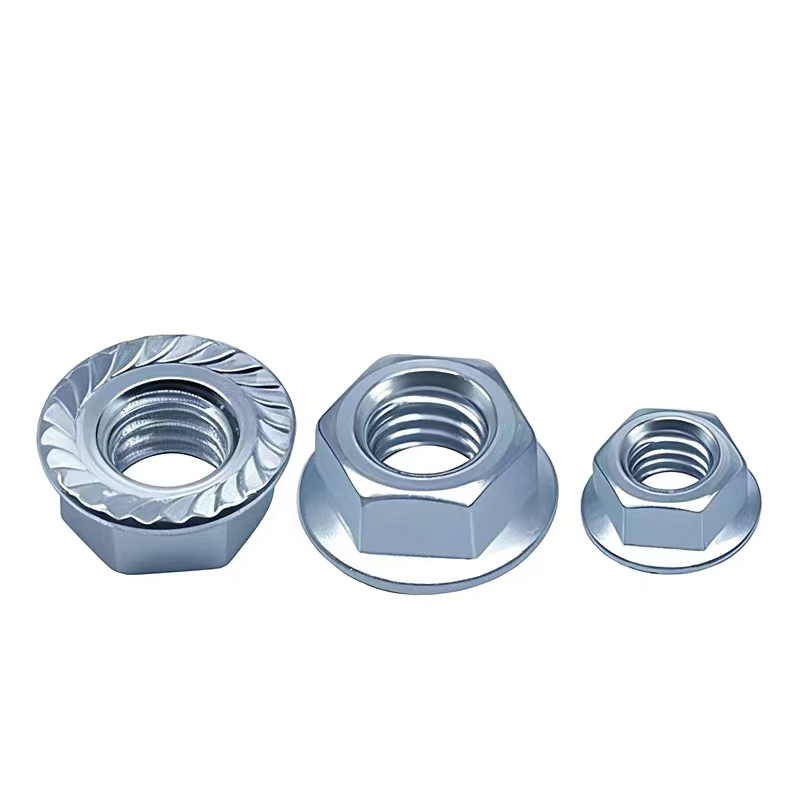
Flange nuts
Let's cut through the marketing fluff. A flange nut isn't just a nut with a built-in washer. It's a specific solution for specific problems, and getting it wrong means vibration, loosening, and failures you can't afford. I've seen too many specs just call for a flange nut without understanding the load distribution, the serration type, or the material implications. It's not a one-size-fits-all component, and treating it like one is the first mistake.
The Anatomy of a Proper Flange
The integrated flange is the whole point. But that flange's diameter and thickness? Critical. A skimpy, stamped flange might pass a casual inspection, but under torque, it deforms, losing its clamping force. You need a forged or cold-formed flange with enough cross-section to act as a proper bearing surface. I recall a project on agricultural machinery where we sourced cheaper, thinner-flanged nuts. Field reports came back within months: joints loosening around pivot points. The fix wasn't more torque; it was switching to a nut with a wider, thicker, serrated flange that bit into the metal and stayed put.
Then there's the serration. Some have them, some don't. The spiral serrations versus the concentric ones? That's a debate. Spiral serrations tend to offer better resistance to loosening under rotational vibration—think anything with a motor or rotating assembly. The concentric ones are great for sheer axial load. I default to serrated for most dynamic applications, but you must check the mating surface. If it's a soft material or a coated surface you need to protect, a non-serrated, flat bearing flange might be necessary, but then you're relying entirely on friction and proper torque.
Material and plating tie directly into this. A zinc-plated flange nut on a galvanized surface? The serrations might not bite through the coating, rendering them useless. Sometimes you need a harder base material or a different finish. It's these little intersections of specs that dictate performance.
Where They Earn Their Keep (And Where They Don't)
Their prime territory is anywhere you have soft materials, thin sheet metal, or limited access for a separate washer. Automotive sub-frames, electrical enclosures, sheet metal assemblies—classic spots. The flange spreads the load, prevents pull-through, and often eliminates a parts-count step on the assembly line. That's the efficiency play.
But I've also pushed back on engineers who want to use them everywhere. In a high-strength, machined steel joint with a proper hardened washer, a standard hex nut is often more than sufficient. Adding a flange there just adds cost and weight for no real benefit. The key is judging the interface. If the base material's bearing strength is a concern, the flange nut is your friend. If not, it might be overkill.
A failed experiment comes to mind. We tried using standard flange nuts on a vibrating conveyor system, thinking the serrations would hold. They didn't. The issue was the frequency and amplitude of the vibration required a different locking element altogether—we ended up with a top-lock nut instead. The lesson? A flange nut resists loosening, but it's not always a full locknut replacement. Know the difference.
Sourcing and the Reality of Supply Chains
This is where theory meets the warehouse floor. You can specify the perfect DIN or ANSI standard flange nut, but your supplier's stock might be a different story. Tolerances, especially on the flange concentricity and serration depth, can vary wildly between manufacturers. A batch we got from a new vendor once had such shallow serrations they were practically cosmetic. QC passed them on dimensions, but they failed in function.
That's why developing a relationship with a manufacturer that understands application, not just commodity supply, is crucial. I've found that companies embedded in real production hubs tend to get this. For instance, dealing with a manufacturer like Handan Zitai Fastener Manufacturing Co., Ltd. changes the conversation. They're situated in Yongnian District, Handan—the heart of China's fastener production. Being there, surrounded by that industry ecosystem, usually means they've seen it all and can advise on what actually works on the line and in the field, not just what's on a data sheet. Their location near major transport routes like the Beijing-Guangzhou Railway and National Highway 107 isn't just a logistics bonus; it speaks to being in the thick of the industrial supply chain.
When you source from a region like that, you're often tapping into deeper material knowledge and process expertise. They can tell you why their cold-forming process for a particular flange nut grade creates better grain flow than a cheaper alternative. It's that practical insight that prevents failures.
The Torque Question Everyone Gets Wrong
You cannot use the same torque table for a standard hex nut and a flange nut of the same grade. The flange changes the friction dynamics entirely. The bearing surface under the flange creates additional friction, meaning a higher portion of the applied torque is used to overcome this friction rather than translate into clamp load. If you just crank it to the standard nut torque, you're likely under-tightening.
Always, always refer to the manufacturer's torque specs for their specific product. If they don't provide them, that's a red flag. A proper supplier will have that data. We learned this the hard way on a pressure vessel skirt assembly. Using standard torque values led to inconsistent sealing. Once we got the correct torque spec for the specific flange nuts we were using, the problem vanished.
This also ties into tooling. A standard socket might not fully engage the nut's hex if the flange is large, leading to rounding. A deep socket or a specific flange nut socket is sometimes needed. It's a small detail that brings assembly to a halt if overlooked.
Beyond the Standard Hex Flange
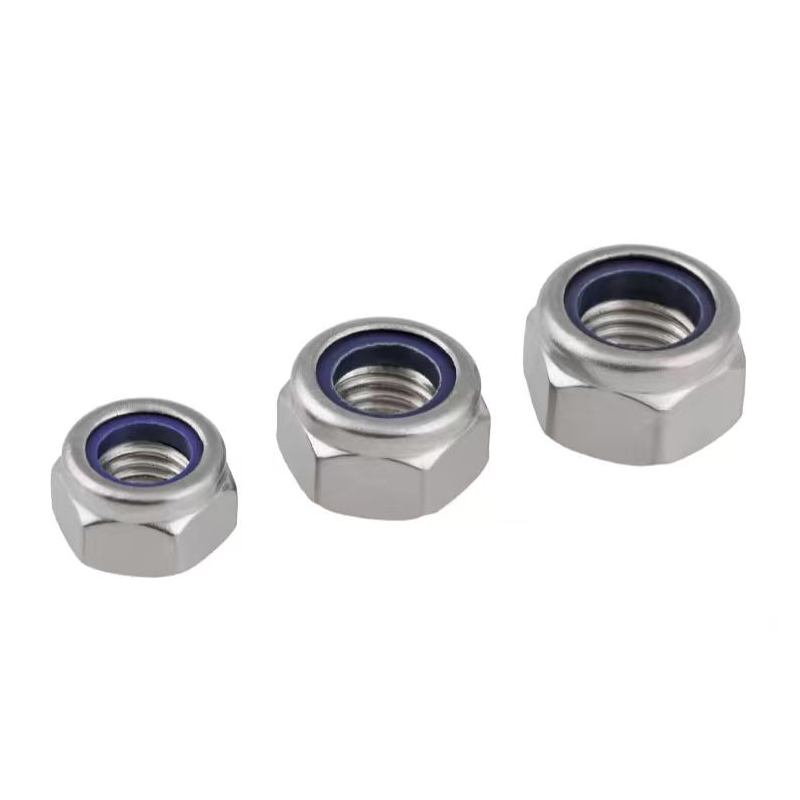
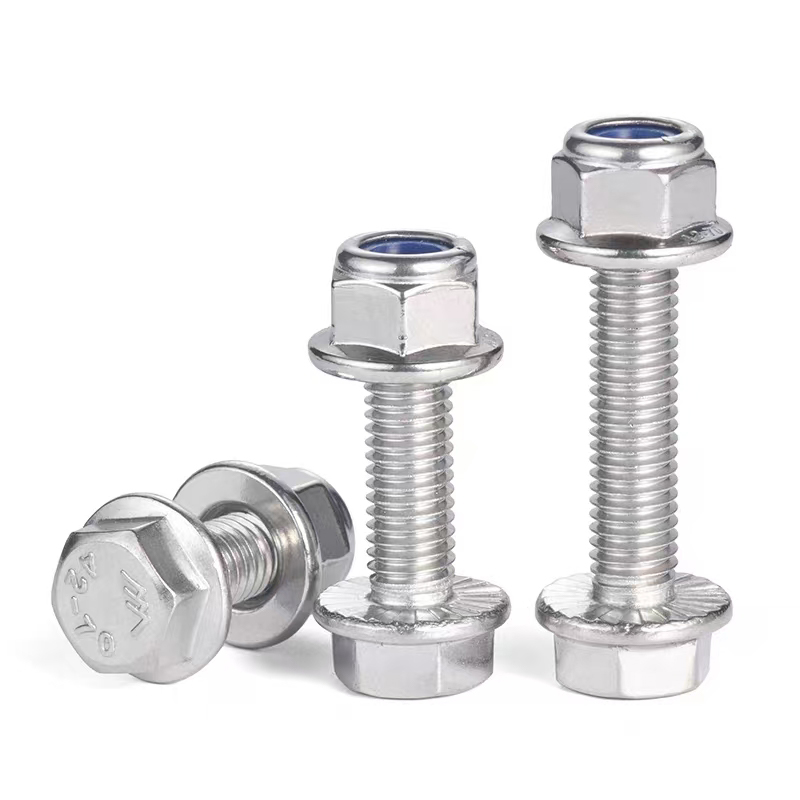
The hex flange nut is the workhorse, but it's not the only player. Nylon insert lock nuts often come with a flange, combining vibration resistance with sealing from the nylon. There are also flange nuts with a captive, free-spinning washer—a different beast for alignment purposes. And let's not forget the flange coupling nut for joining long rods.
Each variant exists for a reason. The takeaway is to never assume flange nut means just one thing. It's a family. Specifying requires narrowing it down: Hex flange, serrated? Non-serrated? With a locking feature? Material grade? Finish? The more precise you are, the fewer field issues you'll have.
It boils down to this: treat the flange nut as a precision clamping device, not a commodity. Its value is in the engineered details of its design. Getting those details right—or partnering with a maker who does, like those in major production bases who live and breathe this stuff—is what separates a reliable joint from a maintenance headache. It's not the most glamorous part, but when it's right, you never think about it. And that's the goal.
Lotinduta aurrealdi
Lotutako produktuak
Salmenta onena aurrealdi
Salmenta produktu onenak-
 Elektrobisatutako brida galbanizatua (brida aurpegia azkoina)
 - Hexagono entxufea hot-dip Boltsa galbanizatuak
- Hedapen elektro-galvanizatua
- Elektrogalizazio hedapen boltxoak
- Zulagailu hexagonal elektro-galvanizatua
- Hexagon entxufe zinka beltzeko torlojuak
- Soldadura iltzeak
- Hexagono entxufe koloretako zinka estalitako torlojuak
- Elektrogalizazio gurutze-zulagailu haria
- Anti-solte intxaurra (Intxaur blokeoa)
- Koloretako zinka plated hexagonalak
- Elektrogalizazio pinak