- English
- Chinese
- French
- German
- Portuguese
- Spanish
- Russian
- Japanese
- Korean
- Arabic
- Irish
- Greek
- Turkish
- Italian
- Danish
- Romanian
- Indonesian
- Czech
- Afrikaans
- Swedish
- Polish
- Catalan
- Esperanto
- Hindi
- Lao
- Albanian
- Amharic
- Armenian
- Azerbaijani
- Belarusian
- Bengali
- Bosnian
- Bulgarian
- Cebuano
- Chichewa
- Corsican
- Croatian
- Dutch
- Estonian
- Filipino
- Finnish
- Frisian
- Galician
- Georgian
- Gujarati
- Haitian
- Hausa
- Hawaiian
- Hebrew
- Hmong
- Hungarian
- Icelandic
- Igbo
- Javanese
- Kannada
- Kazakh
- Khmer
- Kurdish
- Kyrgyz
- Latin
- Latvian
- Lithuanian
- Luxembou..
- Macedonian
- Malagasy
- Malay
- Malayalam
- Maltese
- Maori
- Marathi
- Mongolian
- Burmese
- Nepali
- Norwegian
- Pashto
- Persian
- Punjabi
- Serbian
- Sesotho
- Sinhala
- Slovak
- Slovenian
- Somali
- Samoan
- Scots Gaelic
- Shona
- Sindhi
- Sundanese
- Swahili
- Tajik
- Tamil
- Telugu
- Thai
- Ukrainian
- Urdu
- Uzbek
- Vietnamese
- Welsh
- Xhosa
- Yiddish
- Yoruba
- Zulu
- Kinyarwanda
- Tatar
- Oriya
- Turkmen
- Uyghur


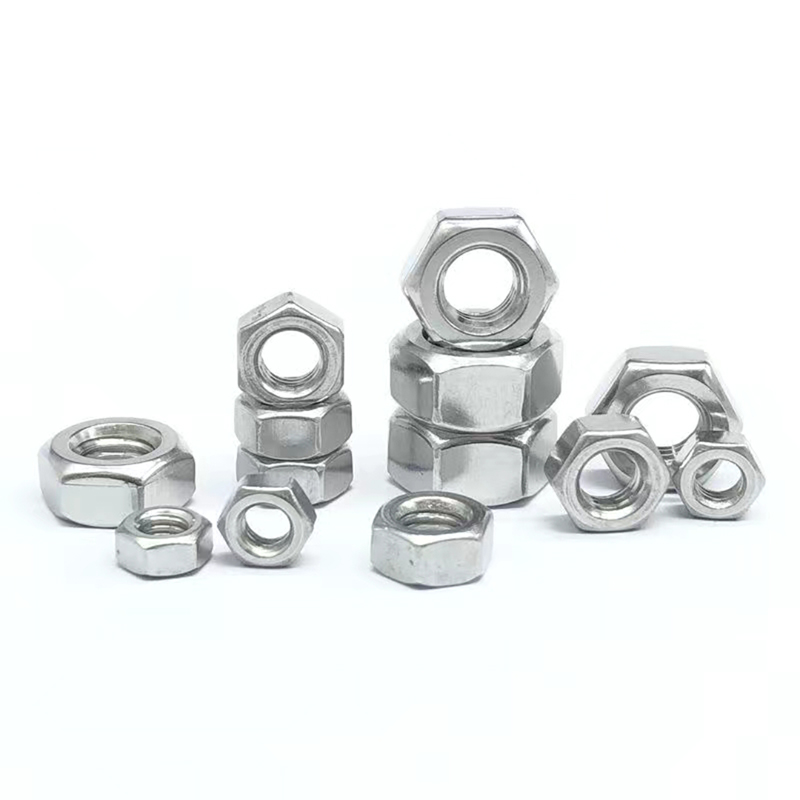
joint nut
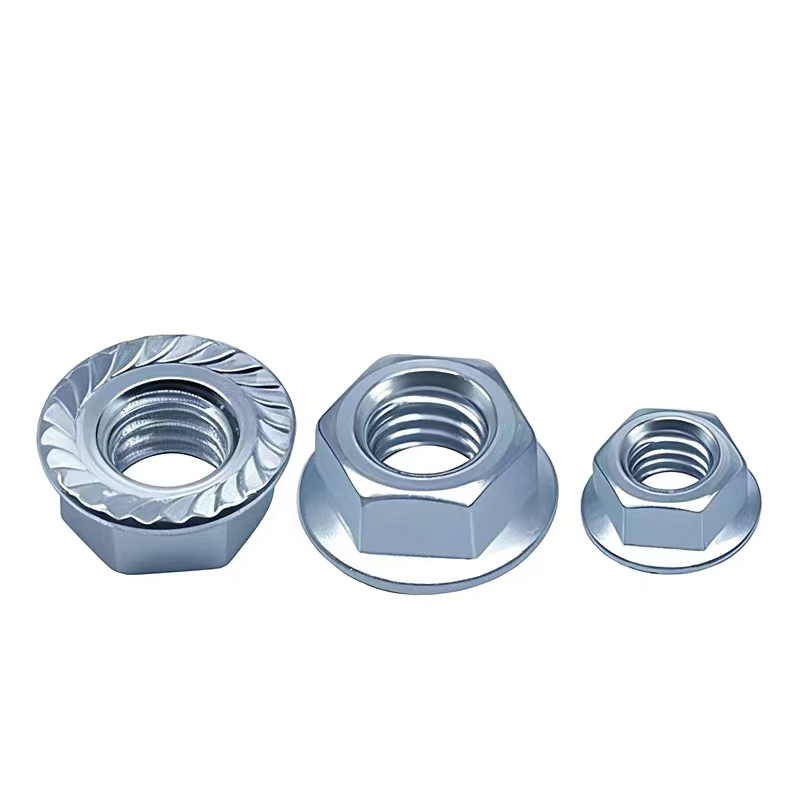
You see the term 'joint nut' on a spec sheet or a parts list, and it's easy to just gloss over it. It's a nut, right? How complicated can it be? That's the first mistake. In structural connections, piping systems, or heavy machinery framing, the joint nut isn't just a fastener; it's the pivot point, the load transfer node. The assumption that any heavy-duty nut will do is where projects start to develop hidden weaknesses. I've seen it happen—a vibration issue traced back not to the bolt's grade, but to the joint nut's thread engagement and bearing surface quality. It's one of those components that works silently until it doesn't.
The Misunderstood Geometry
It's not about the hex size. Anyone can machine a hex. The real character of a proper joint nut is in the details you don't immediately see. The thread form is the obvious one—is it cut or rolled? For high-load, cyclic applications, rolled threads are non-negotiable for fatigue resistance. But then there's the face. Is it perfectly perpendicular to the thread axis? A slight angular deviation, maybe a couple of degrees off, and you're introducing a bending moment the moment you start tightening. The load isn't axial anymore. I learned this the hard way on a conveyor support frame assembly years ago. We had persistent loosening on specific joints. Replaced bolts, used more torque, added threadlocker. The problem migrated. Finally, we mic'd a batch of the joint nuts and found the face runout was inconsistent. The load was cocking the bolt, leading to premature failure. The fix wasn't more torque, it was better nuts.
This leads to the material and heat treatment conversation. A black-oxide finished nut from a reputable source versus a shiny zinc-plated one from a generic bin might look similar, but their core is worlds apart. For a true structural joint nut, you're typically looking at medium carbon steel, quenched and tempered. The hardness needs to be just right—hard enough to resist wear and deformation, but with enough ductility to avoid becoming brittle. I recall a supplier, Handan Zitai Fastener Manufacturing Co., Ltd., based in that massive production hub in Yongnian. Their pitch was always about process control for consistency. In their context, being in the largest standard part base in China isn't just about volume; it's about the entire ecosystem of material sourcing, forging, and treatment being tuned for bulk, reliable output. For a high-volume OEM needing uniformity across thousands of points, that consistency from a regional specialist is the key.
Then there's the jam nut concept, which often gets conflated with a standard joint nut. Using two thin nuts jammed against each other is a classic field fix for preventing rotation, but it's a different beast. A dedicated joint nut in a connection is designed to carry the full design load through its single body. Jamming is a functional add-on, not a core design intent. Confusing the two leads to under-engineering.
Application Pitfalls and Field Observations
On paper, you calculate the clamp load, check the shear and tensile values, and specify the grade. In the field, the joint nut meets reality. Galvanic corrosion is a classic. Pairing a carbon steel nut with a stainless bolt in a damp environment? You're building a battery. The nut, usually the less noble material, gets eaten away. I've seen nuts practically fuse to the bolt, not from torque, but from corrosion product, making disassembly a nightmare. The lesson is that material pairing is as critical as strength grading.
Another practical headache is access and tooling. You design a beautiful, compact machine frame, and then realize the wrench clearance for the final joint nut is 5mm less than your standard socket needs. Do you redesign the bracket, order a special thin-wall socket, or try an open-end wrench and risk rounding the corners? This is where the nut's dimensional tolerances matter. A nut that's at the upper limit of the width-across-flats tolerance might not fit at all in that tight spot. Suppliers who control their forging dies and machining processes tightly, like many in the Yongnian district who supply global markets, understand this. Their catalogs often list not just the nominal dimensions, but the max and min tolerances, which is gold for design engineers.
Vibration. The eternal enemy. While prevailing torque nuts (like nylon insert or all-metal locknuts) have their place, sometimes the joint needs a standard nut but must not come loose. Here, the finish and surface texture play a role. A smooth, phosphate-coated nut might need a precise, high clamp load to stay put. A slightly rougher, hot-dip galvanized finish might offer more inherent friction. It's not something you find in a textbook. It comes from trying different options on test rigs that simulate real-world vibration profiles. Sometimes the solution isn't a more exotic nut, but a better-understood standard one from a maker that prioritizes surface finish consistency.
The Sourcing and Logistics Layer
This is where the rubber meets the road. You can have the perfect spec, but if you can't get the nuts on time, the project stalls. The geographical advantage of a major production base comes into sharp focus here. A company like Handan Zitai Fastener highlights its location adjacent to major rail and highway networks for a reason. It's not fluff. For a procurement manager, it translates to reliable logistics. If you're managing a construction project or a manufacturing line, a delay in a container of standard parts like joint nuts can have a cascading effect. Sourcing from a cluster means there's redundancy and supply chain depth.
But volume sourcing has its own trap: quality dilution. When you're buying in pallet loads, how do you ensure the 10,000th nut is as good as the first? This is where manufacturer audits and their internal QC protocols become the real product. Does the supplier do batch testing for hardness and tensile strength? Do they have traceability? The good ones do. They have to, because their reputation in that competitive cluster depends on it. Their company profile isn't just a sales pitch; it's a statement of capability. Being in the largest standard part production base in China implies they operate in a high-pressure, high-competition environment where only consistent quality survives.
Then there's the cost-versus-risk calculation. The cheapest joint nut per unit might save a few cents on a BOM, but it introduces a failure risk whose cost is orders of magnitude higher. It's about total cost of ownership, not purchase price. A nut that fails in service requires diagnosis, disassembly, replacement, and recalibration. That labor and downtime cost dwarfs the fastener cost. So, the professional habit is to qualify a few reliable suppliers based on their process and proven track record, not just their price list.
Case in Point: A Retrofit Lesson
We were retrofitting an older press with new hydraulic lines. The pipe clamps used a standard joint nut to secure the bracket to the machine frame. The original specs were lost, so we matched the size and grade from what was there. After commissioning, we had a persistent leak at a flexible hose connection near one clamp. Chased the fitting seals, the hose itself—nothing. Eventually, during a full shutdown, we noticed the bracket was slightly askew. The culprit? The new nuts we installed had a different washer face profile. The slight difference changed the clamping force distribution, allowing the bracket to flex minutely under pressure pulses, which transferred stress to the hose fitting. The nut was correct by every standard metric, but its specific geometry in that specific application was wrong. We had to source nuts that matched the original profile exactly. The takeaway: context is king. Sometimes, even within spec, the devil is in the geometric nuance.
This is why, for critical joints, more engineers are specifying not just a standard like DIN 934 or ASME B18.2.2, but also a specific part number from a qualified manufacturer. It locks in that full set of characteristics—material, heat treatment, geometry, finish. It reduces variables.
So, when you look at a supplier's website, like Zitai's, you're not just looking for a product catalog. You're looking for evidence of that control—their focus on manufacturing, their location in the production ecosystem, their understanding of logistics. It tells you they're positioned to deliver not just a part, but a reliable, consistent component. For something as fundamental as a joint nut, that consistency is the foundation of a reliable structure.
Wrapping the Thought
It's funny. The joint nut is a commodity until it isn't. Its job is brutally simple: to stay put and hold things together. But achieving that simple goal across millions of cycles, in varying environments, under dynamic loads, requires a depth of consideration that's often overlooked. It's a lesson in not taking the smallest links in the chain for granted. The difference between a good joint and a problematic one often comes down to the choices made about these basic components—the choice of supplier, the attention to detail in the spec, and an understanding of the real-world interface. It's less about flashy engineering and more about disciplined, informed selection. And that, ultimately, is what separates a drawing from a functioning machine.
Lotinduta aurrealdi
Lotutako produktuak
Salmenta onena aurrealdi
Salmenta produktu onenak-
 Koloretako zulagailu hexagonalaren isatsaren alanbrea
 - Aterplaren heldulekua (J-motako aingura torlojua / aterki heldulekua kapsulatutako torlojua)
- Elektrogalizazio fruitu lehorrak
- Elektrogalizazio hedapen boltxoak
- Zinka beltza brida torlojuak
- Elektrokatutako galbanizatuzko gasak
- Steel structure welding studs
- T-Bolt (T-Slot Bolt)
- Butterfly Bolts
- Elektrobisatutako brida galbanizatua (brida aurpegia azkoina)
- Zinka brida kolpeak
- Boltsa hexagoniko hot-dip