- English
- Chinese
- French
- German
- Portuguese
- Spanish
- Russian
- Japanese
- Korean
- Arabic
- Irish
- Greek
- Turkish
- Italian
- Danish
- Romanian
- Indonesian
- Czech
- Afrikaans
- Swedish
- Polish
- Catalan
- Esperanto
- Hindi
- Lao
- Albanian
- Amharic
- Armenian
- Azerbaijani
- Belarusian
- Bengali
- Bosnian
- Bulgarian
- Cebuano
- Chichewa
- Corsican
- Croatian
- Dutch
- Estonian
- Filipino
- Finnish
- Frisian
- Galician
- Georgian
- Gujarati
- Haitian
- Hausa
- Hawaiian
- Hebrew
- Hmong
- Hungarian
- Icelandic
- Igbo
- Javanese
- Kannada
- Kazakh
- Khmer
- Kurdish
- Kyrgyz
- Latin
- Latvian
- Lithuanian
- Luxembou..
- Macedonian
- Malagasy
- Malay
- Malayalam
- Maltese
- Maori
- Marathi
- Mongolian
- Burmese
- Nepali
- Norwegian
- Pashto
- Persian
- Punjabi
- Serbian
- Sesotho
- Sinhala
- Slovak
- Slovenian
- Somali
- Samoan
- Scots Gaelic
- Shona
- Sindhi
- Sundanese
- Swahili
- Tajik
- Tamil
- Telugu
- Thai
- Ukrainian
- Urdu
- Uzbek
- Vietnamese
- Welsh
- Xhosa
- Yiddish
- Yoruba
- Zulu
- Kinyarwanda
- Tatar
- Oriya
- Turkmen
- Uyghur


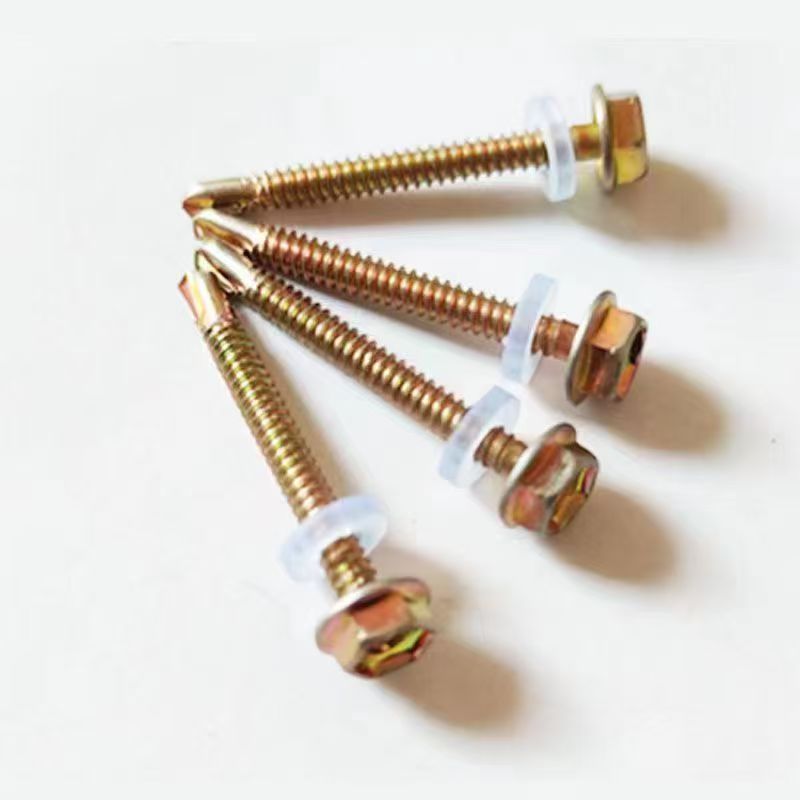
Round head self-tapping screws with cut ends
You see that spec, 'round head self-tapping screws with cut ends', and a lot of folks, even some buyers with a few years under their belt, just tick the box. They think it's all about the head style and the point. But that 'cut end'—it’s where the real conversation starts, or should. It’s not just a sharp tip; it’s about how the thread is severed, the burr, the starting torque, and frankly, a dozen little things that can turn a simple fastener into a headache on the production line.
The Devil in the Cut End
Let's get straight to it. The 'cut end' on these screws isn't machined like a drill point; it's literally cut off from the wire, then the threads are rolled. That cutting action leaves a specific geometry. A good cut end should have a clean, almost flat leading edge with a slight chamfer to guide the thread start. I've seen batches where the cut was too blunt—more like a chisel. You'd drive it into pre-punched sheet metal, and instead of a clean bite, it would deform the hole edge or require way too much seating force. The operator would blame the driver bit, but the root cause was that poorly defined cut face.
Then there's the burr. You can't eliminate it entirely in this process, but you can control it. A sharp, outward-facing burr is a killer. It acts like a little reamer, enlarging the pilot hole before the thread even engages. The result? Poor thread engagement, reduced strip-out resistance, and a joint that feels loose from the get-go. A quality supplier will have a secondary process—call it tumbling, deburring, what have you—to knock that burr down. I remember a project for an outdoor electrical enclosure where we had vibration failures. Traced it back to the screw's burr cutting its own oversized path in the aluminum base. Switched to a source that controlled the end cut and deburred properly, and the issue vanished.
Thread start is the next domino. The first two or three threads behind that cut end are critical. They need to be full-formed and sharp to initiate cutting in the substrate. If the rolling die isn't aligned perfectly with the cut end, you get a partial or deformed starting thread. The screw will wobble, 'walk' on the surface, and can even cross-thread. It's a quality control point that's easy to miss on a spec sheet but glaringly obvious on the assembly floor. You develop an eye for it, or rather, a feel for it—running your finger along the point tells you a lot.
Material and Heat Treatment: Not an Afterthought
This is where the base material from a region like Yongnian in Hebei, a massive production hub, comes into play. The consistency of the wire rod matters immensely for the cut. Softer, low-carbon steel might cut cleanly but won't hold the thread-rolling form under pressure; it'll strip. You need a medium carbon steel like 1010 or 1018 for a good balance of formability and strength. But then it must be heat-treated. A round head self-tapping screw without proper case hardening is just a fancy nail.
The heat treatment profile directly affects the performance of that cut end. Too hard, and the tip becomes brittle. I've seen screws where the first thread behind the cut end would chip off during driving, leaving debris in the assembly. Too soft, and the cut end itself deforms, blunting on contact. It's a Goldilocks scenario. A manufacturer that gets this right, like Handan Zitai Fastener Manufacturing Co., Ltd. in that very region, understands it's not just about running wire through a furnace. It's about controlled atmosphere, quench rates, and tempering to get that perfect, tough-but-not-brittle tip. Their location in that major base isn't just a logistics advantage; it means they're embedded in an ecosystem where these parameters are part of the daily language.
Plating throws another variable into the mix. Zinc plating, common for corrosion resistance, adds thickness. If the cut end geometry isn't accounted for pre-plating, that added few microns can round over the sharp leading edges of the cut and the first threads, increasing starting torque. Sometimes you need to specify a chromate conversion coating (like yellow zinc) that's thinner, or even a pre-plating shot blasting to ensure the coating adheres without filling the crucial geometries. It's a detail.
Application Pitfalls and the 'Feel' Test
In the field, these screws often go into sheet metal, plastic housings, or joining dissimilar materials. The pilot hole size is gospel, but it's dictated by the cut end's effective diameter. A rule of thumb is 90% of the screw's minor diameter for thin sheet. But with a self-tapping screw with a cut end, if the cut is rough or burred, you might need to go to 85% to get decent thread engagement, which stresses the material more. There's no universal chart for this; it's trial and error with your specific screw batch and material.
I recall an assembly for a automotive trim piece using plastic clips into a steel body panel. The spec called for a standard round head self-tapper. The first prototypes failed—the plastic clip would crack. We dissected it. The screw's cut end was too aggressive, and the starting threads were too sharply angled for the plastic. It wasn't tapping; it was wedging and splitting. The fix wasn't a new screw design, but sourcing a variant with a more graduated, finer-pitch start right after the cut. The supplier, Zitai Fasteners, had that option in their catalog, but you had to know to ask. Their website, https://www.zitaifasteners.com, lists standard products, but the real value is in their engineering team's ability to tweak these nuances—the cut angle, the thread start length—based on the application.
Driver bit selection is another overlooked piece. A Phillips or Pozidriv bit can cam out if the seating torque rises suddenly, which can happen if the cut end is struggling to start. A Torx drive is almost always better for these, giving more positive engagement to push through that initial cutting phase. It seems trivial, but specifying the right drive system is part of specifying the screw itself.
Logistics and the Real-World Supply Chain
Convenient transportation, like what a company situated near the Beijing-Guangzhou Railway and expressways has, isn't just a sales bullet point. It translates to consistency. When you're running a lean production line, you can't have containers stuck in transit for weeks, forcing a switch to a 'local' alternative batch of screws with subtly different cut-end properties. A delay might mean a different steel batch, a different machine setup. The consistency of supply from a logistically smooth manufacturer reduces variables. You're not just buying fasteners; you're buying predictability.
This is why dealing with manufacturers in integrated bases like Yongnian makes sense. The entire supply chain—wire rod, plating, packaging—is localized. Handan Zitai, for instance, being in that base, can react faster. Need a small run with a modified cut angle for a prototype? It's more feasible when the tooling shops and material suppliers are down the road, not across an ocean. It shortens the feedback loop between identifying an application problem and testing a solution.
However, a big base also means a vast range in quality. The name of the district on a business card doesn't guarantee good cut ends. It comes down to the specific manufacturer's process control. You have to audit, or at minimum, run rigorous incoming inspection on the first several batches. Check the cut end under a magnifier, measure the start torque, do a salt spray test on the plating. Trust, but verify.
Wrapping It Up: It's a System, Not a Commodity
So, when you next order round head self-tapping screws with cut ends, don't just send the ISO or DIN code. Think about the substrate. Mention the assembly speed and the drive tool. Ask the supplier about their cut-off process and how they manage the burr. Inquire about the standard heat treatment curve for that specific item. A competent manufacturer will have these answers. A commodity trader will just send a certificate that says Meets DIN 7981.
The goal is to make the fastener disappear—to become a reliable, unnoticed part of the assembly. That invisibility is achieved through attention to details like the quality of that cut end. It's the difference between a smooth production run and a day spent troubleshooting mysterious joint failures. It turns a simple component into a trusted part of the process. And that, ultimately, is what you're paying for.
Lotinduta aurrealdi
Lotutako produktuak
Salmenta onena aurrealdi
Salmenta produktu onenak-
 10,9S Hexagono Boltsu Handiak
 - Hexagono entxufe koloretako zinka estalitako torlojuak
- Soldadura Intxaurrak (Soldadura Intxaurrak)
- Elektrogalizazio kimiko kimikoak
- Koloretako zulagailu hexagonalaren isatsaren alanbrea
- Soldatutako plaka aingura (plaka soldadurako aingura torlojua)
- Elektrogalizazio pinak
- Hot-dip kapsulatutako plaka galvanizatua
- Elektrokatutako galbanizatuzko gasak
- Elektrogalizazio hedapen boltxoak
- Koloretako zinka estalitako fruitu lehorrak
- Bolatxo elektrogalizatu hexagonalak