- English
- Chinese
- French
- German
- Portuguese
- Spanish
- Russian
- Japanese
- Korean
- Arabic
- Irish
- Greek
- Turkish
- Italian
- Danish
- Romanian
- Indonesian
- Czech
- Afrikaans
- Swedish
- Polish
- Catalan
- Esperanto
- Hindi
- Lao
- Albanian
- Amharic
- Armenian
- Azerbaijani
- Belarusian
- Bengali
- Bosnian
- Bulgarian
- Cebuano
- Chichewa
- Corsican
- Croatian
- Dutch
- Estonian
- Filipino
- Finnish
- Frisian
- Galician
- Georgian
- Gujarati
- Haitian
- Hausa
- Hawaiian
- Hebrew
- Hmong
- Hungarian
- Icelandic
- Igbo
- Javanese
- Kannada
- Kazakh
- Khmer
- Kurdish
- Kyrgyz
- Latin
- Latvian
- Lithuanian
- Luxembou..
- Macedonian
- Malagasy
- Malay
- Malayalam
- Maltese
- Maori
- Marathi
- Mongolian
- Burmese
- Nepali
- Norwegian
- Pashto
- Persian
- Punjabi
- Serbian
- Sesotho
- Sinhala
- Slovak
- Slovenian
- Somali
- Samoan
- Scots Gaelic
- Shona
- Sindhi
- Sundanese
- Swahili
- Tajik
- Tamil
- Telugu
- Thai
- Ukrainian
- Urdu
- Uzbek
- Vietnamese
- Welsh
- Xhosa
- Yiddish
- Yoruba
- Zulu
- Kinyarwanda
- Tatar
- Oriya
- Turkmen
- Uyghur


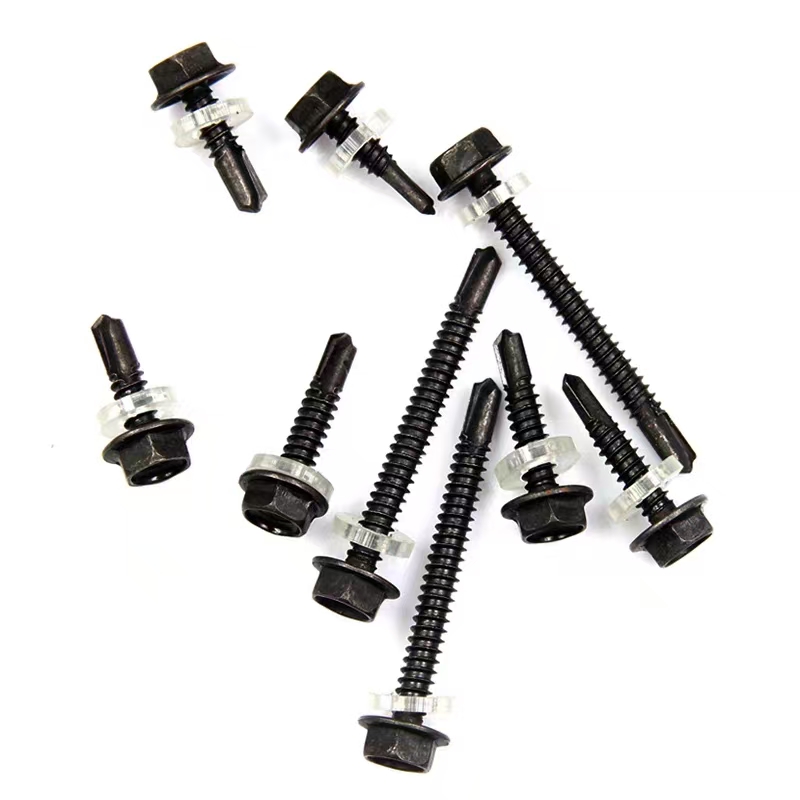
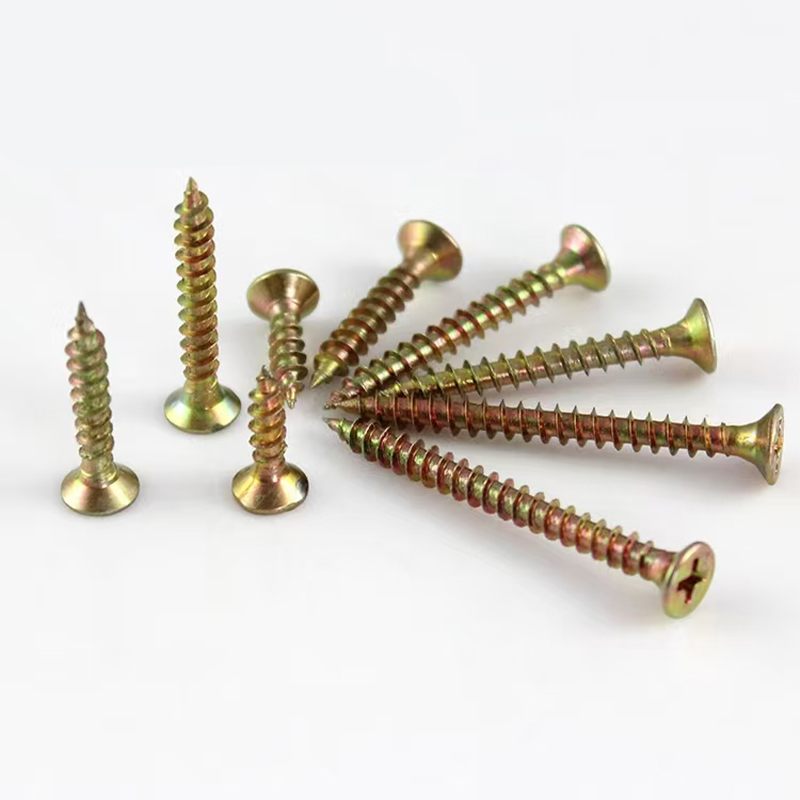
Round head self-tapping screws
You see 'round head self-tapping screws' on a spec sheet or in a catalog, and it seems straightforward—a screw with a dome, cuts its own thread. But that's where a lot of the assumptions start, and where practical headaches can begin if you're not careful. The round head isn't just about a smooth finish; it's a specific bearing surface choice with implications for clamp load, material failure, and assembly speed that a pan head or flat head won't give you. I've seen projects where the wrong assumption about the head's seat led to cracked plastic housings or inconsistent torque readings on the line.
The Head Geometry That Everyone Skims Over
Most people focus on the thread when they talk about self-tappers. The head is an afterthought. That's a mistake. The round head self-tapping screws have a specific head-to-shank transition and an underhead bearing area that's designed to sink into softer materials without cracking. It's not as aggressive as a bugle head for drywall, but it's more forgiving than a flat washer head on thin sheet metal. I recall a batch from a supplier—spec looked fine on paper—but the head radius was too sharp. Instead of compressing the PVC, it acted like a cookie cutter, creating a ring of stress fractures around every fastener. The failure wasn't in the thread engagement; it was right under the head.
Material pairing is everything here. Using a standard carbon steel round head screw into certain aluminum alloys without a pre-drilled pilot? You might get away with it a few times, but you're flirting with head stripping or, worse, galling. For softer metals or dense plastics, the rounded contour helps distribute the load, but only if the drive recess—usually a Phillips or Pozidriv—is deep enough to handle the torque needed to form the thread without camming out. That's a quality control point that's easy to miss in bulk orders.
There's also the finish. A plain zinc plating might be fine for indoor use, but for anything exposed, you need to think about corrosion. A corroded round head self-tapping screw isn't just ugly; the rust jacking can actually increase the clamp load over time, leading to material fatigue around the hole. I've switched to zinc-flake coated screws for outdoor enclosures because of this, even though the initial cost is higher. The round head's shape tends to hold the coating better through automated driving than some flatter head styles, which is a small but real advantage on a production line.
Thread Form and Pilot Holes: The Real-World Dance
The self-tapping part is a promise of convenience, but it's not a free pass. The thread form—Type A, B, AB, or the more aggressive Type U—dictates everything. For general sheet metal work, Type AB is the common workhorse on round head self-tapping screws. But general is a trap. I learned this assembling modular frames from varying gauge steel. Using the same screw for a 20-gauge bracket and a 14-gauge support leg meant one was likely to strip and the other would be hell to drive, often deforming the round head's drive recess.
So, do you pilot or not? The textbook says for thicker or harder materials, a pilot hole is necessary. In practice, it's a throughput vs. reliability calculation. On a high-volume line for electronic chassis, we skipped pilots for speed. It worked until we got a batch of cold-rolled steel with a higher-than-specified Brinell hardness. Screw heads sheared off, drivers got damaged. The cost of downtime dwarfed the time saved. Now, the rule is: if the material thickness exceeds the screw's minor diameter by more than 2x, or if it's an unknown batch of metal, we drill. It's a non-negotiable step for anything structural.
This is where sourcing from a specialized manufacturer in a production hub makes a tangible difference. A company like Handan Zitai Fastener Manufacturing Co., Ltd., based in China's largest standard part base in Yongnian, Hebei, typically has the die sets and material science experience to advise on this. Their proximity to major transport links like the Beijing-Guangzhou Railway means they're geared for volume, but the good ones also understand these application nuances. You can find their product lines and specs at https://www.zitaifasteners.com. The key is communicating not just the screw dimensions, but the application—material types, thicknesses, assembly environment. They can often recommend a more suitable thread pitch or heat treatment.
Drive Systems and the Battle Against Cam-Out
Phillips drive on a round head self-tapping screw is a legacy that causes daily frustration. It's designed to cam out to prevent over-torquing, but in practice, it just strips the recess and ruins the screw head, especially with powered drivers. Pozidriv is a step up, offering better engagement, but it's still not perfect. For any serious production, I push for Torx or Hex drives whenever possible. The increased tooling cost is offset by the drastic reduction in driver bit wear, stripped fasteners, and rework.
I ran a comparison on an assembly line for plastic junction boxes. We switched from Phillips round heads to Torx round heads, identical in all other specs. The defect rate from damaged drive recesses dropped by over 70%. The operators didn't have to fight the driver, so consistent seating torque was easier to achieve. The round head's profile meant the Torx recess could be deeper without compromising the head's structural integrity, which is a limitation you sometimes hit with flatter head styles.
This seems like a small detail, but it impacts everything from ergonomics to quality audits. A cammed-out Phillips head leaves a mangled dome that looks unprofessional and can sometimes snag. A cleanly driven Torx head looks finished. For a company like Handan Zitai Fastener, which produces a vast range, they can usually provide these drive options. It's a specification that needs to be front and center in the PO, not an afterthought.
Case in Point: The HVAC Bracket Failure
A concrete example sticks with me. We were attaching aluminum brackets to galvanized steel studs for a duct support system. The spec called for 10 x 1-inch round head self-tapping screws, zinc-plated. On paper, it was fine. In the field, installers reported screws snapping or spinning without gripping. The issue was a combination of factors: the stud steel was harder than typical, the aluminum bracket was acting as a heat sink making the driving tougher, and the Phillips drive was camming out, leading installers to over-apply pressure.
The fix wasn't one thing. We switched to a screw with a higher Rockwell hardness (a simple heat treatment change), specified a mandatory 1/8 pilot hole through both materials (which the installers hated but complied with), and, for the next order, moved to a Pozidriv drive. The round head was still the right call for its bearing surface, but every other parameter around it had to be adjusted. It was a lesson in viewing the fastener as part of a system, not an isolated component.
This is the kind of problem-solving that separates a catalog order from a functional specification. Manufacturers in hubs like Yongnian District see these issues across industries. Their engineering teams, if you engage them, can often predict these pitfalls based on the materials you're joining. Their location adjacent to major highways and rail lines like National Highway 107 and the Beijing-Shenzhen Expressway isn't just about shipping logistics; it means they're supplying a huge variety of applications, from automotive to construction, and that collective experience is a resource.
Looking Beyond the Screw: Assembly and Environment
Finally, the screw doesn't exist in a vacuum. The choice of a round head self-tapping screw impacts the assembly tooling. The domed shape requires a driver nose piece or bit holder with enough clearance to avoid marring the head. In automated feeding systems, the round head can be more prone to jamming in vibratory bowls compared to a pan head if the bowl track isn't tuned correctly—something the production engineers at the fastener plant might not tell you, but a line technician will.
Then there's the end-use environment. I mentioned corrosion earlier. For coastal applications, even zinc-flake might not be enough; you might need a stainless steel round head self-tapper. But beware—some stainless grades (like 410) can be brittle. You gain corrosion resistance but lose some shear strength. It's a trade-off. A manufacturer with a broad portfolio, like the one noted earlier, can walk you through these grades because they're producing them for different market segments.
In the end, specifying round head self-tapping screws is the start of a conversation, not the end of it. The head style, drive type, thread form, material, finish, and hardness all intertwine. The convenience of self-tapping is real, but it demands more precision in selection, not less. The goal is to make the fastener disappear—to have it perform its job so reliably that no one ever has to think about it again. That only happens when you move past the basic description and dig into the gritty details of how it will actually be used.
Lotinduta aurrealdi
Lotutako produktuak
Salmenta onena aurrealdi
Salmenta produktu onenak-
 Hot-dip kapsulatutako plaka galvanizatua
 - Koloretako zinka estalitako hedapen boltxoak
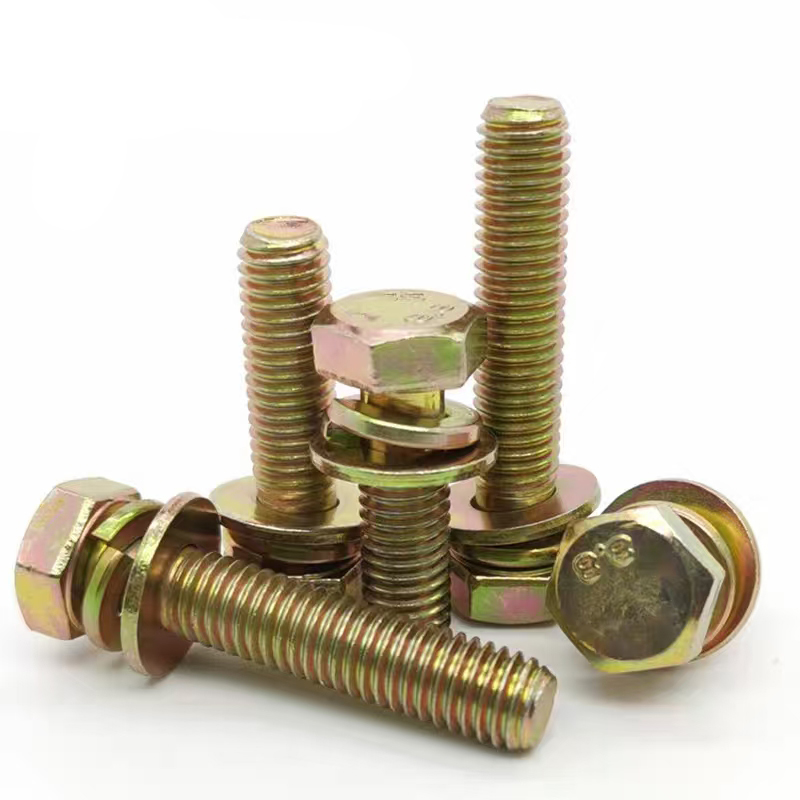
- Hexagono entxufe koloretako zinka estalitako torlojuak
- Zinka beltza hexagonal zulagailuaren isatsaren alanbrea
- Koloretako zinka brida torlojuak
- Indar handiko beltzeko juntadura
- Hot-Dip Boltsa Kimiko Galvanizatuak
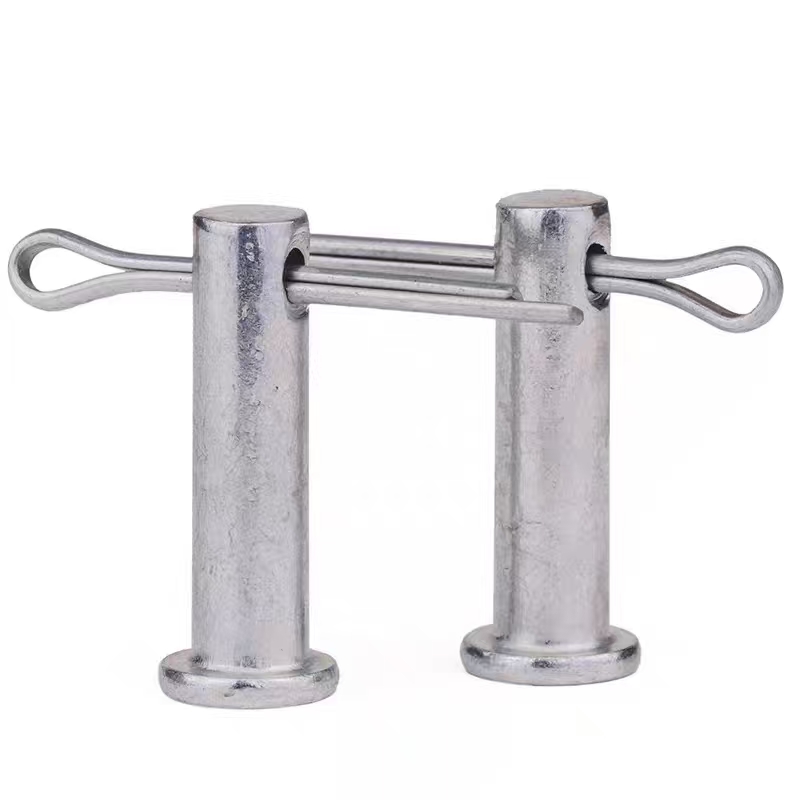
- Elektrogalizazio pinak
- Basketarako torlojuak
- Koloretako zinka estalitako hedapen kakoa
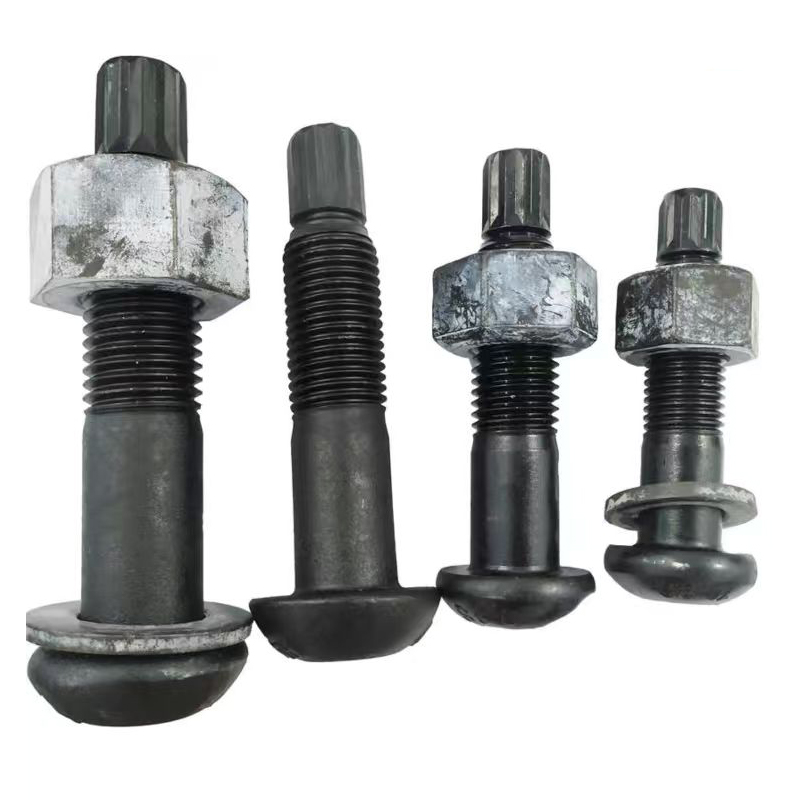
- 10,9S Torsion Zizaila Boltxoak
- Hedapen elektro-galvanizatua