- English
- Chinese
- French
- German
- Portuguese
- Spanish
- Russian
- Japanese
- Korean
- Arabic
- Irish
- Greek
- Turkish
- Italian
- Danish
- Romanian
- Indonesian
- Czech
- Afrikaans
- Swedish
- Polish
- Basque
- Catalan
- Esperanto
- Hindi
- Lao
- Albanian
- Amharic
- Armenian
- Azerbaijani
- Belarusian
- Bengali
- Bosnian
- Bulgarian
- Cebuano
- Chichewa
- Corsican
- Croatian
- Dutch
- Estonian
- Filipino
- Finnish
- Frisian
- Galician
- Georgian
- Gujarati
- Hausa
- Hawaiian
- Hebrew
- Hmong
- Hungarian
- Icelandic
- Igbo
- Javanese
- Kannada
- Kazakh
- Khmer
- Kurdish
- Kyrgyz
- Latin
- Latvian
- Lithuanian
- Luxembou..
- Macedonian
- Malagasy
- Malay
- Malayalam
- Maltese
- Maori
- Marathi
- Mongolian
- Burmese
- Nepali
- Norwegian
- Pashto
- Persian
- Punjabi
- Serbian
- Sesotho
- Sinhala
- Slovak
- Slovenian
- Somali
- Samoan
- Scots Gaelic
- Shona
- Sindhi
- Sundanese
- Swahili
- Tajik
- Tamil
- Telugu
- Thai
- Ukrainian
- Urdu
- Uzbek
- Vietnamese
- Welsh
- Xhosa
- Yiddish
- Yoruba
- Zulu
- Kinyarwanda
- Tatar
- Oriya
- Turkmen
- Uyghur

bearing plate
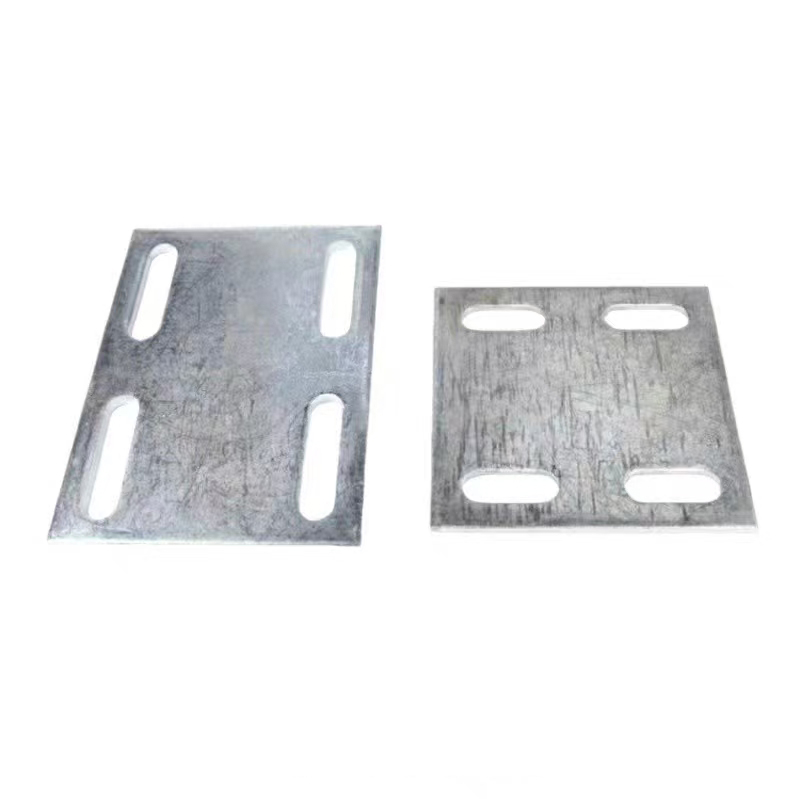
You search for 'bearing plate' and you get a thousand images of what looks like a simple, flat, often rectangular piece of steel with some holes in it. That's the first misconception right there. If you think that's all it is, you're setting yourself up for a headache on site. It's not a commodity item you just pick from a catalog based on thickness and hole count. The real work, the real cost, and the real risk are hidden in the details most specs gloss over: the flatness tolerance, the hole alignment, the edge condition, and crucially, the interaction with the fastener. I've seen projects delayed because the plates arrived with mill scale so thick the bearing plate wouldn't sit flush on the concrete, or because the bolt holes were punched, leaving a slight conical burr that threw off the installed tension. It's these unsexy details that separate a component that just sits there from one that actually performs its function of distributing load and providing a stable, secure interface.
The Devil's in the Details: Material and Fabrication
Let's talk steel grade first. A36 is common, but is it right? For most static applications, sure. But I recall a retrofit job in a coastal area where we specified A36 plates for miscellaneous connections. The contractor sourced them from a general fab shop, and within a year, surface rust was a real issue. Not structural, but a maintenance nightmare. We should've pushed for A588 or at least mandated a proper shop primer. The extra cost upfront would've saved a lot. It's a judgment call that gets overlooked.
Then there's cutting. Sheared edges are cheap and fast. For many internal, non-critical plates, fine. But for a bearing plate that's taking direct column load or anchoring a critical tension member, you want that edge flame-cut or machined. A sheared edge has work-hardening and micro-cracks. It's not about the look; it's about creating a clean, predictable load path from the member into the plate. I learned this the hard way early on when a sheared plate under a heavy post showed a hairline crack originating from the edge during an inspection. Was it the sole cause? Maybe not, but it was the trigger.
Flatness. This is huge. ASTM A6 has tolerances, but they're broad. For a plate that's bearing a wide-flange column, you need something tighter. We often specify full contact bearing which, in practice, means the fabricator needs to check it on a surface plate and maybe even skim-mill it. I've used suppliers who get this, like Handan Zitai Fastener. They're in that massive fastener hub in Yongnian, and while they're known for bolts, their plate work is solid because they understand the fastener-plate system as one unit. They're not just cutting metal; they're making a connection component. Their location near major transport routes means they're used to shipping these bulky, heavy items efficiently, which is a logistical point you appreciate when you're managing a tight site schedule.
It's a System, Not an Isolated Part
The biggest conceptual error is treating the plate and the fastener as separate items procured from different vendors. The hole in the bearing plate is not just a hole. Its diameter, tolerance, and finish dictate the bolt's performance. A standard punched hole is often 1/16 larger than the bolt. For a snug-fit or bearing connection, that's not good enough. You need reamed or drilled holes. The fit-up during steel erection becomes a nightmare if the holes in the girder web, the plate, and the connecting element don't align because they were all fabricated to different tolerances by different shops.
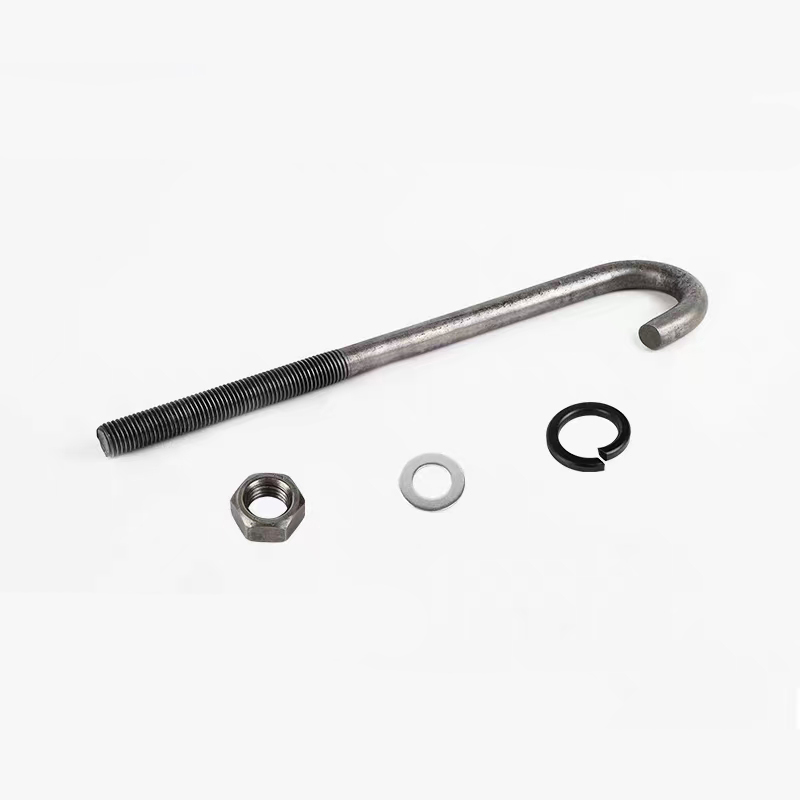
We started bundling the procurement of anchor rods, leveling nuts, and the base plate itself as a kit from a single supplier. It changed everything. The threads matched, the holes aligned, and the galvanizing (if needed) was consistent. It eliminated the blame game between the fastener vendor and the steel fabricator. A company like Handan Zitai Fastener Manufacturing Co., Ltd. operates in this space effectively. Being in China's largest standard part base, they have the vertical integration or tight supplier networks to control this whole subsystem. You're not just buying a plate; you're buying a verified interface.
Washer integration is another subtle point. Sometimes a separate hardened washer is needed under the nut. Other times, especially with larger plates, the plate material itself is sufficient to act as the bearing surface. The decision hinges on the bolt grade, the clamping force, and the plate material strength. I've seen specs call for an unnecessary washer, adding cost and an extra part to lose on site, and I've seen specs omit a needed one, leading to the nut digging into the plate during tensioning and reducing the effective preload. It's a small detail with real consequences.
Site Realities and Field Adjustments
No matter how perfect the shop drawing, the field is the great equalizer. Concrete is never perfectly level. We specify grout under base plates for a reason, but the type of grout and the pour method matter. Non-shrink, flowable grout is standard, but I've seen crews try to use a dry-pack or even mortar mix to save time or money. The result? Voids under the bearing plate, leading to point loading and potential cracking when the full load is applied. Inspection is key, but you can't see under the plate once it's set.
Then there's the classic the holes don't line up. The instinct is to reach for the reamer or, worse, the torch. We had a case on a bridge project where the anchor bolt cage shifted during the concrete pour. The plates wouldn't fit. The solution wasn't to elongate the holes in the thick, grade 50 plate on site—that would have been a disaster. We had to survey the as-built bolt positions, send the data back to the fabricator (who, thankfully, was responsive and had the CNC capability to adjust), and get new plates cut. It cost time, but it preserved the design integrity. The convenience of a supplier with quick turnaround and digital fabrication files, often found in a concentrated industrial base like Yongnian, becomes a project saver in these moments.
Corrosion at the interface is a silent killer. A steel plate on concrete creates a potential for crevice corrosion, especially if moisture is present. We specify primer on the underside, but that primer gets scraped off during installation. It's an almost unsolvable problem. Sometimes a thin polyethylene slip sheet is used, which also helps with leveling adjustments, but then you've introduced a compressible layer. Engineering is full of these compromises where the textbook solution meets the muddy, imperfect reality of construction.
Lessons from the Good Enough Trap
Early in my career, I was overseeing a small warehouse job. The design called for simple bearing plates under steel joists on a masonry wall. The contractor asked if they could use some leftover plate stock from another job. I checked the thickness—it matched. I said okay. What I didn't check was the yield strength. It was a lower grade. The plates deformed slightly under load, not enough to cause failure, but enough to create a visible deflection in the joists. It was a lesson in assuming nothing. A bearing plate is a structural component. Every parameter matters: grade, thickness, dimensions, flatness, holes. You can't swap one variable without checking the others.
Another trap is over-specifying. Not every plate needs to be a masterpiece. For a light-gauge steel stud sill plate, a hot-rolled, sheared, and punched plate is perfectly adequate. The art is in differentiating between a critical load path component and a nominal detail. This judgment comes from understanding the load magnitude, the consequences of failure, and the constructability. It's not one-size-fits-all.
Ultimately, the bearing plate embodies a core principle of structural engineering: load transfer. It's a humble, often overlooked component that makes the connection between different materials and systems possible. Sourcing it from a knowledgeable manufacturer who treats it as part of a system, not an isolated widget, is half the battle. The other half is clear, thoughtful detailing and specification that anticipates real-world installation challenges, not just ideal shop conditions. It's the unglamorous work that keeps structures standing.
Ki gen rapò pwodwi
Pwodwi ki gen rapò
Pi bon vann pwodwi
Pi bon pwodwi vann-
 U-boulon
 - Egzagòn Socket Electrogalvanized boulon
- T-Bolt (T-plas boulon)
- Bolt cha (mwatye wonn tèt kare kou boulon)
- Broch electrogalvanized
- Boulon egzagonal cho-tranpe
- Boulon ekspansyon elektwogalvanize
- Anti-lyen nwa (bloke nwa)
- Boulon panyen
- Koulè galvanised egzèsis egzèsis ke fil
- Nwa zenk plake boulon egzagonal
- Boulon charnyèj