- English
- Chinese
- French
- German
- Portuguese
- Spanish
- Russian
- Japanese
- Korean
- Arabic
- Irish
- Greek
- Turkish
- Italian
- Danish
- Romanian
- Indonesian
- Czech
- Afrikaans
- Swedish
- Polish
- Basque
- Catalan
- Esperanto
- Hindi
- Lao
- Albanian
- Amharic
- Armenian
- Azerbaijani
- Belarusian
- Bengali
- Bosnian
- Bulgarian
- Cebuano
- Chichewa
- Corsican
- Croatian
- Dutch
- Estonian
- Filipino
- Finnish
- Frisian
- Galician
- Georgian
- Gujarati
- Hausa
- Hawaiian
- Hebrew
- Hmong
- Hungarian
- Icelandic
- Igbo
- Javanese
- Kannada
- Kazakh
- Khmer
- Kurdish
- Kyrgyz
- Latin
- Latvian
- Lithuanian
- Luxembou..
- Macedonian
- Malagasy
- Malay
- Malayalam
- Maltese
- Maori
- Marathi
- Mongolian
- Burmese
- Nepali
- Norwegian
- Pashto
- Persian
- Punjabi
- Serbian
- Sesotho
- Sinhala
- Slovak
- Slovenian
- Somali
- Samoan
- Scots Gaelic
- Shona
- Sindhi
- Sundanese
- Swahili
- Tajik
- Tamil
- Telugu
- Thai
- Ukrainian
- Urdu
- Uzbek
- Vietnamese
- Welsh
- Xhosa
- Yiddish
- Yoruba
- Zulu
- Kinyarwanda
- Tatar
- Oriya
- Turkmen
- Uyghur


chain
When most people hear 'chain', they think of a simple series of metal links. In our world—the world of making things that hold other things together—that's where the real conversation starts, and frankly, where a lot of the outside assumptions go wrong. It's never just the chain itself; it's about the chain as a system, a critical load path, a point of failure, or a compliance headache. The romantic idea of a single, perfect link is useless without understanding the entire chain of production, specification, and application.
The Spec Sheet Isn't the Whole Story
You can have a beautifully drawn spec for a Grade 80 alloy steel lifting chain. The chemistry is perfect, the tensile strength numbers look great on paper. But then you see it in a yard, maybe at a site like Handan Zitai Fastener's location in Yongnian, and the reality hits. The spec doesn't tell you about the guy who might misuse it, the environmental corrosion from a coastal project, or the micro-fractures from an unseen manufacturing quirk. I've seen chains that passed every lab test fail in the field because someone connected them with a substandard shackle. The weakest link cliché is a cliché for a reason—it's physically true. The entire chain is only as reliable as its poorest component or its most careless interaction.
This is why proximity to the actual manufacturing base matters. Being in a hub like Yongnian District, Handan, adjacent to major transport routes like the Beijing-Guangzhou Railway and G107, isn't just a logistics advantage for a company. It's an immersion. You're surrounded by the entire supply chain, from raw wire rod to forging, heat treatment, testing, and shipping. You feel the bottlenecks, you see the scrap piles, you hear what the workshop foremen are complaining about this week. That intel is worth more than a stack of technical datasheets.
Take a company like Handan Zitai Fastener. Their positioning in the largest standard part production base in China means they're not operating in a vacuum. The challenge for them, and for any serious player, is to translate that geographic advantage into a quality advantage. It's one thing to make a million links a day; it's another to ensure every single one in a certified chain has seen the correct tempering temperature and been inspected for seam imperfections. The scale can work against you if your process control isn't obsessive.
The Forgotten Links: Logistics and Traceability
Here's a practical headache that rarely gets airtime: traceability in a long physical chain. Say you're supplying anchor chains for marine use. The mill provides the steel, the drawer reduces the wire, the company forms and welds the links, another vendor does the galvanizing. A failure occurs two years later. Can you trace that specific link back to the exact heat number of the steel, the batch of welding wire, and the galvanizing bath chemistry? If your answer isn't an immediate 'yes', you're playing with fire. This is where robust systems, often simple but disciplined lot-number tracking, become part of the product's integrity.
Handan Zitai Fastener's website, https://www.zitaifasteners.com, highlights their convenient transportation access. That's not a minor point. For heavy industrial chains, logistics are a massive part of the cost and risk. A chain coiled improperly on a pallet can develop tension points. Shipping via a bumpy road versus a smooth rail line can introduce stresses. Their adjacency to the Beijing-Shenzhen Expressway and National Highway 107 isn't just a sales point; it's a direct factor in the final condition of the product. I've received chains that were perfect from the factory but damaged in transit because the carrier didn't understand the load. The supply chain literally includes the truck ride.
We tried a digital tagging system once—micro-laser etched QR codes on each link for a high-value project. The idea was brilliant: scan any link for its full history. The reality was grimy. After deployment in a muddy construction site, the codes were unreadable. The lesson? The most elegant traceability solution must survive the environment of the chain itself. Sometimes, the old-fashioned stamped lot number on a master link, combined with impeccable paper trails, is more resilient than tech.
Application is Where Theory Dies
All the manufacturing precision can be undone in five minutes on site. The classic error is side-loading. A chain is designed to take tension in a straight line along its axis. The moment you put a lateral force on it, maybe by hooking it at an angle or letting a load swing, you're introducing bending stresses it was never calculated to handle. I've seen 3/4 chains snap under what seemed like a safe load because of a 15-degree angle no one accounted for. Training, or the lack thereof, is the invisible variable in every chain equation.
Another subtle killer is fatigue. It's not about a single overload. It's the repeated loading and unloading, the constant vibration on a conveyor system, the thousands of cycles that slowly grow a crack from a tiny inclusion in the metal. Inspecting for this isn't just about looking for obvious deformation. It's about knowing where to look—usually at the inner curve of the link, near the weld point—and using the right methods. Magnetic particle inspection is your friend here. A supplier that understands this, and maybe even provides basic inspection guidelines, is moving from a parts vendor to a partner.
This is where the distinction between a fastener company and a component solutions company gets real. Manufacturing a chain is a metallurgical and mechanical process. But understanding its life cycle in the field requires a different mindset. Does the manufacturer just sell you links, or do they provide guidance on working load limits, inspection intervals, and discard criteria? The latter transforms a commodity into a engineered product.
The Cost of Over-Engineering and Under-Thinking
There's a tendency to think bigger is safer. So you spec a chain with a massive safety factor, say 10:1, for a simple static tie-down. The chain is overkill, incredibly heavy, expensive, and a pain to handle. The increased weight might even affect the dynamics of what you're securing. Over-engineering isn't just wasteful; it can introduce new problems. The right approach is precise engineering: matching the chain's grade, configuration, and proof test to the actual duty cycle. Sometimes, a more sophisticated alloy at a smaller diameter is the smarter play.
Conversely, under-thinking the system is a disaster. I recall a project where the chains were correctly specified, but the connecting pins were mild steel. They deformed under load, effectively re-tensioning the entire assembly and over-stressing the chains. The failure wasn't in the primary component, but in the ancillary one. It highlighted that you must design the entire connection chain. This systems-thinking is what separates catalog shoppers from real engineers.
For manufacturers, this means offering a coherent system. It's not enough to have a great chain if your connecting hardware—shackles, master links, hooks—isn't of commensurate quality and rating. The credibility of a producer is often judged by the weakest item in their catalog. A company that offers a fully tested and matched assembly inspires far more confidence.
Back to the Physical: The Feel of a Good Chain
Let's end on something tactile. You can learn a lot about a chain by handling it. A well-made alloy chain has a certain heft, a consistent link-to-link feel, a smooth finish without sharp flash. The weld should be clean and uniform, not a blob of excess material. When you flex it, it should have a firm, predictable drape, not a kinky, erratic stiffness. These are unscientific but vital checks. After a while, your hands can tell you what a datasheet can't.
Visiting a production facility, you get a sense of this. The rhythm of the forge, the smell of the quenching oil, the organized chaos of the packing area. It's about the ingrained habits on the shop floor. Does the operator casually toss finished links into a bin, or place them? That attitude eventually translates to product quality. The physical reality of making things—the heat, the noise, the sheer mass of metal—is the ultimate ground truth for any industrial chain.
So when we talk about a chain, we're really talking about a continuum. It stretches from the metallurgy of the steel mill, through the discipline of the factory floor in places like Yongnian, onto the flatbed of a truck on Highway 107, into the hands of a rigger on a job site, and finally, into the silent, enduring load-bearing state it was designed for. Breaking any link in that broader sequence breaks the promise of the product itself. That's the real weight every link has to carry.
Ki gen rapò pwodwi
Pwodwi ki gen rapò
Pi bon vann pwodwi
Pi bon pwodwi vann-
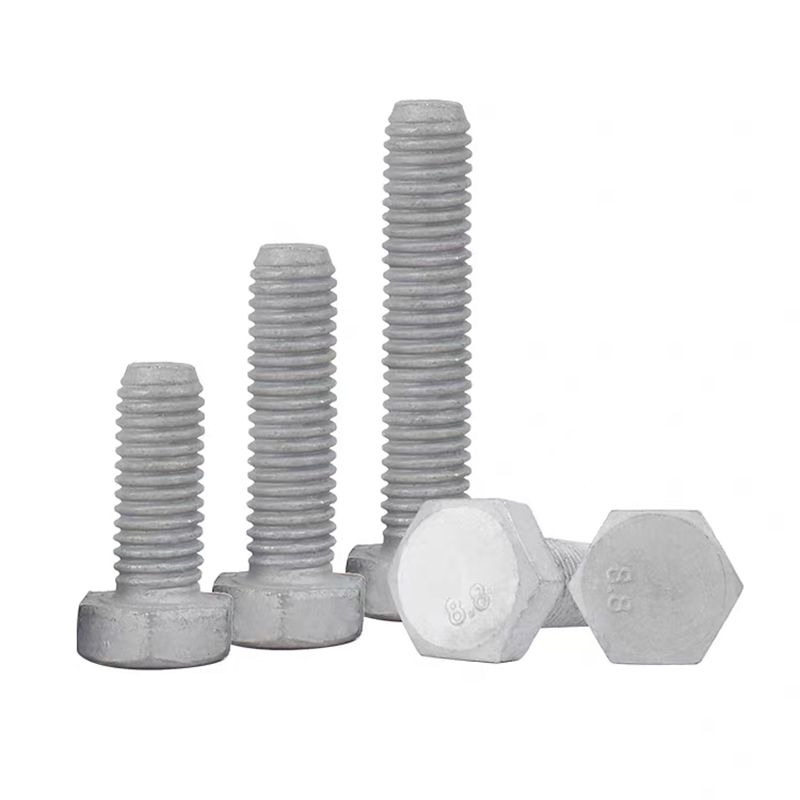
 Koulè zenk plake boulon egzagonal
 - Nwa zenk plake arbr peny
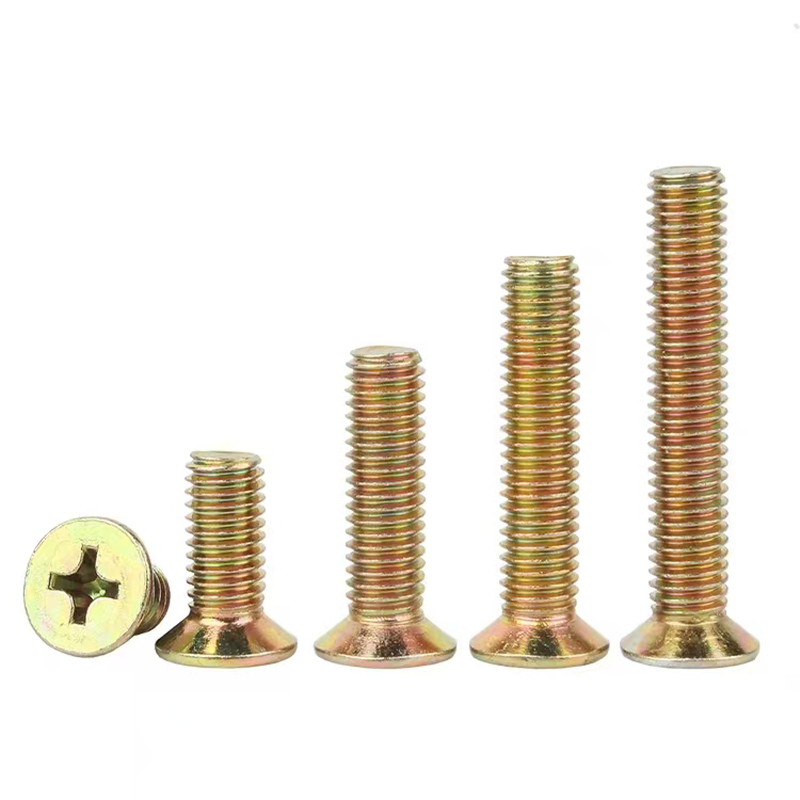
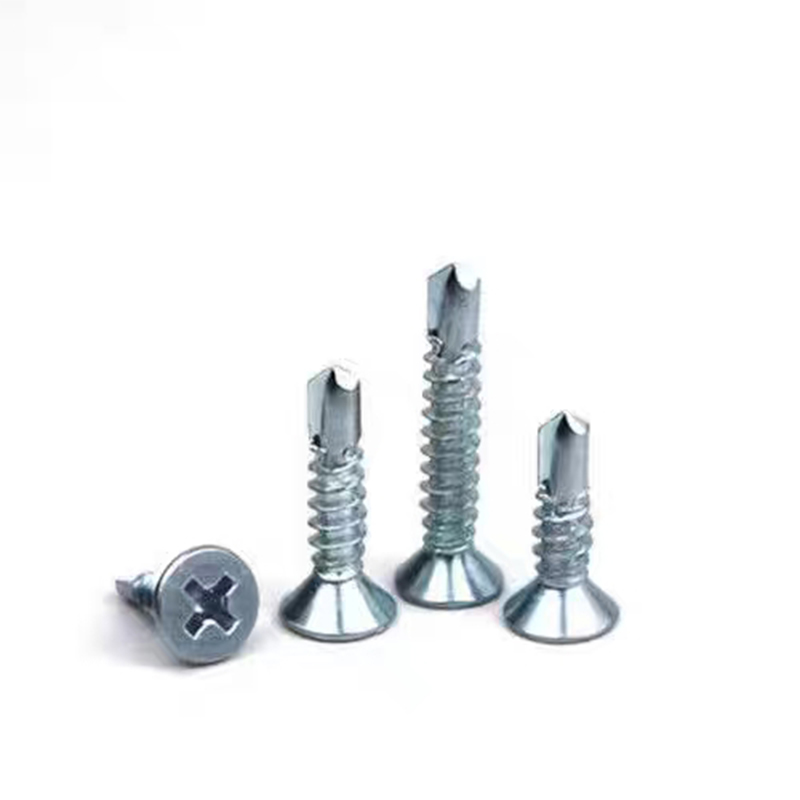
- Electrogalvanized Cross Countersunk Drill Fil
- Ki gen koulè pal zenk-plake zen ekspansyon
- Nwa ki gen koulè pal zenk
- Ki gen koulè zenk-plake garnitur
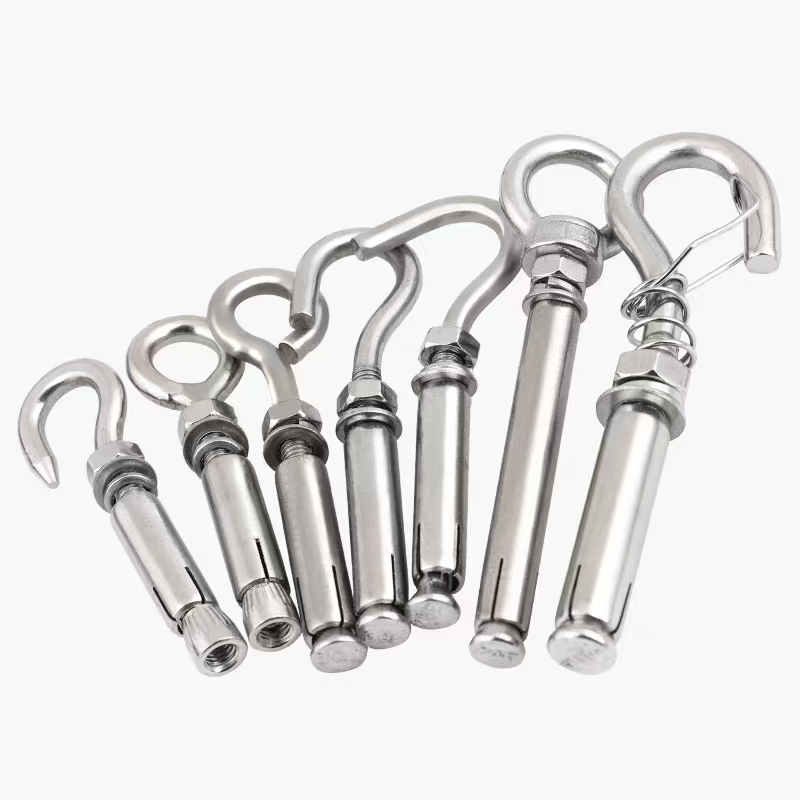
- Boulon ekspansyon elektwogalvanize
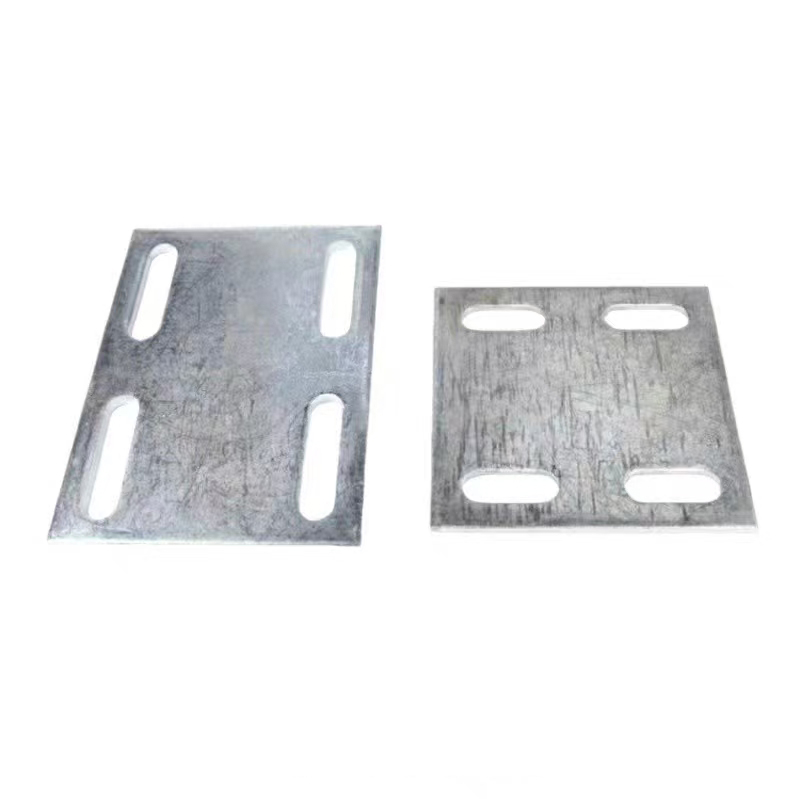
- Cho-tranpe plak galvanised entegre
- Nwa zenk-blende egzèsis egzèsis ke fil
- Nwa soude (nwa soude)
- Koulè galvanised egzèsis egzèsis ke fil
- Boulon bride zenk nwa