- English
- Chinese
- French
- German
- Portuguese
- Spanish
- Russian
- Japanese
- Korean
- Arabic
- Irish
- Greek
- Turkish
- Italian
- Danish
- Romanian
- Indonesian
- Czech
- Afrikaans
- Swedish
- Polish
- Basque
- Catalan
- Esperanto
- Hindi
- Lao
- Albanian
- Amharic
- Armenian
- Azerbaijani
- Belarusian
- Bengali
- Bosnian
- Bulgarian
- Cebuano
- Chichewa
- Corsican
- Croatian
- Dutch
- Estonian
- Filipino
- Finnish
- Frisian
- Galician
- Georgian
- Gujarati
- Hausa
- Hawaiian
- Hebrew
- Hmong
- Hungarian
- Icelandic
- Igbo
- Javanese
- Kannada
- Kazakh
- Khmer
- Kurdish
- Kyrgyz
- Latin
- Latvian
- Lithuanian
- Luxembou..
- Macedonian
- Malagasy
- Malay
- Malayalam
- Maltese
- Maori
- Marathi
- Mongolian
- Burmese
- Nepali
- Norwegian
- Pashto
- Persian
- Punjabi
- Serbian
- Sesotho
- Sinhala
- Slovak
- Slovenian
- Somali
- Samoan
- Scots Gaelic
- Shona
- Sindhi
- Sundanese
- Swahili
- Tajik
- Tamil
- Telugu
- Thai
- Ukrainian
- Urdu
- Uzbek
- Vietnamese
- Welsh
- Xhosa
- Yiddish
- Yoruba
- Zulu
- Kinyarwanda
- Tatar
- Oriya
- Turkmen
- Uyghur


Flange lock nuts
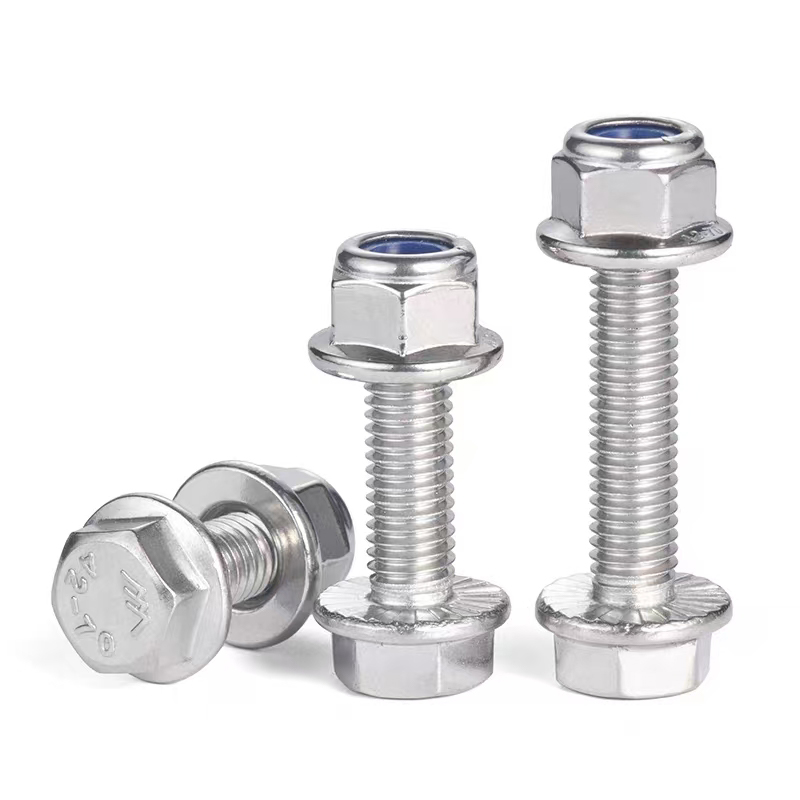
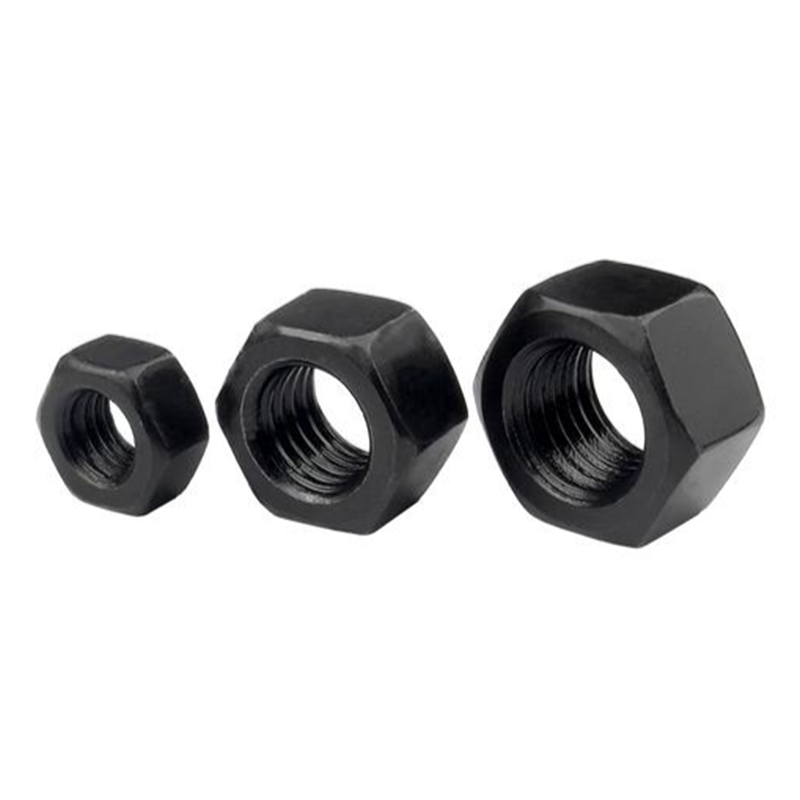
When most people hear 'flange lock nuts', they picture that standard hex nut with a washer base. That's not wrong, but it's where the oversimplification starts. The real discussion isn't about the shape; it's about how that integrated flange interacts with the locking element—be it nylon, a deformed top, or a metal insert—under actual load and vibration. I've seen too many specs where the flange is treated just as a built-in washer, missing the point that its diameter, surface finish, and flatness are critical to the locking performance. If the bearing surface isn't right, you're just clamping with a fancy washer, and the lock might fail prematurely.
The Flange Isn't Just a Washer
Let's get specific. A common mistake is assuming any flange nut will distribute load like a standard washer. It won't, not unless the flange face is properly machined and hardened. I recall a retrofit project on conveyor motor mounts where we used standard nylon insert flange nuts. The vibration loosening was worse than with a separate washer and lock nut. Why? The flange's underside was too smooth—almost polished—on the batch we had. It didn't 'bite' into the joint material enough, allowing micro-movement. The locking element did its job, but the joint itself started walking. The fix wasn't a different nut style, but sourcing nuts with a serrated flange face from a supplier that understood the application. That serration, often overlooked, creates a prevailing torque against rotation right at the bearing surface, complementing the nylon lock.
This leads to the material and plating. Zinc-plated flanges are fine for general use, but in high-cycle assembly or with certain aluminum substrates, the plating can gall or wear off, changing the friction coefficient. For critical joints, I now prefer plain carbon steel with a phosphate coating or stainless steel flanges. They maintain a more consistent surface texture. You can find manufacturers specializing in these nuances, like Handan Zitai Fastener Manufacturing Co., Ltd., located in China's major fastener production hub. Being in that industrial ecosystem often means they've seen a vast range of failure modes and application demands, which informs their production specs—things like ensuring the flange's perpendicularity to the thread, which is a silent killer of even load distribution.
Another detail: the transition radius from the thread to the flange body. A sharp corner is a stress concentrator. Under high dynamic loads, that's a potential crack initiation point. A well-made flange lock nut will have a generous, smooth radius there. It's a small thing you only notice when you're inspecting a failed part, but it speaks volumes about the design intent behind the product.
Nylon vs. All-Metal Locking: A Context Game
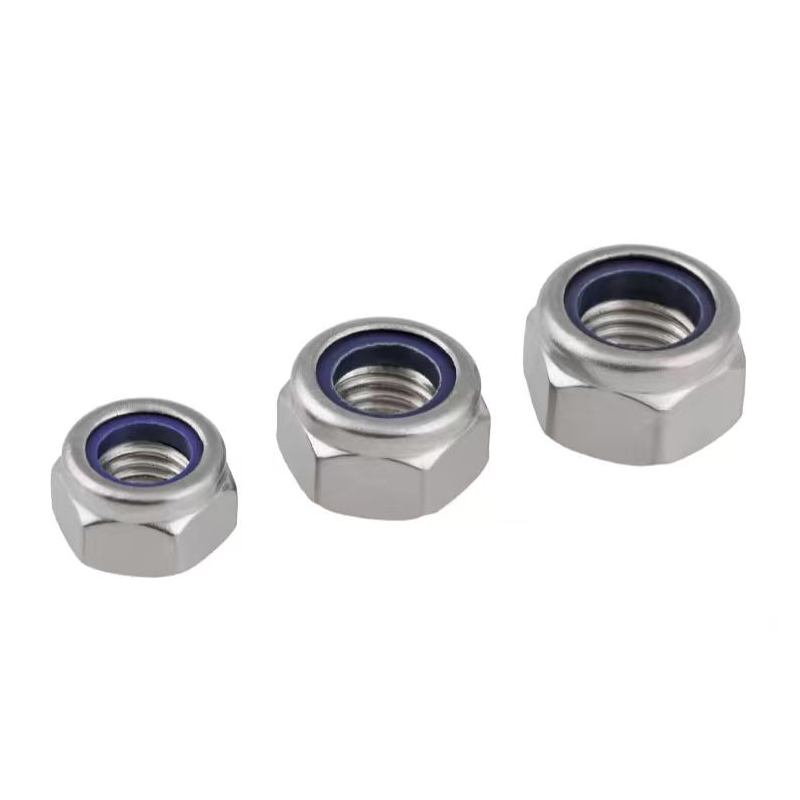
The nylon insert (the red or blue patch) is the go-to, but it's not universal. Its locking torque degrades with temperature and chemical exposure. I learned this the hard way on an outdoor boiler accessory mounting. After a year of thermal cycles and moisture, the nylon lost resilience. The nuts were still tight, but the locking force was gone; they could be turned with fingers. For environments above 250°F or with fuels/solvents, all-metal locking flanges are the answer.
All-metal types, like the ones with a elliptical top or a distorted thread section, rely on elastic deformation. Their performance is more consistent across temperature, but they can be brutal on threads during repeated removal and installation. You can't use them on soft materials like aluminum without a steel insert, or you'll rip the threads out on the third re-installation. The flange here is even more crucial because the locking action creates a higher axial stress on the bearing surface. A thin or flimsy flange can actually dish under this load.
I tend to keep a mix. For permanent or semi-permanent assemblies on steel, all-metal flange nuts are robust. For panels, covers, or components needing occasional service, nylon insert flange nuts are kinder. The key is to never assume they are directly interchangeable without checking the reusability specs. Some all-metal locks are one-time use only, especially in aerospace derivatives.
Sourcing and the Good Enough Trap
Sourcing these isn't about finding the cheapest M12 flange nut. It's about consistency. A batch-to-batch variation in case hardness of the flange can lead to inconsistent clamp load. We once sourced a large batch for structural steel bracing. The nuts met the nominal grade spec (Grade 8), but the flange hardness was on the low end of the tolerance. During torque-up, the flanges on about 5% of the nuts deformed slightly, which felt like 'yield' during tightening and made the torque readings unreliable. The joint was probably still okay, but it violated the procedure and required a re-work. The supplier, to their credit, acknowledged it was a heat-treat lot issue. This is why dealing with established producers in regions with deep supply chains, like the Yongnian District where Handan Zitai Fastener is based, can mitigate risk. They have the material flow and process control infrastructure to maintain consistency for large orders. Their location near major transport routes isn't just a sales point; it means raw material and finished goods logistics are streamlined, reducing process variables.
Don't just ask for a flange lock nut. Provide the context: base material (e.g., hot-rolled steel, painted surface, aluminum extrusion), service temperature, whether it's dynamic load or static, and required installation tool (impact wrench vs. hand tool). A good supplier will ask these questions or at least have different product lines to suggest. The ones that don't ask are selling commodity parts, which might be fine for a non-critical garden shed, but not for machinery.
Also, check the finish on the flange face. For painted or powder-coated surfaces, a smooth flange is fine. For bare steel-to-steel, a serrated or slightly roughened face provides better resistance to rotation. This isn't always in the catalog description; sometimes you need to request it.
Installation Nuances That Get Missed
Torque specs for flange nuts are often listed higher than for a standard nut and washer combo because the flange has a larger bearing diameter, reducing surface pressure for the same clamp force. But you can't just crank them down. The locking element (nylon or deformation) creates a prevailing torque that must be overcome. The standard practice is to run the nut down until the flange contacts the work surface, then apply final torque. If you're using a torque wrench, the reading will include this prevailing torque, so you might actually be under-torquing the joint. Better to use the turn-of-the-nut method after snug contact, especially for all-metal lock types. For critical applications, follow the manufacturer's specific torque procedure—it's often different.
Another pitfall is using them with washers. It defeats the purpose. The flange is the washer. Adding another washer changes the friction interface and the effective bearing diameter, messing up the torque-tension relationship. The only exception is if you need a hardened washer to prevent embedding into a soft material; then, you use a washer, but you lose the anti-rotation benefit of the flange's face. In that case, a separate lock washer under a standard nut might be a more honest engineering choice.
Lubrication is a minefield. Putting oil on the threads under a nylon insert nut can drastically increase the achieved bolt tension for a given torque, risking overstretch. For all-metal locks, a light lubricant on the threads (not the locking deformation) can make installation smoother and more consistent, but you must re-establish your torque specs accordingly. When in doubt, install dry as the standard specifies.
When the Flange Lock Nut Isn't the Answer
For all their utility, they're not a panacea. In applications with extreme shock loads or where joint rotation is possible (like a pinned connection), a flange nut alone might not hold. I've seen them back off on heavy equipment pivot points where there was sheer movement. In those cases, a castellated nut with a cotter pin or a double-nut arrangement is safer, even if it's less convenient. The flange lock nut excels in preventing self-loosening from vibration, not in preventing rotation from play in the joint itself.
Also, in very thin sheet metal applications, the large bearing surface of the flange is great for spread, but if the sheet is too thin, the clamping force can distort it. Sometimes, a smaller bearing surface with a separate fender washer is a better compromise. You have to think about the entire stack-up.
Finally, cost. A quality flange lock nut costs more than a standard nut and lock washer. For thousands of fasteners, that adds up. The value is in the reduced assembly time (one part vs. two or three) and proven vibration resistance. But if the application is truly static and non-critical, you might be over-specifying. It's a judgment call based on the consequence of failure. For most industrial machinery and structural frames, the peace of mind is worth the penny or two extra per joint. It comes back to understanding what you're really buying: not just a fastener, but a pre-engineered, integrated locking system. Getting that right means looking past the basic catalog picture and into the details of how it's made and how it will be used.
Ki gen rapò pwodwi
Pwodwi ki gen rapò
Pi bon vann pwodwi
Pi bon pwodwi vann-
 Boulon egzagonal
 - Boulon papiyon
- Anti-lyen nwa (bloke nwa)
- Electro-galvanised ekspansyon zen
- Egzagòn Socket Electrogalvanized boulon
- 7 ki gen fòm lankr (7 ki gen fòm boulon jete lank)
- Boulon panyen
- Boulon bride zenk elèktroplated
- Koulè galvanised egzèsis egzèsis ke fil
- Steel structure welding studs
- 10.9s boulon taye torsion
- High-fòs nwa nwasi