- English
- Chinese
- French
- German
- Portuguese
- Spanish
- Russian
- Japanese
- Korean
- Arabic
- Irish
- Greek
- Turkish
- Italian
- Danish
- Romanian
- Indonesian
- Czech
- Afrikaans
- Swedish
- Polish
- Basque
- Catalan
- Esperanto
- Hindi
- Lao
- Albanian
- Amharic
- Armenian
- Azerbaijani
- Belarusian
- Bengali
- Bosnian
- Bulgarian
- Cebuano
- Chichewa
- Corsican
- Croatian
- Dutch
- Estonian
- Filipino
- Finnish
- Frisian
- Galician
- Georgian
- Gujarati
- Hausa
- Hawaiian
- Hebrew
- Hmong
- Hungarian
- Icelandic
- Igbo
- Javanese
- Kannada
- Kazakh
- Khmer
- Kurdish
- Kyrgyz
- Latin
- Latvian
- Lithuanian
- Luxembou..
- Macedonian
- Malagasy
- Malay
- Malayalam
- Maltese
- Maori
- Marathi
- Mongolian
- Burmese
- Nepali
- Norwegian
- Pashto
- Persian
- Punjabi
- Serbian
- Sesotho
- Sinhala
- Slovak
- Slovenian
- Somali
- Samoan
- Scots Gaelic
- Shona
- Sindhi
- Sundanese
- Swahili
- Tajik
- Tamil
- Telugu
- Thai
- Ukrainian
- Urdu
- Uzbek
- Vietnamese
- Welsh
- Xhosa
- Yiddish
- Yoruba
- Zulu
- Kinyarwanda
- Tatar
- Oriya
- Turkmen
- Uyghur


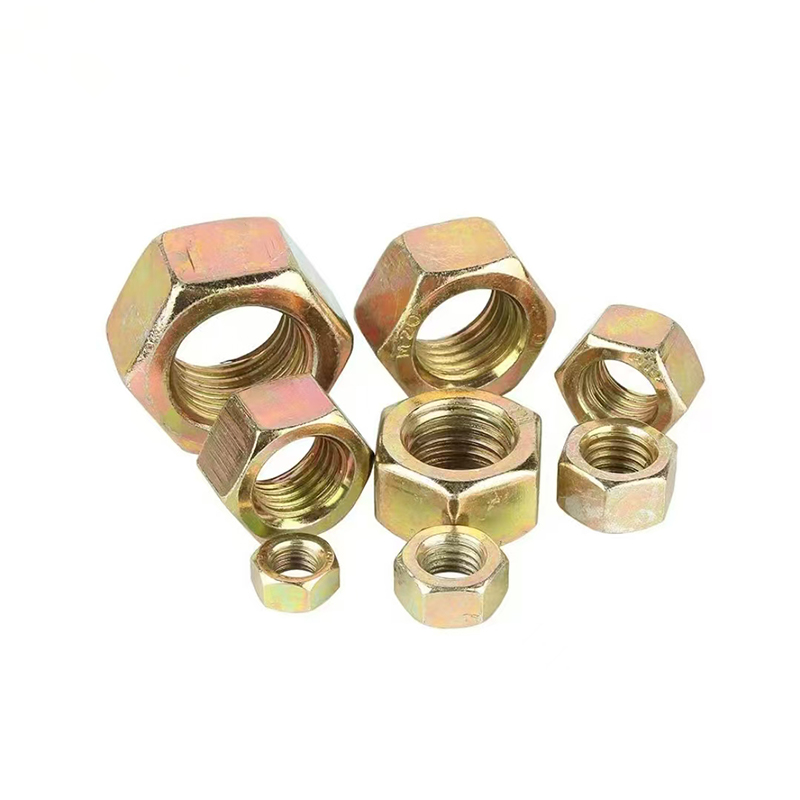
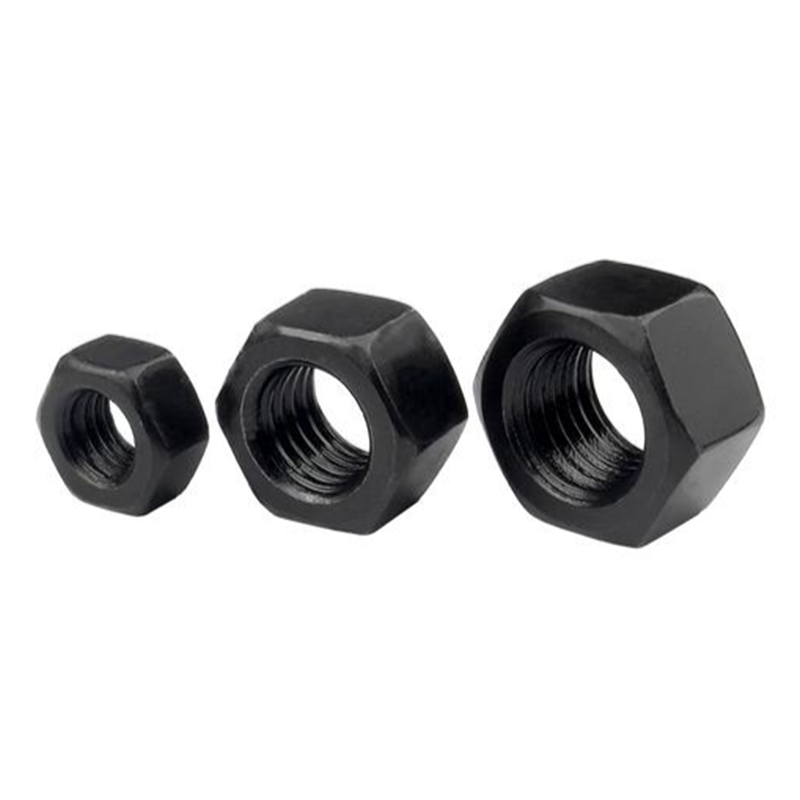
Hex nuts
When most people hear 'hex nut', they picture a simple, cheap commodity. That's the first big mistake. In reality, the choice of a hex nut—its grade, material, plating, and even the precision of its chamfer—can be the difference between a structure that holds for decades and a catastrophic failure. I've seen both outcomes, and it rarely comes down to the bolt alone.
The Illusion of Simplicity and Common Pitfalls
Starting out, I figured a nut was a nut. You match the bolt grade, thread it on, and torque it down. Easy. Then I encountered my first case of thread galling on a stainless steel assembly. Everything seized solid halfway through tightening. That's when you learn that for 304 or 316 stainless, you often need a nut with a different hardness or a specific lubricant coating, like a hex nut with a molybdenum disulfide finish. It's not just about corrosion resistance; it's about the metallurgy of the mating surfaces.
Another classic oversight is the bearing surface. Using a standard hex nut on soft material like aluminum or composite without a washer? You're asking for embedding and a massive loss of clamp force. I recall a prototype where we kept getting loose joints on an aluminum frame. Switched to a flanged hex nut, which spreads the load, and the problem vanished. The flange isn't just for convenience; it's a functional design.
Then there's the issue of plating. Zinc plating is common, but for high-temperature environments, it can off-gas and cause hydrogen embrittlement. We had a client in the automotive sector who specified plain zinc-plated nuts for an engine component. After thermal cycling, we found hairline cracks. The fix was switching to a geomet coated or, in some cases, a plain hex nut in a high-temperature alloy. The spec sheet doesn't always tell the whole story.
Material and Manufacturing Nuances
Walking through a production facility changes your perspective. I remember visiting a major production base in Yongnian, Hebei—the kind of place that supplies the global market. The sheer scale of cold forging, the sound of headers running, it's impressive. You see raw wire rod being sheared, headed, threaded, and heat-treated in a continuous flow. A place like Handan Zitai Fastener Manufacturing Co., Ltd., situated in that very industrial heartland adjacent to major transport routes, understands this volume and precision game. Their location near the Beijing-Guangzhou Railway and expressways isn't just an address; it's a logistical statement for getting containers of hex nuts to port efficiently.
The quality divergence happens in the details. The heat treatment line for Grade 8 or 10.9 nuts is critical. Improper tempering can make them brittle. I've conducted batch tests where nuts from a seemingly good lot would shatter under tension because the core hardness was wrong. You develop a habit of checking the marking—the grade stamps on the nut face—and even doing occasional destructive testing on-site, especially for critical applications.
Material traceability is another layer. For a bridge or wind turbine project, you need to know the melt source of the steel. A generic carbon steel hex nut won't cut it. Reputable manufacturers in hubs like Yongnian have adapted to this, providing mill certificates and chemical analysis reports. It's a non-negotiable for any serious engineering procurement.
Application Stories: Where Theory Meets Reality
Let's talk vibration. The infamous self-loosening problem. Locknuts, nylon inserts, and prevailing torque nuts are solutions, but they're not interchangeable. On a piece of heavy machinery subject to constant impact, we tried a nylon insert lock nut. It worked initially, but the constant flexing degraded the nylon over a year. Switched to a all-metal, deformed thread lock nut (like a Stover style), and the maintenance interval extended dramatically. The lesson? The locking mechanism must match the type of dynamic load.
Corrosion is a slow enemy. We specified hot-dip galvanized hex nuts for a coastal structure. What we didn't account for was the thread tolerance. The thick galvanizing made the threads tight, and during installation, the coating stripped, creating bare spots that rusted prematurely. The better practice, which we adopted later, is to use nuts that are galvanized after threading (when possible) or to specify oversize tapping to accommodate the coating. It's a small process change with a huge field-life impact.
Sometimes, the failure is in the specification itself. I once reviewed a drawing that simply called for M12 hex nut. No grade, no finish, no standard. The contractor bought the cheapest option, which were non-graded, mild steel nuts. They were used in a load-bearing connection. It was a disaster waiting to happen, caught only during a random site audit. Now, I drill into young engineers: always specify to a standard—ASME, DIN, ISO—and a property class.
The Supply Chain and Practical Sourcing
Sourcing isn't just about price per kilo. It's about consistency and reliability. A supplier that can deliver 10,000 pieces of a Grade 5 hex nut every month for two years with zero dimensional deviation is worth its weight in gold. It minimizes production line stoppages for re-torquing or sorting. Companies embedded in large manufacturing clusters, like Zitai Fastener in Handan, often have this advantage. Their entire ecosystem is geared for scale and repeatability, which is why they become go-to sources for bulk, standard fasteners.
However, standard can be misleading. An ISO 4032 nut and an ASME B18.2.2 nut have subtle differences in width across flats and thickness. If your wrench is calibrated for one standard and you're using the other, you might not achieve the correct clamp load. I've seen maintenance crews struggle with this, blaming their tools when it was a specification mismatch. It pays to know exactly what standard your drawings reference and to source accordingly.
Lead times and packaging matter more than you think. Receiving nuts in loose, bulk boxes leads to contamination and damage. Smart sourcing looks for clean, segregated packaging, especially for plated or stainless parts. And having a supplier with good logistics, like one situated near major highways and rail, means you can run leaner inventories. That's a tangible cost saver.
Concluding Thoughts: Respect the Basics
After years in this field, my main takeaway is to never underestimate the basic components. The humble hex nut is a precision-engineered load-bearing device. Its selection should involve as much thought as the component it's fastening.
It's easy to get lost in high-tech solutions, but 80% of fastener failures I've analyzed stemmed from incorrect application of standard parts, not from the lack of exotic ones. Getting the fundamentals right—grade, material, coating, and installation torque—solves most problems.
Finally, build relationships with manufacturers who understand engineering, not just production. When you can call and discuss a thread galling issue or a specific corrosion challenge, and they can suggest a material grade or a plating alternative from their portfolio, that's invaluable. That's the difference between buying a commodity and procuring a component. And in the world of fastening, that distinction is everything.
Ki gen rapò pwodwi
Pwodwi ki gen rapò
Pi bon vann pwodwi
Pi bon pwodwi vann-
 Koulè Zenk-plake kwa kontwar fil fè egzèsis
 - Egzagòn priz cho-plonje boulon galvanised
- 7 ki gen fòm lankr (7 ki gen fòm boulon jete lank)
- T-Bolt (T-plas boulon)
- Koulè galvanised egzèsis egzèsis ke fil
- Nwa ki gen koulè pal zenk
- Nwa soude (nwa soude)
- Electro-galvanised ekspansyon zen
- Egzagòn priz nwa zenk-plake boulon
- Boulon bride zenk nwa
- High-fòs nwa nwasi
- Boulon egzagonal cho-tranpe