- English
- Chinese
- French
- German
- Portuguese
- Spanish
- Russian
- Japanese
- Korean
- Arabic
- Irish
- Greek
- Turkish
- Italian
- Danish
- Romanian
- Indonesian
- Czech
- Afrikaans
- Swedish
- Polish
- Basque
- Catalan
- Esperanto
- Hindi
- Lao
- Albanian
- Amharic
- Armenian
- Azerbaijani
- Belarusian
- Bengali
- Bosnian
- Bulgarian
- Cebuano
- Chichewa
- Corsican
- Croatian
- Dutch
- Estonian
- Filipino
- Finnish
- Frisian
- Galician
- Georgian
- Gujarati
- Hausa
- Hawaiian
- Hebrew
- Hmong
- Hungarian
- Icelandic
- Igbo
- Javanese
- Kannada
- Kazakh
- Khmer
- Kurdish
- Kyrgyz
- Latin
- Latvian
- Lithuanian
- Luxembou..
- Macedonian
- Malagasy
- Malay
- Malayalam
- Maltese
- Maori
- Marathi
- Mongolian
- Burmese
- Nepali
- Norwegian
- Pashto
- Persian
- Punjabi
- Serbian
- Sesotho
- Sinhala
- Slovak
- Slovenian
- Somali
- Samoan
- Scots Gaelic
- Shona
- Sindhi
- Sundanese
- Swahili
- Tajik
- Tamil
- Telugu
- Thai
- Ukrainian
- Urdu
- Uzbek
- Vietnamese
- Welsh
- Xhosa
- Yiddish
- Yoruba
- Zulu
- Kinyarwanda
- Tatar
- Oriya
- Turkmen
- Uyghur


Madichon
When most people hear 'hoop', they think basketball or earrings. In our line of work, it's a critical load-bearing component, and frankly, one that's chronically underestimated. The assumption that a hoop is just a bent piece of metal is where a lot of projects start to go sideways. I've seen specs that treat it as an afterthought, only to face failure modes that trace right back to that simple-looking ring. It's not about the shape; it's about the physics of the closed loop under tension, the stress distribution that a perfect circle—or more often, a slightly engineered ellipse—manages. Getting it wrong means everything it's holding together comes undone.
The Geometry of Constraint
It starts with the coil. High-carbon steel wire, fed, straightened, cut. The forming seems straightforward: bend into a circle and weld the ends. But the first pitfall is right there. A perfect 360-degree closure with a butt weld creates a concentrated stress riser at the weld point. In dynamic load applications—think securing heavy tarps on mining equipment or structural ties in temporary fencing—that's the origin point for fatigue cracks. We learned this through returns, not theory. A client in quarrying was losing hoop fasteners on screen mesh covers monthly. The failure analysis always showed the crack propagating from the weld.
The fix wasn't a better weld, but a different overlap. Shifting to a lap joint design, where the ends overlap by a diameter's width before welding, spreads the load. It seems like a small detail, but it changes the failure mode from a sudden brittle fracture to a gradual, observable deformation. This is the kind of nuance you don't find in a generic manual. It comes from tearing down failed parts and seeing the story in the metal grain. Companies that specialize in volume production, like Handan Zitai Fastener Manufacturing Co., Ltd., get this. Their location in Yongnian, the fastener hub of China, means they've processed enough failure feedback loops to bake these lessons into their tooling. Their approach to a standard hoop isn't standard at all; it's pre-emptively corrected for the most common field stresses.
Then there's the question of roundness. A truly round hoop is ideal for uniform pressure, but what if the object it's binding isn't round? For bundling cables or hydraulic hoses, a slight ovality can be a feature, not a defect. It creates a natural lead-in during assembly and a tighter final lock. We spec'd perfectly round hoops for a wire harness project once, and the installers hated them—harder to snap onto irregular bundles. A 2% deviation from true circle, barely visible to the eye, made the product functional. This is the practical geometry that matters.
Material Memory and Springback
Springback is the enemy of precision in any formed metal part, and hoops are a prime example. You form it to a precise inner diameter on the mandrel, release the pressure, and it springs open a bit. Compensating for that requires an intuitive feel for the material's memory. For high-tensile wire, you're often over-bending, forming to a slightly smaller diameter than the spec, knowing it will relax into the correct tolerance. This isn't just a CNC setting; it's tribal knowledge on the shop floor.
I recall a batch for architectural wire rope systems where the hoop had to slip over a clevis pin with a hand-tight fit, no tools. The first run was unusable—too tight. The steel was a new alloy with a different Young's modulus. The machine operator, a guy with twenty years on the formers, didn't trust the programmed calibration. He did a test run, measured the springback manually, and adjusted the former's stop point by feel. The next batch was perfect. This highlights why sourcing from a concentrated manufacturing base like Yongnian has advantages. That density of expertise, the rapid sharing of tacit knowledge between factories, solves problems that pure automation can't. The website for Zitai Fasteners (https://www.zitaifasteners.com) lists their proximity to major transport routes, which is about more than shipping logistics; it's about being embedded in that ecosystem of shared skill.
The wrong heat treatment can erase all this careful forming. A through-hardened hoop becomes brittle. For most applications, you want a tempered state—tough, with some give. We once received a shipment where the hoops were snapping during installation. The supplier had skipped the tempering step to save cost and time. The material was hard, but it had no ductility. It passed a simple hardness test but failed the real-world test of being crimped. Now, we specify not just the material grade, but the post-forming treatment process: oil quenched and tempered at 400°C. It's a line item that separates a commodity from a component.
The Forgotten Interface: Surface and Friction
The surface finish of a hoop is rarely discussed, but it dictates its function in a system. A galvanized finish isn't just for corrosion resistance; it changes the coefficient of friction. A bright zinc-plated hoop will slide more easily through a tensioning mechanism than a hot-dip galvanized one with a rougher, spangled surface. For a lashing application where the hoop needs to be cinched tight, that smoother surface can mean the difference between achieving the required torque or the tool slipping.
In a project securing fiberglass panels, we used stainless steel hoops. The natural passivation layer of stainless is quite slick. The design relied on friction between the hoop and a backing plate to prevent rotation. It failed. The solution wasn't to change the material but to change the surface. A light bead blast on the inner circumference of the hoop created enough micro-roughness to lock it in place. This kind of secondary operation isn't in most catalogs. You have to know to ask for it, or better, work with a manufacturer that offers these value-added tweaks as part of their production flexibility.
This is where the infrastructure around a major producer becomes relevant. A factory in an isolated location might balk at adding a bead-blasting step. In a cluster like Yongnian, where Handan Zitai is based, there's likely a specialized surface treatment vendor down the road. The entire supply chain is optimized for these customizations. The company's description of very convenient transportation speaks to this interconnectedness—it's not just for exporting finished goods, but for facilitating the quick, collaborative iterations that complex fastening solutions require.
Load Cases and the Illusion of Symmetry
A hoop is radially symmetric, so it's tempting to assume the load is always evenly distributed. That's a dangerous assumption. In reality, hoops often see point loads—a hook pulling from one side, a cross-member pressing at two opposite points. This creates bending moments the hoop wasn't primarily designed for. The classic failure is the hoop deforming into a slight oval, which then compromises the integrity of the joint it's securing.
We tested this with a custom fixture, applying a radial point load to hoops of identical material but different cross-sections. A round wire hoop deformed more easily than one with a flattened or D-shaped cross-section on the inner face. The flattened section provided a wider bearing surface against the point load, effectively stiffening the structure. For a heavy-duty cargo securing strap end fitting, that minor profile change increased the working load limit by 15%. It's a clear case where form must follow a very specific, often asymmetric, function.
This ties back to manufacturing capability. Producing a round wire hoop is simple. Producing a hoop with a specific, consistent profile requires more sophisticated tooling and process control. It's a marker of a manufacturer's depth. When you look at a portfolio from a specialist like Zitai, you're not just looking for product variety, but for evidence of this kind of profiling and an understanding of non-uniform load paths. Their position as part of the largest standard part production base in China suggests they have the tooling diversity and engineering support to move beyond the simplest round wire form.
Beyond the Single Unit: Assembly and Systems Thinking
Finally, the hoop never works alone. It's part of a system: a bolt passes through it, a wire rope terminates in it, it sits against a bracket. The interface tolerances are everything. A common error is designing the hoop and its mating parts in isolation. I've seen beautiful, perfectly in-spec hoops that couldn't be assembled because the clearance for the welding seam wasn't accounted for in the adjacent part's design.
A practical rule we now follow is to design the hoop last, or at least in parallel with its interfaces. Start with the load, define the mating parts, and then design the hoop that bridges them, accounting for assembly sequence and tool access. For a recent modular scaffold system, the hoop was a connecting link. The design had to allow for it to be installed with a gloved hand, often at an awkward angle. This forced a larger inner diameter than pure strength calculations suggested, and mandated a smooth, radiused inner edge to prevent snagging. The perfect hoop from a stress-analysis software would have failed as a product.
This systems-level view is what separates a component supplier from a solutions provider. It's the difference between just selling a hoop and understanding how it behaves when a worker from Handan Zitai's client company is trying to install it on a windy construction site at the end of a long shift. The real-world performance is the only test that matters, and every design choice—from the overlap of the weld to the surface finish—funnels into that moment. The hoop, in the end, is a conduit for force, and its success is measured by its invisible reliability in holding things together, long after the spec sheet has been filed away.
Ki gen rapò pwodwi
Pwodwi ki gen rapò
Pi bon vann pwodwi
Pi bon pwodwi vann-
 Nwa soude (nwa soude)
 - Koulè galvanised egzèsis egzèsis ke fil
- Nwa electrogalvanized
- Nwa zenk plake boulon egzagonal
- Egzagòn priz cho-plonje boulon galvanised
- Boulon ekspansyon ki gen koulè pal zenk
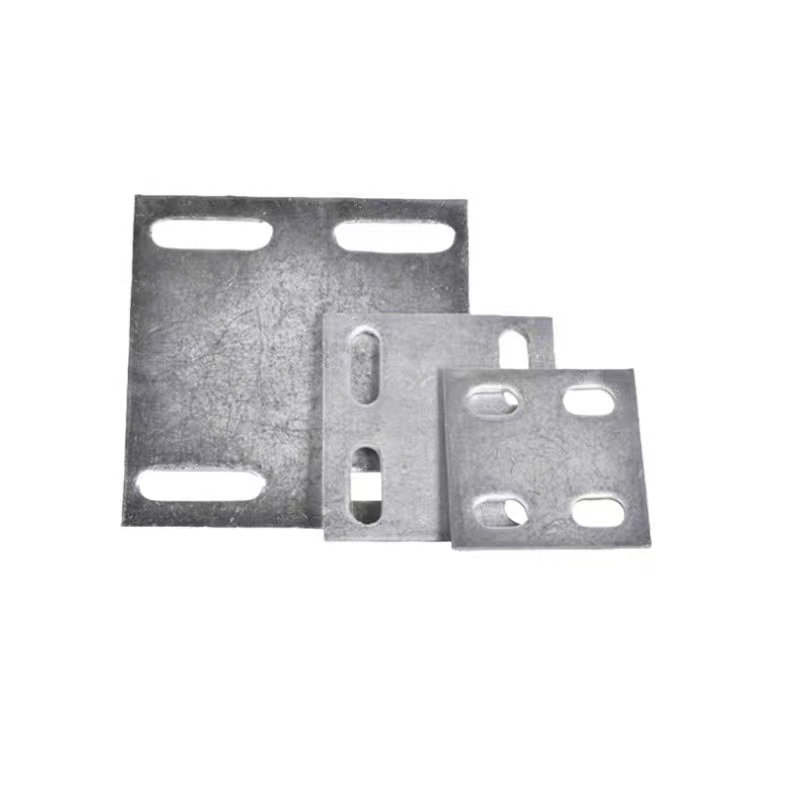
- Plak Electrogalvanized Embedded
- High-fòs nwa nwasi
- Koulè Zenk-plake kwa kontwar fil fè egzèsis
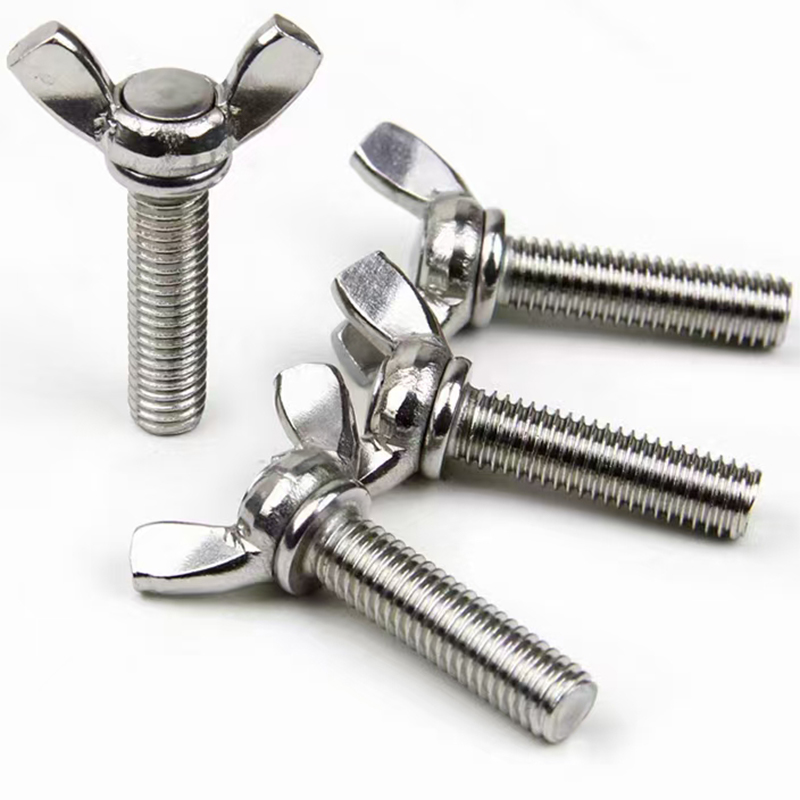
- Boulon papiyon
- Nwa zenk plake boulon charnyèr
- Electroplated galvanised nwa bride (bride figi nwa)