- English
- Chinese
- French
- German
- Portuguese
- Spanish
- Russian
- Japanese
- Korean
- Arabic
- Irish
- Greek
- Turkish
- Italian
- Danish
- Romanian
- Indonesian
- Czech
- Afrikaans
- Swedish
- Polish
- Basque
- Catalan
- Esperanto
- Hindi
- Lao
- Albanian
- Amharic
- Armenian
- Azerbaijani
- Belarusian
- Bengali
- Bosnian
- Bulgarian
- Cebuano
- Chichewa
- Corsican
- Croatian
- Dutch
- Estonian
- Filipino
- Finnish
- Frisian
- Galician
- Georgian
- Gujarati
- Hausa
- Hawaiian
- Hebrew
- Hmong
- Hungarian
- Icelandic
- Igbo
- Javanese
- Kannada
- Kazakh
- Khmer
- Kurdish
- Kyrgyz
- Latin
- Latvian
- Lithuanian
- Luxembou..
- Macedonian
- Malagasy
- Malay
- Malayalam
- Maltese
- Maori
- Marathi
- Mongolian
- Burmese
- Nepali
- Norwegian
- Pashto
- Persian
- Punjabi
- Serbian
- Sesotho
- Sinhala
- Slovak
- Slovenian
- Somali
- Samoan
- Scots Gaelic
- Shona
- Sindhi
- Sundanese
- Swahili
- Tajik
- Tamil
- Telugu
- Thai
- Ukrainian
- Urdu
- Uzbek
- Vietnamese
- Welsh
- Xhosa
- Yiddish
- Yoruba
- Zulu
- Kinyarwanda
- Tatar
- Oriya
- Turkmen
- Uyghur

Pig ear fastener
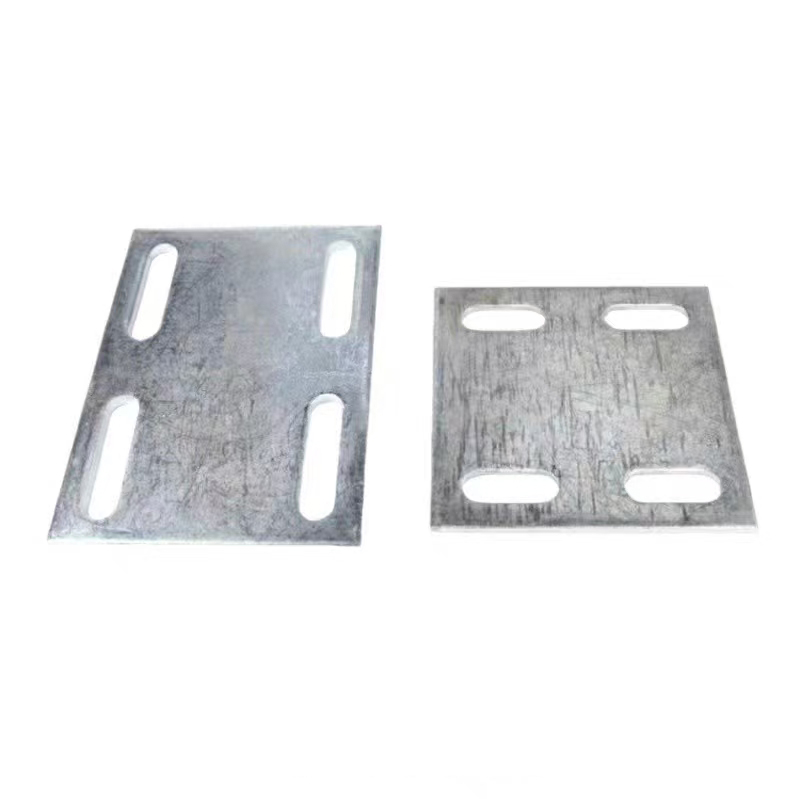
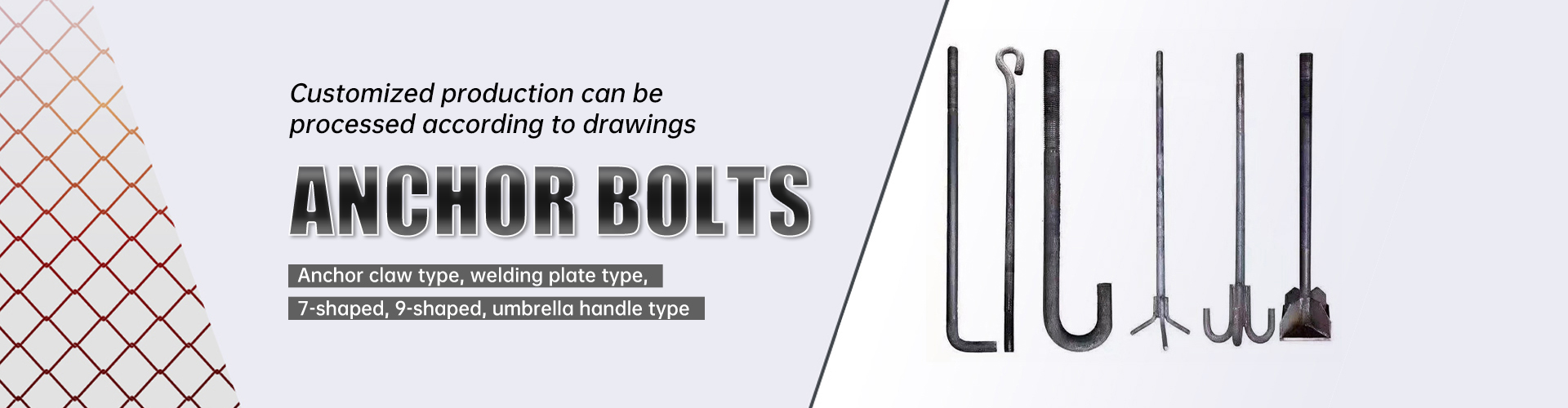
You hear 'pig ear fastener' and most think it's just a simple, bent piece of metal with two holes. That's the first mistake. In structural connections, especially for column base plates or anchoring heavy machinery to concrete, that simplistic view will cost you. It's not a commodity bracket; it's a load-transfer component. The name comes from the shape, sure, but the engineering is in the details: the bend radius, the hole spacing relative to the edge distance, the exact alloy and coating for the environment. I've seen specs get this wrong, treating it like any other L-bracket, and then you get callbacks for cracked concrete or loosened anchors. The real work starts when you move past the catalog image.
The Geometry and the Gotchas
The bend is critical. A sharp, 90-degree bend from a cheap press brake creates a stress concentration point right at the heel. Over time, with dynamic loads or vibration—think industrial fans, compressors—that's a prime spot for a fatigue crack to start. We learned this the hard way on a warehouse ventilation project. The fasteners, sourced as cheap 'generic' pig ears, started showing hairline cracks after 18 months of operation. The fix wasn't pretty: shut down, torch-cut, re-drill the concrete. The cost of the fastener was negligible; the cost of replacement was massive. Now we insist on a specified bend radius, a smoother transition that distributes the stress. It adds a few cents to the unit, but it's non-negotiable.
Then there's the hole placement. It seems straightforward: two holes for anchor bolts. But the distance from the hole center to the edge of the material (the edge distance) and to the bend line is everything for pull-out strength. If it's too close, the steel can tear. I recall a supplier, trying to save material on a large batch, trimmed the blank size down, which inadvertently reduced the edge distance. The parts passed a casual inspection but failed under proof load testing. We caught it because we test samples from every batch, a protocol we established after that ventilation fiasco. You can't eyeball this stuff.
Material grade is another silent spec. A36 mild steel is common, but in a corrosive environment—a food processing plant washdown area, for instance—you need at least a hot-dip galvanized finish, or better yet, stainless. I've specified 304 stainless pig ears from a manufacturer like Handan Zitai Fastener Manufacturing Co., Ltd. for coastal projects. Their production base in Yongnian is geared for volume, but the key is finding a supplier there that understands these niche requirements, not just punching out millions of generic parts. The convenience of their location near major transport routes means they can handle specialized bulk orders efficiently, which matters when you're sourcing for a 50-unit installation.
On-Site Realities and Anchor Compatibility
Here's where theory meets the hammer drill. The pig ear fastener is almost always used with concrete anchors—wedge anchors, sleeve anchors, chemical anchors. Compatibility is paramount. The hole in the fastener must match the anchor's diameter and washer size perfectly. A washer that bridges the bend is a problem; it won't sit flat, creating a pivot point. I've had crews on site grind down washers, which is a hack solution that compromises the anchor's design. The proper fix is to source the fastener and anchor as a matched system, or at least from fabricators who dialogue with anchor suppliers.
Installation sequence is a common pitfall. The temptation is to set the anchor bolts into the concrete first, then slide the pig ear on. But if the bolt placement is off by even a few millimeters—and it often is—the fastener won't sit flush. You're left with a twisted, pre-stressed connection before you even tighten the nut. The better practice, which we enforce now, is to use the pig ear as a template. Secure it in its exact final position, drill through its holes into the concrete, then set the anchors. It's an extra step, but it guarantees alignment. This is the kind of detail you only learn from having a crew yelling over the noise that the parts don't fit.
Load orientation is frequently misunderstood. A pig ear fastener is excellent for resisting shear loads (forces trying to slide the equipment sideways) and uplift. It's mediocre for pure tension if the load is pulling directly away from the bend. In those cases, a straight plate with a center hole might be better. I was once asked to use them to secure the legs of a tall, narrow storage tank primarily against wind-induced overturning. The analysis showed significant tension on the windward side. We had to supplement with additional diagonal bracing because the pig ears alone, in that configuration, weren't the right tool for the primary job. They became part of a system, not the whole solution.
Sourcing and the Supply Chain Nuance
Finding a reliable source isn't about finding the cheapest. It's about finding a fabricator who gets the application. The region around Handan, like where Zitai Fastener operates, is a hub. The advantage of working with established manufacturers there isn't just price; it's capacity and material consistency. You can specify a run of 5,000 pieces in S355JR steel with a 12mm bend radius and zinc-flake coating, and they'll have the stock and the tooling. For a contractor, that predictability is worth its weight. The website https://www.zitaifasteners.com shows the scale, but the real test is in the quoting process: can their engineering team read your drawing and ask smart questions about galvanization standards or hole tolerances?
Lead times can kill a project. If you're doing a design-bid-build, you might have a 10-week window for fabricated items. A supplier that's just a reseller might quote 12 weeks because they're waiting on their own mill order. A integrated manufacturer with their own production base, especially one with the logistical access that a location adjacent to the Beijing-Guangzhou Railway and expressways implies, often has more control over raw material flow. This can shave weeks off delivery. For fast-track projects, that's the difference between profit and penalty.
The value-add is in the processing. Can they deburr the holes cleanly? Can they provide a certified material test report (MTR) for the steel coil lot? Will they pack them in divisible cartons by floor/section for a high-rise project? These are the questions that separate a parts vendor from a construction partner. We once received a pallet of 2,000 pig ears dumped in a single crate, no separation. The site crew spent two days sorting, counting, and dealing with scratched coatings. That good price evaporated in wasted labor. Now it's a spec line item: packaging must facilitate direct site handling.
When It's Not the Right Answer
Despite their utility, pig ear fasteners are not a universal fix. For seismic zones with high cyclic loading requirements, their use might be restricted unless they're part of a pre-qualified moment connection system. You can't just assume. We had to redesign a mezzanine support in California because the local code official wanted an engineer's stamp specifically for the connection detail using these fasteners. The generic calculation wasn't enough; it needed to be project-specific. That added three weeks to the approval process.
They also struggle in applications requiring fine adjustability. Once the concrete is drilled and the anchor set, you get about +/- 2mm of play, if that. For mounting long rails or precisely aligned machinery, you're better off with slotted hole base plates or leveling mounts. Trying to elongate the holes in a pig ear after fabrication weakens it dramatically. I've seen it done in the field with a round file, and it's a sure sign the installation plan was flawed from the start.
So, the takeaway? Respect the pig ear fastener as a specialized connector. Its value is in its simplicity for the right job, but that simplicity is deceptive. Specify the geometry, material, and finish with the end environment in mind. Source from fabricators who understand construction sequencing, not just metal bending. And always, always test the connection—not just the fastener—as a system. It's a small part that holds big things down, and getting it wrong is a lesson you only need to learn once.
Ki gen rapò pwodwi
Pwodwi ki gen rapò
Pi bon vann pwodwi
Pi bon pwodwi vann-
 Koulè galvanised egzèsis egzèsis ke fil
 - Electro-galvanised ekspansyon zen
- Electro-galvanised fil egzèsis egzèsis
- Koulè zenk plake boulon egzagonal
- Nwa electrogalvanized
- Boulon ekspansyon ki gen koulè pal zenk
- Ki gen koulè pal zenk-plake zen ekspansyon
- Boulon charnyèj
- Egzagòn priz ki gen koulè zenk-plake boulon
- Plak Electrogalvanized Embedded
- Nwa zenk plake boulon charnyèr
- Cho-tranpe boulon chimik galvanised