- English
- Chinese
- French
- German
- Portuguese
- Spanish
- Russian
- Japanese
- Korean
- Arabic
- Irish
- Greek
- Turkish
- Italian
- Danish
- Romanian
- Indonesian
- Czech
- Afrikaans
- Swedish
- Polish
- Basque
- Catalan
- Esperanto
- Hindi
- Lao
- Albanian
- Amharic
- Armenian
- Azerbaijani
- Belarusian
- Bengali
- Bosnian
- Bulgarian
- Cebuano
- Chichewa
- Corsican
- Croatian
- Dutch
- Estonian
- Filipino
- Finnish
- Frisian
- Galician
- Georgian
- Gujarati
- Hausa
- Hawaiian
- Hebrew
- Hmong
- Hungarian
- Icelandic
- Igbo
- Javanese
- Kannada
- Kazakh
- Khmer
- Kurdish
- Kyrgyz
- Latin
- Latvian
- Lithuanian
- Luxembou..
- Macedonian
- Malagasy
- Malay
- Malayalam
- Maltese
- Maori
- Marathi
- Mongolian
- Burmese
- Nepali
- Norwegian
- Pashto
- Persian
- Punjabi
- Serbian
- Sesotho
- Sinhala
- Slovak
- Slovenian
- Somali
- Samoan
- Scots Gaelic
- Shona
- Sindhi
- Sundanese
- Swahili
- Tajik
- Tamil
- Telugu
- Thai
- Ukrainian
- Urdu
- Uzbek
- Vietnamese
- Welsh
- Xhosa
- Yiddish
- Yoruba
- Zulu
- Kinyarwanda
- Tatar
- Oriya
- Turkmen
- Uyghur

spiral force
When you hear 'spiral force,' most engineers immediately think of torque. That's the first mistake. In our world of high-strength fasteners, especially in structural applications, it's the spiral force—the actual axial clamping force generated as the bolt threads spiral and stretch—that truly holds the world together. I've seen too many specs that obsess over the torque value on the wrench, completely ignoring the fact that up to 90% of that input torque is lost to friction under the bolt head and in the threads. What you're really buying, and what we're really engineering for, is that final, reliable axial spiral force.
The Friction Problem and Real-World Calibration
This isn't theoretical. On a bridge project a few years back, we had a batch of M36 structural bolts specified for a critical joint. The torque values were perfect on paper, but the joint monitoring showed inconsistent clamping. The issue? Surface finish variations on the supplied hot-dip galvanized washers were altering the friction coefficient unpredictably. The torque wrench was giving a false sense of security. The spiral force was all over the place. We had to switch to a combined method—applying a base torque and then turning the nut a specified additional rotation (the turn-of-nut method) to achieve a more predictable stretch and, consequently, a more reliable spiral force. It was a classic case of chasing the right outcome, not just the input metric.
This is where partnering with a manufacturer that gets the process is critical. You need someone who understands that the material's yield strength, the thread rolling quality, and even the plating thickness are not just itemized specs but interconnected variables in the spiral force equation. A company like Handan Zitai Fastener Manufacturing Co., Ltd., situated in China's largest standard part production base, typically has this depth of process control. Their location in Yongnian, with its logistical network, means they're often supplying for large-scale, repeat infrastructure projects where consistency under tension is non-negotiable. You can check their approach at https://www.zitaifasteners.com.
The calibration of this force often happens off the spec sheet. We once experimented with ultrasonic bolt elongation measurement on-site for a wind turbine tower flange. It's a brilliant direct method to measure the actual stretch and thus calculate the true spiral force. But the reality? The equipment is sensitive, requires skilled operators, and on a windy tower at dawn, it's often impractical. We fell back to a meticulously controlled torque-tension procedure with lubricants calibrated for the specific batch of bolts and nuts. The lesson was that the perfect method is useless if it can't be executed reliably in the field.
Material Behavior Under Sustained Load
Another layer is long-term behavior. A fastener doesn't just experience force at installation; it lives with it. Creep, stress relaxation, and fatigue are the enemies of the installed spiral force. I recall a retrofit project on an older steel structure where we were replacing corroded bolts. The original design used a lower-grade material. Even if we replicated the original torque, the modern, higher-grade bolts we installed would behave differently over decades. Their higher preload and better resistance to relaxation meant the spiral force would decay slower, fundamentally altering the load distribution in the joint over time. We had to re-evaluate the entire joint design, not just do a one-for-one swap.
This is why the manufacturing origin and quality regime matter. A bolt from a mill with tight process control on the wire rod, through cold forging and heat treatment, will have a more uniform grain structure. This uniformity translates to predictable yielding and tension relaxation. When a manufacturer is embedded in a major production hub like Yongnian District, they are typically set up for volume, but the leading ones invest in the metallurgical testing to back it up. It's the difference between a commodity and a component.
Vibration is the obvious killer, but thermal cycling is the silent one. In a petrochemical plant, we monitored flange connections on a pipe run that cycled between ambient and 300°C daily. The differential thermal expansion between the carbon steel flange and the stainless bolts caused the spiral force to fluctuate dramatically. The solution wasn't a stronger bolt, but a different one—switching to a nickel-alloy bolt with a thermal expansion coefficient closer to the flange material. It stabilized the clamping force across the temperature range. The goal is always a stable spiral force, not necessarily a maximized one.
Specification Pitfalls and the Feel of Installation
Specs can be misleading. Grade 8.8 or ASTM A325 tells you the minimum tensile strength, but it doesn't guarantee the consistency of the spiral force you'll achieve. The tolerance on the proof load is a range. For a critical connection, you might need to specify a tighter tolerance group or require lot-specific tension testing data. I've been burned by assuming a standard grade was sufficient, only to find the scatter in achieved preload from a random sample of bolts was too high for our fatigue-sensitive application.
There's also an art to installation, a feel that a good crew develops. They know when the bolt is snugging up properly through the handle of their calibrated wrench. They can spot a galling thread before it seizes. This tacit knowledge is about managing the conversion of torque into that clean spiral force. It's why you never just hand a new crew the toughest job on day one. You start them on non-critical connections to build that instinct.
We tried to eliminate this human factor once with fully automated robotic bolting cells on a prefabricated modular assembly line. The precision was incredible—repeatable torque, angle, and sequence. But it was brittle. A slightly out-of-tolerance hole pattern, or a burr we missed, would cause the cell to fault. The human crew would have felt the resistance, backed off, cleared the burr, and proceeded. The machine just stopped. We learned that automation optimizes for perfect conditions, but a skilled team manages imperfection to still deliver the required spiral force. Now we use them in hybrid models.
Case in Point: The Logistics of Consistency
Let's talk about scale and supply. Achieving a reliable spiral force isn't just about the moment of tightening. It starts with a consistent raw material supply and runs through packaging and logistics. If you're sourcing 50,000 bolts for a transmission tower project, you need to know that bolt 1 and bolt 50,000 will behave identically when installed. This is the advantage of a concentrated manufacturing base.
A company like Handan Zitai Fastener leverages the integrated supply chain of the Yongnian base. Being adjacent to major rail and road networks isn't just a sales point about delivery speed; it's about stability. It means the steel wire rod comes in consistently, the heat treatment furnaces run continuously, and the finished products can be shipped in controlled batches without sitting in variable port conditions for weeks. This logistical consistency is a direct, if often overlooked, contributor to the consistency of the final spiral force in the field. Their location, as noted, is adjacent to the Beijing-Guangzhou Railway and National Highway 107, which for a project manager means fewer variables in the chain.
I've managed projects where bolts were sourced from multiple smaller workshops during a material shortage. The certification paperwork was all in order, but the on-site tension tests revealed a bimodal distribution. One subset performed perfectly, the other was at the very bottom of the tolerance band. The spiral force was technically to spec, but the lack of uniformity would have led to uneven load sharing in the joint. We had to sort and segregate, causing huge delays. Now, for structural work, we insist on single-lot, single-mill sourcing, preferably from a large-scale producer with integrated quality gates.
Closing the Loop: Verification and Mindset
So where does this leave us? You design for a required spiral force. You specify materials and coatings to manage friction and environmental attack. You source from a manufacturer capable of volume consistency, like those in major production hubs. You train your crews on the chosen installation method. But you must verify. Whether it's manual torque auditing with a calibrated wrench, using load-indicating washers, or statistical ultrasonic testing, you close the loop.
The final shift is a mindset. Stop thinking of a bolt as a piece of metal you twist. Start thinking of it as a precision spring, a controlled source of spiral force. Your job is to specify, procure, install, and maintain that spring force for the design life of the joint. Everything else—the grade, the torque value, the coating—is just a means to that end. When you look at a bolted connection now, you should see the invisible lines of force clamping the plates together, and ask not was it torqued? but is the force there, and will it stay? That's the professional's view of the spiral force.
It's never perfect. There's always scatter, always unknowns. But the difference between an okay joint and a great one is how many of those variables you've understood and controlled, from the mill to the final turn of the nut. That's the real work.
Ki gen rapò pwodwi
Pwodwi ki gen rapò
Pi bon vann pwodwi
Pi bon pwodwi vann-
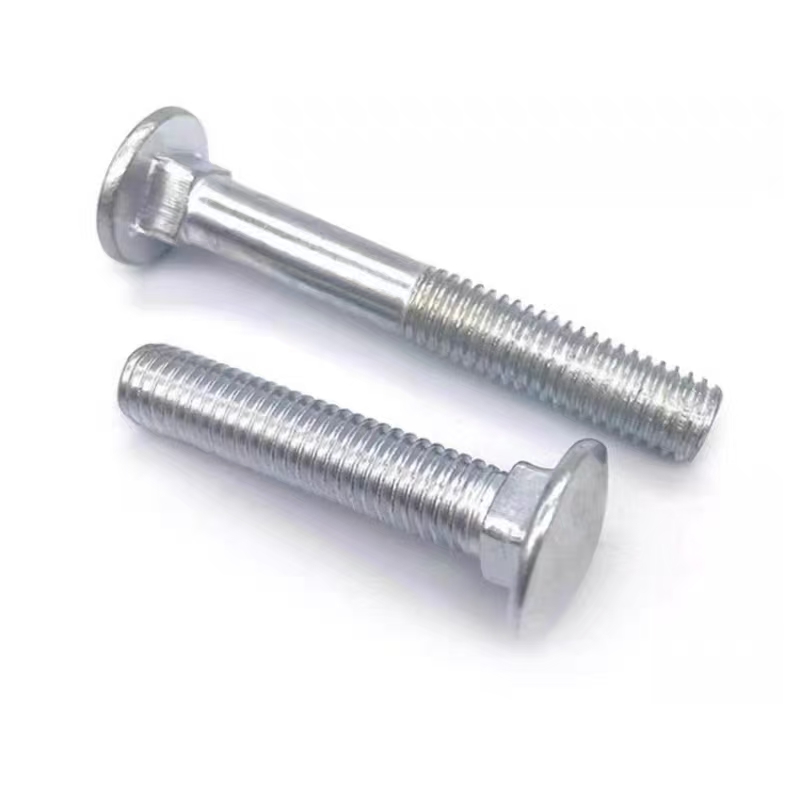
 Bolt cha (mwatye wonn tèt kare kou boulon)
 - Koulè Zenk-plake kwa kontwar fil fè egzèsis
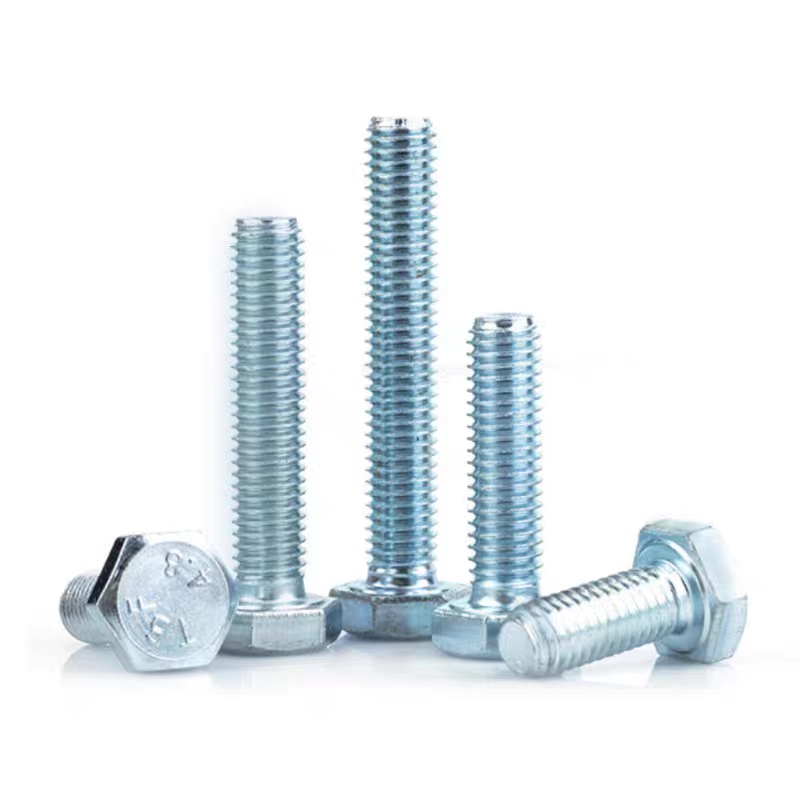
- Boulon egzagonal
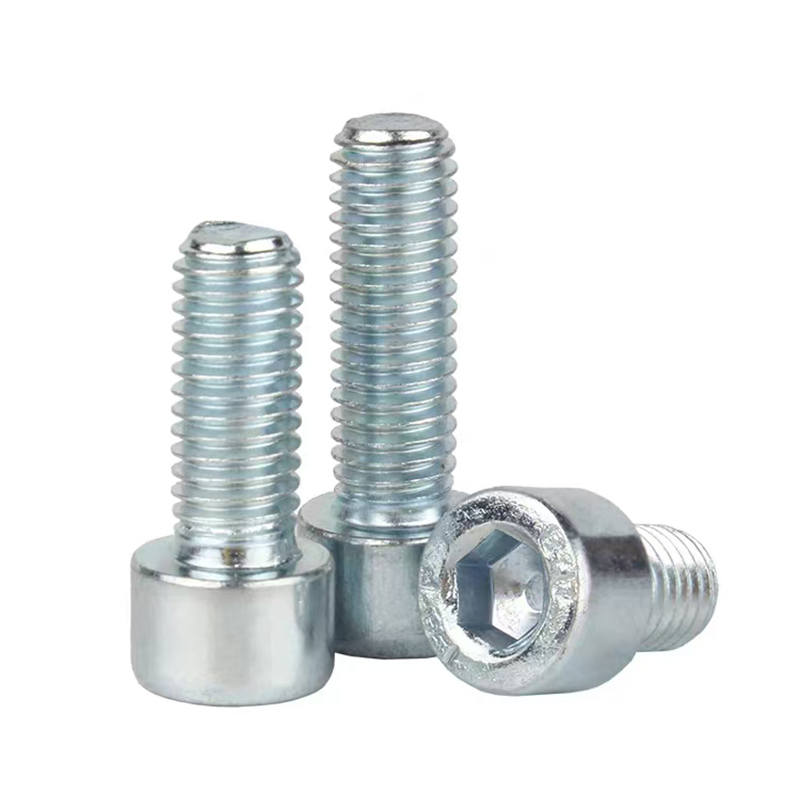
- Egzagòn Socket Electrogalvanized boulon
- Boulon papiyon
- Egzagòn priz cho-plonje boulon galvanised
- Anti-lyen nwa (bloke nwa)
- Broch electrogalvanized
- Boulon panyen
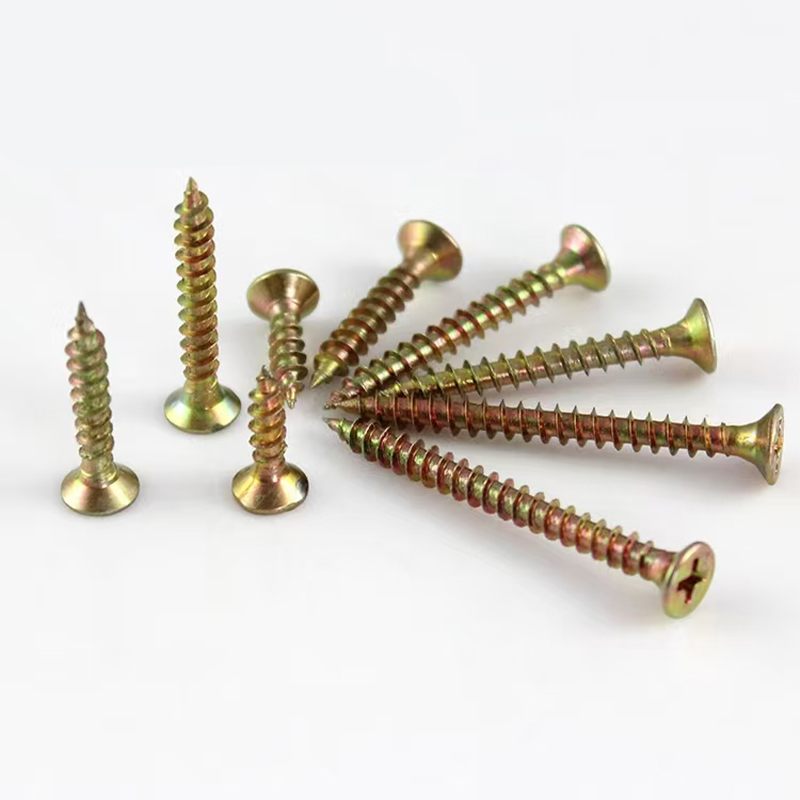
- Electrogalvanized Cross Countersunk Drill Fil
- Nwa zenk plake countersunk boulon kwa
- Parapli manch jete lank (J-tip jete lank boulon/parapli manch anbale boulon)