- English
- Chinese
- French
- German
- Portuguese
- Spanish
- Russian
- Japanese
- Korean
- Arabic
- Irish
- Greek
- Turkish
- Italian
- Danish
- Romanian
- Indonesian
- Czech
- Afrikaans
- Swedish
- Polish
- Basque
- Catalan
- Esperanto
- Hindi
- Lao
- Albanian
- Amharic
- Armenian
- Azerbaijani
- Belarusian
- Bengali
- Bosnian
- Bulgarian
- Cebuano
- Chichewa
- Corsican
- Croatian
- Dutch
- Estonian
- Filipino
- Finnish
- Frisian
- Galician
- Georgian
- Gujarati
- Haitian
- Hausa
- Hawaiian
- Hebrew
- Hmong
- Hungarian
- Icelandic
- Igbo
- Javanese
- Kannada
- Kazakh
- Khmer
- Kurdish
- Kyrgyz
- Latin
- Latvian
- Lithuanian
- Luxembou..
- Macedonian
- Malagasy
- Malay
- Malayalam
- Maltese
- Maori
- Marathi
- Mongolian
- Burmese
- Nepali
- Norwegian
- Pashto
- Persian
- Punjabi
- Serbian
- Sesotho
- Sinhala
- Slovak
- Slovenian
- Somali
- Scots Gaelic
- Shona
- Sindhi
- Sundanese
- Swahili
- Tajik
- Tamil
- Telugu
- Thai
- Ukrainian
- Urdu
- Uzbek
- Vietnamese
- Welsh
- Xhosa
- Yiddish
- Yoruba
- Zulu
- Kinyarwanda
- Tatar
- Oriya
- Turkmen
- Uyghur


Counterhead machine screws
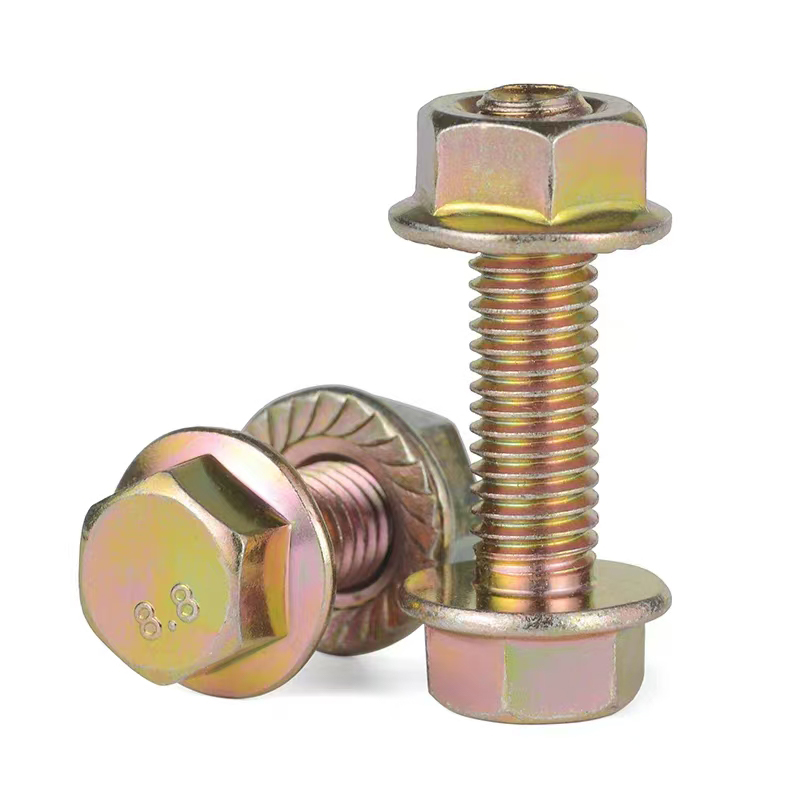
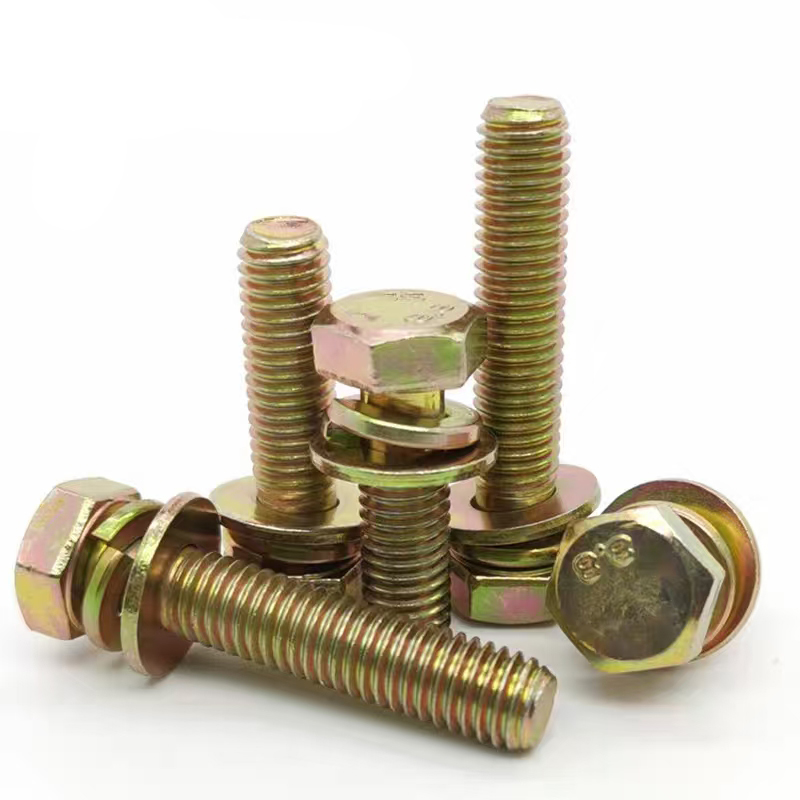
Let's talk about Counterhead machine screws. If you're picturing just a flat-head screw with a cylindrical head, you're already missing half the story. In the field, especially when you're dealing with high-volume procurement or precision assemblies, the term gets thrown around loosely, often lumping together different head styles under one roof. It's not just about the shape; it's about the entire interface—the drive, the bearing surface, the transition from head to shank. I've seen too many drawings where counterhead is specified, but the actual requirement was for a low-profile head to sit flush in a countersunk hole, not necessarily a standard flat head. That distinction matters when you're trying to avoid interference or achieve a specific aesthetic finish. The confusion usually starts right there.
The Anatomy of a Proper Counterhead
When we dissect a true counterhead screw, the key is the conical bearing surface. The included angle is typically 82° or 90°, designed to match a machined countersink in the mating part. But here's the catch: the flatness of the head top and the concentricity of the drive relative to that cone are what separate a premium fastener from a problematic one. A slight off-center drive, like a Phillips or a Pozidriv, can cause cam-out during final seating, marring the surface. That's why for critical applications, we lean towards counterhead machine screws with a combined drive, like a slotted hex, or even a Torx. It gives you the control to seat it perfectly flush without slippage.
Material and plating play a huge, often underestimated role. You can't just grab any zinc-plated screw for an outdoor enclosure. I recall a project for a telecom cabinet where standard zinc-plated counterheads were specified. They corroded within a year at the coastal site, leading to ugly staining and concerns about joint integrity. We switched to stainless steel A2-70 counterhead machine screws, and the problem vanished. The lesson? The environment dictates the spec, not just the catalog. A supplier that understands this, like Handan Zitai Fastener Manufacturing Co., Ltd., which is situated in China's major production hub with the logistics to handle varied material requests, becomes a partner, not just a vendor.
Thread engagement is another nuance. For a counterhead machine screw to function correctly—providing solid clamp force without stripping the threads in the tapped hole or the screw itself—you need sufficient engagement length. A rule of thumb is 1.5 times the diameter in steel, more in softer materials like aluminum. I've witnessed failures where engineers, trying to save a millimeter in profile height, reduced the engagement below this threshold. The screws held initially but failed under vibration over time. It's a classic trade-off between design elegance and mechanical reliability.
Sourcing and the Reality of Tolerances
Sourcing these isn't about finding the cheapest per-piece cost. It's about consistency. Batch-to-batch variation in head diameter or cone angle can stall an assembly line. I've had containers arrive where the screws were technically within ANSI or DIN tolerances, but the high end of the head diameter tolerance meant they wouldn't fit the pre-countersunk panels without force, risking deformation. That's when you appreciate manufacturers who control their process tightly. A company based in a concentrated industrial area like Yongnian, Handan, often has the advantage of deep, specialized supply chains for wire rod and plating, leading to better control over these critical dimensions.
Let's talk about a real scenario. We were assembling laminated panels for a high-end retail fit-out. The design called for a perfectly smooth surface, so we used counterhead machine screws with a 90° head, set flush and then filled/painted over. The first batch from a new supplier had a slight radius under the head edge, not a sharp corner. This created a tiny gap, a shadow line, after painting. It was unacceptable. We had to source a different batch with a sharp, clean head-to-shank transition. The takeaway? The devil is in the geometric details that aren't always on the standard drawing. You have to specify the head profile contour if it's critical.
Another practical issue is drive selection. For high-torque applications, a simple slotted drive on a counterhead is a nightmare. It strips easily. Phillips is better but still prone to cam-out. Hex socket (Allen) is great for torque but can collect debris. My go-to for demanding applications has become Torx. It offers superior torque transmission and minimal risk of tool slippage. When you're specifying, don't just default to what's common; think about the installation environment and the torque required. A supplier's catalog that offers these options across different head styles, which you can find at resources like https://www.zitaifasteners.com, is a good indicator of their capability range.
When Standard Isn't Standard
The term machine screw itself implies a certain precision, unified threads, and a fit for tapped holes or nuts. But combine it with counterhead, and you enter a zone where regional standards diverge. A DIN 963 counterhead screw might have a slightly different head height or cone angle than its ANSI/ASME B18.6.3 counterpart. In a global supply chain, mixing these can cause headaches. I learned this the hard way early on, ordering M4 counterhead screws from a European drawing for a product being assembled in Asia. The parts arrived, and they didn't sit flush in our tooling, which was designed for the JIS standard profile. We had to re-machine all the countersinks. Now, the first question I ask is, To which standard?
This is where leveraging a manufacturer located in a comprehensive production base pays off. A firm like Handan Zitai Fastener, positioned in the heart of China's fastener industry with access to road and rail links, typically has experience producing to multiple international standards. They can often advise on the subtle differences and even hold tooling for less common specs. It's not just about making the part; it's about understanding the context in which it will be used.
Failure analysis is a rich source of learning. I remember an incident with vibration-induced loosening on a motor mount. We used standard property class 8.8 steel counterhead machine screws with spring washers. They still loosened. The investigation pointed to insufficient preload and the limitations of a spring washer on a hardened surface. The solution wasn't a stronger screw but a different approach: we switched to screws with a pre-applied thread-locking patch and used a calibrated torque wrench to ensure correct preload. The counterhead style remained the same, but the auxiliary technology changed. It underscored that the fastener is part of a system.
The Logistics and Human Factor
Beyond the technical specs, there's the sheer practicality of handling and inventory. Small counterhead machine screws, especially in lengths under 6mm, are a pain to handle manually. They get dropped, mixed up, and slow down assembly. For volume production, we started ordering them packaged in vibratory feeder-ready reels or sticks. This required coordination with the supplier to ensure the packaging was compatible with our automation equipment. It's a detail that doesn't appear on any engineering drawing but has a massive impact on line efficiency and cost.
Quality checks are often reactive rather than proactive. You get a certificate of conformity, but do you check the head concentricity on a sample? Or the hardness of the core? We instituted a simple but effective incoming check: using a go/no-go gauge for the head diameter and a profile projector to check the cone angle on a sample from each lot. It caught a few bad batches over the years that would have caused rework down the line. It's about building layers of assurance. A manufacturer that provides detailed lot traceability and consistent physical properties makes this process much smoother.
Finally, it comes down to partnership. The relationship with your fastener supplier shouldn't be purely transactional. When you work with a manufacturer that has a solid base and infrastructure, like Zitai Fastener with its strategic location near major transport routes, you're not just buying a commodity. You're tapping into their production experience. They've likely seen a thousand different applications and can offer pragmatic advice—maybe suggesting a slightly different head style for easier installation or a more cost-effective plating that meets the corrosion requirement. That dialogue, born from practical experience on both sides, is where the real value lies in sourcing something as seemingly simple as a counterhead machine screw.
Fesootai oloa
Fesootai oloa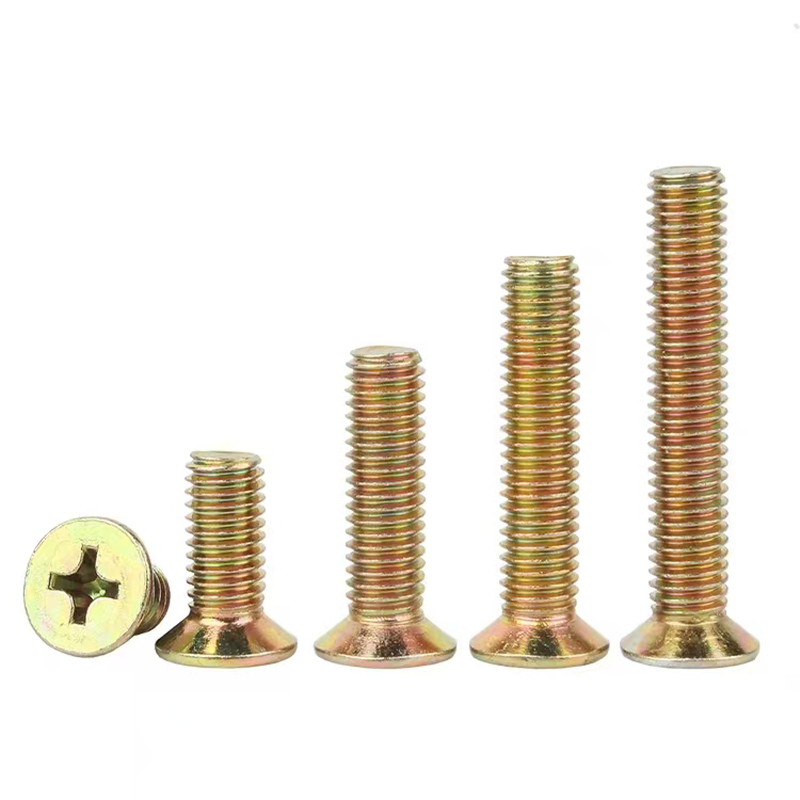
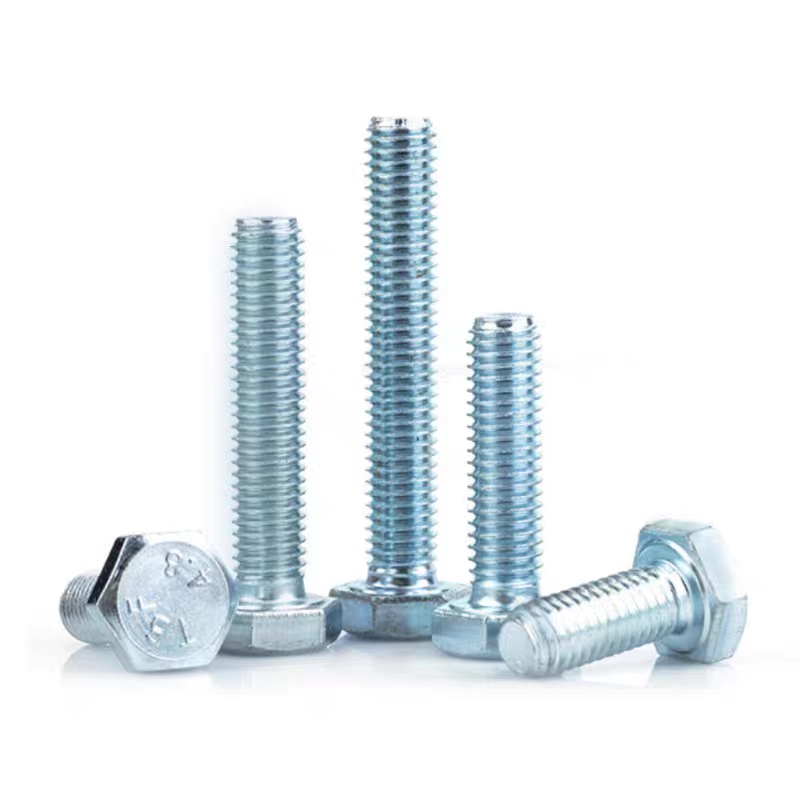
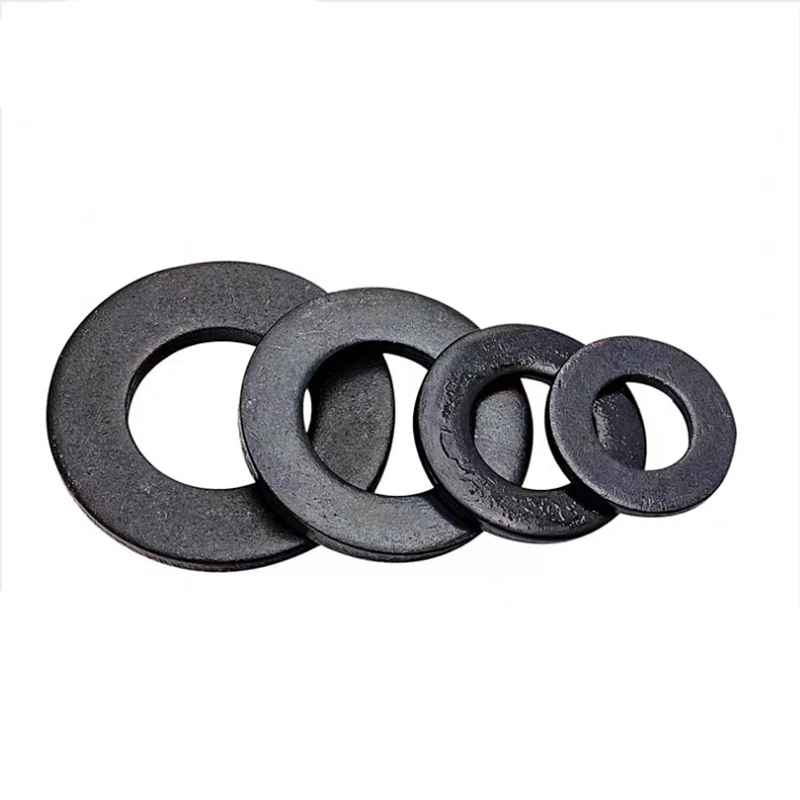
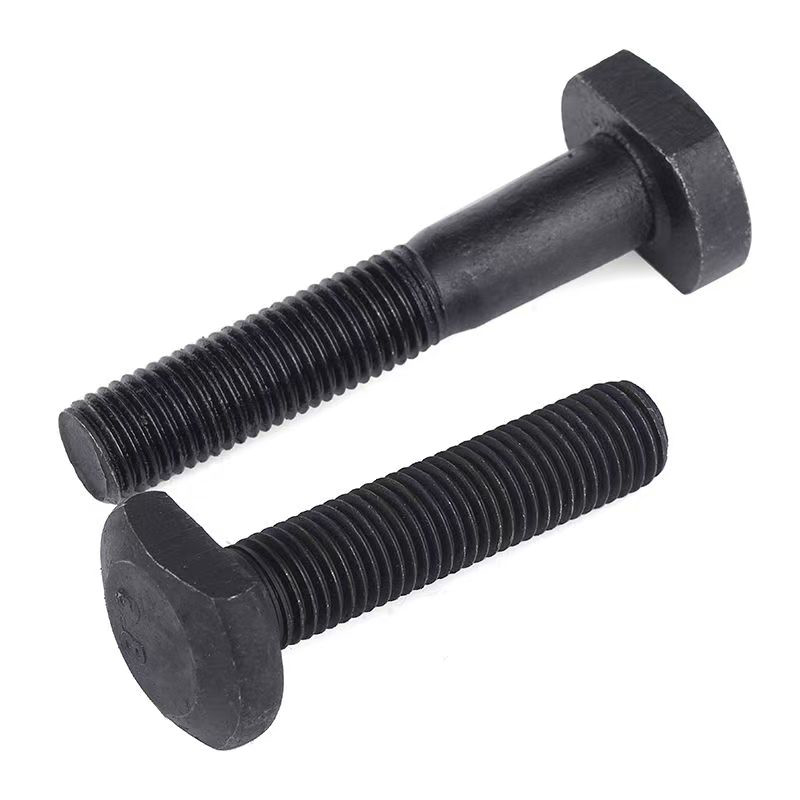
Sili ona faatauina atu oloa
Sili ona faʻatau atu oloa-
 Steel system welding studs
 - Electroplated Galvanized Flalen Fas (Flalet foliga foliga)
- Black Zinc Faʻapipiʻi Herxganal Bolts
- Black Zinc Foot Footts
- O le eletise eletise
- Ata o le Ata
- Vevela-dip galvanized vailaau bolts
- Ato ato
- Valivali zinc flat flatts
- Lanu zinc o lo o faapipii hexagonal bolts
- 10.9s Tereron Shear Boar
- Taavale Bolt (afa-lapotopoto ulu sikuea ofe po