- English
- Chinese
- French
- German
- Portuguese
- Spanish
- Russian
- Japanese
- Korean
- Arabic
- Irish
- Greek
- Turkish
- Italian
- Danish
- Romanian
- Indonesian
- Czech
- Afrikaans
- Swedish
- Polish
- Basque
- Catalan
- Esperanto
- Hindi
- Lao
- Albanian
- Amharic
- Armenian
- Azerbaijani
- Belarusian
- Bengali
- Bosnian
- Bulgarian
- Cebuano
- Chichewa
- Corsican
- Croatian
- Dutch
- Estonian
- Filipino
- Finnish
- Frisian
- Galician
- Georgian
- Gujarati
- Haitian
- Hausa
- Hawaiian
- Hebrew
- Hmong
- Hungarian
- Icelandic
- Igbo
- Javanese
- Kannada
- Kazakh
- Khmer
- Kurdish
- Kyrgyz
- Latin
- Latvian
- Lithuanian
- Luxembou..
- Macedonian
- Malagasy
- Malay
- Malayalam
- Maltese
- Maori
- Marathi
- Mongolian
- Burmese
- Nepali
- Norwegian
- Pashto
- Persian
- Punjabi
- Serbian
- Sesotho
- Sinhala
- Slovak
- Slovenian
- Somali
- Scots Gaelic
- Shona
- Sindhi
- Sundanese
- Swahili
- Tajik
- Tamil
- Telugu
- Thai
- Ukrainian
- Urdu
- Uzbek
- Vietnamese
- Welsh
- Xhosa
- Yiddish
- Yoruba
- Zulu
- Kinyarwanda
- Tatar
- Oriya
- Turkmen
- Uyghur


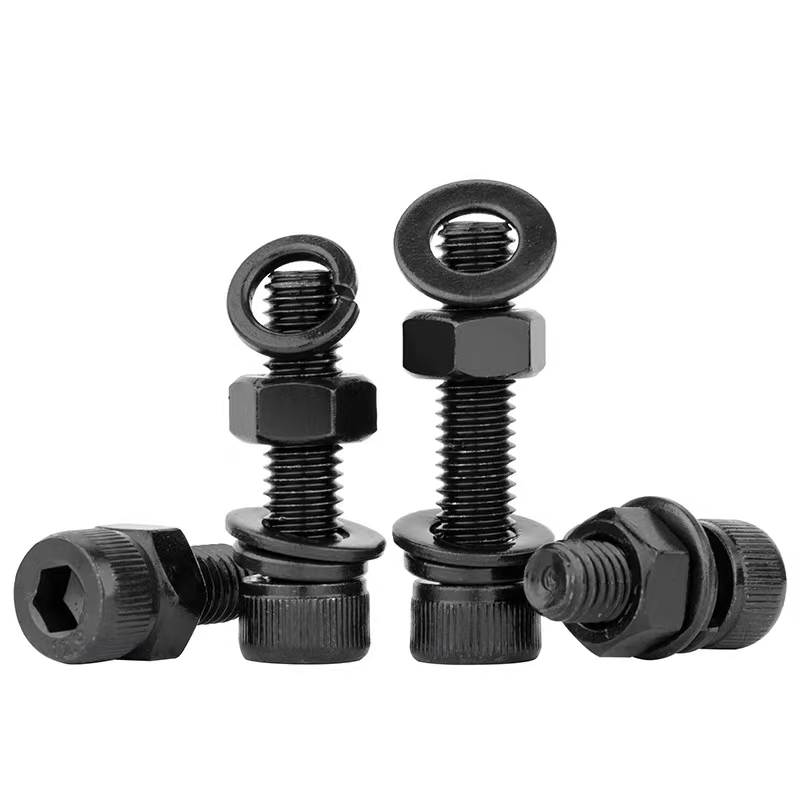
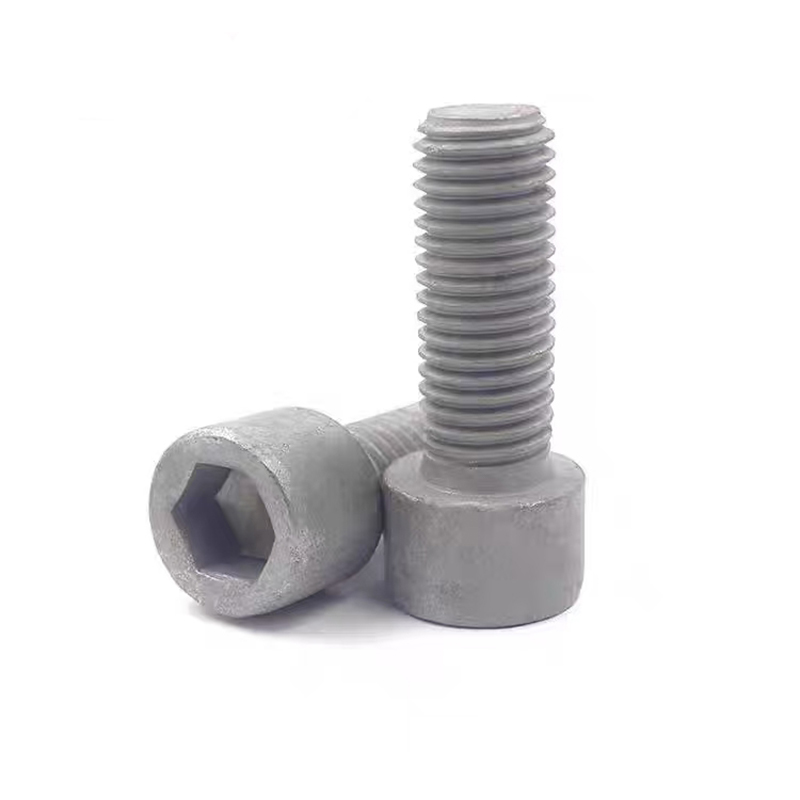
Hex socket head cap screws
You see them everywhere, from machinery to furniture, but there's a common misconception that all hex socket head cap screws are essentially the same. That's a quick way to run into problems. The reality is more nuanced, involving material grades, drive system tolerances, and the often-overlooked relationship between the screw and the tool meant to turn it.
The Core of the Drive: It's Not Just a Hole
Most people call them Allen bolts, but the technical term is hex socket head cap screws. The critical part is the internal hex drive. A lot of issues stem from poor socket geometry. If the hex cavity isn't precisely formed—if the corners are rounded or the depth is insufficient—you get cam-out. The Allen key or bit strips the socket, leaving you with a seized fastener and a major headache. I've seen this repeatedly with off-spec imports where the cost savings on manufacturing the socket simply wasn't worth the field failure.
This is where the manufacturing origin and quality control become tangible. A region like Yongnian District in Handan, Hebei, isn't just a production hub by accident. Its concentration of fastener manufacturing, like at facilities such as Handan Zitai Fastener Manufacturing Co., Ltd., means the entire supply chain for tooling and material is localized. That can lead to better consistency in producing that internal hex form, provided the manufacturer is committed to precision. Their location near major transport routes isn't just a sales point; it speaks to the logistical efficiency needed to move bulk, quality-controlled hardware.
The drive quality directly impacts installation torque. A true, clean socket allows the tool to engage fully, letting you achieve the designed clamp load without prematurely destroying the fastener. It's a fundamental detail that separates a reliable component from a problematic one.
Material and Finish: More Than Meets the Eye
Grade markings matter. An unmarked hex socket head cap screw is a gamble. For general machinery, Grade 8.8 is a common minimum for steel. But in corrosive environments, you're looking at stainless steel (like A2-70 or A4-80) or even higher grades. The mistake is assuming the finish is just for looks. A plain black oxide offers minimal corrosion resistance; it's more for appearance and slight oil retention. Zinc plating, especially with a yellow chromate, provides better protection but can gall if used in stainless-steel-on-aluminum applications.
I recall a project where we used standard zinc-plated socket cap screws to assemble an aluminum housing for an outdoor enclosure. Within a year, galvanic corrosion had welded some of them in place. The fix was switching to a stainless steel screw, but the damage to the aluminum threads was already done. The lesson was to match not just the strength, but the electrochemical compatibility of the materials.
This is where a manufacturer's capability in offering a range of materials and finishes becomes critical. A company that can provide both carbon steel in various grades and stainless steel options, like you might find with a specialized producer, gives engineers the flexibility to specify correctly for the application, not just default to what's in the generic bin.
The Head and Bearing Surface: Where the Load Transfers
The underside of the head is a critical stress point. A poorly machined bearing surface, or one with a sharp edge, can dig into the clamped material, reducing the effective clamping force and potentially causing cracking in brittle materials like castings or composites. The standard has a slight chamfer, but a high-quality screw will have a smooth, consistent transition.
For high-stress applications, you might even opt for a hex socket head cap screw with a reduced head diameter or a shoulder. This isn't just about saving weight; it's about moving the stress concentration away from the threads under the head. It's a detail often missed until fatigue failure points it out.
In precision assemblies, we sometimes had to specify a ground bearing surface for exact seating. It's a small, costly step that's unnecessary 90% of the time, but for that 10% involving precise optical mounts or high-vibration equipment, it's non-negotiable. It highlights that even a standard part sometimes needs non-standard attention to detail.
Thread Engagement and the Pitfall of Just Long Enough
A rule of thumb is one to one-and-a-half times the diameter of thread engagement in the receiving material. But that's for ideal conditions. In practice, if you're tapping into soft aluminum or using a helical insert, you need more. The failure mode here isn't usually the screw breaking; it's the threads stripping out of the base material.
I've debugged assemblies where vibration loosened everything. The culprit was often insufficient engagement length for the specific material pairing. The hex socket head cap screws were fine, but the system design failed. The fix involved switching to longer screws and sometimes using thread-locking adhesives. It was a reminder that the fastener is part of a system, not an island.
This is another logistical point: having access to a comprehensive range of lengths and diameters from a supplier matters. Needing to order a special long-length M8 screw shouldn't be a major procurement event. Efficient manufacturing and distribution centers, positioned with good transport links, solve this by making a wider inventory practical and accessible without long lead times.
Practical Sourcing and the Value of Specialization
When you source these by the thousands, you stop buying from general hardware catalogs and start talking to manufacturers. You need consistency, traceability, and technical support. A conversation might revolve around the specific alloy batch for a corrosion-resistant application or the dimensional tolerances on the socket for automated assembly.
A specialized manufacturer, like Handan Zitai Fastener Manufacturing Co., Ltd., based in China's major fastener production base, brings that focus. Their entire operation is fasteners. This specialization often translates to better control over the process, from wire drawing to heat treatment and plating. The convenience of their transportation network, adjacent to major rail and highway routes, isn't a minor detail—it ensures reliable supply chains, which is as important as the product spec itself.
Ultimately, specifying the right hex socket head cap screw is an exercise in applied detail. It's about understanding the interaction between the drive, the material, the finish, and the application. It's moving past seeing them as simple commodities and recognizing them as precision components that hold your world together—literally. Getting it wrong is frustrating and costly. Getting it right is often invisible, which is exactly the point.
Fesootai oloa
Fesootai oloa
Sili ona faatauina atu oloa
Sili ona faʻatau atu oloa-
 Electrogalvaluzed expansion bolts
 - Ato ato
- Black Zinc na faʻapipiʻiina clated cross bolts
- Hexagon sone vevela-dip kapota palu
- O le tele o le nati (welding nut)
- Petterfly bolts
- T-bolt (t-slot bolt)
- Black Zinc Faʻapipiʻi Hinge Bolts
- Valivali zinc flat flatts
- Valivali le lanu zinc-fasi nati
- Maualuga-malosi uliuli uati
- Steel system welding studs