- English
- Chinese
- French
- German
- Portuguese
- Spanish
- Russian
- Japanese
- Korean
- Arabic
- Irish
- Greek
- Turkish
- Italian
- Danish
- Romanian
- Indonesian
- Czech
- Afrikaans
- Swedish
- Polish
- Basque
- Catalan
- Esperanto
- Hindi
- Lao
- Albanian
- Amharic
- Armenian
- Azerbaijani
- Belarusian
- Bengali
- Bosnian
- Bulgarian
- Cebuano
- Chichewa
- Corsican
- Croatian
- Dutch
- Estonian
- Filipino
- Finnish
- Frisian
- Galician
- Georgian
- Gujarati
- Haitian
- Hausa
- Hawaiian
- Hebrew
- Hmong
- Hungarian
- Icelandic
- Igbo
- Javanese
- Kannada
- Kazakh
- Khmer
- Kurdish
- Kyrgyz
- Latin
- Latvian
- Lithuanian
- Luxembou..
- Macedonian
- Malagasy
- Malay
- Malayalam
- Maltese
- Maori
- Marathi
- Mongolian
- Burmese
- Nepali
- Norwegian
- Pashto
- Persian
- Punjabi
- Serbian
- Sesotho
- Sinhala
- Slovak
- Slovenian
- Somali
- Scots Gaelic
- Shona
- Sindhi
- Sundanese
- Swahili
- Tajik
- Tamil
- Telugu
- Thai
- Ukrainian
- Urdu
- Uzbek
- Vietnamese
- Welsh
- Xhosa
- Yiddish
- Yoruba
- Zulu
- Kinyarwanda
- Tatar
- Oriya
- Turkmen
- Uyghur


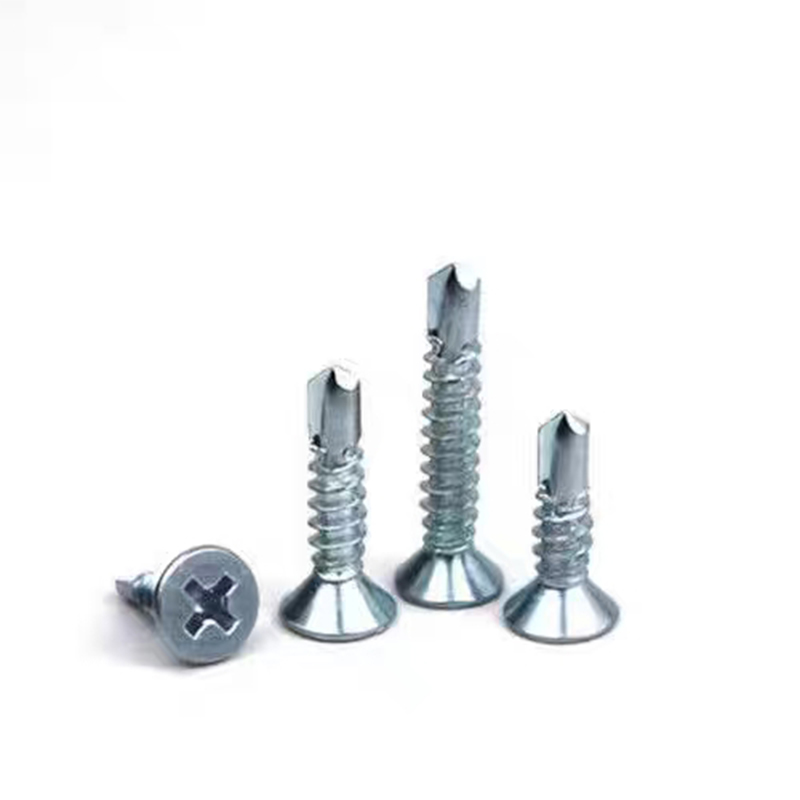
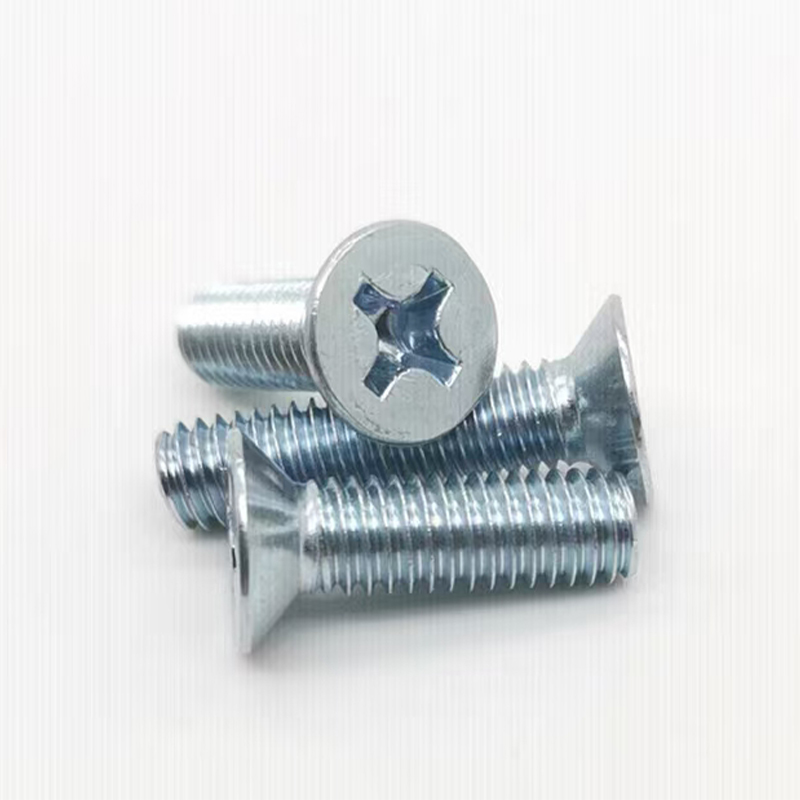
Large flat head machine screws
When you hear 'large flat head machine screws', most think it's just about size and a low-profile head. That's the first mistake. It's really about the interface – how that broad, flat bearing surface interacts with the material, and why getting it wrong costs more than just the fastener.
The Head Game Isn't Just About Looks
You see, the 'flat head' in large sizes isn't just for a flush finish. The critical function is load distribution. A standard hex head or pan head concentrates stress in a smaller area. With a large flat head machine screw, especially in M12, M16, and up, you're spreading that clamping force over a much wider surface. This is non-negotiable in sheet metal fabrication or when fastening into brittle substrates like certain composites or castings. A failure here isn't a loose screw; it's a cracked or deformed component.
I've seen projects where they substituted a standard washer with a smaller-head screw to 'save cost' on a large panel assembly. The result? The thin-gauge steel around the fastener hole started to dimple and deform under vibration within months. The fix was a full teardown to replace with proper large flat head machine screws. The washer couldn't replicate the integrated, hardened bearing surface of the true flat head. The cost saving was a fantasy.
The nuance is in the countersink angle, too. The standard 82° or 90°. It has to match the receiving feature perfectly. A mismatch, even by a few degrees, means the screw is riding on a knife-edge, not sitting flush. You lose almost all the load-bearing advantage. I always specify the angle alongside the screw size now. It's a lesson from a bad batch we received years ago where the angle was off-spec. They seated, but they creaked and groaned under load – a telltale sign of a poor interface.
Material and Drive: Where Specs Get Real
Moving past the head, the machine screw body in these sizes demands attention. You're not looking at mild steel. For anything structural or exposed, it's Grade 8.8, 10.9, or 316 stainless. The threading on a large flat head machine screw is also different from a bolt. It's designed to mate with a tapped hole or a nut, offering finer adjustment and a more precise clamp. The failure mode I've encountered is using a thread-cutting screw where a machine screw was needed. In repeated assembly/disassembly of a jig, the tapped aluminum threads stripped out. Machine screws preserve the integrity of the internal threads.
Drive type is another practical battlefield. For large sizes, a simple Phillips or Pozidriv is asking for trouble – cam-out is guaranteed, especially at higher torque. Hex socket (Allen) is the reliable workhorse. I'm leaning more towards Torx drives now for anything above M10. The engagement is superior, it transmits torque without slipping, and you ruin fewer driver bits. It's a small upgrade that saves man-hours on the floor during installation.
Speaking of installation, the torque specs are often ignored. With a large flat head, under-torquing means you're not utilizing the clamping force you paid for in the design. Over-torquing can warp the head or strip threads. It's not guesswork. A calibrated wrench and a proper spec sheet are part of the fastener package, not an optional extra.
Sourcing and the Reality of Local Giants
This is where theory meets the warehouse floor. Sourcing these reliably, in consistent quality and volume, is the real challenge. The global supply chain is messy. You might get a perfect sample batch, then the production run has heat-treatment inconsistencies. That's why knowing the origin and the manufacturer's capability is part of the job.
Take a place like Yongnian District in Handan. It's not just a city in China; it's the epicenter of fastener manufacturing. When you're dealing with a supplier based there, like Handan Zitai Fastener Manufacturing Co., Ltd., you're tapping into that concentrated ecosystem. Their location adjacent to major rail and road arteries isn't just a line on a website; it translates to logistical efficiency for bulk orders. You're not just buying a box of screws; you're buying into a production and distribution network that can handle the scale and specificity required for industrial large flat head machine screws.
I recall a project needing M14 flat heads in A4-80 stainless for a marine environment. The off-the-shelf options were limited and lead times were long. We went directly to a manufacturer in that region, emphasizing the corrosion certification and batch testing. It wasn't the cheapest route initially, but it prevented a nightmare of field failures and replacements. The point is, for critical applications, your supplier's address and their embeddedness in a production base like Yongnian becomes a tangible part of your quality assurance. You can check their facility details and capacity directly on their site at HTTPS://www.zitiiiisters.com to gauge their fit for your project's demands.
Application Pitfalls: The It Should Fit Fallacy
Here's a classic field error: assuming the screw length is just 'thickness of materials plus a bit'. With a flat head, the length is measured from the underside of the head to the tip. If your countersink is 5mm deep, that's 5mm of screw that isn't engaged in your thread. Get this wrong, and your screw bottoms out in the countersink before it clamps, or it doesn't engage enough threads to hold. I've had to drill out and re-tap more than one assembly because of this miscalculation. The rule now is: total material thickness + countersink depth + minimum 1.5x diameter thread engagement = your screw length. Do the math first.
Another pitfall is surface finish against soft materials. That nice, broad flat head can mar or compress the surface of finished wood or plastic if not properly considered. Sometimes a bonded washer or a slight under-bore is needed. It's not in the generic spec, but it's in the practical application knowledge.
Finally, consider extraction. A large, flush flat head offers no protrusion to grab onto for removal if it seizes or the drive strips. It's good practice to plan for this – whether it's specifying a corrosion-inhibiting lubricant during assembly or ensuring access for an easy-out tool. I learned this the hard way on an outdoor steel structure, spending a day drilling out seized stainless screws. Prevention is cheaper than extraction.
Wrapping It Up: It's a System, Not a Component
So, pulling this all back, a large flat head machine screw is never just an item on a BOM. It's a defined interface in a mechanical system. Its value is in the correct application of its geometry, material, and drive to solve a specific clamping problem. Ignoring the nuances – the head geometry, the thread engagement, the drive type, the sourcing quality – turns it from a precision component into a point of failure.
The takeaway isn't to memorize every standard. It's to approach these fasteners with respect for their engineering intent. Specify with precision, source with an eye on proven manufacturing hubs that can deliver consistency, like the concentrated infrastructure in places such as Handan's production base, and never assume installation is just about tightening until it feels right. The details in the spec sheet are there for a reason, born out of countless real-world failures and successes. That's what separates a parts list from a reliable build.
In the end, the right large flat head machine screw disappears into the job, doing its work silently and reliably for years. That's the goal. And achieving that is what the craft is all about.
Fesootai oloa
Fesootai oloa
Sili ona faatauina atu oloa
Sili ona faʻatau atu oloa-
 Black Zinc Faʻapipiʻi Pin Shaft
 - Hexagon sone vevela-dip kapota palu
- Hexagon socket lanu zinc-faʻapipiʻi bolts
- O le eletise eletise
- T-bolt (t-slot bolt)
- Electro-galvanized clatsters cross bults
- Valivali le lanu zinc-fasi kolosi cropters
- Petterfly bolts
- Na totoina le faatafafa faatagata (ulded plate bletor bol)
- Vevela-dip kaponi kala
- Ato ato
- O le tele o le nati (welding nut)