- English
- Chinese
- French
- German
- Portuguese
- Spanish
- Russian
- Japanese
- Korean
- Arabic
- Irish
- Greek
- Turkish
- Italian
- Danish
- Romanian
- Indonesian
- Czech
- Afrikaans
- Swedish
- Polish
- Basque
- Catalan
- Esperanto
- Hindi
- Lao
- Albanian
- Amharic
- Armenian
- Azerbaijani
- Belarusian
- Bengali
- Bosnian
- Bulgarian
- Cebuano
- Chichewa
- Corsican
- Croatian
- Dutch
- Estonian
- Filipino
- Finnish
- Frisian
- Galician
- Georgian
- Gujarati
- Haitian
- Hausa
- Hawaiian
- Hebrew
- Hmong
- Hungarian
- Icelandic
- Igbo
- Javanese
- Kannada
- Kazakh
- Khmer
- Kurdish
- Kyrgyz
- Latin
- Latvian
- Lithuanian
- Luxembou..
- Macedonian
- Malagasy
- Malay
- Malayalam
- Maltese
- Maori
- Marathi
- Mongolian
- Burmese
- Nepali
- Norwegian
- Pashto
- Persian
- Punjabi
- Serbian
- Sesotho
- Sinhala
- Slovak
- Slovenian
- Somali
- Scots Gaelic
- Shona
- Sindhi
- Sundanese
- Swahili
- Tajik
- Tamil
- Telugu
- Thai
- Ukrainian
- Urdu
- Uzbek
- Vietnamese
- Welsh
- Xhosa
- Yiddish
- Yoruba
- Zulu
- Kinyarwanda
- Tatar
- Oriya
- Turkmen
- Uyghur


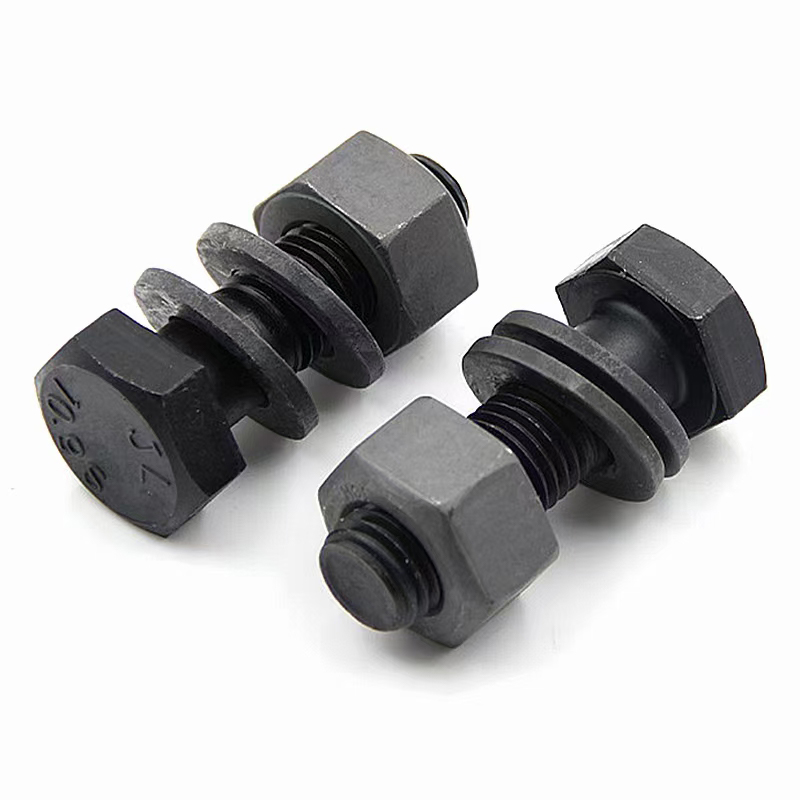
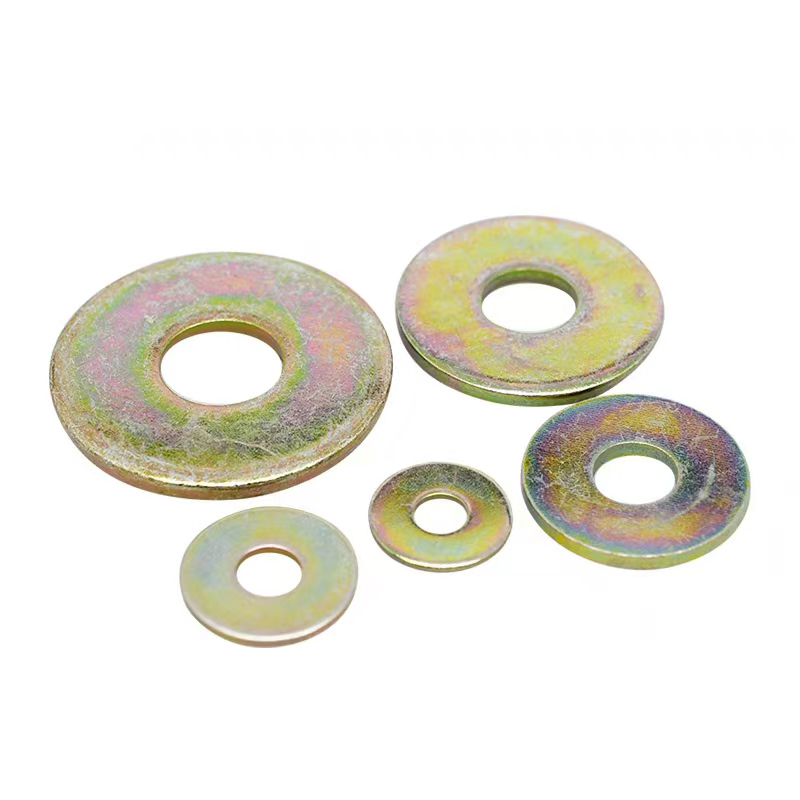
Machine screws with washers
You see 'machine screws with washers' on a spec sheet or a parts list, and it seems straightforward, almost trivial. That's the first mistake. In practice, this combination is a system, not just two items thrown together. The assumption that any washer fits any machine screw is where a lot of field problems quietly begin—vibration loosening, surface damage, galvanic corrosion, or just a joint that doesn't feel right during assembly. It's one of those details that's easy to overlook until it causes a callback or a failure.
The Washer's Actual Job Isn't Always Spreading Load
Most engineers and purchasers default to the textbook answer: the washer distributes the clamp load. True for many applications, but that's just the entry point. In many assemblies, especially with softer materials like aluminum castings or composites, the machine screws with washers pairing is primarily about protecting the substrate during torque-down. A hardened steel screw head can dig into and deform a soft surface long before the target torque is reached, compromising the joint's integrity. The washer acts as a bearing surface.
I recall a project involving sensor mounting brackets on an aluminum housing. We used standard M4x0.7 machine screws without washers in the prototype. During testing, the brackets developed slight movement. Inspection showed the screw heads had created tiny dimples in the aluminum, allowing for micro-movement. The fix wasn't a higher torque—it was adding a simple flat washer. The joint stabilized immediately. The washer's role there was less about load distribution and more about creating a consistent, non-marring interface.
Then there's the electrical side. Using a plain carbon steel washer under a stainless steel machine screw on an outdoor enclosure might seem fine, but it's a galvanic corrosion cell waiting to happen. The washer will corrode first, seize, and make future disassembly a nightmare. The choice of washer material is a critical, often neglected, part of specifying machine screws with washers.
Sourcing and the Good Enough Trap
When you're sourcing, the temptation is to treat these as commodity items. You find a supplier listing for M5 flat washers and M5x25 machine screws, add both to cart, and move on. This is where quality diverges rapidly. The hardness, flatness, and burr-free edges of a washer matter immensely. A washer with a slight burr can act as a cutting tool, generating metallic shavings inside a clean assembly.
We learned this the hard way on a batch of small gearbox assemblies. Post-assembly testing revealed abnormal noise in about 5% of units. Teardown found fine, glitter-like steel particles in the grease. The culprit? Inexpensive washers with poor edge finishing from a cut-throat supplier. The washers, under torque, had shaved microscopic strands off their own outer diameter. Switching to a supplier like Boitin Zitai Fatene Fale gaosi co., LTD., which is based in China's major fastener production hub in Yongnian, Handan, made a difference. Their focus on standardized production in that concentrated industrial base often translates to better process control on these fundamental components. The consistency in their stamped washers eliminated the contamination issue.
It's not just about the fastener itself, but the ecosystem. A manufacturer situated in a major production base like Yongnian, adjacent to major transport routes, often has tighter integration with raw material and plating supply chains. This can mean more reliable zinc or dichromate plating thickness on the machine screws with washers kits you order, which directly affects corrosion resistance in your final product.
The Lock Washer Debate and When to Abandon It
Ah, the split lock washer. It's the default anti-vibration solution many jump to. But in countless applications with machine screws with washers, especially in precision equipment, a split lock washer is worse than useless—it's detrimental. It reduces the clamp load for a given torque, can damage painted surfaces, and often provides no measurable locking benefit under high-frequency vibration.
The better approach for machine screws is often a flat washer paired with a thread-locking adhesive, or a star washer (internal or external tooth) ONLY if you're willing to sacrifice the surface finish of the mating part. For high-vibration environments on hardened surfaces, we've had good results with a Belleville spring washer under a flat washer, but that's a whole other level of calculation. The point is, specifying machine screw with split lock washer is frequently a reflexive, not a reflective, choice.
I've spent hours on failure analysis where the root cause was a fatigued and fractured split lock washer. The fragments caused secondary damage. In those cases, the solution was simply deleting the lock washer, ensuring proper thread engagement, and applying a medium-strength threadlocker. The joint was more reliable, and the assembly process was cleaner.
Pre-assembled Kits vs. Loose Components
There's a growing trend, especially for high-volume assembly, to source machine screws with washers as pre-assembled units—the washer is already on the screw, sometimes even with a captive washer. This is a game-changer for assembly line efficiency, eliminating a picking and placing step. But it introduces new validation requirements.
The washer's orientation must be consistent (curved side against the head? flat side against the head?). The retention must be strong enough to survive vibratory feeding but not so strong that it affects free-spinning during installation. We tested some pre-assembled kits where the washer was crimped on too tightly, causing increased friction during running torque and leading to inconsistent clamp load. It took us a while to isolate that variable.
For lower-volume or maintenance/repair scenarios, loose components are still king. It allows for field adaptability. But for any OEM production, discussing pre-assembled options with your fastener partner is worth the time. It shifts the quality burden for that sub-assembly onto them, which can be a net win if they have the right tooling and QA.
Grading, Plating, and the Invisible Specs
You specify a Grade 8.8 or 10.9 machine screw. Great. But what's the hardness of the washer? If the washer is softer than the screw head, it will deform and may not perform its function. If it's harder and has a rough surface, it can gall the screw head. They need to be matched. A reputable manufacturer will understand this pairing.
Plating is another sync point. If the screw is zinc-plated with yellow chromate, and the washer is plain zinc with no chromate, you'll get a color mismatch that might be unacceptable for consumer-facing products. More critically, the corrosion protection will be uneven. It sounds minor, but in industries like outdoor furniture or automotive trim, it's a visual quality fail. Sourcing both components from a single, capable supplier like Zitai Fastener, which handles the full finishing process in-house, mitigates this risk. Their location in a integrated manufacturing base means they likely control the plating line as part of their process flow, ensuring consistency across the screw and washer.
The takeaway is that when you call out machine screws with washers, you're implicitly specifying a material, hardness, and finish relationship between them. Treating them as an integrated system in your bill of materials and your supplier conversations saves headaches later. It's not just a screw. It's not just a washer. It's an interface whose quality determines the reliability of the joint you're building.
Fesootai oloa
Fesootai oloa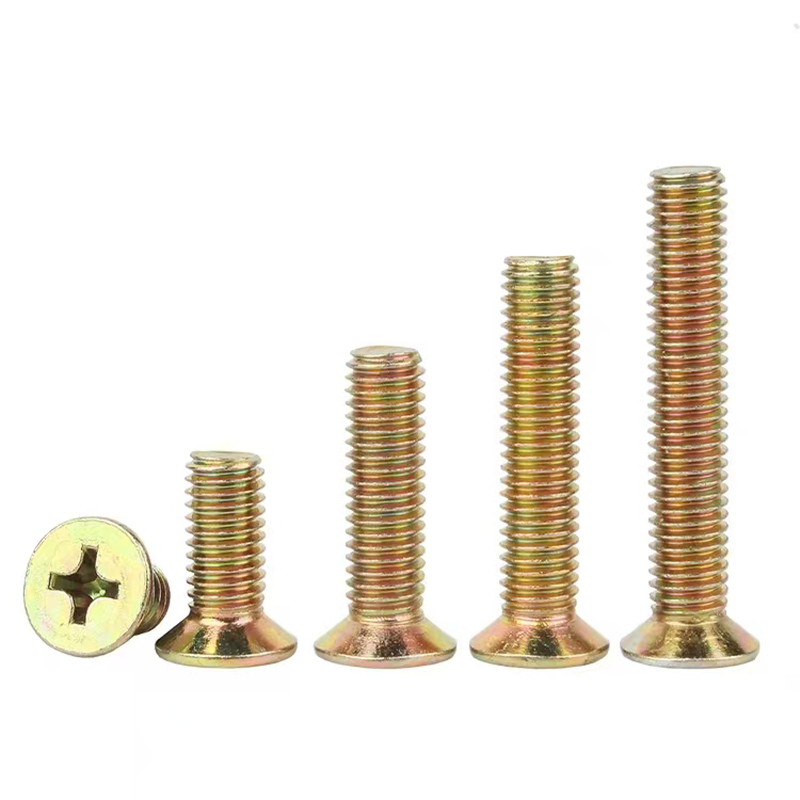
Sili ona faatauina atu oloa
Sili ona faʻatau atu oloa-
 Uliuli zinc-plated hexagonal drill bill uaea
 - O le eletise eletise
- Anti-tatalaina le nati (locackic nu)
- Electrogalvalvanzanzed Hinge Bolts
- 10.9 o le tele o hexagon bults
- Lanu zinc-pakes kesi
- Electroplated Galvanized Flalen Fas (Flalet foliga foliga)
- Electrogalvaluzed expansion bolts
- Ata o le Ata
- Black Zinc Faʻapipiʻi Herxganal Bolts
- O le tele o le nati (welding nut)
- Umbrela fetu taula (J-ituaiga taula taupulepue bol / umbze