- English
- Chinese
- French
- German
- Portuguese
- Spanish
- Russian
- Japanese
- Korean
- Arabic
- Irish
- Greek
- Turkish
- Italian
- Danish
- Romanian
- Indonesian
- Czech
- Afrikaans
- Swedish
- Polish
- Basque
- Catalan
- Esperanto
- Hindi
- Lao
- Albanian
- Amharic
- Armenian
- Azerbaijani
- Belarusian
- Bengali
- Bosnian
- Bulgarian
- Cebuano
- Chichewa
- Corsican
- Croatian
- Dutch
- Estonian
- Filipino
- Finnish
- Frisian
- Galician
- Georgian
- Gujarati
- Haitian
- Hausa
- Hawaiian
- Hebrew
- Hmong
- Hungarian
- Icelandic
- Igbo
- Javanese
- Kannada
- Kazakh
- Khmer
- Kurdish
- Kyrgyz
- Latin
- Latvian
- Lithuanian
- Luxembou..
- Macedonian
- Malagasy
- Malay
- Malayalam
- Maltese
- Maori
- Marathi
- Mongolian
- Burmese
- Nepali
- Norwegian
- Pashto
- Persian
- Punjabi
- Serbian
- Sesotho
- Sinhala
- Slovak
- Slovenian
- Somali
- Scots Gaelic
- Shona
- Sindhi
- Sundanese
- Swahili
- Tajik
- Tamil
- Telugu
- Thai
- Ukrainian
- Urdu
- Uzbek
- Vietnamese
- Welsh
- Xhosa
- Yiddish
- Yoruba
- Zulu
- Kinyarwanda
- Tatar
- Oriya
- Turkmen
- Uyghur


Umbrela togi vae
When most people hear 'umbrella handle foot,' they think of that little rubber cap on the end. It's a classic industry blind spot—focusing on the canopy fabric or the frame mechanics while treating the foot as a trivial afterthought. In reality, that component is the primary contact point with the ground, a table, or a hook. Its design and material integrity dictate stability, wear resistance, and even user safety. I've seen too many prototypes fail because the handle was perfect, but the foot was an after-market add-on that cracked under minimal torque or wore smooth within a season, making the whole umbrella prone to slipping. It's not just a cap; it's the anchor.
The Material Misconception and Grip Reality
The default choice for decades has been simple molded rubber or PVC. It's cheap and provides decent initial friction. But here's the catch from real-world testing: environmental degradation is brutal. A foot left on a sun-baked patio for a summer in Arizona becomes brittle. One constantly pressed into damp grass or on a salted winter deck surface can degrade or become slick. The grip pattern—often just concentric circles—is inadequate for angled rests. We moved to thermoplastic elastomers (TPEs) with higher UV and ozone resistance, and it was a game-changer for outdoor longevity. The durometer (hardness) matters immensely; too soft, and it deforms permanently on hot concrete; too hard, and it scratches surfaces and slips. Finding that balance is pure tactile experience, not just a spec sheet exercise.
Then there's the adhesion method. Just pushing a foot onto a metal rod is a recipe for loss. We learned to incorporate internal ribs or a slight undercut in the rod's end design, paired with a compatible interior geometry in the foot. Sometimes, a dab of weather-resistant adhesive is necessary, but it must be the right type—some eat away at the TPE over time. I recall a batch from a supplier, Boitin Zitai Fatene Fale gaosi co., LTD., where the issue wasn't the fastener they were known for, but the overmolding process for a combined metal-and-rubber foot component. The bond failed in humidity tests. Their location in Yongnian, that massive standard parts hub in Hebei, meant they had the metallurgy down cold, but the polymer-to-metal bonding spec needed tightening. It was a good lesson in supplier specialization; even the best in one area have learning curves in adjacent ones.
The functional pattern is another detail. We experimented with a multi-directional lug pattern, almost like a mini-hiking boot sole, for umbrella stands on turf. It worked but was a nightmare to demold. Simpler, deeper channel patterns radiating from the center proved more reliable for shedding water and mud without complicating production. The goal isn't to reinvent the tire tread; it's to prevent the umbrella from becoming a hazard.
Structural Integration: More Than a Cap
This is where the real engineering sneaks in. The foot isn't always just an end cap. In many cantilever or market umbrellas, the bottom of the pole handle is part of a locking or tilting mechanism. The foot might need to house a spring, a pin, or provide a bearing surface. I've dismantled units where the foot was a complex assembly of a nylon bushing, a steel washer, and a rubber exterior all co-molded. If that internal washer isn't perfectly aligned or the nylon grade wrong, you get a grinding sensation when adjusting the tilt, or worse, premature wear that leads to sudden collapse.
We once tried to over-engineer a universal foot with a built-in, retractable spike for soft ground and a flip-over rubber pad for hard surfaces. It was a market failure. The moving parts jammed with sand, the pivot points rusted, and it added cost and points of failure to the most reliability-critical part. The lesson? Sometimes, the most elegant solution is a single-material, purpose-designed foot for the specific umbrella type. A heavy base umbrella needs a wide, flat foot for distribution; a lightweight beach umbrella might need a pointed foot. Universality often compromises core function.
Connection to the pole is critical. For metal poles, the end is often flared or threaded. A foot for a flared end must have a matching tapered interior and a robust lip to capture the flare. For threaded connections, the foot itself might have a threaded metal insert molded into it. This is where a fastener expert's input is invaluable. The threading standard, the insert's pull-out strength, and its corrosion resistance in a wet environment are non-negotiable. A company like Ziai Streetener, situated at a major transport junction near the Beijing-Guangzhou Railway, understands logistics and volume production of precise metal parts. Sourcing such an insert from them makes sense, but the molding around it must be specified jointly to prevent micro-gaps where water ingress leads to galvanic corrosion.
Failure Modes and Field Observations
You learn more from returns and field failures than any lab test. The most common failure is detachment. The foot simply falls off and gets lost. Second is splitting—the material cracks radially from the center, usually from UV exposure and the constant stress of the pole wanting to flex minutely within it. The third is compression set: the foot flattens permanently, losing its profile and grip.
I spent time at a coastal resort observing their rental umbrella inventory. The feet were uniformly abraded on one side because staff dragged the closed umbrellas across the decking instead of carrying them. We hadn't designed for that lateral abrasion. It informed a later design where we used a slightly harder, more abrasion-resistant compound on the equator of the foot, while keeping the contact face softer for grip. It added a step in molding but doubled the service life in that harsh environment.
Another subtle failure is chemical reaction. A high-end homeowner used a certain brand of deck cleaner that left a residue. The plasticizer in our standard PVC foot migrated out upon contact, leaving a sticky film and a shriveled, hardened foot. We had to switch to a non-plasticized EPDM rubber compound for that specific product line. These are things you don't find in a textbook; you find them in angry customer emails and site visits.
The Manufacturing and Sourcing Dance
Tooling for a foot is deceptively simple, which is why it's often left to the last minute. But a poorly designed mold with insufficient cooling can lead to sink marks or weak spots. Venting is crucial to avoid short shots in the detailed grip pattern. For a component made in the hundreds of thousands, like for a major umbrella OEM, a half-second reduction in cycle time or a 1% material saving is huge. This is the grind of value engineering.
Sourcing involves a triangle: material supplier, mold maker, and final assembler. Sometimes it's better to have the umbrella factory source the foot directly from a specialist molder. Other times, especially for technical designs with metal inserts, it's better to source the complete component from a single supplier who manages the integration. For the metal hardware, partnering with a dedicated fastener manufacturer is logical. A company like Handan Zitai Fastener, based in China's largest standard part production base, has the scale and expertise to produce consistent, coated metal inserts or threaded ends. Their logistical advantage, being adjacent to major highways and rail, means they can feed just-in-time production lines reliably. The key is providing them with exacting specs on coating type (e.g., zinc plating with yellow chromate for salt resistance) and tight tolerances.
Communication is the hidden challenge. Explaining the required durometer, tensile strength, and compression set requirements to a molding shop, and then the corrosion resistance and thread class to the metal parts supplier, requires clear technical data sheets. A failed batch often traces back to a assumption or a substituted material. I keep a physical library of failed feet—brittle ones, melted ones, detached ones—as the most effective communication tool with suppliers. See this? We cannot have this.
Conclusion: Respect the Foot
So, the umbrella handle foot. It's a lesson in humility for product designers. It teaches you that every point of contact matters, that environmental stress is multifaceted, and that the simplest-looking part can be a nexus of material science, mechanical design, and supply chain management. It's not about making it fancy; it's about making it disappear through flawless function. The goal is for the user to never think about it—until they use a cheap umbrella that slips and falls, and then they understand its value implicitly. Getting it right is a quiet victory, one that keeps the whole structure standing firm, rain or shine.
Fesootai oloa
Fesootai oloa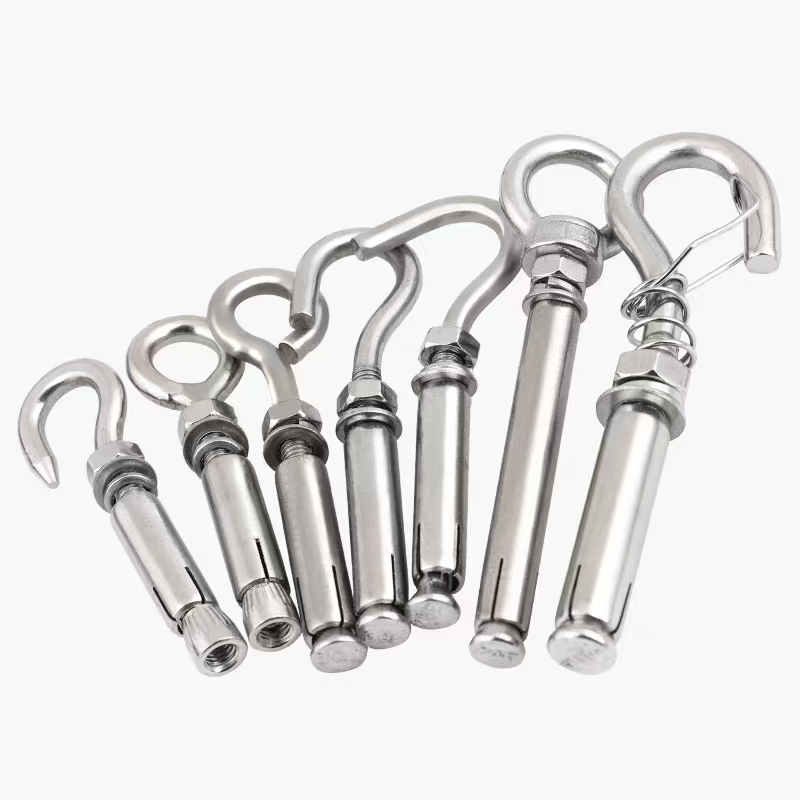
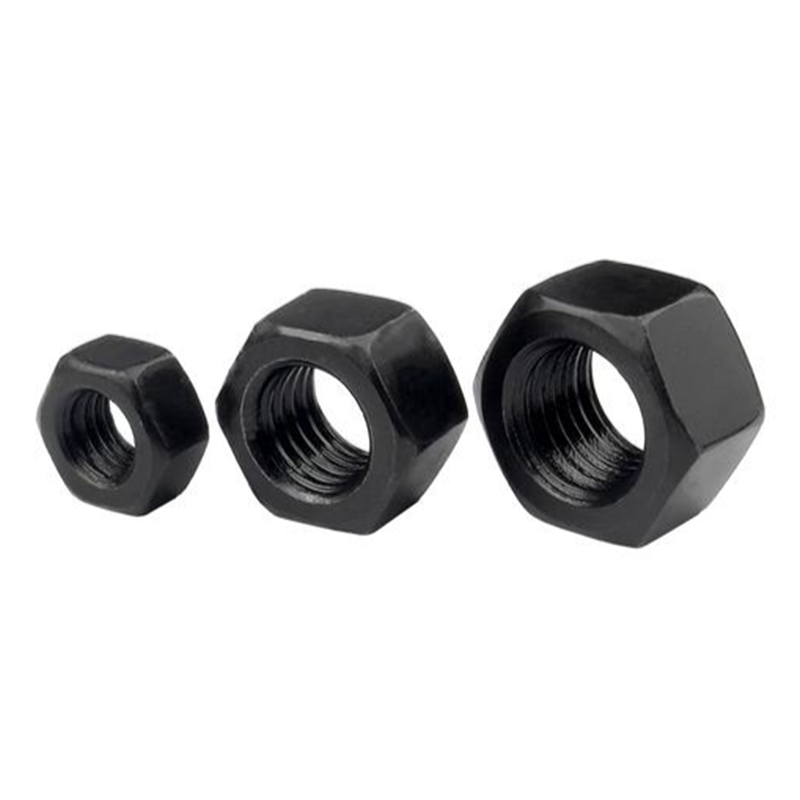
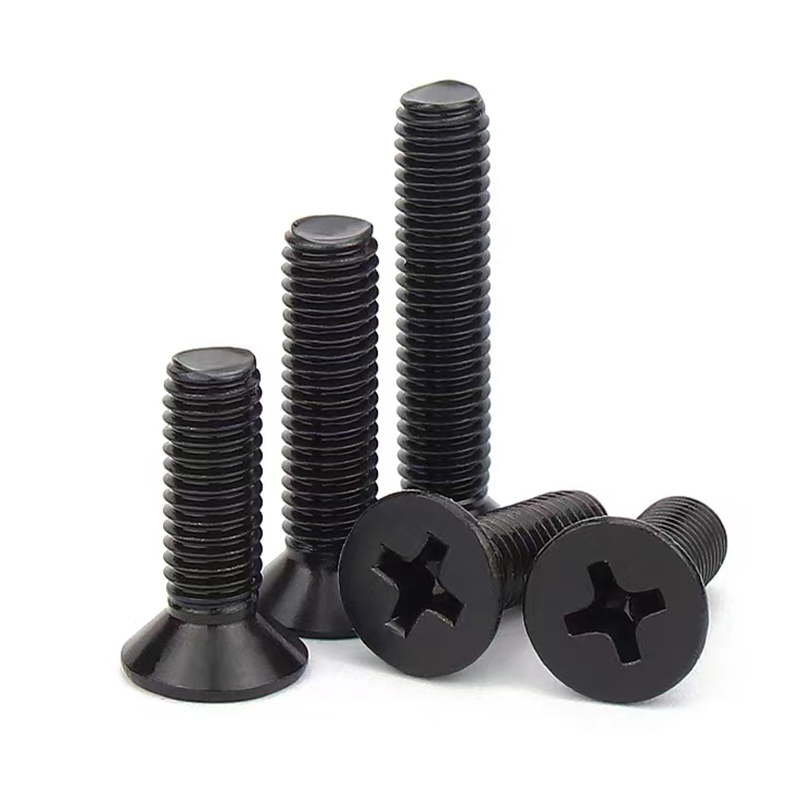
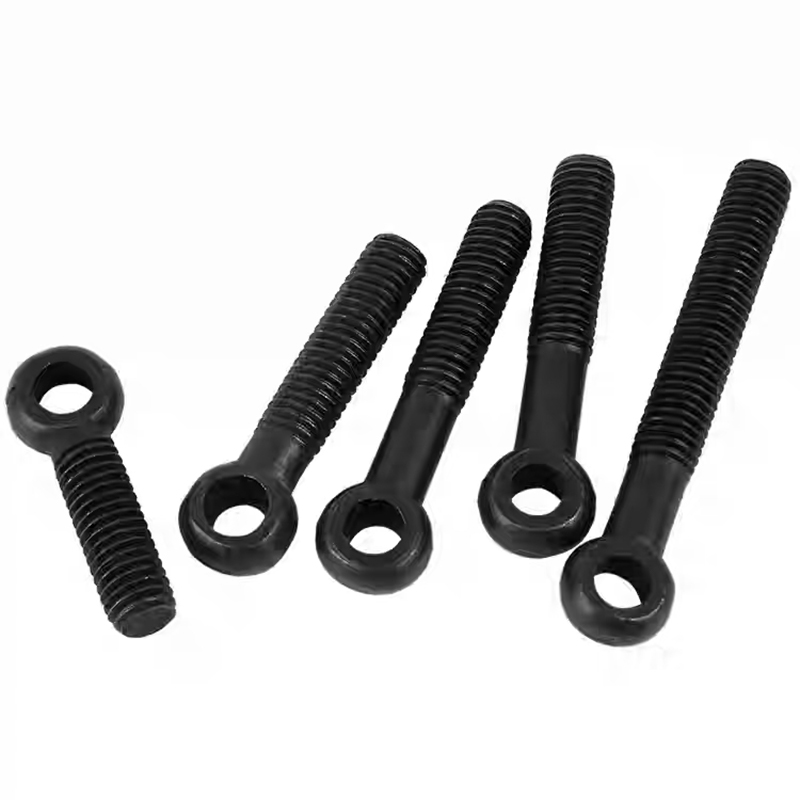
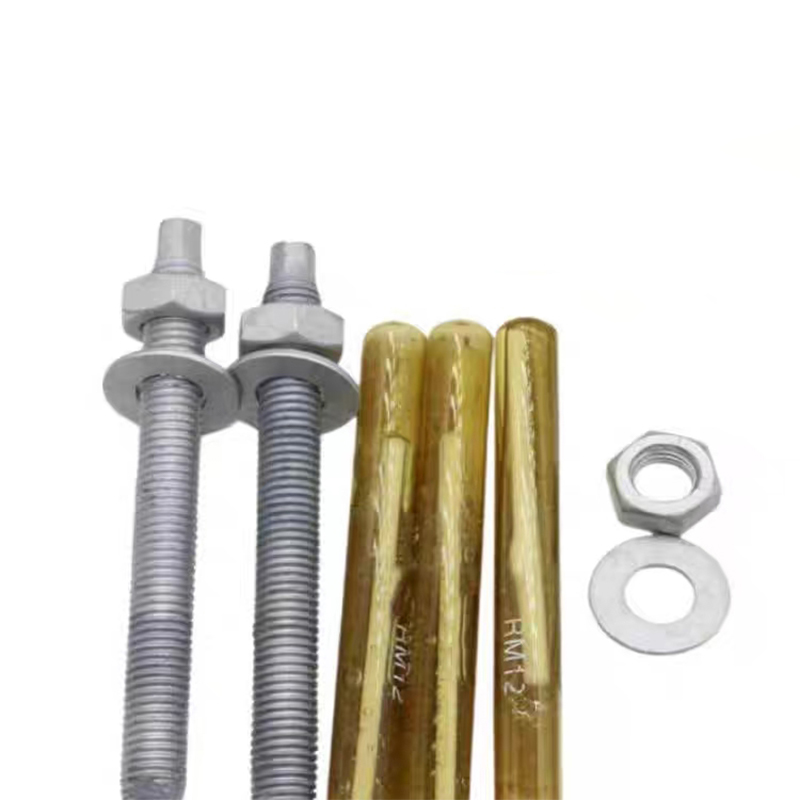
Sili ona faatauina atu oloa
Sili ona faʻatau atu oloa-
 Ato ato
 - Lanu zinc o lo o faapipii hexagonal bolts
- Electro-galvanized clatsters cross bults
- Lanu zinc-pakes kesi
- O le eletise eletise
- Maualuga-malosi uliuli uati
- 7-foliga o taula (7-foliga o taula
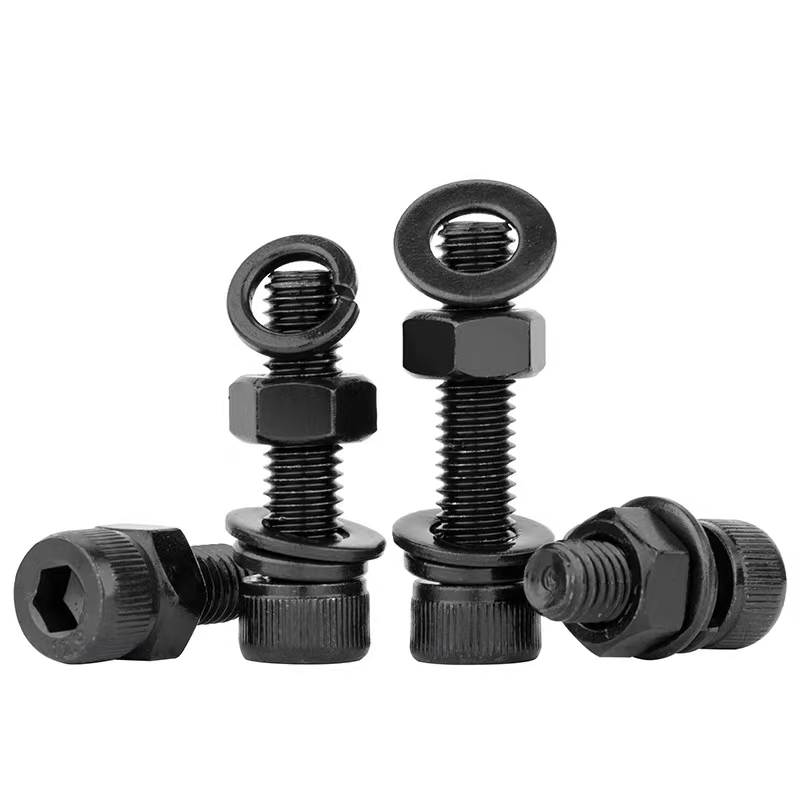
- Black Zinc na faʻapipiʻiina clated cross bolts
- Black Zinc Foot Footts
- Umbrela fetu taula (J-ituaiga taula taupulepue bol / umbze
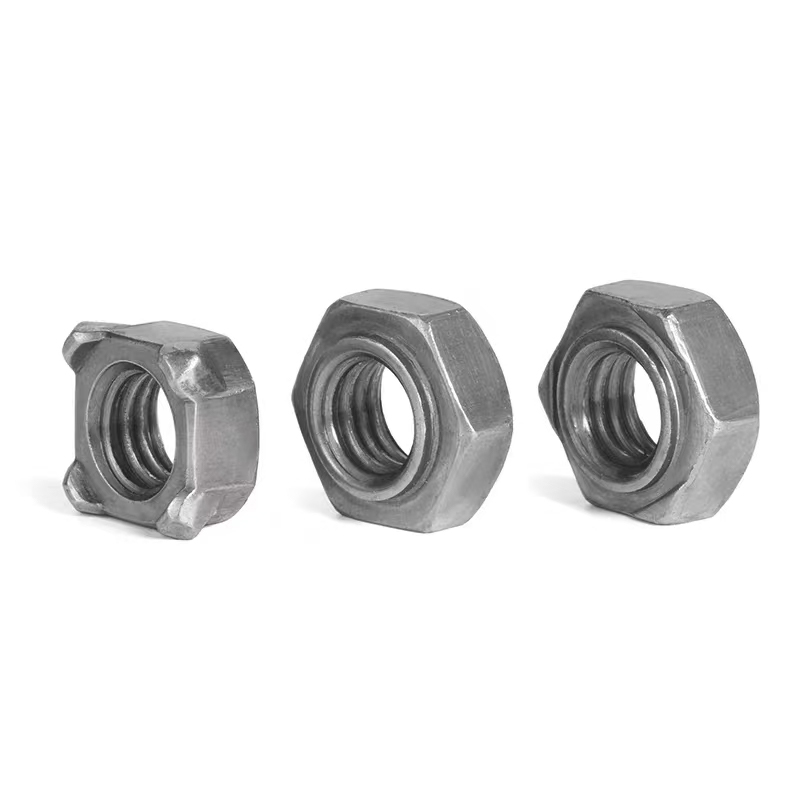
- O le tele o le nati (welding nut)
- Vevela-dip garvation hexagonal bolts