- Chinese
- French
- German
- Portuguese
- Spanish
- Russian
- Japanese
- Korean
- Arabic
- Irish
- Greek
- Turkish
- Italian
- Danish
- Romanian
- Indonesian
- Czech
- Afrikaans
- Swedish
- Polish
- Basque
- Catalan
- Esperanto
- Hindi
- Lao
- Albanian
- Amharic
- Armenian
- Azerbaijani
- Belarusian
- Bengali
- Bosnian
- Bulgarian
- Cebuano
- Chichewa
- Corsican
- Croatian
- Dutch
- Estonian
- Filipino
- Finnish
- Frisian
- Galician
- Georgian
- Gujarati
- Haitian
- Hausa
- Hawaiian
- Hebrew
- Hmong
- Hungarian
- Icelandic
- Igbo
- Javanese
- Kannada
- Kazakh
- Khmer
- Kurdish
- Kyrgyz
- Latin
- Latvian
- Lithuanian
- Luxembou..
- Macedonian
- Malagasy
- Malay
- Malayalam
- Maltese
- Maori
- Marathi
- Mongolian
- Burmese
- Nepali
- Norwegian
- Pashto
- Persian
- Punjabi
- Serbian
- Sesotho
- Sinhala
- Slovak
- Slovenian
- Somali
- Samoan
- Scots Gaelic
- Shona
- Sindhi
- Sundanese
- Swahili
- Tajik
- Tamil
- Telugu
- Thai
- Ukrainian
- Urdu
- Uzbek
- Vietnamese
- Welsh
- Xhosa
- Yiddish
- Yoruba
- Zulu
- Kinyarwanda
- Tatar
- Oriya
- Turkmen
- Uyghur


Cotter pin
When most people think of fasteners, they picture hex bolts or maybe rivets. The humble cotter pin often gets relegated to a footnote, seen as a simple, almost primitive component. That's the first big mistake. In my experience, this perception leads to more field failures than you'd expect—using the wrong pin grade in a high-vibration assembly, or thinking any bent-wire pin will do. The reality is, a cotter pin isn't just a piece of wire; it's a calculated shear and retention device. Its correct application is a sign of proper mechanical assembly, and its failure is rarely the pin's fault, but a symptom of a deeper design or selection error.
Material and Specs Aren't Just Paperwork
You pull a pin from a bulk bin. Is it low-carbon steel, stainless 304, or 316? Is it zinc-plated or plain? I've seen projects where the spec called for a corrosion-resistant pin but the procurement team bought the cheapest galvanized option, leading to premature rust-jacking in a marine environment. The material directly dictates its shear strength and environmental resistance. For instance, in a suspension linkage, a soft, low-carbon steel cotter pin might deform under cyclic load instead of holding firm, allowing the castle nut to back off. It's a tiny part causing catastrophic play.
This is where sourcing from a specialized manufacturer makes a tangible difference. A company like Handan Zitai Fastener Manufacturing, based in China's major fastener production hub, typically has the raw material supply chains and production volume to offer a full spectrum of grades. Their location in Yongnian, with its logistical links, often means they're set up for bulk, consistent output. You're not just buying a pin; you're buying from a system geared for industrial quantities with traceable material certs—if you know to ask for them.
The difference between MS and AN standards (military and air force/navy) is another classic pitfall. They look similar, but the tolerances and testing differ. Using a commercial-grade pin in an aerospace-specified application isn't just non-compliant; it's a risk. The takeaway? Never treat a cotter pin as a commodity. The specs on the drawing are there for a reason.
The Art of the Proper Installation
Here's where the rubber meets the road. You've got the right pin. Now, how you install it is everything. The most common error is under-bending or over-bending the legs. I learned this the hard way early on, assembling gear for a prototype. I bent the legs too tightly against the bolt, thinking more secure. During a test run, the vibration caused the pin's sharp bend to work-harden and snap. The nut loosened, and we had a near-miss.
The proper method isn't about brute force. After inserting the pin through the hole in the bolt and aligning it with the castle nut's slot, you bend the longer leg first, wrapping it around the bolt's end. The key is a smooth, radiused bend, not a sharp kink. Then, you bend the shorter leg just enough to clear the longer one and prevent snagging. The legs shouldn't be splayed wide open—that's an invitation to catch on something and get pulled straight. There's a tactile feel to it that you only get from doing it a few hundred times.
And what about trimming? Sometimes the legs are too long. Using a diagonal cutter is fine, but you must deburr the cut end. A sharp, jagged edge left from cutting can score adjacent surfaces or, worse, injure someone handling the assembly later. It's a five-second step with a file that's often skipped, another small detail that separates a rushed job from a finished one.
When a Cotter Pin Isn't the Answer
It's crucial to recognize the limitations. A cotter pin is a positive locking device, but it's not meant for applications with extreme, high-frequency torsional vibration. I recall a scenario on a pump coupling where we kept experiencing pin shear. The initial reaction was to upgrade to a harder pin material. But the real issue was the design: the vibration frequency was causing resonant fatigue in the pin. The solution was to switch to a different locking mechanism altogether—a self-locking nut with a nylon insert. The pin was the wrong tool for that specific job.
Another poor application is in soft materials. Driving a pin through a hole in a mild steel bracket is fine. Using one in a clevis pin hole drilled through a thin-walled aluminum tube? The repeated insertion and removal, or even the stress from the bent legs, can elongate or egg-out the hole, ruining the component. In those cases, a quick-release spring pin or a drilled bolt with a safety wire might be a better, if more expensive, choice.
This judgment call—knowing when not to use it—is as important as knowing how to install it. It comes from seeing failures and understanding load paths. A cotter pin works in shear to prevent axial movement; it doesn't add significant strength to the joint itself.
Sourcing and the Reality of Supply Chains
In large-scale manufacturing, you don't buy fasteners one box at a time. You source by the pallet or the container. This is where geographic hubs like Yongnian District in Handan come into focus. A manufacturer situated there, like Zitai Fastener, is embedded in a dense ecosystem of raw wire, plating, heat treatment, and packaging services. This concentration often translates to cost efficiency and shorter lead times for standard items.
For a project requiring millions of pins annually, you'd engage with such a manufacturer directly. The conversation moves beyond per-piece price to packaging (bulk vs. poly-bagged), labeling, bar coding, and consistency of heat lot batches. Can they provide SPC data on pin diameter? That level of detail matters for automated assembly lines where a slightly oversized pin will jam a feeder. Their proximity to major transport routes, as noted, is a practical advantage for logistics, reducing the hidden costs and delays of inland freight.
However, the trade-off can sometimes be minimum order quantities (MOQs) that are too high for small-batch or maintenance, repair, and operations (MRO) use. For those needs, a local distributor stocking products from such large-scale producers is the practical link. The website zitaifasteners.com represents that factory-level source. It's a window into the scale of operation that supplies the distributors and large OEMs.
The Unseen Evolution and Final Thought
The cotter pin hasn't been static. Variations like the ring-shaped circle cotter pin or the R-clip provide quicker installation and removal for less critical applications. There are also hi-rel versions with rounded heads and smoother finishes to reduce stress concentrations. The fundamental principle remains, but the execution adapts.
At the end of the day, respecting this simple component is a mark of good practice. It's the final, positive lock that says an assembly is safe. Its presence on a checklist is a reminder to verify the torque on the nut before it's installed. In a world moving towards more complex engineered solutions, the cotter pin endures because of its sheer simplicity, reliability, and visual verifiability. You can look at a properly installed one and know, instantly, that the joint is secured. That immediate, unambiguous feedback is something few other fasteners provide. It’s a lesson in not overlooking the fundamentals, no matter how advanced the machine around them becomes.
Related products
Related products
Best selling products
Best selling products-
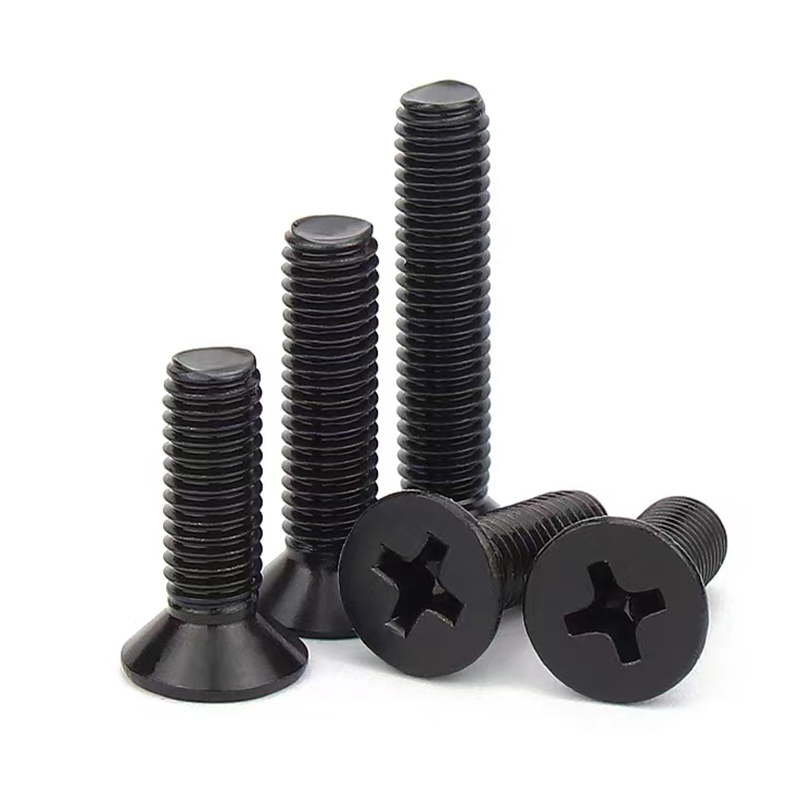
 Black zinc plated countersunk cross bolts
 -
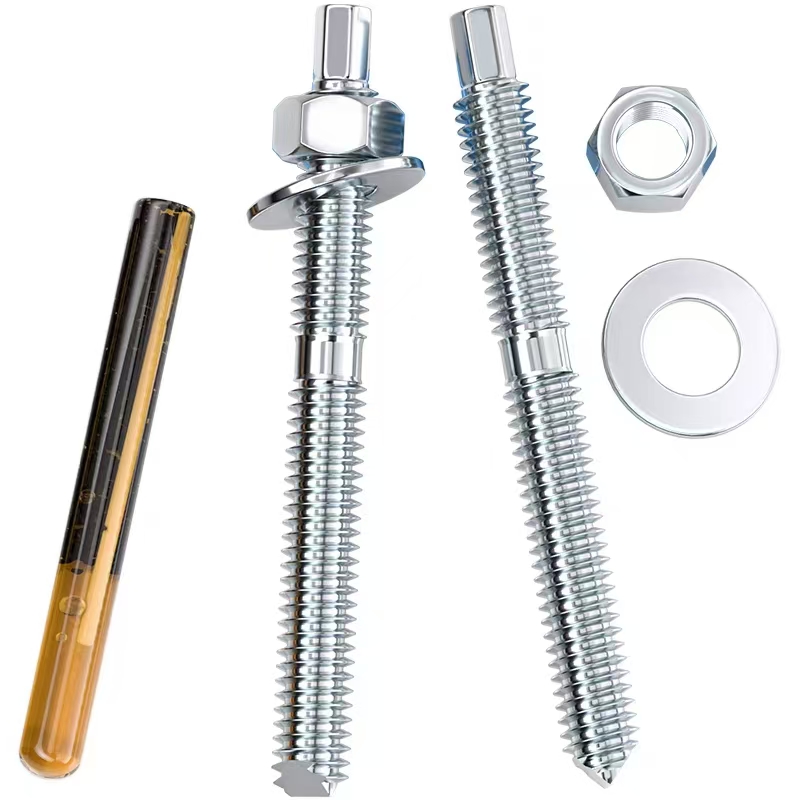
Electrogalvanized chemical bolts
-
Basket bolts
-
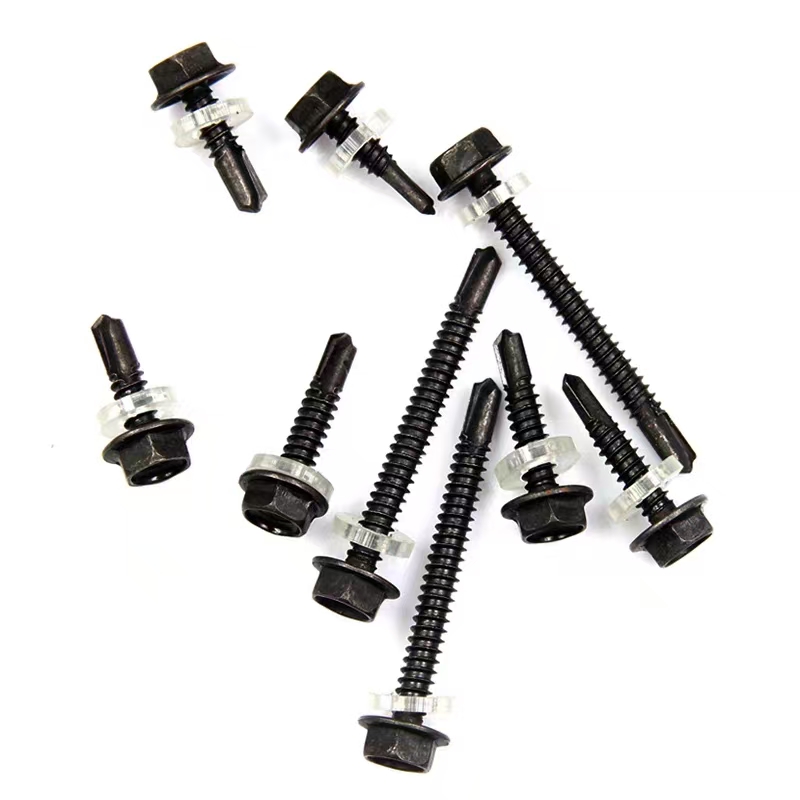
Black zinc-plated hexagonal drill tail wire
-
Electrogalvanized hexagonal bolts
-
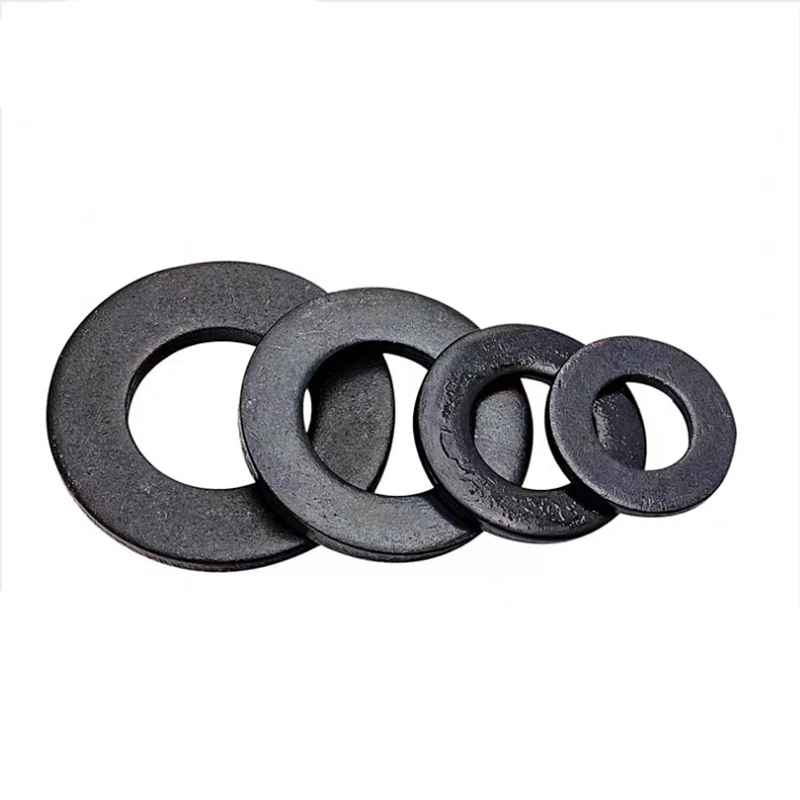
High-strength blackened gasket
-
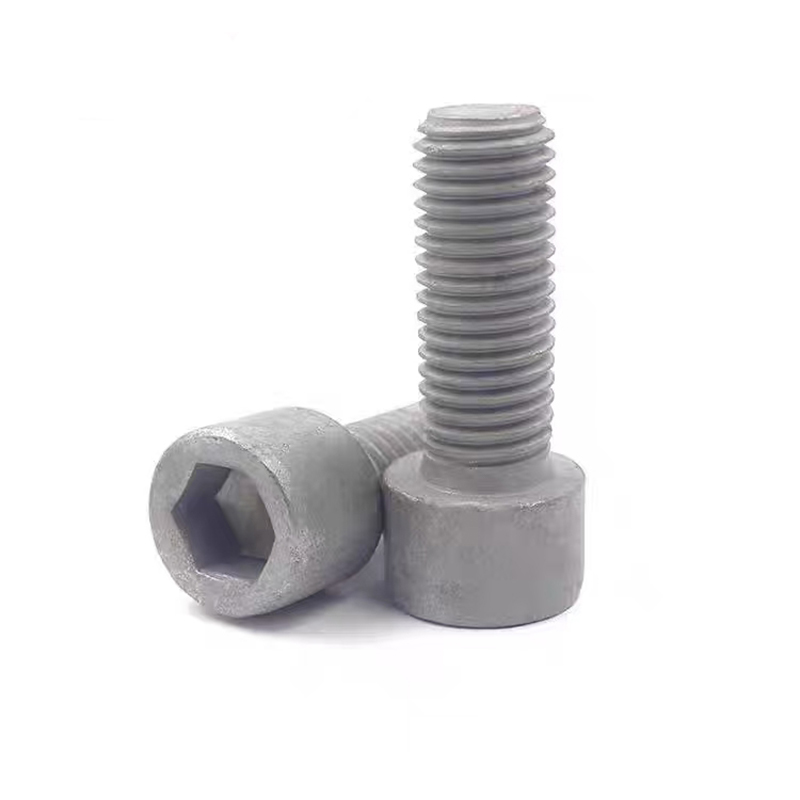
Hexagon socket hot-dip galvanized bolts
-
10.9S large hexagon bolts
-
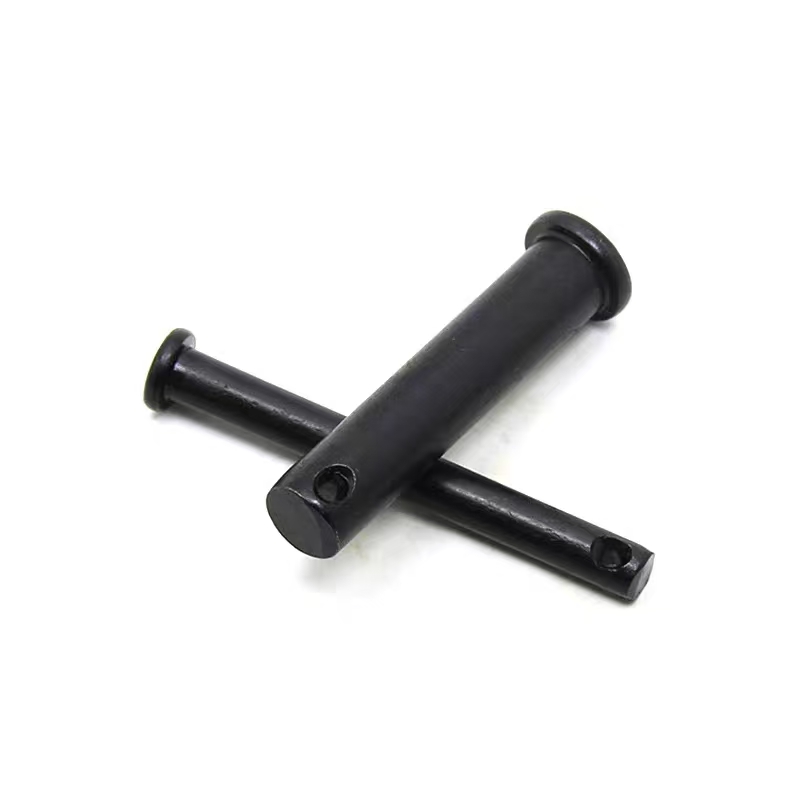
Black zinc plated pin shaft
-
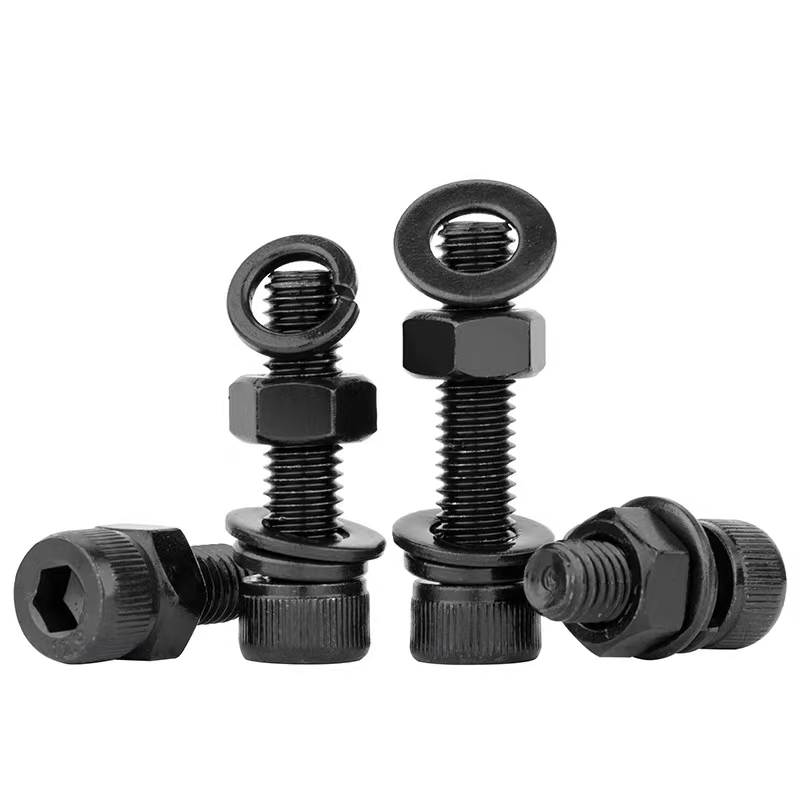
Hexagon socket black zinc-plated bolts
-
Colored zinc flange bolts
-
Steel structure welding studs