- Chinese
- French
- German
- Portuguese
- Spanish
- Russian
- Japanese
- Korean
- Arabic
- Irish
- Greek
- Turkish
- Italian
- Danish
- Romanian
- Indonesian
- Czech
- Afrikaans
- Swedish
- Polish
- Basque
- Catalan
- Esperanto
- Hindi
- Lao
- Albanian
- Amharic
- Armenian
- Azerbaijani
- Belarusian
- Bengali
- Bosnian
- Bulgarian
- Cebuano
- Chichewa
- Corsican
- Croatian
- Dutch
- Estonian
- Filipino
- Finnish
- Frisian
- Galician
- Georgian
- Gujarati
- Haitian
- Hausa
- Hawaiian
- Hebrew
- Hmong
- Hungarian
- Icelandic
- Igbo
- Javanese
- Kannada
- Kazakh
- Khmer
- Kurdish
- Kyrgyz
- Latin
- Latvian
- Lithuanian
- Luxembou..
- Macedonian
- Malagasy
- Malay
- Malayalam
- Maltese
- Maori
- Marathi
- Mongolian
- Burmese
- Nepali
- Norwegian
- Pashto
- Persian
- Punjabi
- Serbian
- Sesotho
- Sinhala
- Slovak
- Slovenian
- Somali
- Samoan
- Scots Gaelic
- Shona
- Sindhi
- Sundanese
- Swahili
- Tajik
- Tamil
- Telugu
- Thai
- Ukrainian
- Urdu
- Uzbek
- Vietnamese
- Welsh
- Xhosa
- Yiddish
- Yoruba
- Zulu
- Kinyarwanda
- Tatar
- Oriya
- Turkmen
- Uyghur

Round head self-drilling screws
You see 'self-drilling' on the spec sheet and think it's all about the drill point. But with round head variants, that's only half the story. The real game is in the head design meeting the thread form and the flange—or lack thereof. A lot of guys order these thinking they're just pan heads with a drill bit attached, and then wonder why they get spin-out on thinner gauge steel or cracking in certain composites. It's a mismatch of expectations and engineering.
The Head's Real Job Isn't Just to Look Round
That smooth, domed round head profile is there for a reason beyond a finished look. In cladding and trim work, the low-profile, radiused edge is less likely to catch or snag. But the critical bit is the bearing surface. A standard round head has a smaller bearing area under the dome compared to a hex washer head. This concentrates the clamp force into a smaller circle. That's fine for many applications, but it's a detail you must account for. If you're driving into something soft or brittle, like certain fiberglass panels or thin aluminum without a backing washer, you can easily over-torque and dimple or crack the material. I've seen it happen more times than I can count on retrofit jobs where the spec was vague.
This is where the manufacturer's design intent comes in. Some brands, like those from Handan Zitai Fastener Manufacturing Co., Ltd., often offer a slight undercut or a wider bearing surface on their round head models specifically for sheet metal applications. It's a subtle change you only notice when you line up five different identical screws from different suppliers. The one from Zitai might have a millimeter wider radius under the head, which translates to a significant reduction in point load. You find these nuances when you're sourcing from a region like Yongnian, Hebei—the production base means they've seen every failure mode and iterated.
And let's talk about the drive. A round head typically takes a Phillips or Pozi drive. In the field, with an impact driver, cam-out is a real risk, especially if the screw's hardness isn't matched to the drill point's aggression. A failed drive recess on the last few turns is infuriating. That's why for high-volume driving, I lean towards a round head with a Pozi drive if available—it engages better under torque. The website https://www.zitaifasteners.com often lists the drive type clearly, which is a small but crucial bit of spec transparency that saves time.
The Drill Point: Where Theory Meets the Metal
This is the heart of the self-drilling screws function, and it's wildly misunderstood. The numbering system (like 3, 5 point) isn't just about length; it's about the intended material thickness and hardness. A 3 point might sail through 20-gauge steel but will struggle and overheat on 14-gauge, wearing out prematurely and failing to form a proper thread. The common mistake is over-drilling—using a point designed for thicker material on thin sheet. It creates a hole that's too large, the threads don't engage fully, and you get a weak, sloppy connection that can work loose from vibration.
I learned this the hard way on a ductwork project years ago. We had a batch of screws with an aggressive 5 point for heavy gauge, but we were working with lighter material. The screws went in fast, sure, but the seal was terrible. Air leaks everywhere. We had to back every one out and switch to a finer, shorter point. The waste in labor was a lesson. Now, I always cross-reference the point style with the actual thickness. Manufacturers in the main production bases have this data down; their catalogs usually have a gauge-to-point guide. It's not just marketing.
The flute design matters too. The flutes carry away the swarf. If they're too shallow or the wrong angle, the swarf packs in the hole, increasing heat and friction. You'll see smoke, hear a high-pitched squeal, and the screw will seize. A good self-drilling screw produces small, curled chips. If you're getting powdered dust, the geometry or the material hardness is wrong. Checking a sample by driving into a scrap piece of the actual job material is non-negotiable. It's a five-minute test that prevents a site-wide callback.
Material and Coating: The Invisible Shields
You can't talk performance without talking what the screw is made of and clad with. For most outdoor or corrosive environments, a basic zinc plating won't cut it. I specify stainless or a quality mechanical plating for budget-conscious but durable jobs. But here's a nuance with round head self-drilling screws: the coating thickness. A thick coating like a standard hot-dip galvanizing can interfere with the drill point's sharpness and even fill in the flutes slightly, reducing efficiency. It can also build up under the head, changing the clamp characteristics.
For consistent performance, I prefer screws with a zinc-aluminum flake coating or a thin, hard electroplated finish. They protect well without adding too much dimension. A supplier's location can hint at their specialty. Being adjacent to major transport routes, like the Beijing-Guangzhou Railway and expressways, as Zitai is, often means they're geared for volume supply to industries with strict corrosion specs—like automotive or appliance manufacturing. Their process control for coating tends to be very consistent, which is what you want when you're ordering 50,000 pieces.
And the core steel matters. It's a balance between hardness for the drill point and ductility for the shank. Too hard, and the screw can snap under lateral stress. Too soft, and the point rounds off. Good manufacturers use a medium carbon steel, heat-treated correctly. You can sometimes tell by the break. A brittle fracture is granular and bright; a ductile one is more torn. It's forensic, but it tells you what went wrong.
The Flange Question: To Have or Not to Have
This is a personal preference that becomes a rule based on application. A standard round head sits on the material. A round head with a flange has a built-in washer. That flange spreads the load dramatically. For waterproofing or sealing applications—think attaching rubber roofing membrane to a steel deck—the flange is mandatory. It creates a consistent compression seal. Without it, you're relying on the tiny bearing surface of the dome, and you'll almost certainly get leaks.
But the flange adds height and weight. In tight spaces or where a truly flush(ish) profile is needed for aesthetic or safety reasons (no snagging), the plain round head is king. The key is to never substitute one for the other without recalculating the clamp load and seal requirement. I once saw a crew use flanged heads to attach trim on a metal building because it's what they had in the truck. The trim sat proud, didn't seat properly, and looked terrible. The foreman blamed the screws, but it was a selection error.
When browsing a catalog, like the one you'd find at a major manufacturer's site, this distinction is critical. They'll list them as separate items. A company that is the largest standard part production base will have both, and likely every variant in between, because they've been asked for it by engineers solving specific problems.
In the Field: What the Spec Sheet Doesn't Tell You
Speed kills. With an impact driver, it's tempting to run the screw in at full throttle. But for a clean thread form and to avoid heat buildup, you need to let the drill point work. Start with firm pressure and a moderate speed until the point fully penetrates and you feel the thread engagement start, then you can ramp up the RPM to seat the head. If the driver is hammering away at the end, you're probably stripping the threads in the hole.
Another field note: pilot holes. The term self-drilling implies you don't need one. And for most steel-to-steel work, you don't. But when you're dealing with layered materials—say, steel over wood, or through a rubber gasket—a small pilot hole in the top layer can prevent the screw from walking or the softer material from tearing. It's a hybrid technique that isn't in the manual, but it works.
Finally, sourcing. Consistency is everything. Finding a manufacturer that can deliver the same product, with the same metallurgy and coating, batch after batch, is more valuable than saving half a cent per unit. The logistical advantage of a supplier located in a central hub with excellent transport links can't be overstated. It means reliable lead times and easier logistics for large orders. When your project timeline is tight, knowing your screws will arrive on schedule from a place like Handan Zitai's base is a form of risk management. You're not just buying a fastener; you're buying predictability.
Related products
Related products
Best selling products
Best selling products-
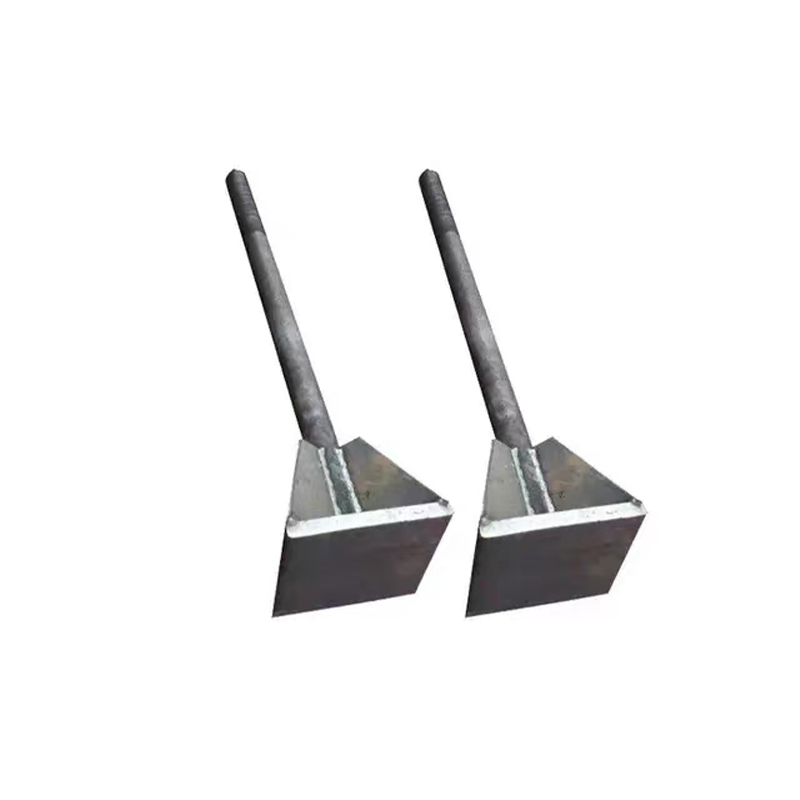
 Welded plate anchor (welded plate anchor bolt)
 -
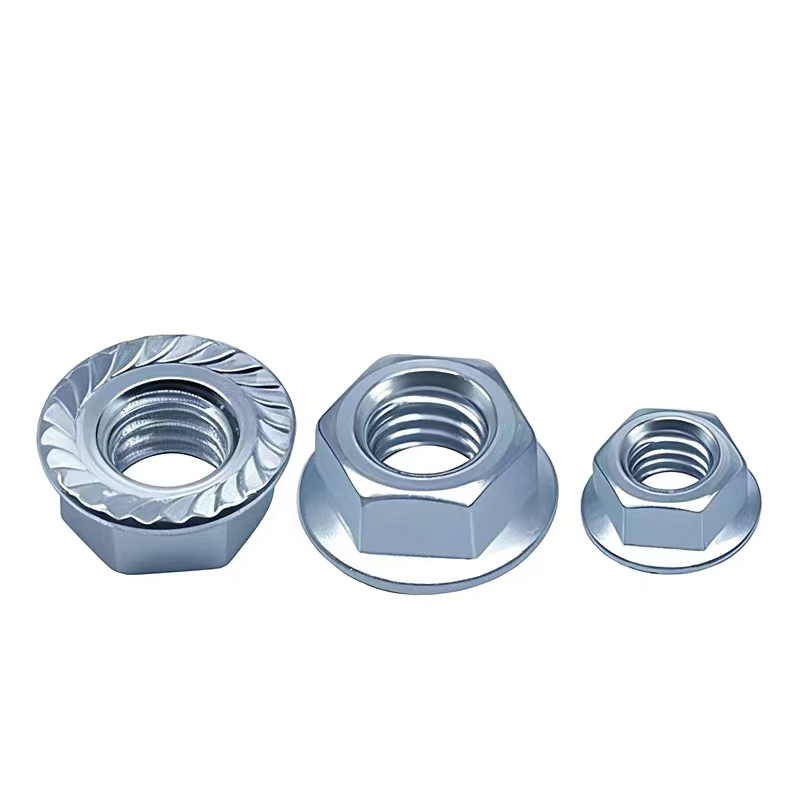
Electroplated galvanized flange nut (flange face nut)
-
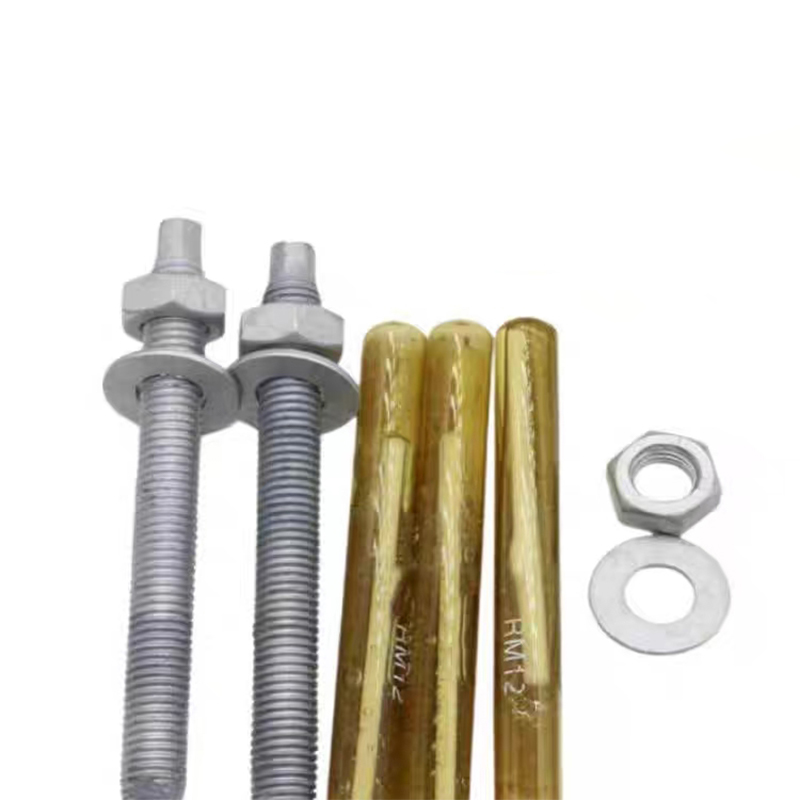
Hot-dip galvanized chemical bolts
-
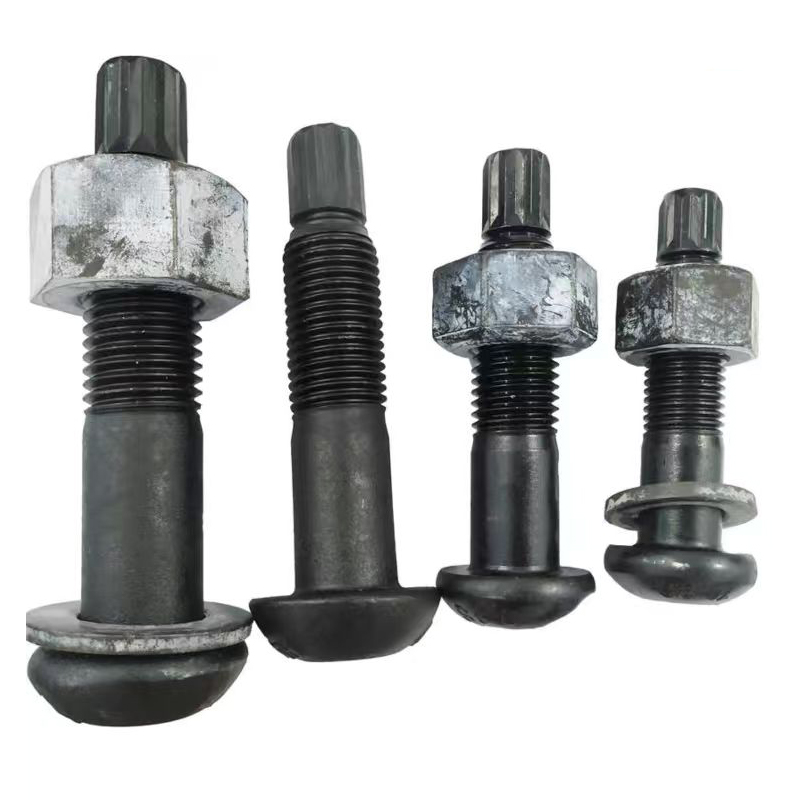
10.9S Torsion Shear Bolts
-
Stud bolts
-
Hot-dip galvanized embedded plate
-
Hexagon socket colored zinc-plated bolts
-
Colored zinc-plated nuts
-
Electrogalvanized cross countersunk drill thread
-
Electrogalvanized pins
-
Anti-loosening nut (locking nut)
-
T-bolt (T-slot bolt)