- English
- Chinese
- French
- German
- Portuguese
- Spanish
- Russian
- Japanese
- Korean
- Arabic
- Irish
- Greek
- Turkish
- Italian
- Danish
- Romanian
- Indonesian
- Czech
- Afrikaans
- Swedish
- Polish
- Catalan
- Esperanto
- Hindi
- Lao
- Albanian
- Amharic
- Armenian
- Azerbaijani
- Belarusian
- Bengali
- Bosnian
- Bulgarian
- Cebuano
- Chichewa
- Corsican
- Croatian
- Dutch
- Estonian
- Filipino
- Finnish
- Frisian
- Galician
- Georgian
- Gujarati
- Haitian
- Hausa
- Hawaiian
- Hebrew
- Hmong
- Hungarian
- Icelandic
- Igbo
- Javanese
- Kannada
- Kazakh
- Khmer
- Kurdish
- Kyrgyz
- Latin
- Latvian
- Lithuanian
- Luxembou..
- Macedonian
- Malagasy
- Malay
- Malayalam
- Maltese
- Maori
- Marathi
- Mongolian
- Burmese
- Nepali
- Norwegian
- Pashto
- Persian
- Punjabi
- Serbian
- Sesotho
- Sinhala
- Slovak
- Slovenian
- Somali
- Samoan
- Scots Gaelic
- Shona
- Sindhi
- Sundanese
- Swahili
- Tajik
- Tamil
- Telugu
- Thai
- Ukrainian
- Urdu
- Uzbek
- Vietnamese
- Welsh
- Xhosa
- Yiddish
- Yoruba
- Zulu
- Kinyarwanda
- Tatar
- Oriya
- Turkmen
- Uyghur


screw with a head in the shape of a plum blossom
You hear plum blossom screw and most guys in the trade immediately think of those cheap, decorative fasteners for consumer electronics or furniture trim. That's the common pitfall. In reality, a true screw with a head in the shape of a plum blossom refers to a specific tamper-resistant drive system, often designated as a 5-petal or 6-petal security head. The confusion is rampant. I've seen procurement orders mix them up with Torx or even spanner heads, leading to a mess on the assembly line when the right driver isn't in the kit. The functional core isn't about aesthetics; it's about controlled access and torque transmission in applications where you don't want just anyone with a standard hex key to be able to disassemble something. The shape, with its recessed petals, requires a matching male bit, which isn't something you find at the local hardware store. That's the first layer of understanding often missed.
Defining the Drive: Geometry and Misconceptions
The geometry is precise. It's not just a flower stamped into metal. Each petal has a defined flank angle and a recess depth that dictates engagement. A poorly molded bit will cam out under moderate torque, stripping the head and turning a simple service job into a drilling nightmare. I recall a batch from a supplier—won't name them—where the petal corners were too rounded. Our drivers kept slipping, and we initially blamed the tool steel. Turned out the screw head form was off-spec by a few microns. It's a detail you only catch when you're dealing with volume or critical assemblies.
There's also the naming chaos. Some call it a flower head screw, others 5-lobe. In certain Japanese industrial standards, it's clearly defined. But in the vast manufacturing hubs like Yongnian District in Handan, you have to be specific. You can't just send a drawing; you need the standard code or a physical sample. The region, being the largest standard part production base in China, has shops that can make anything, but clarity is king. A place like Handan Zitai Fastener Manufacturing Co., Ltd., situated there with its good transport links, would get this right because they're used to handling export orders with precise specifications. Their location near major rail and road routes means they're sourcing steel and shipping finished goods in a logistics ecosystem built for this.
The material choice is another point. For true tamper-resistant applications, you're looking at hardened steel. But I've seen these heads cast into zinc alloy for low-stress, high-volume consumer goods. The head form holds, but the screw itself shears if you look at it wrong. It creates a false sense of security. The drive type doesn't dictate the fastener's strength; the entire package does.
Application Realities: Where It Actually Gets Used
Forget the decorative stuff. The serious use is in public infrastructure, transit, telecommunications, and any enclosed system where the manufacturer wants to deter casual tampering but allow authorized maintenance. Think electrical panel covers on trains, access plates on street furniture, or internal chassis components in commercial vending machines. It's a step above a Phillips but not as high-security as a one-way or shear head.
We tried using them on an outdoor equipment project years back. The theory was sound: deter vandalism. The failure was in the environmental spec. We used standard carbon steel with a trivalent chrome plating. The coastal environment ate through the plating, corrosion locked the threads, and the plum blossom drive recess filled with rust, making authorized service just as difficult as unauthorized entry. Lesson learned: the drive system is one variable; corrosion protection and material pairing are equally critical. A manufacturer that understands this will offer the head form on a range of material and finish options, which is what you'd expect from a specialized producer.
Another practical note: driver bit availability. You have to supply the bits with the product or specify the exact driver part number. We learned this the hard way by not including them in the service manual. Field techs ended using improper tools, damaging the heads. Now, we either source the screws and matching bits as a kit or mandate the bit part number in all documentation.
Manufacturing and Sourcing Nuances
Making these isn't about simply machining a fancy shape. The head is usually cold-forged. The quality of the forging die determines the consistency of the petal form. A worn die produces shallow recesses, compromising torque capability. When auditing a supplier, you don't just look at their QA sheet; you ask about their die maintenance schedule and how often they sample-check the head form with a optical comparator.
Sourcing from a concentrated production base like Yongnian has advantages and pitfalls. The advantage is deep supply chains for wire rod, plating, and packaging. The pitfall is the sheer number of factories, varying wildly in capability. A company like Handan Zitai Fastener, by virtue of its established presence and focus on manufacturing (as their site https://www.zitaifasteners.com suggests), is more likely to have dedicated tooling and process control for specialized drives, rather than treating it as a generic stamped item. Their proximity to major transport arteries like the Beijing-Guangzhou Railway and Beijing-Shenzhen Expressway is a practical plus for raw material in and finished product out, reducing lead times.
Price points are telling. If a quote for plum blossom screws is suspiciously low, they're probably using low-grade steel or skipping a proper heat treatment. The cost is in the tooling and the material science, not just the shape.
The Tooling Side: It's a System
The screw is half of the equation. The driver bit is the other. They are a matched pair. A high-quality screw ruined by a soft, out-of-spec bit is a common frustration. The bit's lobes must be sharp and hard. We standardized on S2 steel bits for most field service kits, but for production line use, where torque is controlled, a different alloy might be used.
Bit wear is a real issue. A worn bit will start to round the screw's petals. In a controlled assembly environment, you need a schedule for bit replacement based on cycle count, not just when it fails. This is something a good fastener supplier can often advise on, as they see the failure modes from their other clients.
There are also security versions of these bits with a pin in the center, matching a hole in the screw head, for an added layer of control. That's a whole other level of specification. It's crucial to know which system you're buying into from the start.
Concluding Thoughts: Specifying It Right
So, when you need a screw with a head in the shape of a plum blossom, the spec sheet must go beyond the name. It needs the standard (if any), the number of petals, the major/minor lobe diameters, the intended torque range, the material grade, the plating or coating, and the matching driver bit specification. It's not a commodity item.
Going back to the regional point, leveraging a specialized manufacturer in a hub like Yongnian makes sense. They live and breathe fasteners. For instance, a firm such as Handan Zitai Fastener Manufacturing, operating from that base, would inherently have the infrastructure to get the details right—from the forging to the final inspection—because that's their core business, not a side line. Their company profile notes they're in the largest production base, which implies access to skilled labor and specialized machinery.
In the end, it's a clever, functional drive. But its value is entirely dependent on precise execution, from the factory floor to the field technician's tool pouch. Specify it with care, source it from someone who understands it's an engineering component, not a novelty, and it'll do its job reliably for years.
Lotinduta aurrealdi
Lotutako produktuak
Salmenta onena aurrealdi
Salmenta produktu onenak-
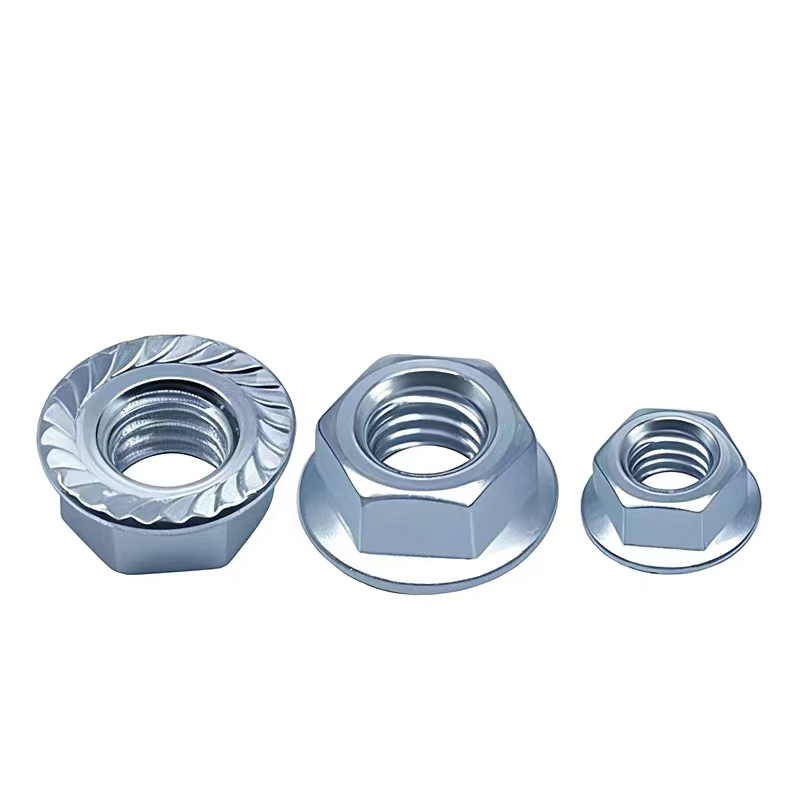
 Elektrobisatutako brida galbanizatua (brida aurpegia azkoina)
 - Soldadura iltzeak
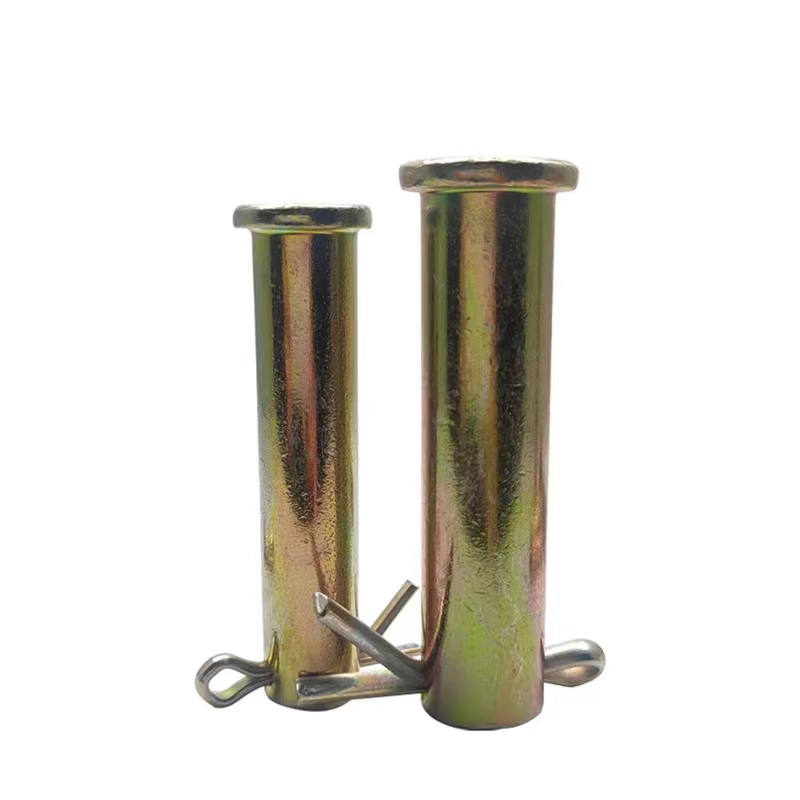
- Koloretako zinka estalitako pinak
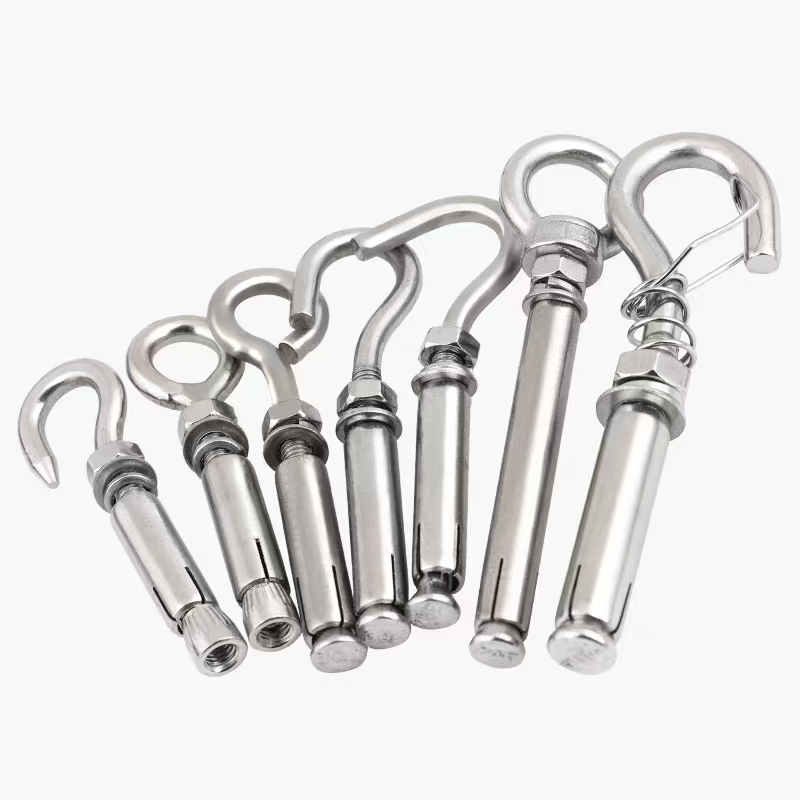
- Hedapen elektro-galvanizatua
- Electro-Galvanized Cross Cross Bolts
- Zink Black Plated Bolts Hexagonalak
- T-Bolt (T-Slot Bolt)
- Koloretako zinka estalitako hedapen boltxoak
- 10,9S Hexagono Boltsu Handiak
- Steel structure welding studs
- Elektrokatutako galbanizatuzko gasak
- Koloretako zinka estalitako gasak