- Chinese
- French
- German
- Portuguese
- Spanish
- Russian
- Japanese
- Korean
- Arabic
- Irish
- Greek
- Turkish
- Italian
- Danish
- Romanian
- Indonesian
- Czech
- Afrikaans
- Swedish
- Polish
- Basque
- Catalan
- Esperanto
- Hindi
- Lao
- Albanian
- Amharic
- Armenian
- Azerbaijani
- Belarusian
- Bengali
- Bosnian
- Bulgarian
- Cebuano
- Chichewa
- Corsican
- Croatian
- Dutch
- Estonian
- Filipino
- Finnish
- Frisian
- Galician
- Georgian
- Gujarati
- Haitian
- Hausa
- Hawaiian
- Hebrew
- Hmong
- Hungarian
- Icelandic
- Igbo
- Javanese
- Kannada
- Kazakh
- Khmer
- Kurdish
- Kyrgyz
- Latin
- Latvian
- Lithuanian
- Luxembou..
- Macedonian
- Malagasy
- Malay
- Malayalam
- Maltese
- Maori
- Marathi
- Mongolian
- Burmese
- Nepali
- Norwegian
- Pashto
- Persian
- Punjabi
- Serbian
- Sesotho
- Sinhala
- Slovak
- Slovenian
- Somali
- Samoan
- Scots Gaelic
- Shona
- Sindhi
- Sundanese
- Swahili
- Tajik
- Tamil
- Telugu
- Thai
- Ukrainian
- Urdu
- Uzbek
- Vietnamese
- Welsh
- Xhosa
- Yiddish
- Yoruba
- Zulu
- Kinyarwanda
- Tatar
- Oriya
- Turkmen
- Uyghur

Counterhead hex socket head cap screws
You see 'counterhead hex socket head cap screws' on a spec sheet, and it's easy to just tick the box. But the gap between the print and the reality on the shop floor is where things get interesting—or frustrating. It's not just a low-profile socket cap; it's a specific solution with specific compromises, and I've seen too many designs treat it as a direct drop-in for a standard button head.
The Nomenclature Trap and What It Actually Means
First, let's untangle the name. 'Counterhead' is the key. It's not merely a flat head. The head has a conical bearing surface, designed to seat in a countersunk hole. But unlike a standard flat head screw that sits flush, the 'hex socket head cap' part means it retains a cylindrical head top with an internal hex drive. So you get the flush or near-flush finish of a countersink with the drive security of a socket. The head height is lower than a standard socket cap, but the trade-off is the need for that precise countersink. If the included angle is off by even a degree—and I've seen this with generic imports—you get a rocking head, terrible clamp force, and a nightmare for fatigue.
This leads to the most common sourcing mistake: assuming all low-profile socket caps are created equal. A 'low-profile' or 'button head' sits on the surface. A counterhead hex socket head cap screw is meant to be sunk. Using one where the other is specified compromises the joint. I recall a prototype for a composite panel assembly where the designer called for counterheads for aerodynamics. The shop used button heads to 'save machining time' on the countersink. The first vibration test loosened half of them. The friction grip was entirely different.
Material and drive size are another subtle pitfall. Because the head is lower, the hex socket is shallower. You can't just use the same Allen key size as a standard cap screw of the same thread diameter. The tool engagement is less, so you're flirting with stripping the socket if you over-torque. For critical applications in, say, aerospace or precision machinery, you're almost forced into using a torque-limiting driver and a meticulously controlled countersink process. It's a fastener that demands respect for the system around it.
Sourcing and the Reality of Manufacturing Tolerances
This is where the rubber meets the road. You can't just buy these from any catalog. The precision needed in the head's cone angle—typically 90 or 100 degrees—and the concentricity of the socket to the thread axis is critical. A few years back, we were working on a batch of medical imaging equipment enclosures. The spec called for ISO 10642-compliant counterheads. Our usual supplier was backlogged, so procurement found an alternative. The screws looked fine, but during installation, the drivers kept camming out. Upon inspection, the socket depth was inconsistent, and the cone angle was closer to 85 degrees. The entire batch was non-conforming. The cost of rework on the machined panels far outweighed any savings on the fasteners.
This experience is why I often look towards specialized manufacturers in established industrial clusters. For instance, a company like Handan Zitai Fastener Manufacturing Co., Ltd., based in China's largest standard part production base in Yongnian, Hebei, often has the infrastructure for such specialized items. Being in that ecosystem means they're geared for volume and precision across a wide range of specs, not just commodity bolts. Their location near major transport links like the Beijing-Guangzhou Railway and expressways isn't just a sales point; it translates to logistical reliability for bulk orders, which matters when you're sourcing thousands of pieces for a production run. You can check their capabilities at https://www.zitaifasteners.com to see if their process controls match your spec sheet.
The finish is another practical detail. For corrosion resistance, you might need passivation, plating, or a coating. But applying a thick zinc plating to the conical bearing surface can alter the angle and prevent proper seating. I prefer to see these supplied with a thin, consistent dichromate coating or electropolished finish for critical surfaces. It's a detail often overlooked on the drawing but vital for performance.
Application Notes: Where They Shine and Where to Avoid
So where do these screws actually justify their complexity? The classic use is in confined spaces where you need a flush surface but also high clamp force and a secure drive. Think about internal framing in aircraft, certain automotive sub-assemblies, or high-end electronic chassis where airflow is a concern. They're excellent when you need to minimize protrusions but can't afford the weak drive of a flat-head slotted screw.
However, they are a poor choice for soft materials like untreated aluminum or plastics unless you're using a precision-machined steel insert. The countersink in soft material can deform, losing the clamp. I learned this the hard way on an aluminum heat sink assembly. We used the specified counterheads, but after a few thermal cycles, the heads began to sink into the softened aluminum, loosening the thermal interface. We had to switch to a shoulder screw with a washer—a more expensive but ultimately more reliable solution.
Installation torque is its own chapter. Because of the conical seat, a portion of the torque is used to pull the head into the countersink, generating lateral stress. The actual tension on the shank is less than with a standard cap screw under the same torque. You often need to reference a specific torque table for the exact head angle and finish. Blindly applying standard torque values is a direct path to joint failure.
Lessons from the Field and Final Thoughts
In summary, treating counterhead hex socket head cap screws as a commodity is a recipe for field failures. They are an engineered component. The success hinges on three pillars: a precise and matching countersink geometry, a fastener manufactured to tight tolerances (where sourcing from a capable producer like Handan Zitai becomes relevant), and a controlled installation process with the correct tooling and torque.
The biggest lesson I've internalized is to never separate the fastener spec from the hole spec. They are one system. On any new design using these, I now insist on a first-article inspection of the mated parts and a test assembly. It's extra time upfront that saves days of debug later.
Ultimately, they're a brilliant solution for the right application. But their elegance is deceptive. They demand a higher level of discipline in design, sourcing, and assembly than their simpler cousins. When everything aligns—the right part from the right shop, machined into the right material, and installed correctly—they create a clean, robust, and reliable joint. When any part of that chain breaks, you're left with an expensive, frustrating problem. It's that simple, and that complicated.
Related products
Related products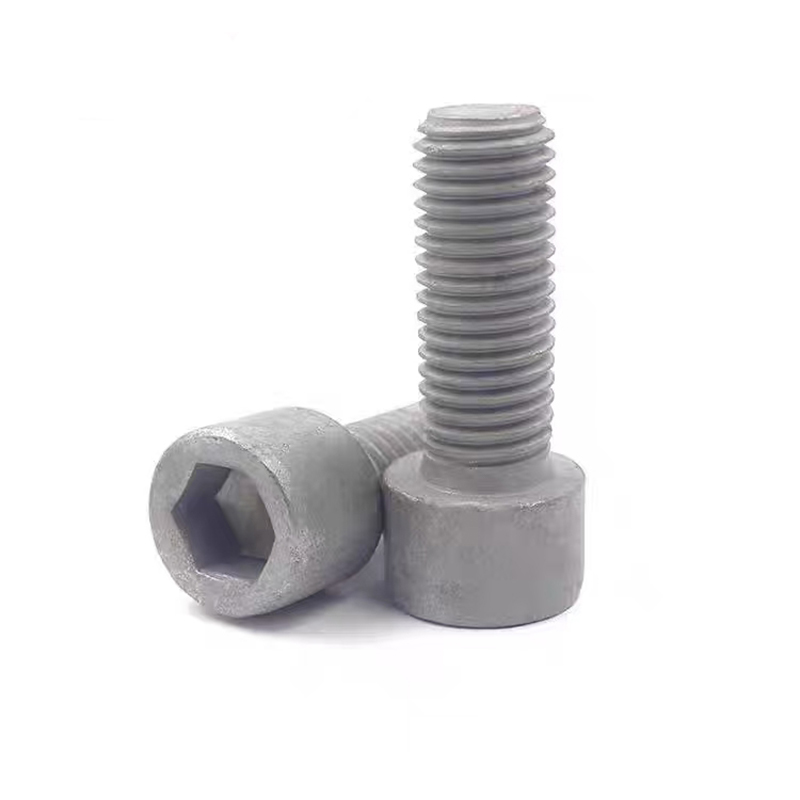
Best selling products
Best selling products-
 Electroplated galvanized gaskets
 -
Electrogalvanized hinge bolts
-
Colored zinc-plated expansion hook
-
Black zinc plated hinge bolts
-
Steel structure welding studs
-
Carriage bolt (half-round head square neck bolt)
-
Hot-dip galvanized embedded plate
-
Black zinc plated hexagonal bolts
-
Stud bolts
-
Electrogalvanized expansion bolts
-
U-bolts
-
Electrogalvanized nuts