- English
- Chinese
- French
- German
- Portuguese
- Spanish
- Russian
- Japanese
- Korean
- Arabic
- Irish
- Greek
- Turkish
- Italian
- Danish
- Romanian
- Indonesian
- Czech
- Afrikaans
- Swedish
- Polish
- Basque
- Catalan
- Esperanto
- Hindi
- Lao
- Albanian
- Amharic
- Armenian
- Azerbaijani
- Belarusian
- Bengali
- Bosnian
- Bulgarian
- Cebuano
- Chichewa
- Corsican
- Croatian
- Dutch
- Estonian
- Filipino
- Finnish
- Frisian
- Galician
- Georgian
- Gujarati
- Hausa
- Hawaiian
- Hebrew
- Hmong
- Hungarian
- Icelandic
- Igbo
- Javanese
- Kannada
- Kazakh
- Khmer
- Kurdish
- Kyrgyz
- Latin
- Latvian
- Lithuanian
- Luxembou..
- Macedonian
- Malagasy
- Malay
- Malayalam
- Maltese
- Maori
- Marathi
- Mongolian
- Burmese
- Nepali
- Norwegian
- Pashto
- Persian
- Punjabi
- Serbian
- Sesotho
- Sinhala
- Slovak
- Slovenian
- Somali
- Samoan
- Scots Gaelic
- Shona
- Sindhi
- Sundanese
- Swahili
- Tajik
- Tamil
- Telugu
- Thai
- Ukrainian
- Urdu
- Uzbek
- Vietnamese
- Welsh
- Xhosa
- Yiddish
- Yoruba
- Zulu
- Kinyarwanda
- Tatar
- Oriya
- Turkmen
- Uyghur


Keeper nuts
You hear 'keeper nuts' and most people think of a simple locknut, maybe a nylon insert type. That's the first misconception. In practice, a true keeper nut, especially in heavy-duty or vibration-prone applications, is a different beast. It's not just about preventing loosening; it's about maintaining a precise clamp load, acting as a positional lock, or even serving as a mechanical stop. I've seen too many designs where a standard nut is specified as a 'keeper,' only to have the assembly fail in field testing because the engineer didn't consider the axial and radial forces involved. The term itself is almost too broad, covering everything from a jam nut on a valve stem to a specialized castellated nut with a cotter pin on a rotating shaft. The nuance is everything.
The Core Function and Common Pitfalls
Let's get specific. The primary job is to 'keep' a setting. For instance, on an adjustable linkage, you set the length, then tighten the keeper nut against the turnbuckle or rod end body. The failure point here is often under-torquing. People are scared of galling threads or deforming the component, so they go light. The result? Vibration works it loose over a few hundred hours. I learned this the hard way on a conveyor system project. We used a standard hex nut as a keeper on a tensioning rod. Spec'd the torque per a generic chart. Three months later, we had a shutdown because the rod backed out, throwing the belt track off. The fix wasn't a higher torque, but switching to a keeper nut with a prevailing torque feature—a deformed thread or an integrated plastic ring. It provided that consistent drag force the standard nut lacked.
Material choice is another pitfall. In corrosive environments—think chemical processing or marine applications—a carbon steel keeper nut is a ticking clock. Even with plating. I recall a client who insisted on zinc-plated nuts for a coastal water pump assembly. The galvanic corrosion between the stainless steel stud and the carbon steel nut essentially welded them together. When maintenance tried to adjust, the stud snapped. The solution was to bite the bullet and use a full 316 stainless assembly, including the keeper nuts. The upfront cost was higher, but it eliminated a recurring repair nightmare.
Then there's the issue of space. A standard nut needs a proper wrench swing. In tight cavities, you might need a thin-jam nut style keeper, but its reduced height means less thread engagement and lower locking performance. You're trading function for fit. We once had to design a custom spanner wrench just to tighten a keeper nut seated in a recessed bore. It added tooling cost, but it was the only way to achieve both the required torque and the compact design. Off-the-shelf isn't always the answer.
Sourcing and the Reality of Manufacturing Hubs
This brings me to sourcing. For volume runs, you're often looking at manufacturers in specialized industrial clusters. One major global hub is in Yongnian, Hebei, China. The concentration of fastener production there is staggering. Companies like Handan Zitai Fastener Manufacturing Co., Ltd. operate right in the middle of it. Their location adjacent to major rail and highway networks isn't just a line in a company profile; it translates to logistical efficiency for raw material intake and finished goods shipping. When you're procuring container loads of specialized fasteners, that proximity to transport arteries matters for cost and lead time.
Dealing with a manufacturer like Zitai, you're tapping into that deep, localized supply chain. Need a specific grade of boron steel wire for high-strength keeper nuts? The supplier is likely down the road. This can streamline prototyping and allow for more material options. However, the key is specification clarity. I've had samples come back where the heat treatment wasn't to spec because the drawing called for a Grade 8 equivalent rather than the precise mechanical properties and testing method. The assumption was it would be made to a common local standard, which differed slightly. The lesson: control drawings must be exhaustive—material chemistry, Rockwell hardness range, proof load, coating type and thickness, marking requirements.
It's not just about getting the part made. It's about getting it made consistently, batch after batch. A good technical partner in such a region will have the metallurgical lab equipment to provide certs, not just a promise. The website might say they serve global markets, but the proof is in their willingness and capability to meet specific international standards like ASTM or DIN, not just GB. That's a filter I always apply.
Application-Specific Variations and Lessons
Beyond the basic hex form, keeper nuts morph for their duty. Castellated nuts with cotter pins are the classic positive lock for rotating shafts on machinery. The trick here is drill alignment. If the hole in the bolt isn't perfectly aligned with the castellations at the correct torque, you either under-torque to line it up or over-torque to the next slot. Neither is ideal. The best practice is to use a fine-pitch thread, which gives you smaller angular increments for alignment, minimizing the torque compromise.
Then you have flange keeper nuts. The integrated washer face distributes load and can be serrated to bite into the mating surface for enhanced locking. I've specified these for composite assemblies where you need to prevent crushing the laminate. The broad bearing surface is critical. But watch out for the serrations—if the mating surface is a soft aluminum or a painted finish, the serrations can dig in and make future adjustment a pain, often tearing up the material. Sometimes a smooth flange with a bonded washer is the better call.
One of the more interesting failures I analyzed was on a high-temperature pipeline. They used all-metal, temperature-resistant keeper nuts. They held initially. But during thermal cycling, the differential expansion rates between the nut (stainless) and the carbon steel flange caused the clamp load to vary dramatically. The nuts didn't loosen in the traditional sense, but the seal failed because the gasket lost compression at the temperature extreme. The fix involved calculating the thermal coefficients and switching to a nut material that better matched the flange, and using a helical spring washer to maintain tension. It was a reminder that a keeper's job is dynamic if the environment is.
The Adjustment Factor and Field Realities
A keeper nut often implies future adjustment. This is a design philosophy point. You must assume the technician in the field will have basic, possibly worn, tools and will not have a torque wrench calibrated last week. The design should be forgiving. For example, using a double-nut system (jam nut method) as a keeper is notoriously sensitive to the proper procedure—tightening the primary nut, then the keeper against it. In the field, they often just crank both down together, nullifying the locking effect. If adjustment is anticipated, a design with a visual indicator—like a witness mark or a thread that protrudes a specific amount past the nut—is more reliable than relying on a perfect procedure.
Lubrication is another field variable. Do you specify pre-lubricated nuts? If so, with what? Or do you assume the field crew will apply anti-seize? I've seen assemblies where the factory-applied lubricant dried out or attracted grit, turning it into an abrasive paste that wore the threads. Conversely, I've seen dry assemblies gall and seize during the first adjustment. There's no universal answer. For a keeper nut on a stainless steel stud that will see infrequent adjustment in a dry environment, a molybdenum disulfide dry film might be specified. For something that will be regularly serviced in a wet environment, a copper-based anti-seize is common. The spec sheet must state it clearly.
Ultimately, the most reliable keeper system I've deployed is often the simplest one that accounts for human factors. A nylon-insert locknut (nyloc) is great for one-time or rare adjustment, as the insert wears. A distorted thread locknut is better for multiple adjustments. For no adjustment, a prevailing torque nut with a patch or a chemical thread-locker might be best. The choice isn't just in a catalog; it's on the drawing, with clear instructions. It's the difference between a component that lasts the life of the machine and one that causes a callback. That's the real measure of a keeper.
Ki gen rapò pwodwi
Pwodwi ki gen rapò
Pi bon vann pwodwi
Pi bon pwodwi vann-
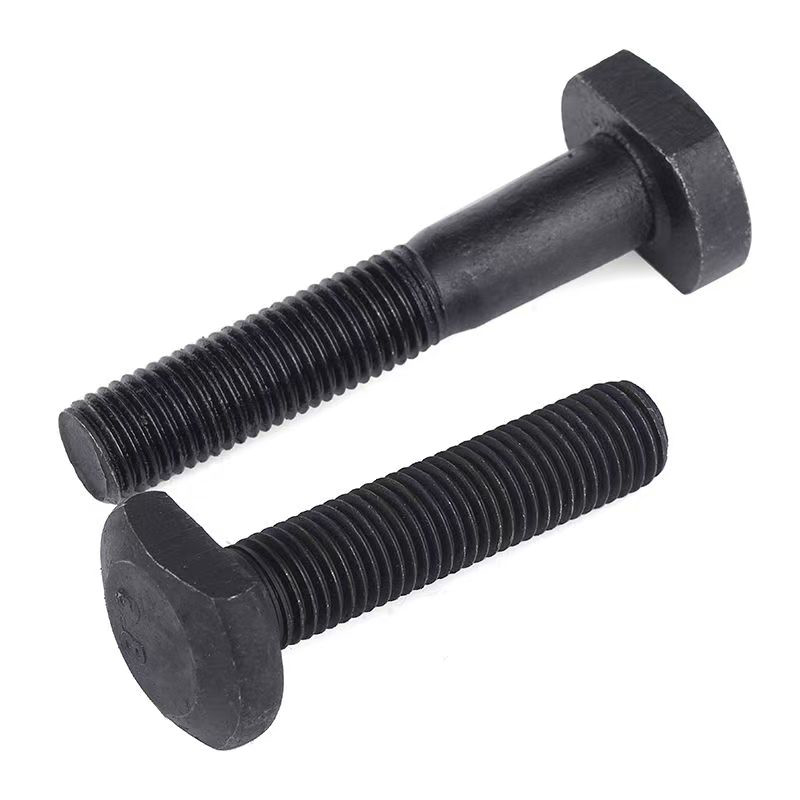
 T-Bolt (T-plas boulon)
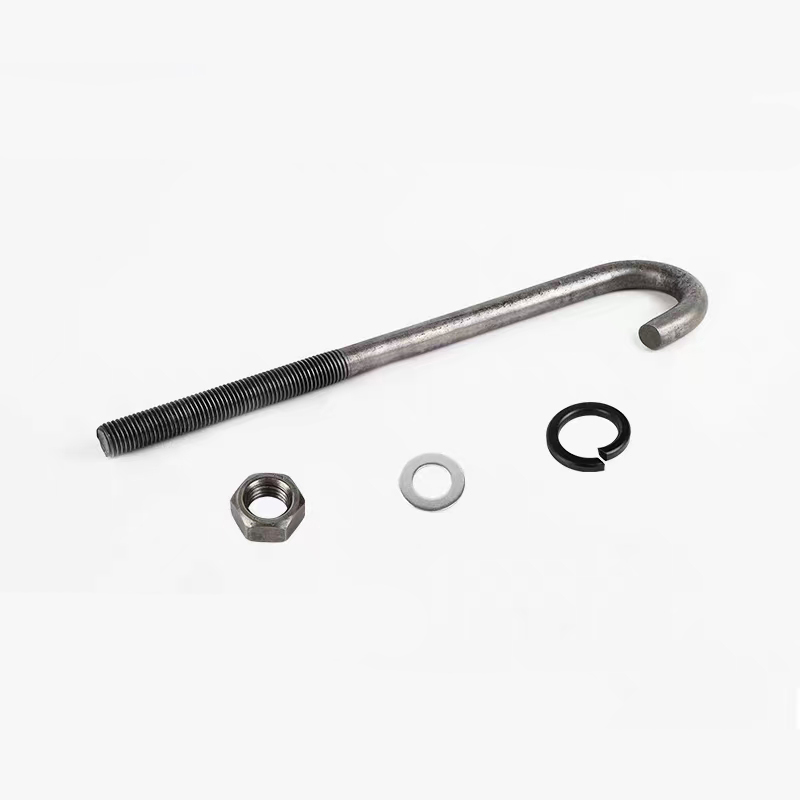
 - Parapli manch jete lank (J-tip jete lank boulon/parapli manch anbale boulon)
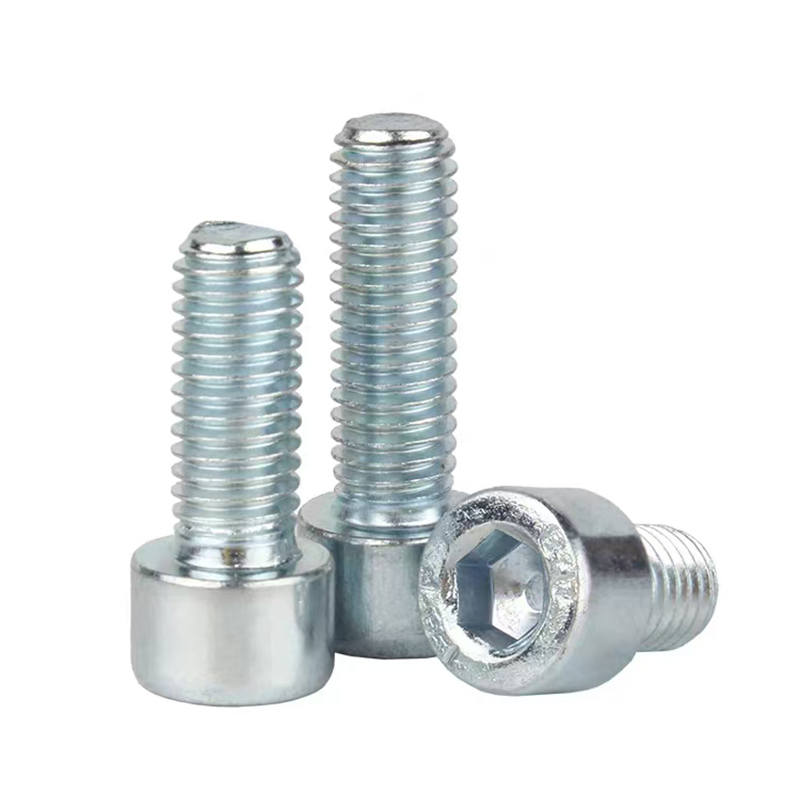
- Egzagòn Socket Electrogalvanized boulon
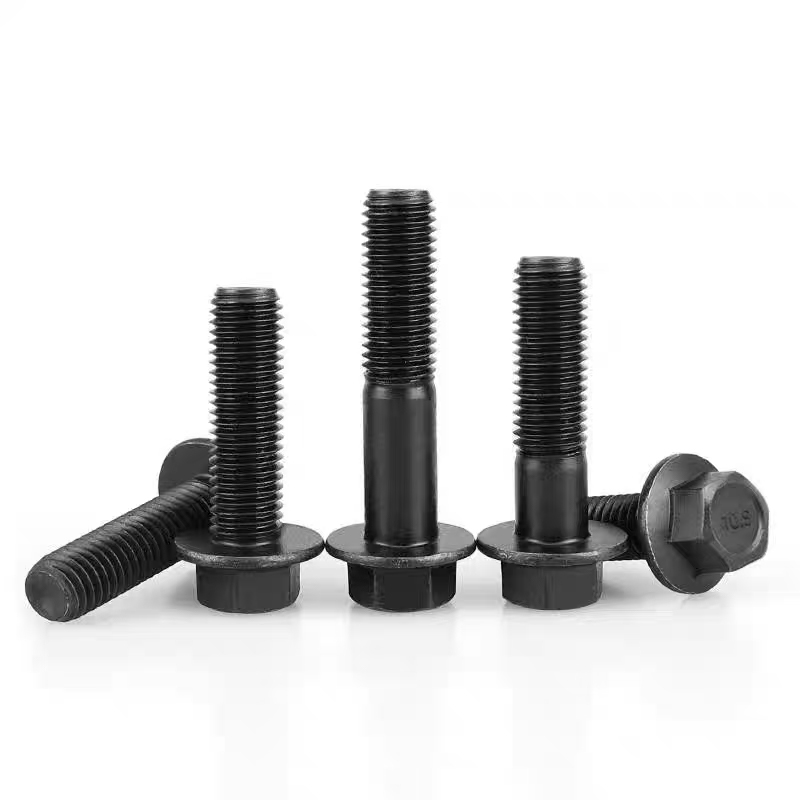
- Boulon bride zenk nwa
- Electro-galvanised ekspansyon zen
- Cho-tranpe plak galvanised entegre
- Nwa zenk plake boulon charnyèr
- Boulon chimik elektwogalvanize
- Electro-galvanised fil egzèsis egzèsis
- Egzagòn priz cho-plonje boulon galvanised
- Boulon ekspansyon elektwogalvanize
- Boulon egzagonal cho-tranpe