- Chinese
- French
- German
- Portuguese
- Spanish
- Russian
- Japanese
- Korean
- Arabic
- Irish
- Greek
- Turkish
- Italian
- Danish
- Romanian
- Indonesian
- Czech
- Afrikaans
- Swedish
- Polish
- Basque
- Catalan
- Esperanto
- Hindi
- Lao
- Albanian
- Amharic
- Armenian
- Azerbaijani
- Belarusian
- Bengali
- Bosnian
- Bulgarian
- Cebuano
- Chichewa
- Corsican
- Croatian
- Dutch
- Estonian
- Filipino
- Finnish
- Frisian
- Galician
- Georgian
- Gujarati
- Haitian
- Hausa
- Hawaiian
- Hebrew
- Hmong
- Hungarian
- Icelandic
- Igbo
- Javanese
- Kannada
- Kazakh
- Khmer
- Kurdish
- Kyrgyz
- Latin
- Latvian
- Lithuanian
- Luxembou..
- Macedonian
- Malagasy
- Malay
- Malayalam
- Maltese
- Maori
- Marathi
- Mongolian
- Burmese
- Nepali
- Norwegian
- Pashto
- Persian
- Punjabi
- Serbian
- Sesotho
- Sinhala
- Slovak
- Slovenian
- Somali
- Samoan
- Scots Gaelic
- Shona
- Sindhi
- Sundanese
- Swahili
- Tajik
- Tamil
- Telugu
- Thai
- Ukrainian
- Urdu
- Uzbek
- Vietnamese
- Welsh
- Xhosa
- Yiddish
- Yoruba
- Zulu
- Kinyarwanda
- Tatar
- Oriya
- Turkmen
- Uyghur


Square nuts
You see them in old machinery, on adjustable rails, and buried in assemblies where a wrench swing is impossible. Yet, most spec sheets just default to hex. Let's talk about square nuts—where they truly earn their keep and where they can trip you up.
Beyond the Obvious: Where Square Really Shines
The textbook answer is anti-rotation. A square nut seated in a square channel or against two perpendicular surfaces won't turn. That's fine, but it's the practical, gritty details that matter. In channel framing, like T-slot extrusions, a square nut drops in and rotates 90 degrees to lock. You can't do that with a hex. It's faster for assembly lines where you're building dozens of frames. I remember sourcing these for a packaging conveyor retrofit; the maintenance team insisted on them because they could be installed with just a flat piece of steel as a tool if needed. Low-tech, but zero downtime.
Then there's the issue of space. In a tight corner, getting a socket or even an open-end wrench onto a hex nut can be a nightmare. A square nut often gives you more flat surface to grip with a basic wrench, or you can use a lighter, thinner tool. It's a salvage operation's best friend. We had a project repairing vintage farm equipment, and the recessed mounting points were all designed for square nuts. Trying to force a hex in there would have meant machining new parts—cost and time we didn't have.
But here's the catch: torque. You generally can't torque a square nut as high as a hex. The wrench contact isn't as secure, and you risk rounding the corners if you push it. It's not for high-stress, critical structural joints. It's for clamping, positioning, and anchoring where the load is more about stability than sheer strength. Knowing that difference saves a lot of callbacks.
The Manufacturing Reality and Supplier Nuances
People assume these are simple, commodity items. They're not wrong, but the tolerances and material consistency are where cheap options fail. A poorly formed square nut with rounded corners or inconsistent width across flats will spin in its seat or refuse to seat properly. It jams up an entire assembly process. I've seen batches where the zinc plating was too thick, changing the dimensions just enough to make them unusable in precision channels.
This is where geography and supply chains get real. A lot of the world's standard fasteners, including quality square nuts, come from a concentrated production base in China. For instance, Handan Zitai Fastener Manufacturing Co., Ltd. operates out of Yongnian District in Handan, Hebei—the heart of that base. Their location near major rail and road arteries isn't just a sales pitch; it translates to logistical efficiency for bulk orders. When you're ordering pallets of fasteners, freight cost and lead time from the factory gate are huge parts of the total cost. A supplier embedded in that ecosystem often has more consistent access to raw material and can react to volume shifts.
Dealing with a manufacturer like Zitai Fasteners, you learn to ask specific questions. It's not just got square nuts? It's about the cold forging process, the grade of steel wire (like 1008 or 1010 for standard grade), and the post-production treatment. Do they offer a black oxide finish that's better for certain environments than zinc? For a project involving outdoor storage racks, we opted for hot-dip galvanized square nuts from their catalog to combat rust. The point is, the right supplier understands these application-specific needs, not just the basic dimensions.
Common Pitfalls and Field Adjustments
A classic mistake is assuming all square nuts are created equal for all square holes. The nominal size might be M8, but the width across flats can vary. If the square hole in your casting or bracket is a tight fit, a nut with a slightly oversized width (a common tolerance issue) won't go in. You're left with filing down dozens of nuts or re-drilling the holes—neither is good. Always specify the width across flats tolerance if it's critical, or better, get samples and test-fit before committing to a 10,000-unit order.
Another pitfall is thread engagement. Because square nuts are often thinner than heavy hex nuts, you get fewer threads engaged on the bolt. In dynamic load applications, this can lead to thread stripping. The fix? Sometimes you use a thicker square nut, or pair it with a washer and a thread-locking adhesive if vibration is a concern. It's a compromise between the nut's form factor and the joint's mechanical needs.
Then there's the installation headache in deep, blind holes. If the square nut isn't perfectly aligned when you start threading the bolt, it can cross-thread or, worse, turn 45 degrees and become impossible to seat or remove. We learned this the hard way on an internal assembly jig. The solution was to use a magnetic socket to hold the nut square during initial threading, or to specify nuts with a slight chamfer on the top threads to guide the bolt in. Small details that you only learn by getting it wrong first.
Material and Finish: It's Not Just Steel
While low-carbon steel is the workhorse, don't overlook other materials. Stainless steel square nuts (typically 304 or 316) are essential for food processing or chemical environments. Brass square nuts are used in plumbing and electrical applications for their corrosion resistance and non-sparking properties. Nylon square nuts provide electrical insulation and are great for reducing weight and preventing galvanic corrosion.
The finish is half the battle. A plain, unfinished steel nut will rust in a humid warehouse. Electroplated zinc is standard, but for harsh environments, a mechanical galvanizing or even a dacromet coating might be necessary. I recall a marine equipment supplier who kept having failures. They were using standard zinc-plated nuts. Switching to a manufacturer that could provide a more robust, salt-spray-tested zinc-nickel coating on their square nuts solved the premature rust issue. It's about matching the nut to its entire life cycle environment.
This is another area where a specialized manufacturer adds value. A company focused on fasteners, like the aforementioned Zitai Fasteners, will typically have a range of these options in their portfolio. It's more efficient than trying to get a general hardware trader to source a specific plated brass square nut. Their website, https://www.zitaifasteners.com, acts as a catalog, but the real spec sheets and material certifications come from direct contact. You learn to use the online info as a starting point, not the final word.
The Unspoken Advantage: Cost and Inventory Simplicity
Finally, let's talk economics. For many non-critical applications, square nuts are cost-effective. The tooling for cold forging them is generally simpler than for hex nuts, which can translate to a lower unit cost, especially in bulk. For a maintenance department or a factory stocking a repair kit, having a range of square nuts from M4 to M12 takes up less space and covers more oddball repairs than a full set of hex nuts.
There's also an inventory logic. In systems designed around them, like certain types of industrial shelving or machine guards, using square nuts reduces the number of different parts you need to stock. The same nut might be used in multiple places. Standardization is an underrated form of reliability.
So, the next time you're laying out a design or troubleshooting a rickety old frame, don't just reach for the hex nut by default. Think about the space, the tool access, the need for anti-rotation, and the environment. That humble, four-sided piece of metal might be the more elegant, and certainly the more experienced, solution. It's a small component, but specifying it correctly speaks volumes about practical engineering knowledge.
Related products
Related products
Best selling products
Best selling products-
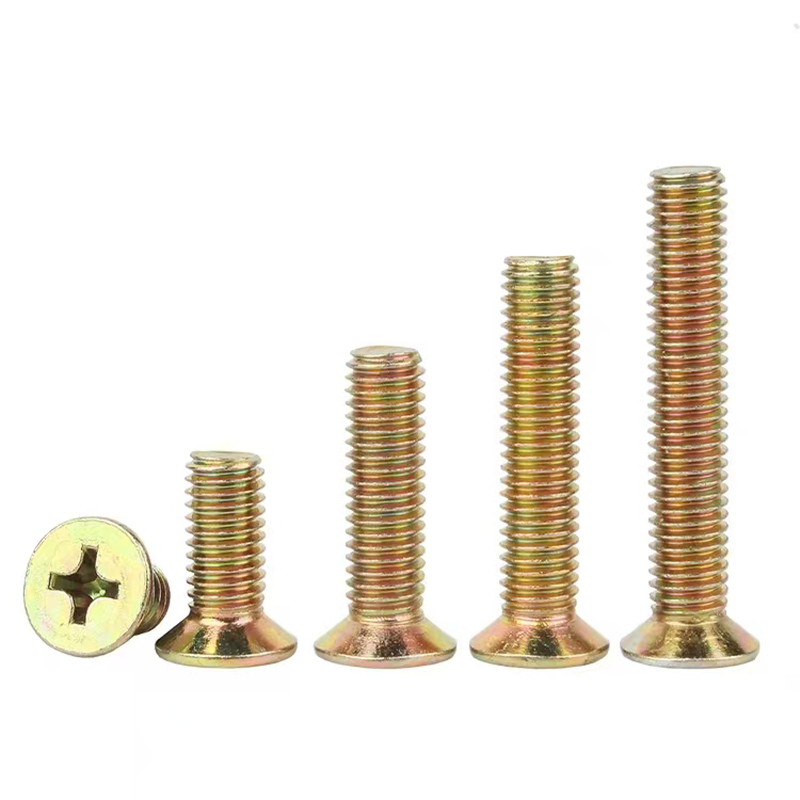
 Colored zinc plated countersunk cross bolts
 -
High-strength blackened nuts
-
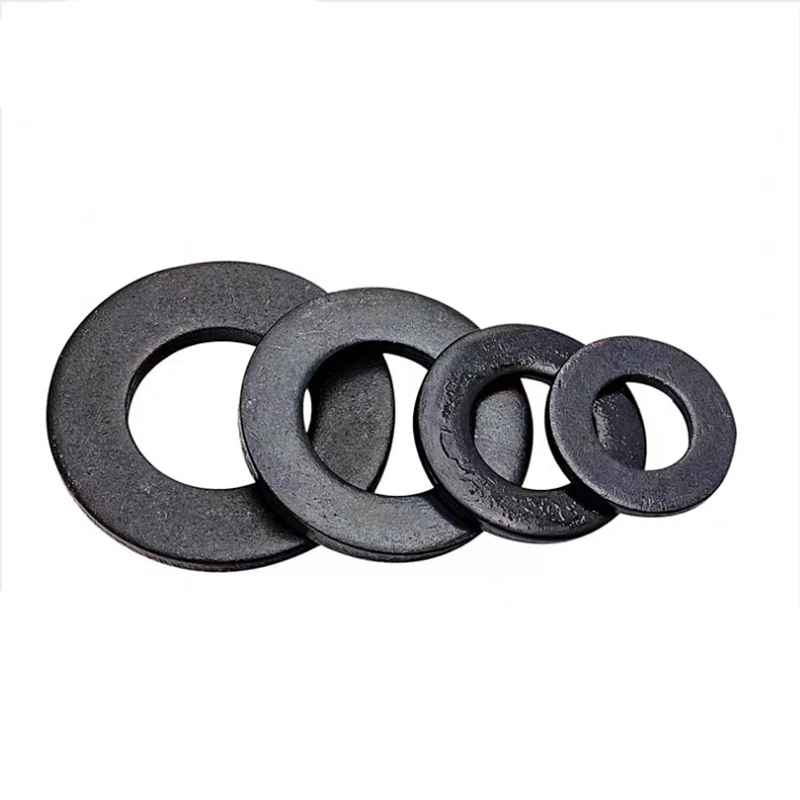
High-strength blackened gasket
-
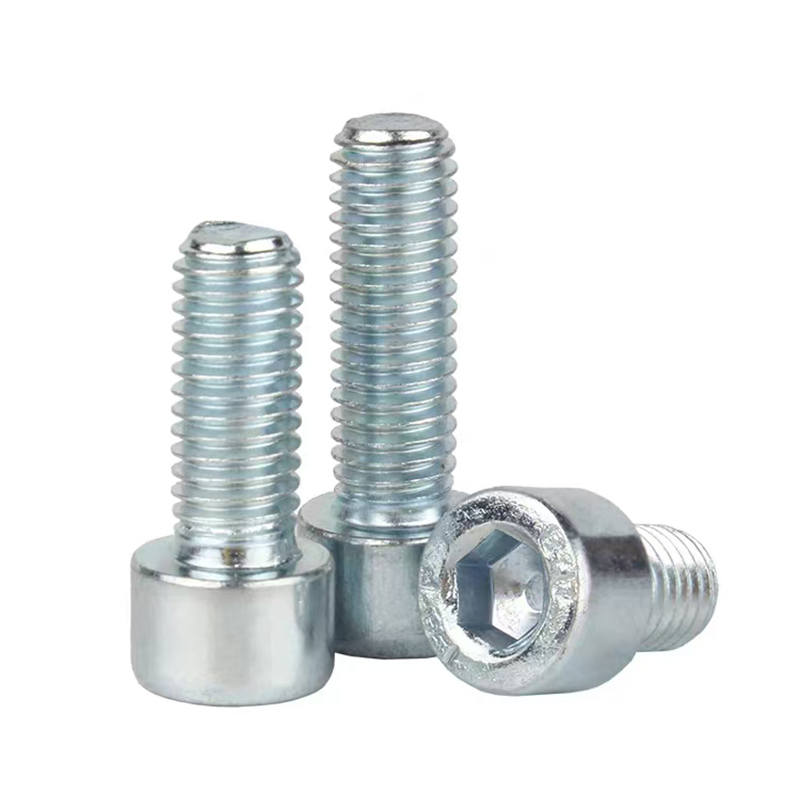
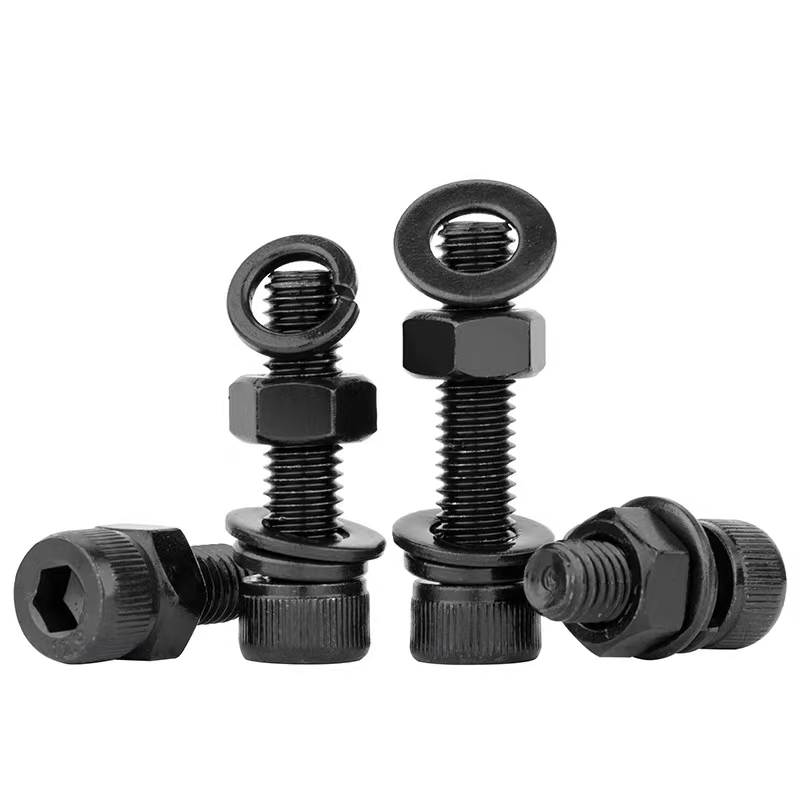
Hexagon socket electrogalvanized bolts
-
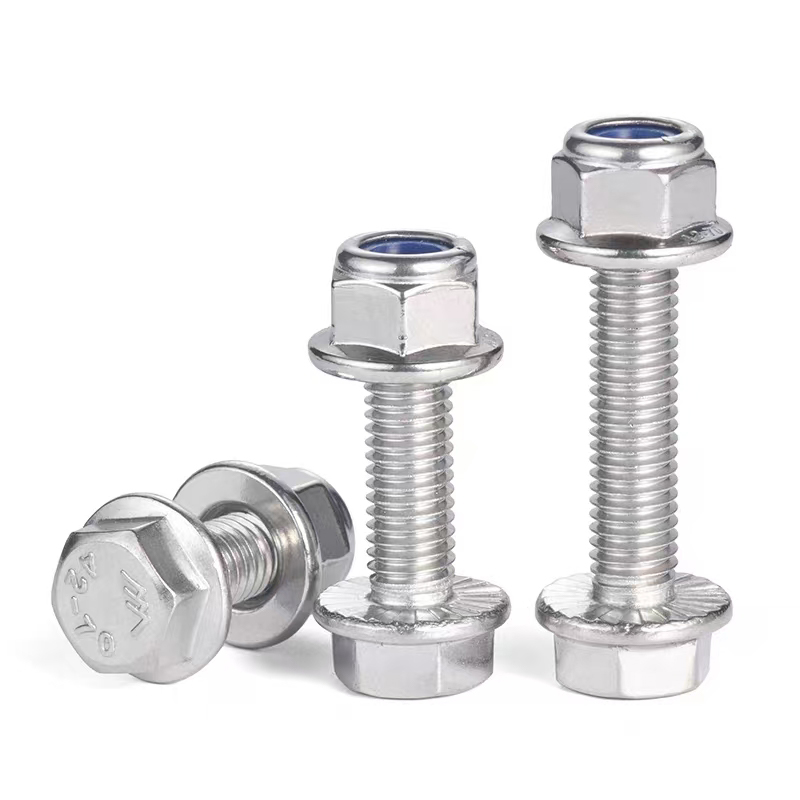
Electroplated zinc flange bolts
-
Electrogalvanized chemical bolts
-
U-bolts
-
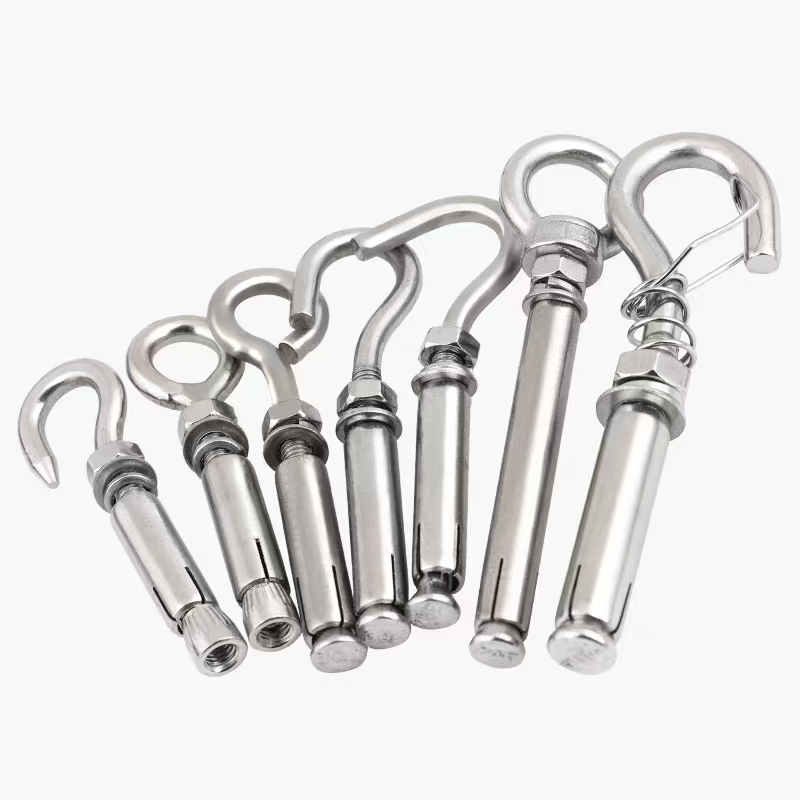
Electro-galvanized expansion hook
-
Stud bolts
-
10.9S Torsion Shear Bolts
-
Electrogalvanized hinge bolts
-
Colored zinc-plated expansion bolts