- Chinese
- French
- German
- Portuguese
- Spanish
- Russian
- Japanese
- Korean
- Arabic
- Irish
- Greek
- Turkish
- Italian
- Danish
- Romanian
- Indonesian
- Czech
- Afrikaans
- Swedish
- Polish
- Basque
- Catalan
- Esperanto
- Hindi
- Lao
- Albanian
- Amharic
- Armenian
- Azerbaijani
- Belarusian
- Bengali
- Bosnian
- Bulgarian
- Cebuano
- Chichewa
- Corsican
- Croatian
- Dutch
- Estonian
- Filipino
- Finnish
- Frisian
- Galician
- Georgian
- Gujarati
- Haitian
- Hausa
- Hawaiian
- Hebrew
- Hmong
- Hungarian
- Icelandic
- Igbo
- Javanese
- Kannada
- Kazakh
- Khmer
- Kurdish
- Kyrgyz
- Latin
- Latvian
- Lithuanian
- Luxembou..
- Macedonian
- Malagasy
- Malay
- Malayalam
- Maltese
- Maori
- Marathi
- Mongolian
- Burmese
- Nepali
- Norwegian
- Pashto
- Persian
- Punjabi
- Serbian
- Sesotho
- Sinhala
- Slovak
- Slovenian
- Somali
- Samoan
- Scots Gaelic
- Shona
- Sindhi
- Sundanese
- Swahili
- Tajik
- Tamil
- Telugu
- Thai
- Ukrainian
- Urdu
- Uzbek
- Vietnamese
- Welsh
- Xhosa
- Yiddish
- Yoruba
- Zulu
- Kinyarwanda
- Tatar
- Oriya
- Turkmen
- Uyghur


External fastener
When most people hear 'fastener,' they think of the hidden ones – the bolts inside an engine block, the screws in a phone chassis. But the ones living outside, exposed to the world, that's where the real engineering headache begins. It's not just about holding things together; it's about surviving. I've seen too many projects treat external fasteners as an afterthought, just picking something 'stainless' from a catalog, only to face premature failure a year later. The gap between spec sheet performance and real-world endurance is vast, and it's filled with rain, salt, UV, thermal cycles, and sheer neglect.
The Core Challenge: It's a Hostile World Out There
Let's be clear: the primary enemy of any external fastener isn't shear or tensile load in a controlled test lab. It's the environment. For coastal applications, it's chloride-induced stress corrosion cracking, even on some grades of stainless like 304. I recall a boardwalk railing project where the 316 stainless bolts started showing hairline cracks after 18 months. The culprit? Not the salt spray from the front, but the constant damp, salty sand accumulation in the threaded recess, creating a perfect crevice corrosion cell. The load was trivial, but the environment was brutal.
Then there's galvanic corrosion. It's Fastener 101, yet it's constantly botched. Pairing an aluminum extrusion with a plain carbon steel bolt? A recipe for disaster. But even with more careful material pairing, you must consider the plating or coating as part of the galvanic series. A hot-dip galvanized bolt into a zinc-aluminum coated steel member might be fine, but if that coating gets scratched during installation… you've just created an anode and a cathode. The fastener often loses.
UV degradation is another silent killer for polymer-based or coated options. Those lovely black-oxide or cheap electroplated finishes on standard bolts offer almost zero long-term protection outdoors. The coating breaks down, moisture gets in, and rust starts. It's not a matter of 'if,' but 'how quickly.' This is where the sourcing location matters. Getting fasteners from a region with deep, practical experience in volume manufacturing for diverse climates can be a hidden advantage. For instance, a supplier like Handan Zitai Fastener Manufacturing Co., Ltd., based in Yongnian – China's largest standard part production base – sees an immense volume of orders for both indoor and outdoor applications. That scale forces them to confront these environmental specs daily, not as a niche request. Their proximity to major transport routes like the Beijing-Guangzhou Railway isn't just a logistics benefit; it means they're shipping to every conceivable environment, which informs their production know-how.
Material Choices: Beyond Stainless Means Good
A2-70, A4-80, 316, 304, Silicon Bronze, Monel, A588… the list goes on. Picking the right material is a cost-versus-longevity calculation, but one often skewed by initial budget. 304 stainless is okay for mildly corrosive atmospheres, but for any real exterior duty, 316 is the starting point. Even then, for highly corrosive industrial or marine zones, you might need to look at duplex grades or non-ferrous options.
I made a mistake once, specifying silicon bronze bolts for a historic building restoration near the ocean. The material was perfect, historically appropriate and corrosion-resistant. What I didn't account for was the bi-metallic reaction with the new, hidden stainless steel structural bracket behind the timber. We used insulating washers, but the thermal/moisture cycling created a slight differential movement that fretted the interfaces. Lesson learned: the entire assembly, not just the fastener, must be considered as a system.
Sometimes, the answer isn't a more exotic alloy, but a smarter coating system. A well-applied mechanical galvanizing or a true hot-dip galvanizing to ASTM A153 can make a simple carbon steel bolt incredibly resilient for decades, and often at a lower cost than stainless. The key is coating thickness and integrity, especially at the threads. A supplier's capability to consistently control this is critical. Visiting a factory floor, you learn to look for the little things – how they rack parts for plating, how they handle post-plating thread chasing. It's these process details that separate a durable external fastener from a cosmetic one.
Installation & Maintenance: The Points of Failure
This is where theory meets the grimy reality of the jobsite. A perfect fastener can be ruined in minutes. Over-torquing a stainless bolt can gall the threads, essentially welding the nut in place. Under-torquing leaves it loose, subject to vibration and fatigue. Using the wrong tool – an impact wrench where a torque wrench is specified – is sadly common.
Then there's the issue of sealants and thread lockers. Should you use them? On external applications, often yes. A quality sealant like a polysulfide or silicone around the fastener head can prevent water ingress into the substrate, which is sometimes more important than protecting the fastener itself. But it adds a step, adds cost, and requires clean surfaces to adhere to. It's a trade-off.
Maintenance is the great lie of many external fastener specs. The design assumes a level of inspection and re-torquing that almost never happens. So your design must either be truly maintenance-free (a high bar) or fail in a predictable, non-catastrophic way. That's why, for critical connections, we sometimes specify a proprietary coated system with a visually inspectable wear indicator, like a colored coating that wears off when the fastener loosens. It's a clever solution, but again, adds cost. The reality is, for most non-critical applications, the fastener is installed and forgotten until it visibly fails.
Sourcing and the Supply Chain Reality
Where your fasteners come from isn't just about price. It's about consistency, traceability, and technical support. You need a supplier who understands the application, not just one who sells commodity bolts. Can they provide a material certificate? Can they advise on galvanic pairing for your specific materials? Do they have experience with the relevant ASTM, ISO, or DIN standards for exterior exposure?
This is where established production bases earn their keep. A company operating at scale from a hub like Yongnian District, Handan, has seen it all. They're not just making fasteners; they're solving connection problems for a global market. A quick look at a site like https://www.zitaifasteners.com shows the range – from basic carbon steel to high-grade stainless – but the real value is in the manufacturing depth. Being in the largest standard part base in China implies a dense ecosystem of raw material suppliers, plating specialists, and logistics networks. This can translate to more consistent quality and faster turnaround on specialized orders, which is crucial when a construction project is held up waiting for the right bolt.
However, scale has its pitfalls too. The risk with any high-volume producer is that a small, non-standard order gets less attention. Clear communication on specs – not just dimensions and grade, but coating type, thickness, salt spray test hours required – is paramount. Never assume. Always specify, and request batch test reports.
Lessons from the Field: A Few War Stories
On a telecom tower project in a humid, polluted industrial area, we used A) stainless. They corroded within five years. Post-mortem analysis pointed to sulfur compounds in the atmosphere reacting with the passive layer. We switched to a hot-dip galvanized steel bolt with a thick, proprietary topcoat for the next round. So far, so good after eight years. Sometimes, the 'less noble' material with a superior barrier coating wins.
Another time, on a bridge expansion joint assembly, the specified external fasteners were high-strength, galvanized, and tensioned correctly. The failure came from 'walking.' The constant micro-movement from traffic vibration caused the nuts to back off, despite prevailing torque lock nuts. The fix was switching to a different thread form with a finer pitch and a chemical thread-locker applied at the factory. It held. The lesson: dynamic loads require a dynamic solution; static corrosion tests don't tell the whole story.
Then there's the simple issue of aesthetics. For an architectural facade, the fastener head design matters. A standard hex head can look industrial and ugly. We switched to a conical socket head with a custom drive, which presented a much cleaner profile. But that required a custom tool for installation and maintenance, which we had to supply to the client. Every design decision has a ripple effect.
Concluding Thoughts: No Universal Answer
So, what's the perfect external fastener? There isn't one. It's always a compromise between corrosion resistance, strength, cost, installability, and aesthetics. The key is to stop thinking of it as a commodity item and start treating it as a critical component of the system's longevity. Define the environment as precisely as possible. Consider the entire material assembly. Specify not just the fastener, but the installation procedure and, if possible, a maintenance schedule.
And build a relationship with a supplier who gets it. Whether it's a large manufacturer from a major industrial base like Handan Zitai or a specialized boutique shop, you need a partner, not just a vendor. Someone who will push back if your spec is wrong for the application, and who has the production rigor to deliver what you actually ordered, batch after batch. Because in the end, that little piece of metal holding your structure to the world is all that stands between success and a costly, potentially dangerous, failure.
Related products
Related products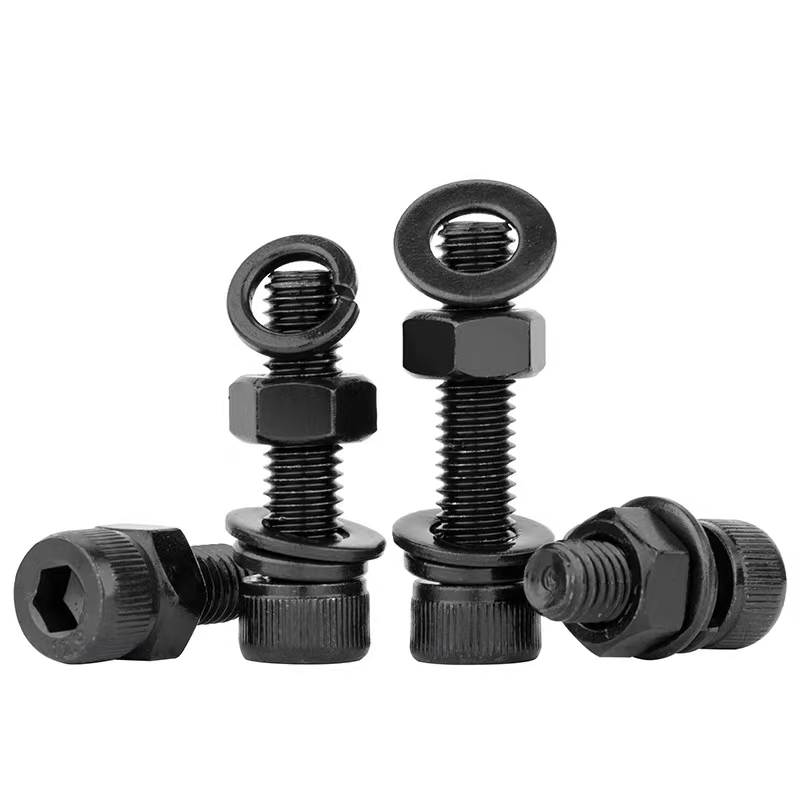
Best selling products
Best selling products-
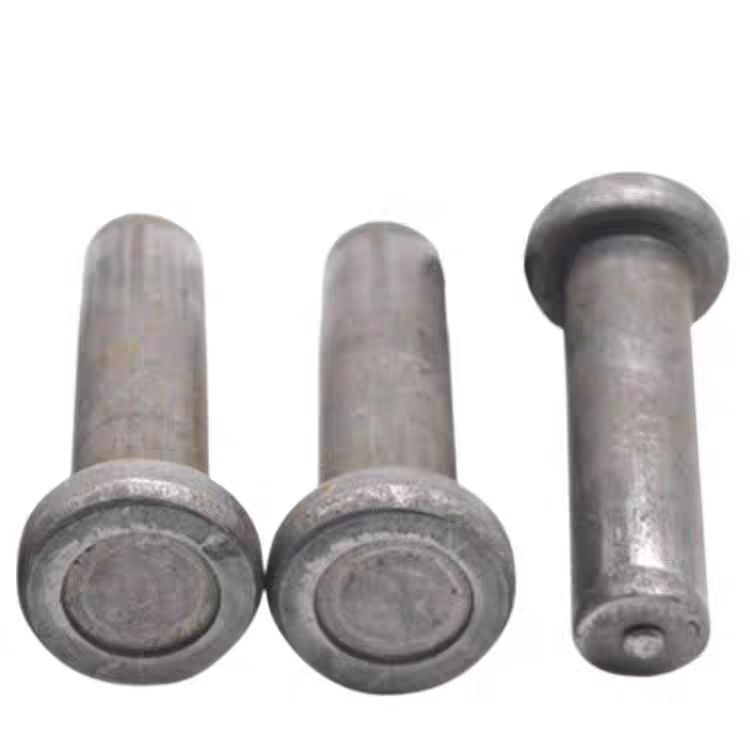
 Steel structure welding studs
 -
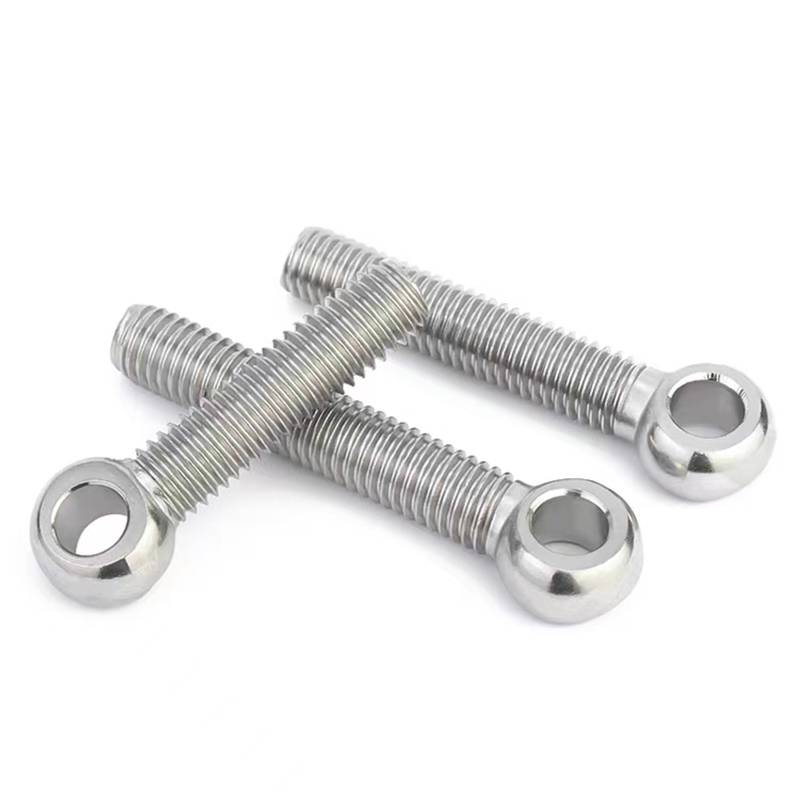
Electrogalvanized hinge bolts
-
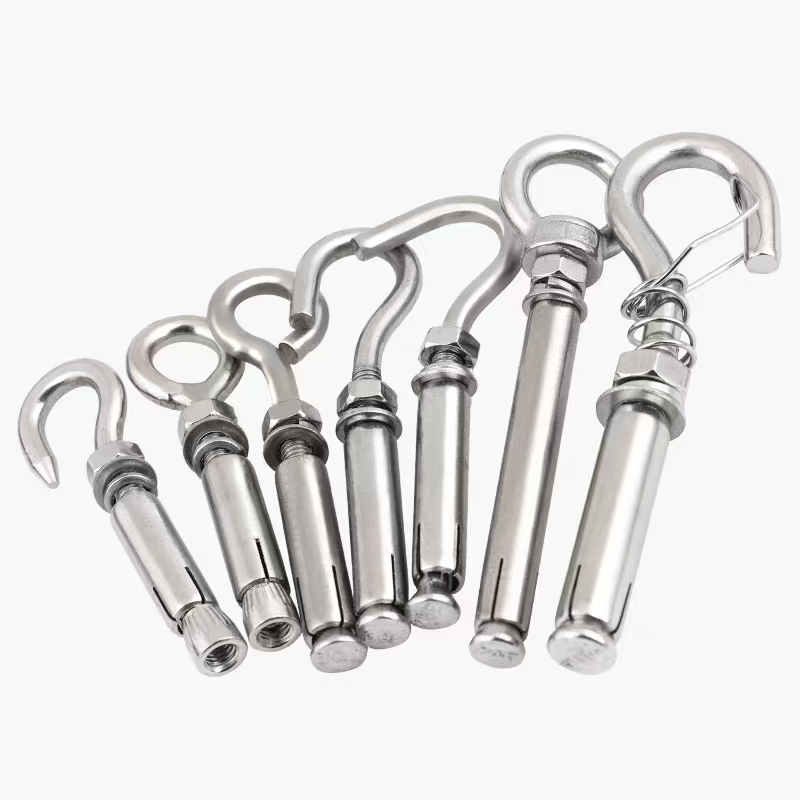
Electro-galvanized expansion hook
-
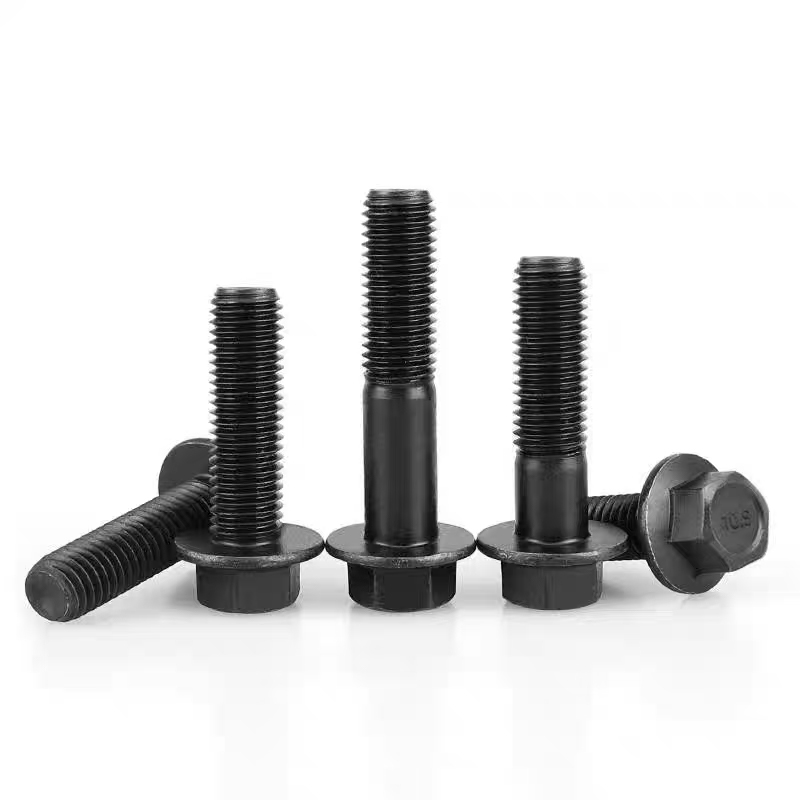
Black zinc flange bolts
-
Stud bolts
-
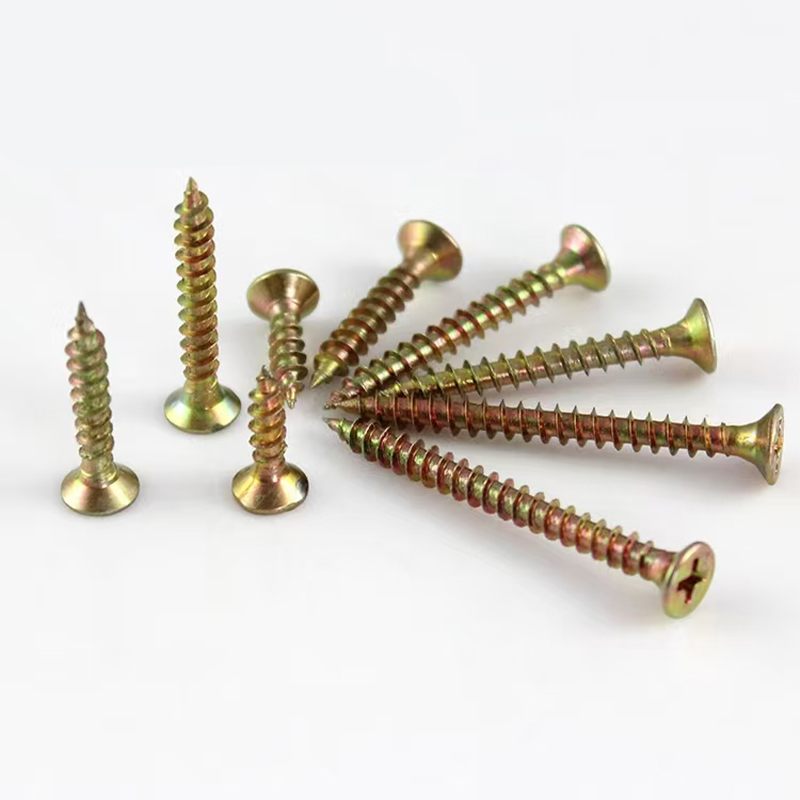
Electrogalvanized cross countersunk drill thread
-
Black zinc-plated hexagonal drill tail wire
-
Hexagon socket black zinc-plated bolts
-
Colored zinc-plated pins
-
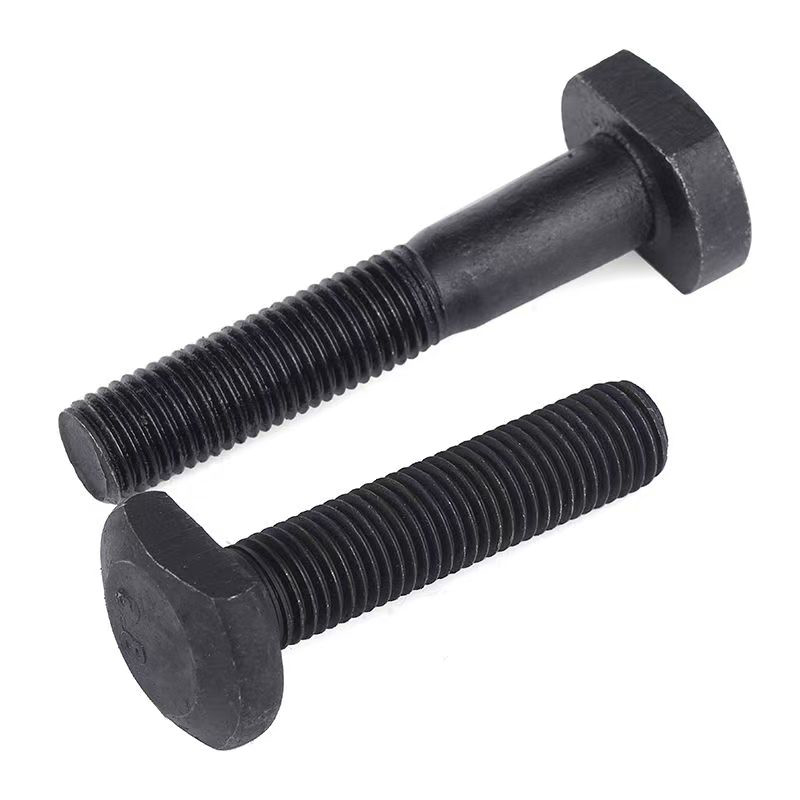
T-bolt (T-slot bolt)
-
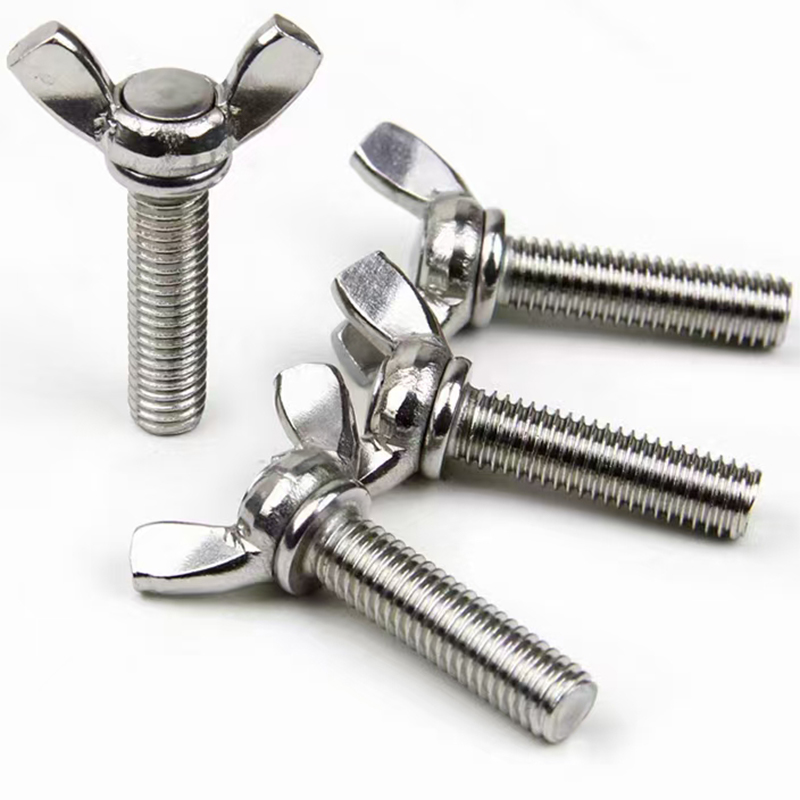
Butterfly bolts
-
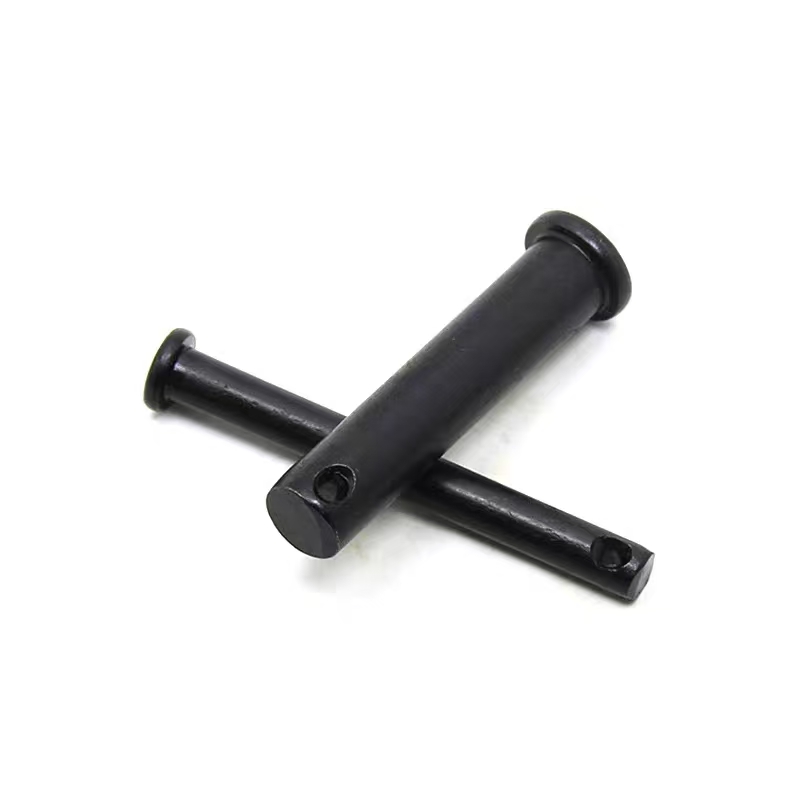
Black zinc plated pin shaft